


China Merchants Signs $2.8 Billion-Plus Simandou Shipping Deal
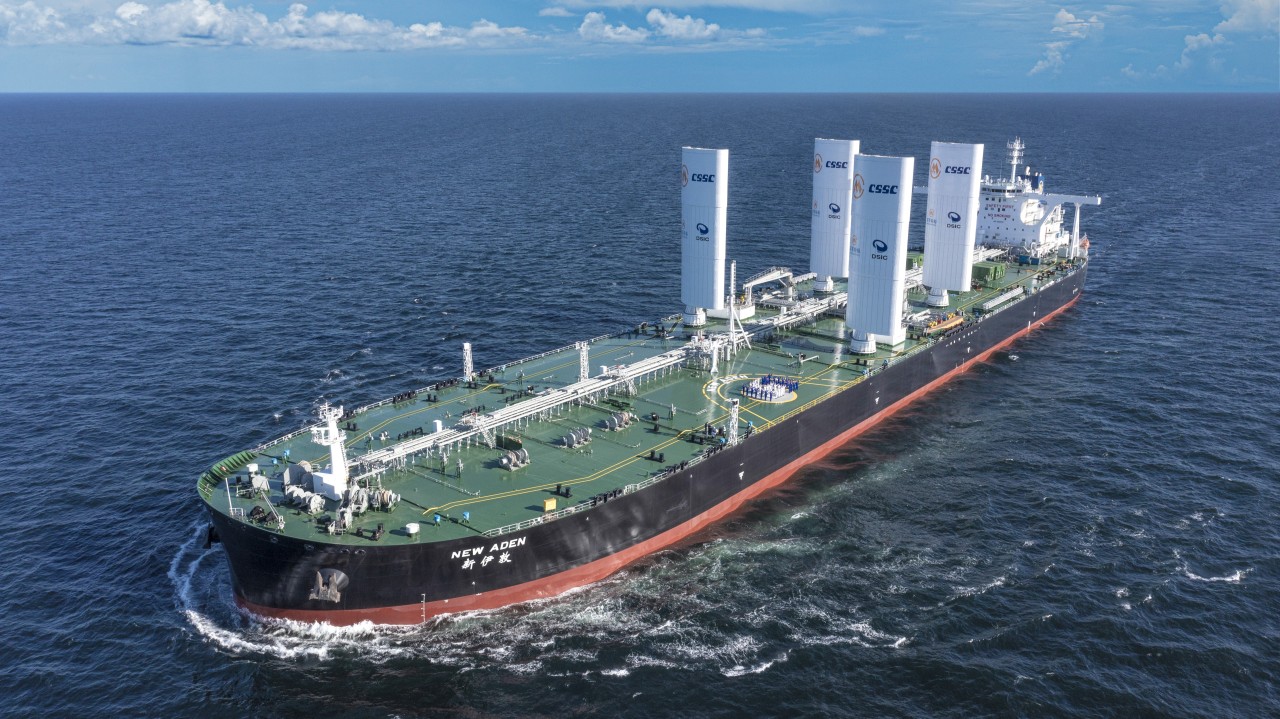
China Merchants Energy Shipping (CMES) has secured a 25-year iron ore transportation agreement covering six very large ore carriers (VLOCs), with an estimated total value of at least $2.8 billion.
In a stock exchange announcement dated September 30, the company said its wholly owned subsidiary, Hong Kong Ming Wah, had signed the agreement with an undisclosed iron ore trading company as part of its involvement in Guinea’s Simandou project.
The agreement complements CMES’s plans for six 343,000-dwt VLOC newbuildings and strengthens its position in an emerging iron ore trade. It also gives the shipowner a clearer commercial basis for developing dedicated capacity as Simandou’s export volumes grow.
From Initial Shipments to Long-Term Cooperation
Hong Kong Ming Wah’s participation began before the latest agreement. In July, CMES disclosed that the subsidiary had already transported approximately 600,000 tonnes of mineral cargo associated with the Simandou project and was preparing a long-term agreement with a customer holding maritime transport rights for its ore.
The CMES board authorised the signing of a 25-year VLOC transportation agreement on July 28. The latest announcement confirms that the agreement has now been executed and specifies both the vessel count and its estimated value.
CMES described the counterparty as an iron ore trading company with sound commercial credit and the capacity to meet its contractual obligations. Its identity was withheld under applicable disclosure provisions.
For Hong Kong Ming Wah, the progression from initial shipments to a long-term commitment builds on an established operating relationship. It allows vessel deployment and customer service to be planned around a much longer business horizon.
Revenue will be recognised over the contract’s performance period. CMES said the agreement would have no material impact on current-period profit and a limited effect on any individual year’s financial results.
A Commercial Foundation for Six New VLOCs
The transportation agreement follows a major fleet investment proposal announced in July.
CMES plans to build six energy-efficient, 343,000-dwt VLOCs through overseas single-ship subsidiaries, with total project investment capped at RMB4.93 billion. Deliveries are scheduled for 2029–2030.
Together, the proposed vessels would add 2.058 million dwt of capacity. CMES previously indicated that they were intended to support long-term contracts of affreightment and deepen cooperation with major customers.
In August, Xinde Marine reported that Hong Kong Ming Wah had issued an invitation for the six-vessel project on August 10, naming China Merchants’ Qingdao shipyard as the invited supplier.
The transport commitment provides a clearer basis for planning vessel employment, financing and delivery schedules. For a capital-intensive fleet programme, that connection between investment and future business is significant.
The two financial figures represent different commitments: RMB4.93 billion is the proposed shipbuilding investment ceiling, while at least $2.8 billion is the estimated transportation contract value. The latest announcement confirms the transport agreement; progress on the shipbuilding contracts remains subject to separate disclosure.
An Upgraded Design for Long-Haul Ore Trades
CMES previously told Xinde Marine that the 343,000-dwt design is an upgraded version of the established 325,000-dwt VLOC platform, developed to match the requirements of large-scale Simandou transportation.
The increase amounts to 18,000 dwt per vessel, or approximately 5.5%.
The operational benefit will depend on loading conditions, draught restrictions and terminal arrangements. Where the additional capacity can be fully used, carrying more cargo per voyage offers scope to spread some voyage costs across a larger volume.
For a long-term shipping programme, vessel size must work alongside port compatibility, fuel efficiency and reliable scheduling. An upgraded design based on a familiar platform gives CMES an opportunity to apply its existing ore-carrier experience to the requirements of a developing trade.
Long-Term Employment With Market-Linked Freight
The commercial framework outlined in CMES’s July announcement was a contract of affreightment, with freight linked to relevant Baltic Exchange route indices and supplemented by a cost-adjustment mechanism.
Such a structure can combine a long-term customer relationship with exposure to market freight movements. It also provides a contractual mechanism for addressing changes in operating costs over an extended period.
For the cargo interest, the attraction is access to dependable shipping capacity. For the owner, it is greater visibility over future business while retaining an element of market participation.
That balance requires sustained operating discipline. Freight markets, customer requirements and exchange rates can still affect performance, but a defined long-term relationship provides a foundation for coordinating vessel investment and transport demand.
Building a Position in West African Iron Ore Shipping
Simandou is central to the opportunity.
According to CMES’s earlier disclosure, the project began production and iron ore shipments in November 2025 and could reach a combined annual capacity of 120 million tonnes once fully developed.
For dry bulk shipping, the significance extends beyond additional tonnes. Moving ore from Guinea to distant Asian markets requires substantial vessel time, making fleet efficiency and reliable transport arrangements important as exports increase.
CMES’s early participation places it within that developing transport network. Initial voyages provide practical operating experience, while the long-term agreement creates a basis for closer coordination with the cargo interest.
The company’s involvement also follows earlier efforts to expand West African mineral transportation. In December 2025, Hong Kong Ming Wah signed a Guinea project contract with Chinalco’s logistics business, focused on mineral transport and supply-chain cooperation.
These developments show a sustained effort to build customer relationships and operating capabilities in the region as resource projects move into commercial production.
Fleet Experience and Financial Capacity Support Expansion
CMES brings an established ore-carrier operation to the project. As covered in Xinde Marine’s reporting on its first-half results, the company operated and managed 37 VLOCs, placing it among the world’s leading owners and operators in the segment.
Its dry bulk business also recorded stronger earnings in the first half of 2026. Segment revenue rose 38.34% to RMB5.12 billion, while segment net profit increased 179.37% to RMB1.179 billion.
Across the group, net profit attributable to shareholders reached RMB6.96 billion, and net cash generated from operating activities totalled RMB8.131 billion. That cash generation supports the company’s capacity to invest in fleet renewal and long-term projects.
CMES’s wider fleet programme has included contracts for 10 VLCCs, 12 containerships and five Aframax tankers during 2026, alongside the proposed VLOC investment. The Simandou agreement illustrates the role that long-term cargo commitments can play within this broader expansion.
As Simandou develops, the next phase will depend on aligning mine output, shipping capacity and vessel deliveries. CMES has now established a long-term contractual position in that process.
For the wider dry bulk market, the agreement demonstrates how a major new mineral export project can support investment in specialised shipping capacity. Matching efficient vessels with durable customer relationships will be an important part of building a reliable West Africa–Asia iron ore trade.

READ MORE
 Dry Cargo
Shipowners Bet on Ultramaxes: 42 Ships for Chinese Yards, Deliveries Stretch into 203
 Dry Cargo
“We Are Buying Ships”: Why Dry Bulk Is Beating Expectations
 Dry Cargo
40 Days from Brazil to China: COSCO SHIPPING Bulk’s New Grain Fleet Takes Shape
 Dry Cargo
Seaspan Enters Newcastlemax Market, with Yangzijiang Set to Build Two Tri-Fuel Ore Carriers
 Dry Cargo
Wooyang orders four triple-fuel Newcastlemax bulkers at China’s New Times for Vale contracts
 Dry Cargo
Shipowners Are Raising Capital to Buy Ships Again: Safe Bulkers Signals Dry Bulk’s Shift from Freight Recovery to Asset Expansion
 Dry Cargo
NORDEN Shows Why Ships Alone Are No Longer Enough
 Dry Cargo
Vale’s 30-Vessel Triple-Fuel Ore Carrier Plan Takes Shape as 25-Year Contracts Reshape Iron Ore Shipping
 Dry Cargo
HMM Locks in $3.5bn Vale Iron Ore Deal for Eight Triple-Fuel Newcastlemaxes
 Dry Cargo