


NORDEN Shows Why Ships Alone Are No Longer Enough
Ships Are No Longer Enough: Specialist Shipping Companies Are Competing for Control of the Supply Chain

From dry bulk shipping and project cargo to port transshipment, logistics engineering and long-term solutions extending as far as 25 years, NORDEN is doing something more consequential than simply expanding its fleet: it is pushing its business boundary beyond the provision of seaborne capacity and deeper into customers’ supply chains. A growing number of specialist shipping companies are reaching the same conclusion. Future competitiveness will not be determined solely by how many ships they control, but increasingly by who can intervene earlier in cargo-flow design, solve port bottlenecks, secure long-term cargo, and combine vessels, transshipment infrastructure, port nodes and long-duration contracts into logistics systems that are difficult to replace.

A shipping company with more than 150 years of history, long known for dry bulk and product tanker operations, is redefining what it actually sells.
Xinde Marine News has noted that NORDEN no longer presents itself simply as a shipowner or operator. On its website, the company increasingly positions itself as a platform covering “freight and smarter supply chain solutions”. NORDEN says it operates more than 450 vessels across different segments and serves more than 1,000 customers worldwide, yet fleet size is no longer the only — or even the most revealing — part of the story. The company increasingly speaks in terms of a “platform”, “strategic partnering” and “supply chain solutions”, bringing vessel operations, market intelligence, risk management, compliance, decarbonisation, port logistics and data capabilities into one integrated framework.
This change in language reflects a deeper shift in NORDEN’s position within the value chain. The company is no longer content simply to receive a cargo enquiry, match it with a vessel and move the shipment from Port A to Port B. It increasingly wants to enter the decision-making process before the cargo flow itself is fully defined: where should the cargo move from, what size of vessel should be used, how should port constraints be overcome, and how can the total logistics chain be designed to reduce overall cost?
From “finding a ship” to redesigning how cargo moves
NORDEN’s Maritime Logistics strategy is perhaps the clearest expression of this shift. The traditional commercial logic of a shipping company is relatively straightforward: find cargo, find ships, match capacity with demand, manage chartering exposure and asset prices across the cycle, and seek freight or TCE returns above the market average.

NORDEN is increasingly starting from a different question. Rather than beginning with the available ship, it first examines the customer’s port draught restrictions, loading and discharge efficiency, CO₂ targets, logistics bottlenecks and long-term cargo volumes, and then works backwards to determine what transportation structure makes the most sense. The answer may be barges feeding Supramax vessels. It may involve Panamax vessels, floating cranes and subsequent transshipment into Capesize tonnage. It may require a floating transshipment installation or an entirely new long-term offshore logistics system.
The vessel remains a fundamental tool, but it is no longer the only product. What NORDEN is increasingly selling is a solution designed around a customer’s supply-chain problem.
Its operation in Gabon is one of the clearest examples. In 2022, NORDEN entered into a ten-year agreement with Comilog, the manganese producer owned by France’s Eramet, and committed around US$40 million to establish and operate a transshipment system. Because port conditions prevented large Capesize vessels from loading directly at the terminal, NORDEN did not simply accept the limitation and source a smaller vessel. Instead, it created an offshore transshipment solution approximately 40 kilometres from the port. Ore is moved by barge from the terminal to the offshore location, where it is transferred into Capesize vessels for the long-haul voyage to Asia.
The port was not deepened and the mine did not move, but by redesigning the transportation system, the customer was able to access larger and more efficient ocean-going tonnage, improving transport economics and reducing emissions per tonne carried. For Comilog, NORDEN was no longer simply providing an ocean voyage; it was effectively providing logistics infrastructure designed around the mine’s export system. For NORDEN, the commercial relationship moved beyond the role of carrier and deeper into the customer’s production and export chain.
The concept has since been applied in other regions. In Guinea, NORDEN has used offshore transshipment between Panamax and Capesize vessels to overcome port limitations. In Australia, specialised barges are used to connect shallow-draught ports with larger ocean-going vessels offshore. NORDEN now describes Maritime Logistics as a way of bringing fragmented port operations, transshipment and individual ocean voyages together into a coordinated cargo-flow system, using planning, execution and data integration to improve reliability, eliminate inefficiencies and improve supply-chain economics.

That definition matters. It shows that the centre of gravity is shifting from “moving a cargo” to “designing the transport chain”.
The logic also has parallels with the “Three Cores and Three Chains” strategy previously discussed by Xinde Marine in relation to COSCO Shipping Specialized Carriers: shipping companies are looking beyond an isolated sea leg and attempting to connect more of the industrial and logistics chain around specialised cargo flows.
The question they are asking customers is gradually changing as well. It is no longer merely: “How much capacity do you need?” Increasingly, it is: “Why does your cargo have to move this way — and is there a better way to move it?”
From one voyage to 10, 15 or even 25 years
The most direct commercial consequence of this strategy is that customer relationships become longer.
NORDEN currently divides its Maritime Logistics offering into areas including Consultancy, Creating, Projects and Classic. Under its Classic model, the company explicitly states that transshipment and ocean transportation can be combined into long-term solutions, with cooperation structures extending for 10, 15 or even 25 years.

That time horizon says more about what NORDEN wants to achieve than the addition of another handful of ships.
In the spot market, the relationship between owner and charterer may last only for a single voyage. A COA can extend that relationship to several months or years. But once a shipping company becomes involved in port transshipment facilities, dedicated barges, floating transfer stations and long-term vessel configuration, the customer’s cost of changing provider becomes materially higher. What binds the two parties is no longer simply a freight rate. It becomes an operating system embedded in the supply chain.
This is the essence of what can be described as supply-chain control.
Control does not mean that a shipping company must own every terminal, warehouse, truck, barge or crane involved in the movement. It means being able to influence how cargo is organised, which nodes it moves through, what vessel types are employed and how the whole system is executed over an extended period. Once a company occupies that position, vessel ownership itself can actually become more flexible. Owned vessels, long-term charters, short-term time charters and market tonnage can all become tools used to deliver the logistics solution. A company does not need to own every underlying asset in order to control the organisation of the cargo flow.
For NORDEN, with its long history as an operator, this model fits particularly well. It allows the company to preserve flexibility on the asset side while using long-term contracts, logistics expertise and supply-chain design to deepen customer relationships.
Seen this way, NORDEN is not simply trying to secure more cargo. It is trying to secure a longer-term role in organising the cargo flow itself.
There is an important distinction. Securing cargo means participating in the market. Helping determine how that cargo flow should be structured means participating in the design of the market relationship. Traditional shipping companies often enter the competitive process after a customer issues a cargo tender. Once a company begins contributing to port solutions, vessel combinations and transport-route design, it is moving upstream in the decision process — before the transport requirement has even been fully formed.
Others are competing over who will carry the voyage. NORDEN increasingly wants to help determine how that voyage should be created in the first place.
Why NORDEN is also expanding aggressively into project cargo
Maritime Logistics can appear to be a separate business line when viewed in isolation. But NORDEN’s moves over the past several years show a broader strategic logic.
In 2023, NORDEN completed the first corporate acquisition in its history by acquiring the Thorco Projects business, establishing a meaningful position in breakbulk, steel, wind-energy components and large industrial equipment. In 2024, it acquired Norlat Shipping, gaining established cargo flows, customers and parcelling capabilities across trades connecting Northern Europe, North Africa and North America. NORDEN subsequently acquired parts of Taylor Maritime’s freight activities in Southern Africa.
At the same time, the company has continued to add 17,500-dwt multipurpose vessel charters, often with purchase options. By 2025, its project cargo and MPP-related activities had expanded to a fleet of around 50 vessels, and further newbuilding capacity has since been added.
These transactions can be described separately as M&A, fleet expansion and diversification. Taken together, however, they point in the same direction: broadening the range of cargoes, customers and supply-chain situations NORDEN is capable of handling.
Traditional dry bulk shipping is comparatively standardised. Iron ore, coal and grain can often be matched with established vessel classes and well-defined trade patterns. Project cargo, wind components, steel and industrial equipment are different. Cargo dimensions, lifting requirements, port restrictions, delivery schedules and land-sea interfaces often have to be engineered specifically for the shipment.
The more complex the cargo, the harder it becomes for the customer to choose a shipping provider purely on the basis of the lowest dollar-per-tonne quote. That gives specialist operators greater scope to monetise expertise, execution capability and reliability. Through Thorco Projects, Norlat and subsequent expansion, NORDEN has therefore acquired more than additional voyages. It has gained entry points into the supply chains of a broader range of industrial customers.
NORDEN is gradually building a multi-layered platform around non-containerised cargo. Bulk Cargo provides scale and a global cargo-flow base. Projects & Parcelling adds the capability to handle complex industrial cargoes. Maritime Logistics pushes the company further into ports, transshipment systems and other critical supply-chain nodes. Low Emission Solutions, risk management and data capabilities sit across the entire structure.
These activities are not simply parallel business lines. They can reinforce one another. A bulk customer may need a port transshipment solution. A project cargo customer may require dedicated long-term tonnage. That long-term tonnage may in turn support infrastructure investment. Once a supply-chain solution is established, it can lock in cargo demand and vessel requirements over much longer periods.
That kind of competitive barrier is considerably harder to replicate than simply adding several ships.
The vessel is becoming a tool rather than the entire product
This evolution raises a deeper question about the economics of traditional shipping: what exactly does a shipping company earn money from?
For decades, many of the industry’s key competitive metrics have centred on assets — fleet size, deadweight tonnage, average vessel age, newbuilding costs, asset values and the ability to trade the market cycle. Those factors remain important, but within the model NORDEN is building, the role of the ship is changing.
A customer is not necessarily buying “one Supramax from Port A to Port B”. The requirement may instead be to move several million tonnes of ore annually from a draught-restricted port to Asia with the lowest possible total logistics cost and emissions. Once the commercial problem is defined that way, the vessel class becomes only one part of the answer. Port transshipment, shipment frequency, inventory management, COAs, floating infrastructure and long-term capacity all become part of the same equation.
That has implications for where shipping companies generate value. Simply providing vessels leaves earnings highly exposed to freight and asset cycles. Participating in supply-chain design gives the company an opportunity to capture not only freight margins and asset returns, but also the premium attached to organising a complex logistics system.
The customer is then paying for more than sea transport. It is paying for reliability, predictability, port efficiency, lower inventory requirements and the ability to execute difficult projects. The deeper the shipping company sits within the customer’s supply chain, the greater the potential to shift the commercial relationship away from one-off transactions towards longer-duration partnerships.
This is also why an asset-light operator model is not inconsistent with a supply-chain strategy.
Supply-chain control is sometimes assumed to require ownership of a large base of physical assets. NORDEN’s approach suggests otherwise. A company does not need to own every barge, port facility, floating crane and ocean-going vessel. If it can design the system, coordinate resources, assume execution responsibility and maintain influence over the critical nodes through long-term contracts, it can still exercise substantial control over the cargo flow.
Asset ownership and supply-chain control are not the same thing. The latter is increasingly based on customer relationships, technical expertise, project experience, regional networks and long-term contractual structures.
NORDEN is not alone: specialist shipping companies are pushing their boundaries outward
NORDEN’s direction is not an isolated development.
Swire Shipping has been strengthening the links between ocean transport, project logistics, inland movement, lifting and engineering planning. G2 Ocean, supported by its open-hatch fleet and long-standing industrial customer base, has continued to strengthen port cooperation, berth arrangements, cargo-flow optimisation and specialised industrial logistics.
Their paths differ, but the strategic direction is similar. None wants to remain only an ocean carrier. Each is pushing outward from the cargoes and customers it knows best into additional parts of the supply chain.
This is different from the expansion model of a traditional global logistics company. Specialist shipping companies do not necessarily need to become DHL, DSV or Kuehne+Nagel, nor do they need to build massive warehousing and trucking networks. A more logical route is to expand outward from the maritime activities in which they already possess a structural advantage.
NORDEN’s strengths lie in bulk operations, vessel deployment, cargo portfolios and port transshipment, so its natural extension is toward Maritime Logistics and port solutions. Swire has liner networks, island trades and a strong project cargo heritage, making project logistics and inland interfaces a more natural extension. G2 Ocean has deep exposure to forest products, steel and industrial cargo, making its open-hatch fleet, industrial cargo expertise and strategic port network central to its model.
The result is not three identical integrated logistics companies. It is the emergence of a group of specialist supply-chain operators built around different cargo types.
There is also a wider industry reason why this is happening. Ships themselves are becoming increasingly difficult to sustain as an unassailable competitive moat. New vessels can be ordered, financing can be raised, and advanced designs and efficiency technologies can eventually be replicated by competitors. With Asian shipyards capable of delivering sophisticated tonnage at scale, the period during which a company can rely on a new vessel design alone for differentiation is inevitably limited.
Customer relationships, port knowledge, regional networks, cargo-specific logistics systems and execution capabilities accumulated over years are much harder to duplicate. These “soft assets” cannot simply be acquired through one capital expenditure programme. They can, however, become progressively more valuable when embedded in contracts extending for 10, 15 or even 25 years.
From competing for ships, to competing for cargo — and now for the right to decide how cargo moves
Competition among specialist shipping companies can therefore be viewed at three levels.
The first is competition for capacity: who has the right vessel, who has the lower cost base, and who can deploy tonnage to the right market at the right time. The second is competition for cargo: using COAs, long-term customer relationships and regional cargo portfolios to reduce dependence on the spot market.
The third level is increasingly important: the right to influence supply-chain design.
Who enters the customer’s decision-making process early enough to determine what size of vessel should be used? Which port should handle the cargo? Is offshore transshipment required? Can Capesize tonnage reduce overall transport cost? Should the customer commit for five years, 15 years or 25? How should port efficiency, emissions and inventory costs be balanced?
The value of this third layer is that it can strengthen the other two. Once a shipping company participates in designing the transport system, it is more likely to secure the cargo over the long term. Once the cargo is secured, it becomes easier to commit dedicated or long-term tonnage. Dedicated tonnage then improves reliability and further raises the customer’s switching cost.
Supply-chain design, cargo access and fleet deployment can therefore become a self-reinforcing system. Once this structure is established, the shipping company is no longer simply a price-taker responding to market demand. It begins to acquire a degree of influence over how the cargo flow itself is structured.
NORDEN’s emphasis on “Strategic Partnering” points in exactly this direction. As geopolitics, regulation, decarbonisation requirements and supply chains become more complex, the company wants to combine market intelligence, local networks, commercial teams, operational capabilities, risk management and data to help customers manage a broader section of the logistics chain.
What matters here is not the word “partner”. It is the change in the commercial relationship that the term represents.
Shipping companies increasingly want to move from the quotation stage to the planning stage, from executing transport to designing transport, and from responding to demand to participating in the formation of that demand.
Shipping’s next competitive moat may not be entirely on board the ship
None of this means that ships are becoming less important. Efficient, reliable and low-emission tonnage remains the foundation of the entire system. Without vessels, no supply-chain solution can ultimately be delivered.
But when assessing the competitiveness of a specialist shipping company, another dimension is becoming increasingly relevant. In addition to asking how many vessels it controls, we may also need to ask how much influence it has over the way cargo moves.
The first determines scale. The second determines stickiness.
Fleet size can be increased relatively quickly with sufficient capital. A position inside a customer’s supply chain takes years to establish. Once a shipping company is embedded in a customer’s port system, transshipment structure and long-term production and sales planning, its competitive advantage begins to migrate away from the balance sheet alone and into relationships, data, operational know-how and infrastructure design.
At that point, a company can maintain meaningful control over cargo flows even if part of its fleet is chartered from the market. Conversely, a company can own a large number of vessels and still remain commercially exposed if it is continually waiting for cargo in the spot market.
NORDEN appears to be trying to combine both capabilities. On one side, it retains the fleet and asset flexibility traditionally associated with a sophisticated operator, using vessel purchases, sales, charters and market deployment to exploit the shipping cycle. On the other, through Thorco Projects, Norlat, the Taylor Maritime cargo activities and Maritime Logistics, it is continuously adding new customers, cargo types, regional networks and supply-chain nodes.
The result is not simply a shipping company trying to become a logistics company. It is a shipping company extending its maritime expertise further into the customer’s supply chain.
That may also represent a more sustainable model for a new generation of specialist shipping companies: assets can remain flexible, but customer relationships need to become deeper; fleets can be adjusted, but cargo flows should become more durable; freight markets can fluctuate, but the company’s position inside the customer’s supply chain should continue to move upstream.
Seen in this context, NORDEN’s strategy is not an ordinary diversification exercise. It represents an outward shift in the competitive boundary of shipping.
At the most basic level, shipping companies compete over who has the ships.
Then they compete over who has the cargo.
Now, some of the leading specialist operators are competing for something further upstream:
the right to decide how that cargo should move.
When a company can design the port solution, organise the transshipment structure, combine different vessel classes, arrange long-term capacity and lock those elements into contracts lasting a decade or two, the number of ships on its fleet list no longer tells the full story of its competitiveness.
Ships remain the foundation of shipping.
But ships alone are no longer enough.


READ MORE
 Dry Cargo
Can Dry Bulk Match Tankers’ Earnings?
 Dry Cargo
How Much Longer Can Dry Bulk Stay Strong?
 Dry Cargo
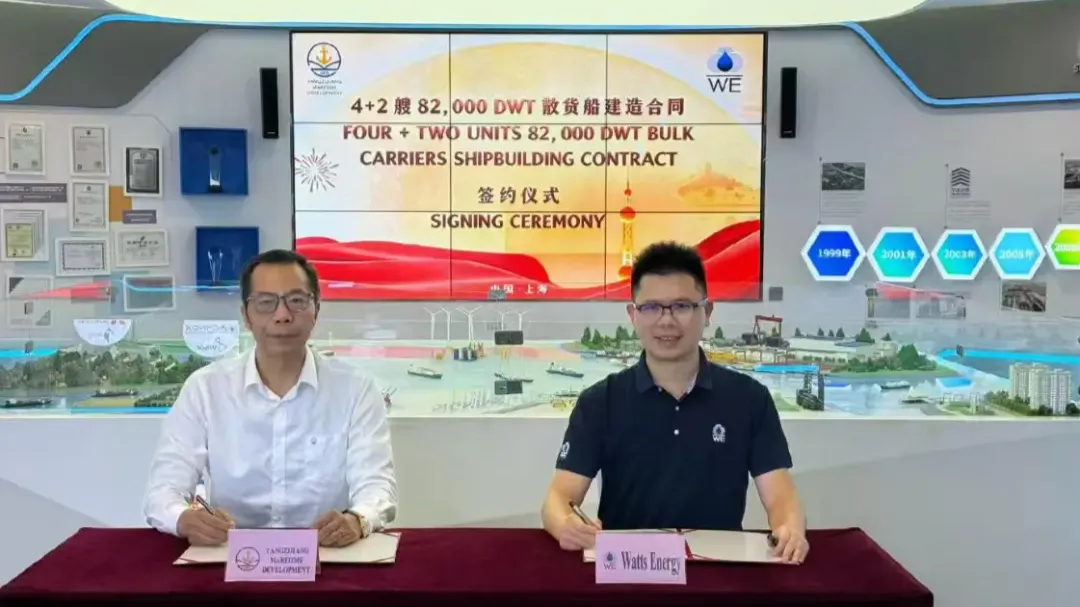
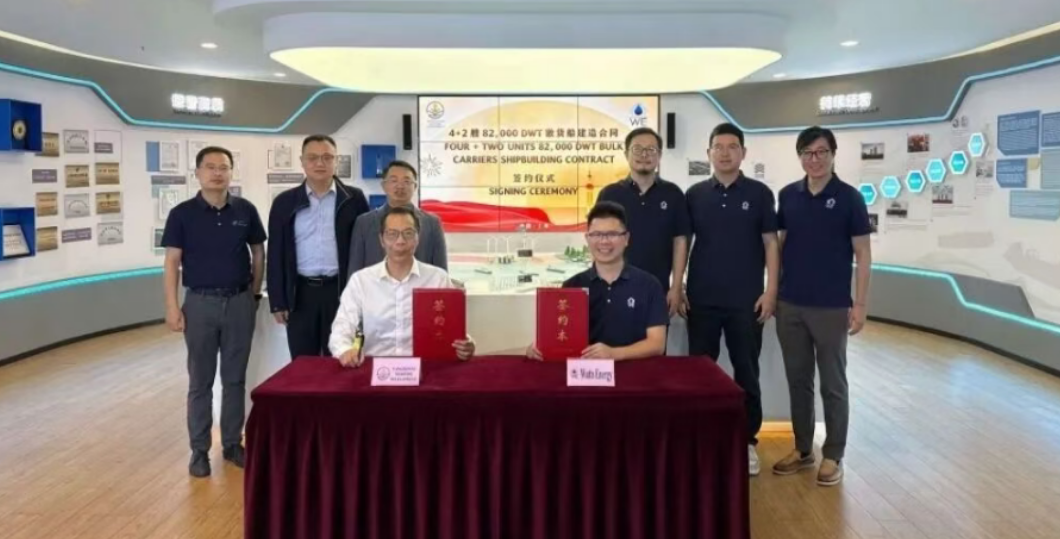
Yangzijiang Maritime Orders 4+2 Kamsarmaxes as Watts Energy Expands into Merchant Shipbuilding
 Dry Cargo
Paliou Urges Fleet Discipline as Dry Bulk Faces Rising Supply and Changing Demand
 Dry Cargo
Yangzijiang Maritime linked to 4+2 Kamsarmax order
 Dry Cargo
Black Sea Wheat Loadings Plunge 78% as Grain Trade Reroutes
 Dry Cargo
China Merchants Signs $2.8 Billion-Plus Simandou Shipping Deal
 Dry Cargo
Seaspan Enters Newcastlemax Market, with Yangzijiang Set to Build Two Tri-Fuel Ore Carriers
 Dry Cargo
Shipowners Bet on Ultramaxes: 42 Ships for Chinese Yards, Deliveries Stretch into 203
 Dry Cargo