


Shipowners Are Raising Capital to Buy Ships Again: Safe Bulkers Signals Dry Bulk’s Shift from Freight Recovery to Asset Expansion
Dry Bulk Recovery Is Moving from Freight Rates to Capital Markets

Dry Bulk Recovery Is Moving from Freight Rates to Capital Markets
The recovery in dry bulk shipping appears to be entering a new phase. After a period in which stronger freight rates primarily improved shipowners’ operating cash flow, capital is now beginning to move toward fleet expansion and asset acquisition. The latest signal comes from Greek dry bulk owner Safe Bulkers, which has completed an equity financing transaction worth approximately €80.4 million, or around $93.5 million, through an accelerated bookbuilding offering. On 9 September, the company announced the placement of 12 million new ordinary shares at a price of €6.70 per share. Safe Bulkers CEO and largest shareholder Polys Hajioannou also participated in the transaction, ultimately subscribing for 1.5 million shares, representing an investment of approximately €10.05 million. According to the company’s disclosure, the proceeds will be used to strengthen liquidity, support existing newbuilding projects, and potentially finance future newbuilding orders and second-hand vessel acquisitions.
The importance of this transaction goes beyond the amount of capital raised. Safe Bulkers is not a company that was forced into the equity market because of financial pressure. Instead, the company is raising capital at a time when its earnings, balance sheet and market valuation have all improved. This distinction is important because it suggests that the company is not simply funding existing obligations, but is preparing itself for future opportunities in the vessel market. In shipping, the most aggressive asset acquisitions often happen when owners have sufficient liquidity and confidence rather than when they are under pressure. Safe Bulkers’ decision to raise nearly $100 million while maintaining substantial financial flexibility indicates that management believes the current market environment may provide attractive opportunities for further fleet investment.
Raising Capital Despite a Strong Balance Sheet
As of 24 July 2026, Safe Bulkers owned a fleet of 46 dry bulk vessels and had 10 newbuilding vessels under construction or contracted. The company had already paid approximately $91.5 million for nine newbuilding vessels, excluding one Capesize vessel acquired through a financing lease arrangement, while remaining capital commitments for these projects amounted to approximately $277.2 million through 2029.
At the same time, Safe Bulkers maintained a strong liquidity position, with approximately $153.2 million in cash, cash equivalents, time deposits and restricted cash, as well as approximately $204.5 million in undrawn revolving credit facilities. The company also had contracted revenue visibility from existing charter arrangements.
Therefore, the latest equity raise should be viewed less as a response to immediate funding needs and more as a strategic decision to increase financial capacity ahead of potential fleet expansion opportunities. For a shipowner that already has access to significant liquidity, raising additional equity suggests that management is preparing for a market environment where attractive acquisition opportunities may emerge.
Fleet Renewal Strategy: Replacing Older Tonnage with Modern Ships
This approach fits closely with Safe Bulkers’ long-term fleet renewal strategy. Over recent years, the company has consistently focused on improving the quality and efficiency of its fleet through a combination of newbuilding investments, selective second-hand acquisitions and the disposal of older vessels.
In January 2026, Safe Bulkers ordered two 82,500 dwt Kamsarmax bulk carriers, both designed to meet IMO GHG-EEDI Phase 3 and NOx Tier III requirements, with deliveries scheduled for 2028 and 2029. In May, the company further expanded its future fleet pipeline by acquiring four additional Japanese-built newbuilding vessels, including three Kamsarmax vessels and one 182,000 dwt Capesize vessel.
Meanwhile, the company has continued to sell older tonnage as part of its fleet optimisation strategy, including the disposal of the 2006-built Post-Panamax vessel Xenia and the 2008-built Kamsarmax vessel Pedhoulas Commander for a combined price of approximately $27.7 million.
The strategy reflects a broader transformation taking place across the dry bulk market. Modern tonnage with better fuel efficiency and lower regulatory risk has become increasingly valuable as charterers and shipowners prepare for stricter environmental requirements. At the same time, older vessels face growing uncertainty as compliance costs increase and future commercial competitiveness declines.
Safe Bulkers’ approach has therefore been to continuously recycle capital from older assets into more efficient ships while maintaining the flexibility to capture opportunities in the second-hand market. The latest financing directly supports this model because the company specifically identified future newbuilding orders and second-hand vessel acquisitions as potential uses of proceeds.
Why Now? Strong Freight Markets Are Opening the Financing Window
The timing of the financing is significant. Dry bulk markets have strengthened considerably in 2026, with the Baltic Dry Index reaching 3,620 points on 9 September and Capesize earnings exceeding $50,000 per day. Even after some market correction, earnings remained at historically strong levels.
The improvement has been driven by a combination of firm demand, limited fleet growth and stronger utilisation of larger vessel segments. Higher freight rates first improve shipowners’ operating cash flow, but after a sustained period they begin to influence vessel valuations, equity markets and investment decisions.
Safe Bulkers’ financing represents the next stage of that process: stronger shipping earnings are beginning to be converted into additional purchasing power for vessels.
The company’s decision also reflects a change in how shipowners approach the current cycle. During previous recoveries, owners often waited until vessel prices had already moved significantly higher before returning to the market. Today, companies with stronger balance sheets are attempting to position themselves earlier by securing capital before asset prices fully reflect improved market expectations.
Safe Bulkers’ equity raise demonstrates this behaviour clearly. The company accepted some shareholder dilution in exchange for greater flexibility, effectively choosing to expand its investment capacity while market conditions remain favourable.
Safe Bulkers Is Not Alone: Shipowners Are Rebuilding Their Buying Power
Safe Bulkers is not the only company showing this trend. Chinese dry bulk owner Haitong Development recently announced plans to raise up to RMB 2 billion through a private placement, with the proceeds primarily directed toward vessel acquisitions. The company plans to add 16 dry bulk and multipurpose heavy-lift vessels and has emphasised that fleet scale is a key competitive advantage in shipping.
Meanwhile, Star Bulk has also entered the equity market, with financing proceeds intended to support existing newbuilding commitments and potentially future acquisitions of newbuildings and second-hand vessels.
Although these companies operate in different markets and have different capital structures, their recent actions point toward the same conclusion:
Shipowners are rebuilding their ability to acquire assets.
The dry bulk sector is beginning to show a familiar cycle pattern: freight recovery improves profitability, stronger earnings support valuations, better valuations improve access to capital, and capital availability enables fleet expansion.
From Freight Cycle to Asset Cycle
This development represents an important stage in the shipping cycle. Freight markets typically recover first, followed by improvements in shipowner profitability, vessel values and access to capital. Once financing becomes available, investment decisions accelerate and begin influencing future fleet supply.
Safe Bulkers’ transaction should therefore not be viewed simply as a $93.5 million fundraising exercise. Its broader significance lies in what it reveals about market behaviour: after benefiting from stronger freight rates, some shipowners are now preparing to transform those earnings into fleet growth.
However, increased purchasing power does not automatically mean the beginning of another uncontrolled ordering cycle. Supply discipline remains critical. If fleet expansion accelerates too quickly, future vessel oversupply could eventually weaken earnings. The balance between demand growth, fleet growth and asset investment will determine whether this recovery can develop into a sustainable cycle.
For now, the most important signal from Safe Bulkers is that the dry bulk recovery is moving beyond the freight market.
The next stage of the cycle will not only be measured by how much ships earn, but also by who has the capital and confidence to buy the next generation of ships.

READ MORE
 Dry Cargo
Can Dry Bulk Match Tankers’ Earnings?
 Dry Cargo
How Much Longer Can Dry Bulk Stay Strong?
 Dry Cargo
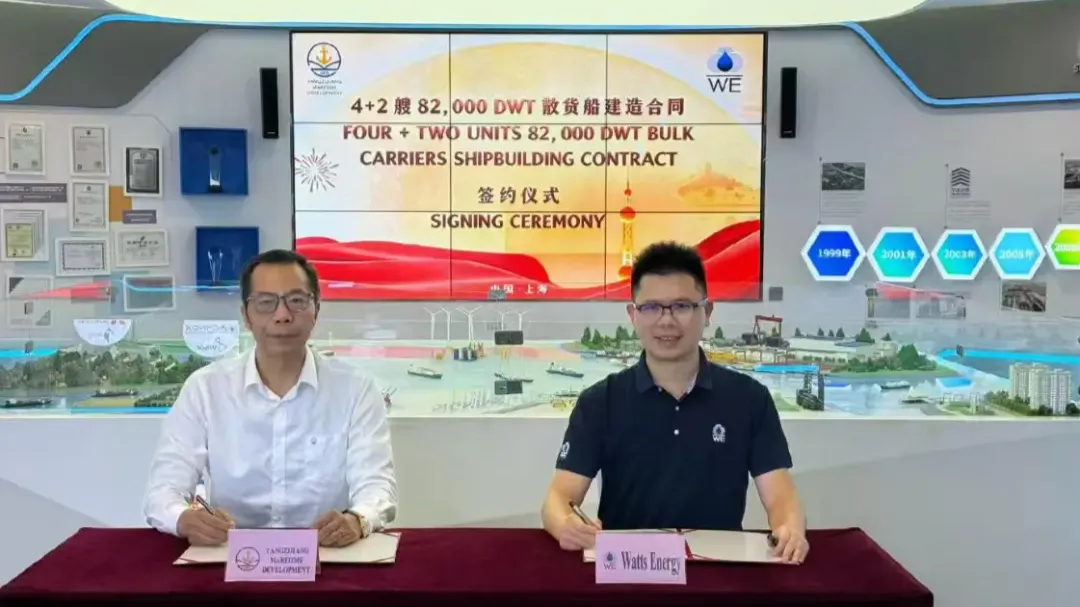
Yangzijiang Maritime Orders 4+2 Kamsarmaxes as Watts Energy Expands into Merchant Shipbuilding
 Dry Cargo
Paliou Urges Fleet Discipline as Dry Bulk Faces Rising Supply and Changing Demand
 Dry Cargo
Yangzijiang Maritime linked to 4+2 Kamsarmax order
 Dry Cargo
Black Sea Wheat Loadings Plunge 78% as Grain Trade Reroutes
 Dry Cargo
China Merchants Signs $2.8 Billion-Plus Simandou Shipping Deal
 Dry Cargo
Seaspan Enters Newcastlemax Market, with Yangzijiang Set to Build Two Tri-Fuel Ore Carriers
 Dry Cargo
Shipowners Bet on Ultramaxes: 42 Ships for Chinese Yards, Deliveries Stretch into 203
 Dry Cargo