


Wooyang orders four triple-fuel Newcastlemax bulkers at China’s New Times for Vale contracts
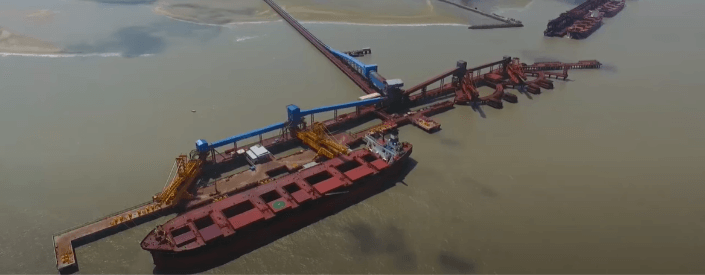

South Korean shipowner Wooyang Shipping has ordered four 210,000-dwt Newcastlemax bulk carriers at China’s New Times Shipbuilding, with the vessels backed by 25-year iron ore transportation contracts with Vale. The deal highlights how long-term cargo commitments are increasingly being used to support high-cost, alternative-fuel tonnage — and how Chinese shipyards are becoming a key production base for the next generation of large ore carriers.
South Korean shipowner Wooyang Shipping has ordered four 210,000-dwt Newcastlemax bulk carriers from China’s New Times Shipbuilding for long-term employment with Brazilian mining giant Vale, according to TradeWinds and subsequent industry reporting.
The vessels are scheduled for delivery in 2029 and 2030 and are expected to be capable of operating on ethanol, methanol and conventional fuel oil.
TradeWinds reported that the ships are priced at around $108 million each, implying a total newbuilding investment of approximately $432 million. The figure is a market estimate rather than a contract price publicly disclosed by Wooyang or New Times.
Separately, the four ships are backed by 25-year transportation contracts with Vale. Xinde Maritime News reported that the contracts have a combined value of approximately $1.65 billion, with possible extensions of up to five years. That figure represents contracted transportation revenue, not the cost of building the vessels.
The distinction is important: the roughly $432 million newbuilding investment and the $1.65 billion long-term transportation contract describe two very different parts of the transaction.
Vale is turning long-term cargo into shipbuilding demand
The most significant feature of the deal is not the four vessels themselves, but the commercial structure behind them.
A 210,000-dwt Newcastlemax is a major capital investment. Ordering such a ship on a speculative basis exposes an owner to decades of uncertainty over freight rates, fuel costs, regulation and residual values.
A 25-year cargo contract changes that equation.
By securing employment with Vale before the ships are delivered, Wooyang can build a long-term revenue framework around the vessels rather than relying entirely on the spot market. For Vale, the arrangement provides dedicated modern tonnage for its long-haul iron ore transportation requirements.
Vale already relies heavily on long-term contracts of affreightment with owners of very large ore carriers. In its 2025 annual filing, the miner said it shipped approximately 306 million tonnes of iron ore and pellets in transactions where it was responsible for transportation. It also said long-term VLOC contracts help reduce shipping costs, emissions and exposure to Capesize spot-market volatility.
The latest Wooyang deal therefore fits a broader commercial model rather than representing a one-off chartering decision.
Wooyang is becoming more exposed to Vale-backed large ore carriers
The order also marks another step in Wooyang's expansion into the very large ore carrier segment.
According to Xinde Maritime News, the company previously acquired two 325,000-dwt ore carriers, Wooyang Moria and Wooyang Erebor, from SK Shipping in 2025. The vessels already had long-term Vale employment attached to them.
The latest transaction takes that strategy from secondhand acquisitions to purpose-built newbuildings.
Instead of buying existing ships with contracts already attached, Wooyang is now ordering new tonnage specifically designed around long-duration Vale employment.
That gives the shipowner greater control over vessel specifications, fuel technology and asset life, while giving Vale ships designed for the requirements of a future operating environment.
Part of a much larger Newcastlemax programme
Wooyang's four ships are also part of a much broader Vale-backed fleet renewal programme.
Xinde Maritime News estimates that Vale was originally seeking around 30 alternative-fuel ore carriers, comprising approximately 20 Newcastlemaxes of about 210,000 dwt and 10 larger Guaibamaxes of roughly 325,000 dwt.
Of the 20 Newcastlemaxes, 16 have now been publicly identified:
-
HMM — eight vessels
-
Polaris Shipping — four vessels
-
Wooyang Shipping — four vessels
That leaves approximately four Newcastlemax positions yet to be publicly allocated, assuming the original programme remains unchanged.
The HMM component underlines the scale of the strategy. HMM announced a 25-year Vale transportation contract worth approximately KRW4.7 trillion, or about $3.5 billion, covering eight 210,000-dwt Newcastlemaxes from 2030. Those vessels will use tri-fuel propulsion capable of burning methanol, ethanol and conventional fuel and will also be designed to accommodate LNG and ammonia conversion.
Polaris has separately ordered four 210,000-dwt Newcastlemaxes at Qingdao Beihai Shipbuilding for a 25-year Vale transportation contract. Its vessels are also designed around methanol, ethanol and conventional marine fuels.
Taken together, the three programmes show a clear pattern: Vale is not simply chartering ships as they become available. It is helping create demand for a new generation of large ore carriers years before they enter service.
Why triple-fuel technology matters
The fuel specification is particularly significant because the vessels are expected to remain in service well into the 2050s.
There is still no consensus over which alternative fuel will ultimately dominate deep-sea shipping. Methanol, ethanol, ammonia and LNG each face different challenges involving fuel availability, infrastructure, cost, regulation and lifecycle emissions.
For a ship ordered today with a commercial life potentially lasting 25 years or more, choosing a single fuel pathway carries considerable technological and commercial risk.
A multi-fuel design provides another option: preserve flexibility while the market determines which fuels become economically viable at scale.
That does not make the ships “zero-carbon” vessels. Rather, the value lies in fuel optionality and regulatory resilience.
The approach is consistent with Vale's broader efforts to reduce the emissions intensity of its maritime supply chain.
Vale has already experimented with technologies such as rotor sails. In 2021, the company introduced a 325,000-dwt Guaibamax fitted with five rotor sails and said the system could improve efficiency by up to 8% and reduce emissions by as much as 3,400 tonnes of CO2 equivalent per vessel annually.
Its current logistics strategy also relies heavily on large ore carriers. Vale says its fleet includes Valemax vessels and Guaibamax ships, while its logistics network is designed around the efficient movement of iron ore from Brazil to major markets.
Chinese shipyards are becoming central to the programme
The location of the newbuilding work is another important part of the story.
Wooyang has selected New Times Shipbuilding in Jiangsu for its four Newcastlemaxes. The yard is an established builder of large bulk carriers, and Lloyd's Register lists 210,000-dwt Newcastlemax among its product range.
New Times' published company profile says the yard has capacity to build vessels in the 100,000-300,000-tonne range, with Newcastlemax and Capesize bulkers among its main products.
The Wooyang order therefore fits an increasingly visible pattern in Vale's new-generation ore carrier programme.
Polaris is building its four Newcastlemaxes at Qingdao Beihai Shipbuilding, while other Vale-related large ore carrier projects are also being developed at Chinese yards.
This is significant because these are not simply conventional bulk carriers differentiated by price and hull efficiency.
The vessels require integration of multi-fuel propulsion, alternative-fuel systems and, in some cases, future-fuel readiness and energy-saving technologies.
For Chinese shipyards, successful execution of these projects provides experience in a segment where shipowners increasingly expect both competitive pricing and advanced technical capability.
The commercial logic is as important as the technology
The most important lesson from the Vale programme may be that alternative-fuel shipping becomes easier to finance when cargo is secured for decades.
A shipowner ordering a high-specification Newcastlemax faces uncertainty over future fuel prices, bunkering infrastructure, carbon costs and the resale value of the vessel.
A major cargo owner with predictable long-term volumes can absorb part of that uncertainty by committing to the ship's employment.
That creates a chain reaction:
long-term cargo → contracted revenue → shipowner investment → shipyard order → alternative-fuel technology deployment.
The structure also improves visibility for lenders and other financial stakeholders because the vessel is supported by contracted employment rather than depending entirely on future spot freight rates.
For shipyards and engine manufacturers, meanwhile, a large series of similar vessels can help move alternative-fuel technology from individual demonstration projects towards commercial-scale deployment.
A shift from chartering ships to shaping the fleet
Vale's role in the dry bulk market has long extended beyond simply chartering ships.
Its development of Valemax and Guaibamax vessels was driven by the economics of moving very large volumes of Brazilian iron ore over long distances. The company now appears to be applying a similar long-term approach to the energy transition.
The difference is that the new generation of ships is being designed not only around cargo capacity, but also around fuel flexibility.
That could prove important as ships delivered around 2030 remain commercially active for decades.
The industry still does not know whether methanol, ethanol, ammonia, LNG or another technology will ultimately emerge as the dominant low-carbon solution for deep-sea shipping.
Vale's approach is effectively to avoid making that decision too early.
By securing long-term cargo commitments for vessels capable of using multiple fuel pathways, the miner and its shipping partners can invest today while retaining room to adapt as fuel markets and regulations evolve.
For Wooyang, the four New Times newbuildings represent a significant expansion of its exposure to large-scale iron ore transportation.
For New Times, the project adds another high-specification Newcastlemax programme to its large-bulker portfolio.
And for China's shipbuilding industry, it provides another example of how the country's yards are moving beyond conventional tonnage and increasingly participating in technically complex, long-duration projects backed by major global commodity companies.
The wider significance is therefore larger than four ships.
Vale is effectively using long-term cargo commitments to create the commercial conditions for the next generation of ore carriers — and Chinese shipyards are increasingly becoming the industrial platform on which that transition is being built.

READ MORE
 Dry Cargo
Can Dry Bulk Match Tankers’ Earnings?
 Dry Cargo
How Much Longer Can Dry Bulk Stay Strong?
 Dry Cargo
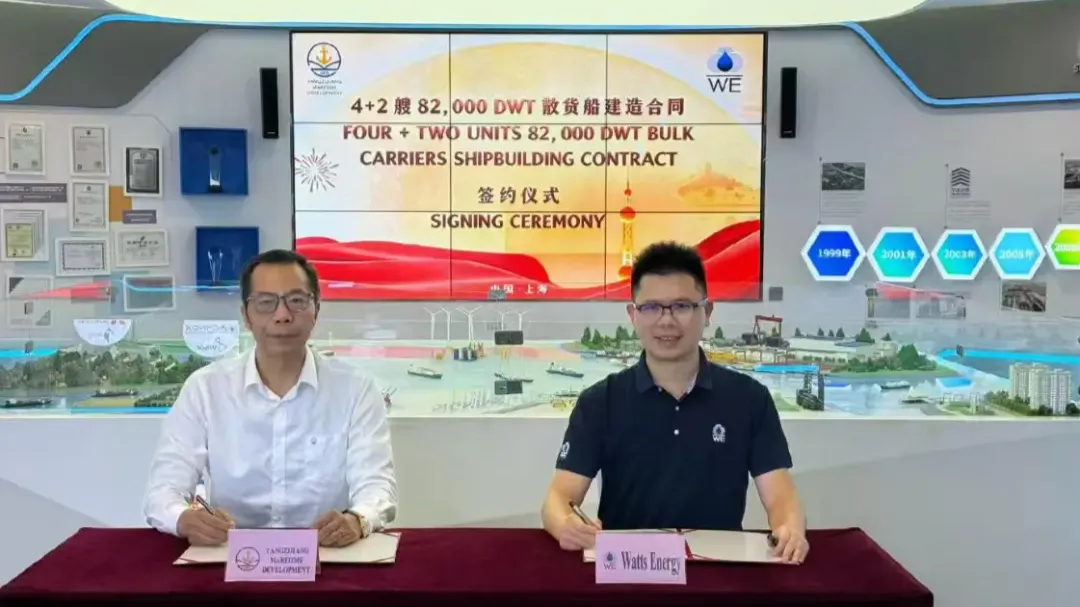
Yangzijiang Maritime Orders 4+2 Kamsarmaxes as Watts Energy Expands into Merchant Shipbuilding
 Dry Cargo
Paliou Urges Fleet Discipline as Dry Bulk Faces Rising Supply and Changing Demand
 Dry Cargo
Yangzijiang Maritime linked to 4+2 Kamsarmax order
 Dry Cargo
Black Sea Wheat Loadings Plunge 78% as Grain Trade Reroutes
 Dry Cargo
China Merchants Signs $2.8 Billion-Plus Simandou Shipping Deal
 Dry Cargo
Seaspan Enters Newcastlemax Market, with Yangzijiang Set to Build Two Tri-Fuel Ore Carriers
 Dry Cargo
Shipowners Bet on Ultramaxes: 42 Ships for Chinese Yards, Deliveries Stretch into 203
 Dry Cargo