


HMM Locks in $3.5bn Vale Iron Ore Deal for Eight Triple-Fuel Newcastlemaxes
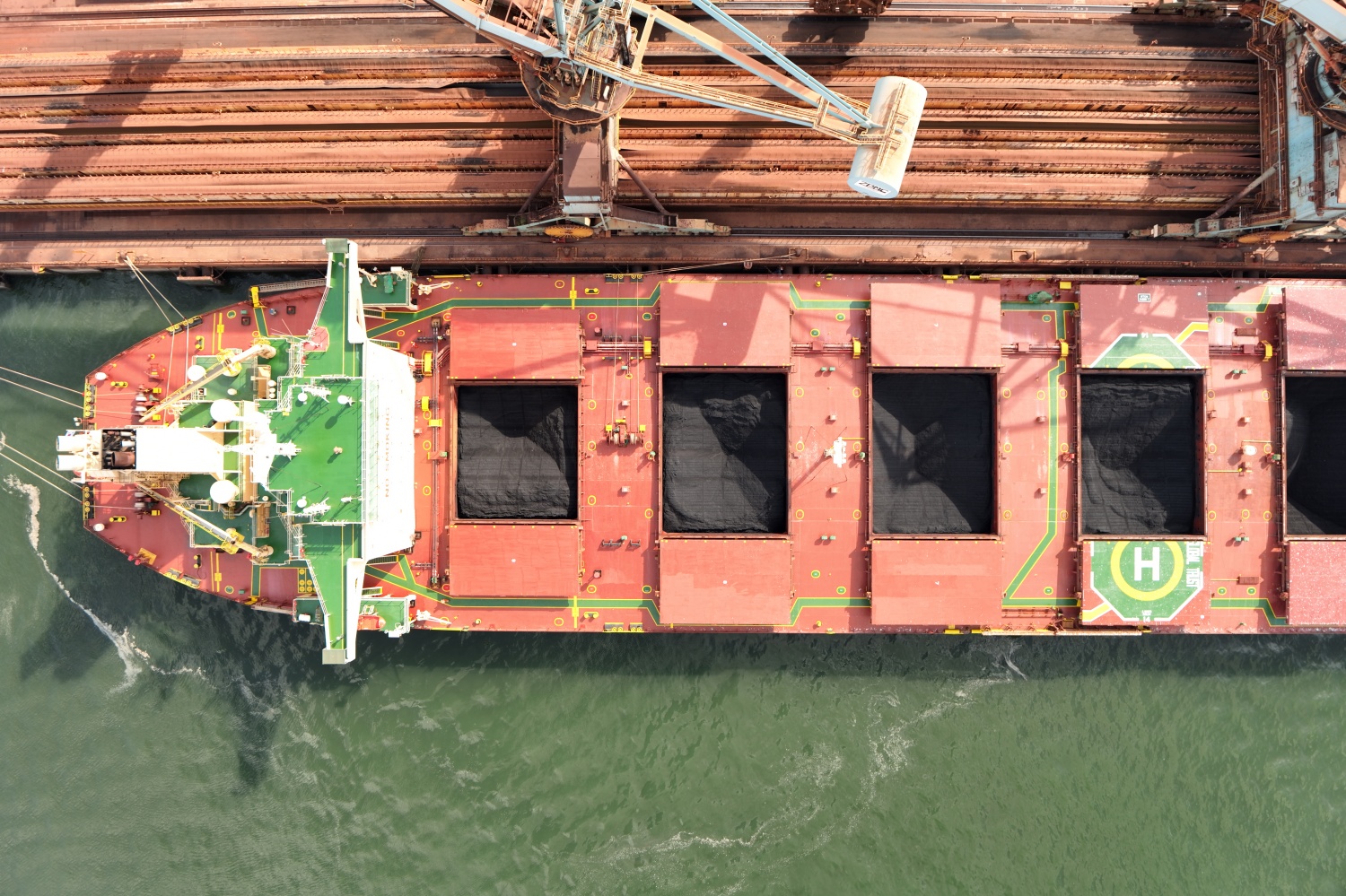

HMM will deploy eight 210,000-dwt Newcastlemax bulkers under 25-year contracts with Vale from 2030, securing long-term cargo before the ships enter service. The deal strengthens the Korean carrier’s push beyond containers while adding momentum to Vale’s expanding programme of fuel-flexible ore carriers, much of which is being directed to Chinese shipyards.
South Korea’s HMM has signed a KRW 4.7 trillion ($3.5 billion) long-term transportation agreement with Brazilian mining giant Vale, locking in employment for eight new 210,000-dwt Newcastlemax bulk carriers for 25 years each.
The vessels will be delivered sequentially from 2030 and deployed in Vale’s bulk cargo trades. The contract, signed on September 7, is worth KRW 4.697 trillion and represents 43.13% of HMM’s consolidated revenue in 2025, according to the company’s regulatory disclosure.
The overall contractual window runs from April 1, 2030 to October 31, 2056, reflecting the staggered delivery of the eight vessels. Vale also has the option to extend the employment period by as much as five years. The disclosed contract value may change depending on factors including vessel deployment, fuel arrangements and operating conditions.
Crucially, the $3.5 billion figure is the value of the long-term transportation agreement — not the construction cost of the eight ships.
Cargo secured before the ships arrive
The agreement completes a commercial structure that HMM began putting in place earlier this year.
On June 24, HMM’s board approved KRW 1.664 trillion of investment covering eight bulk carriers and two gas carriers. The regulatory filing said the investment in the eight bulkers was conditional on approval by the cargo owner’s board, while the gas-carrier investment was separately subject to approval by the charterer. Final deliveries under the overall investment programme were scheduled through the third quarter of 2031.
Vale’s latest approval effectively provides the long-term cargo foundation for those eight bulkers.
That distinction matters in a capital-intensive sector such as large dry bulk shipping. Instead of ordering a fleet of Newcastlemaxes and exposing the ships entirely to future spot-market conditions, HMM is matching newbuilding investment with decades of contracted cargo.
For lenders and shipowners, a long-term agreement with a major commodity producer can significantly improve visibility over vessel utilisation and cash generation, reducing one of the biggest uncertainties surrounding investment in large bulk carriers.
The latest contract is also part of a broader relationship between the two companies.
HMM signed a KRW 636 billion 10-year agreement with Vale in May 2025 and a second 10-year contract worth KRW 430 billion that September. Under the latter deal, five bulk carriers were scheduled to transport iron ore from the second quarter of 2026 through the first quarter of 2036.
The latest 25-year agreement is considerably larger and extends that strategy into a new generation of purpose-built tonnage.
HMM pushes further beyond containers
The Vale deal also fits HMM’s effort to reduce its dependence on container shipping.
The carrier’s broader bulk fleet increased from 44 vessels at the end of March 2025 to 61 in the first half of 2026, while its bulk division generated KRW 240 billion in operating profit in the first six months of this year. HMM has been reducing its reliance on short-term chartered tonnage while pursuing longer contracts with large cargo interests.
HMM has set a target of expanding its bulk fleet to around 110 vessels by 2030 as part of its portfolio diversification strategy.
The commercial rationale is straightforward. Container shipping can produce exceptional returns during periods of disruption and tight capacity, but earnings are highly cyclical. Long-term dry bulk contracts with miners and other major industrial cargo owners provide a different earnings profile, with more predictable vessel employment stretching across market cycles.
Vale’s 25-year commitment therefore does more than provide cargo for eight ships. It gives HMM a long-duration revenue base against which it can make a major fleet investment.
Triple-fuel ships designed for an uncertain fuel future
The ships themselves are another significant part of the deal.
HMM said the eight Newcastlemaxes will feature propulsion systems capable of burning methanol, ethanol and conventional fuel oil, a configuration the company describes as the first of its kind for the vessel class.
They will also be built LNG-ready and ammonia-ready, allowing future conversion if either fuel develops into a commercially attractive option.
Rotor sails will provide wind-assisted propulsion to reduce engine load, fuel consumption and emissions.
The design illustrates an increasingly important approach to ordering ships expected to remain in service well into the 2050s: preserve as many fuel options as practical rather than making an irreversible bet on a single alternative fuel today.
A Newcastlemax delivered in 2030 could still be trading more than two decades later, by which time the relative economics of methanol, ethanol, ammonia, LNG and conventional fuels could look very different.
Fuel availability, lifecycle emissions, carbon pricing and IMO regulation will all influence which solution proves most competitive.
For Vale, flexibility is particularly valuable because shipping is a material part of the delivered cost of Brazilian iron ore into Asia.
Brazilian ore travels substantially farther to China than Australian material. Reducing fuel consumption and maritime emissions can therefore address both environmental targets and a structural freight-cost disadvantage.
Reuters reported in April that Vale plans to increase its fleet of wind-assisted ore carriers to at least 20 ships within three years, from eight at the time. The miner said wind-assisted technologies can cut fuel consumption while helping manage freight and fuel-price exposure.
Vale’s wider green ore-carrier programme takes shape
HMM’s eight ships form part of a much larger renewal of the fleet supporting Vale’s long-haul iron ore trades.
TradeWinds reported earlier this year that Vale was seeking as many as 30 triple-fuel ore-carrier newbuildings, comprising 20 Newcastlemaxes and 10 larger Guaibamax vessels.
By July, the shipping publication reported that HMM, Polaris Shipping and China’s Shandong Shipping had been selected as owners for the 20-vessel Newcastlemax programme, with the newbuilding haul expected to be placed at shipyards in China.
Not every vessel in the reported programme has yet been converted into a publicly confirmed shipbuilding contract, however, making it important to distinguish Vale’s fleet framework from firm yard orders.
One project that has been formally confirmed is Polaris Shipping’s order at Qingdao Beihai Shipbuilding Heavy Industry, a subsidiary of state-owned China State Shipbuilding Corporation.
Polaris signed contracts in August for four 210,000-dwt Newcastlemaxes equipped with engines capable of operating on ethanol, methanol and conventional fuel oil. The ships are also LNG- and ammonia-ready and will feature wind-assisted propulsion technologies.
Deliveries are scheduled to begin in 2031, with the four ships backed by a 25-year employment agreement with Vale.
The contract gives Qingdao Beihai a firm position in Vale’s new generation of 210,000-dwt fuel-flexible ore carriers.
Shandong Shipping adds a larger Guaibamax dimension
Vale is pursuing a similar strategy at the upper end of the ore-carrier market.
In April, the miner announced an agreement with Shandong Shipping Corporation covering two second-generation 325,000-tonne Guaibamax vessels, backed by 25-year contracts and options for additional ships.
The first vessels are due to enter Vale service from 2029.
They will use ethanol as a primary alternative fuel while also being capable of burning methanol and conventional bunker fuel. Their design allows future conversion to LNG or ammonia. Vale said the project represents the first use of ethanol as a primary fuel on an ocean-going vessel.
The arrangement builds on Vale’s existing relationship with Shandong Shipping. In 2025, the Brazilian miner announced 25-year charter agreements covering 10 new-generation Guaibamax vessels to be delivered from 2027.
Together, these projects show Vale developing fuel flexibility across both the 210,000-dwt Newcastlemax segment and the larger Guaibamax fleet.
Chinese yards move up the value chain
For China’s shipbuilding industry, the Vale programme is notable not simply because of the number of ships involved.
Large conventional bulk carriers have long been an important part of Chinese yards’ orderbooks. The latest projects add another layer of technical complexity: multi-fuel propulsion, future-fuel conversion capability, rotor sails, shaft generators, shore-power systems and increasingly sophisticated energy-management packages.
Qingdao Beihai’s Polaris ships, for example, combine ethanol/methanol/fuel-oil propulsion with rotor sails, high-voltage shore power and shaft-generation technology.
Polaris has also been linked to a separate Newcastlemax programme at privately owned Hengli Heavy Industry in Dalian. Industry reports have described that project as two firm plus two optional 210,000-dwt vessels supported by Vale employment, but as conventional-fuel ships rather than part of the confirmed Beihai tri-fuel series.
That distinction is important as several Vale-backed projects are progressing in parallel.
HMM yard still awaits confirmation
One major question remains unresolved: where HMM’s eight Newcastlemaxes will actually be built.
HMM’s June regulatory filing confirmed the investment in eight bulk carriers but did not name a shipyard or disclose the detailed vessel specifications. TradeWinds subsequently reported that the ships were believed to be eight triple-fuel Newcastlemaxes linked to Vale, and its latest report said the previously ordered vessels have now been allocated to the new 25-year contract.
TradeWinds has separately reported that Vale’s wider 20-ship Newcastlemax programme is intended for Chinese construction.
However, neither HMM’s regulatory filings nor the company’s announcement of the Vale transportation agreement has publicly identified the builder of the eight ships.
The specific yard should therefore remain unconfirmed until HMM, Vale, a shipbuilder or another authoritative disclosure names it.
What is already clear is that the commercial side of the project is now locked in. Eight fuel-flexible Newcastlemaxes have 25 years of Vale cargo waiting for them before they enter service.
The next pieces to watch are the final yard allocation for HMM’s vessels, further firm orders emerging from Vale’s reported 20-ship Newcastlemax programme, and how quickly ethanol-capable large bulkers move from a small group of pioneering projects into a repeatable newbuilding standard.

READ MORE
 Dry Cargo
Wooyang orders four triple-fuel Newcastlemax bulkers at China’s New Times for Vale contracts
 Dry Cargo
Shipowners Are Raising Capital to Buy Ships Again: Safe Bulkers Signals Dry Bulk’s Shift from Freight Recovery to Asset Expansion
 Dry Cargo
NORDEN Shows Why Ships Alone Are No Longer Enough
 Dry Cargo
40 Days from Brazil to China: COSCO SHIPPING Bulk’s New Grain Fleet Takes Shape
 Dry Cargo
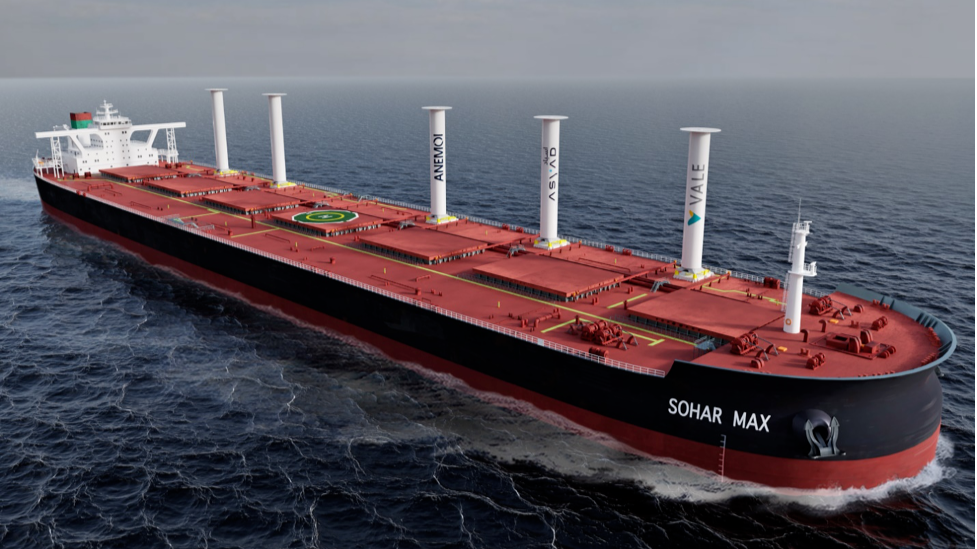
Vale’s 30-Vessel Triple-Fuel Ore Carrier Plan Takes Shape as 25-Year Contracts Reshape Iron Ore Shipping
 Dry Cargo
Capesize Rates Hit Highest Since 2021 as Strength Spreads Into Asset Values and Newbuildings
 Dry Cargo
Cetus Maritime Prepares for IPO: 13-Vessel Deal and 70% Equity Payment Could Open a New Chapter for the Handysize Giant
 Dry Cargo
Cetus Maritime Eyes 13-Vessel Expansion as Seacon Deal Points to Pre-IPO Consolidation
 Dry Cargo
China’s Steel Demand Is Weak — So Why Are Capesize Ships Still Earning $30,000 a Day?
 Dry Cargo