


China’s Steel Demand Is Weak — So Why Are Capesize Ships Still Earning $30,000 a Day?
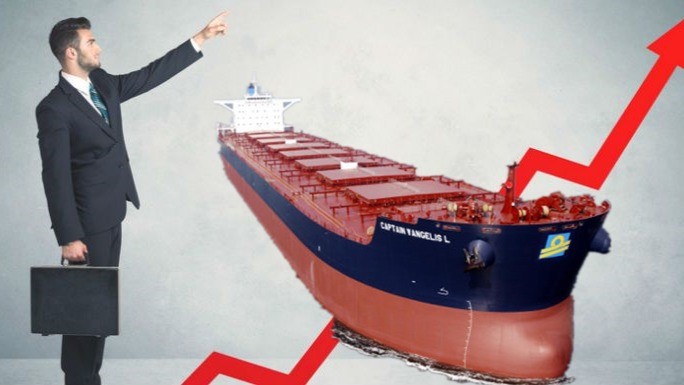

China’s steel demand remains under pressure, iron ore inventories at Chinese ports are elevated, and netbacks for Atlantic iron ore producers have fallen to their lowest level in eight years. Yet on the other side of the market, Capesize vessels have averaged more than $30,000 per day so far in 2026, nearly 80% higher than a year ago. Even more unusually, this strength has come with realized dry bulk volatility falling to at least a seven-year low.
This is one of the most striking contradictions in today’s dry bulk market.
In its August 18 Bi-Weekly Dry Bulk Report, Breakwave Advisors described the current environment as “Steady As She Goes.” According to the firm, realized volatility across dry bulk has declined to at least a seven-year low even as shipowners continue to earn some of the strongest absolute daily rates seen in decades.
Part of the explanation is technical. With freight rates already sitting at elevated levels, the same absolute daily move translates into a smaller percentage change. The traditional summer slowdown has also reduced trading activity and compressed short-term volatility.
But the more important explanation lies deeper in the supply side of the freight market.
Breakwave argues that persistent geopolitical disruption across the Black Sea, Red Sea, Arabian waters and Baltic region continues to reduce vessel efficiency. As long as those structural disruptions remain in place, the conditions for a major downward correction in dry bulk freight rates remain limited.
The numbers underline just how strong the market has been.
According to the fundamentals data accompanying Breakwave’s report, the Baltic Dry Index has averaged around 2,452 points so far in 2026, up 73% year on year. Average Capesize spot earnings have reached $31,063 per day, up 77.8%, while Panamax earnings have averaged around $17,808 per day, an increase of 52%.
Separate figures cited from Xclusiv Shipbrokers point in the same direction. During the first seven months of 2026, average Capesize 5TC earnings stood at roughly $30,400 per day, compared with just $16,800 per day during the same period last year — an increase of around 81%. Rates reached $46,538 per day at the end of May and were still around $35,457 per day at the end of July.
This has therefore not been a short-lived freight spike.
The question is why Capesize earnings have remained so strong when global steel demand — and Chinese steel demand in particular — is far from booming.

Weak Chinese steel demand does not necessarily mean weak seaborne demand
For decades, the dry bulk market has been heavily dependent on China. Iron ore, coal, bauxite, grain and a wide range of minor bulks moving into the country form the backbone of global dry bulk demand.
As a result, weaker Chinese property activity, steel production or industrial growth has traditionally been interpreted as negative for dry bulk shipping.
The relationship is now becoming more complicated.
Research published by Ocean Analytics through Breakwave on August 21 showed that China’s industrial output grew 4.5% year on year in July, below expectations, while fixed-asset investment remained weak and the property sector continued to struggle.
From a macroeconomic perspective, this hardly points to a strong commodity-demand cycle.
Yet according to Signal Ocean data cited in the same analysis, seaborne dry bulk volumes destined for China still increased 4.1% year on year during the first half of 2026 and were also nearly 2% above the same period in 2024.
China continues to account for roughly 40% of global seaborne dry bulk demand.
Breakwave therefore argues that Chinese GDP growth has become an increasingly imperfect leading indicator for the country’s dry bulk imports.
Iron ore offers the clearest example.
Chinese crude steel production has been weaker than last year, yet iron ore imports have not contracted in parallel. Earlier Breakwave research showed that China imported 112.69 million tonnes of iron ore in June, up 6.4% year on year, while imports during the first half of 2026 reached 628.87 million tonnes, an increase of 6.3%.
At the same time, a significant portion of these imports has accumulated in inventories rather than being immediately absorbed by steel production. By the end of July, Chinese port iron ore inventories had risen to around 174 million tonnes, more than 22% above the level a year earlier, while crude steel production remained roughly 3% lower year on year.
This creates an important distinction for the shipping market.
Weak steel demand is clearly negative for the underlying iron ore market. But as long as iron ore is still loaded onto a ship and transported to China, it still creates seaborne freight demand.
That helps explain why weak Chinese steel consumption, rising port inventories and strong Capesize earnings can exist at the same time.
Xclusiv’s figures provide further evidence. During the first seven months of 2026, cargo volumes carried by Capesize vessels increased by around 4.8% year on year to approximately 936.7 million tonnes. Global seaborne iron ore trade increased 1.5%, coal volumes rose 2.1%, and grain trade expanded 10.4%.
The physical cargo market is therefore not booming, but neither is it in recession.
The more important question is why Capesize earnings have risen by roughly 80% when cargo volumes have increased by only a few percentage points.
The answer increasingly lies in effective vessel supply.
The market may have more ships, but not necessarily more available capacity
One of the easiest mistakes in dry bulk analysis is to equate fleet growth with transport capacity growth.
The number of ships in the global fleet represents nominal supply.
What actually determines freight-market tightness is how many voyages those ships can complete, how long each voyage takes, how much time vessels spend waiting at ports, whether they are forced to reroute, how geopolitical risk affects deployment, where they bunker and how many ships are unavailable because of drydocking or maintenance.
Breakwave has repeatedly highlighted structural constraints on effective dry bulk supply this year, including geopolitical disruptions and a heavy drydocking schedule.
The key concept is effective vessel supply.
Consider a simplified example.
If a fleet consists of 100 ships and each vessel can complete ten voyages per year, the fleet can provide 1,000 voyages of transport capacity.
If rerouting, congestion, geopolitical risk, drydocking and longer average sailing distances reduce annual productivity to nine voyages per vessel, then even after five additional ships enter the fleet, total transport capacity falls to only 945 voyages.
The fleet becomes larger, but its practical carrying capacity declines.
This is one of the fundamental differences between shipping and many other commodity markets.
A vessel cannot instantly relocate from one region to another. A Capesize sailing from West Africa to China may be tied up for weeks and unavailable to compete for Australian cargoes during that period.
Freight rates therefore do not simply reflect how many vessels exist globally. They reflect how many vessels can reach the right loading area at the right time.
That distinction has become increasingly important in 2026.
Simandou and the growing importance of ton-miles
Another factor is changing the structure of dry bulk demand: the geography of iron ore supply itself.
China has historically relied heavily on Australia and Brazil for iron ore. Western Australia–China is one of the core short-haul Capesize trades, while Brazil–China is significantly longer and therefore far more intensive in terms of vessel employment.
Now Guinea is emerging as a potentially significant third source of large-scale iron ore supply as the Simandou project ramps up.
Signal Ocean data cited by Breakwave showed that Guinea exported around 1.8 million tonnes of iron ore in July and around 2 million tonnes in June. Volumes remain small compared with those from Australia or Brazil, but freight-market participants are looking well beyond today’s numbers.
The critical issue is not simply how much ore Guinea exports.
It is what cargo Guinea may eventually replace.
If Simandou adds incremental iron ore imports into China, the impact on Capesize demand is obviously positive. But even if China’s total iron ore imports remain broadly unchanged and Guinean ore simply displaces part of Australia’s supply, the change could still benefit shipowners.
The reason is distance.
Breakwave, citing Ocean Analytics, has noted that the voyage from Guinea’s Atlantic coast to China is around three times longer than the voyage from Port Hedland in Western Australia to China.
That means one tonne of iron ore shipped from Guinea occupies a Capesize vessel for significantly longer than one tonne shipped from Australia.
This is why ton-mile demand is becoming increasingly important.
The dry bulk market does not merely care about how many tonnes are transported. It cares how far those tonnes travel.
Ten million tonnes of iron ore moving from Australia to China and ten million tonnes moving from West Africa to China create very different levels of vessel demand.
The tonnage is identical. The shipping requirement is not.
Signal Ocean analysis has suggested that even if Chinese iron ore demand eventually declines, a gradual substitution of Australian ore by higher-grade Simandou material could still increase ton-mile demand and partially offset the negative impact of lower absolute import volumes on the Capesize market.
This is one reason why focusing solely on headline Chinese iron ore imports is becoming less useful as a freight-market indicator.
The source of those imports matters almost as much as the total volume.
High freight rates are now squeezing miners
There is, however, a limit to how far freight rates can rise without affecting cargo demand.
One of the most important signals in Breakwave’s latest report is that netbacks for Atlantic iron ore producers have fallen below $60 per tonne, the lowest level in eight years.
Netback refers broadly to the value retained by a producer after freight and related logistics costs are deducted from the delivered commodity price.
That figure is now under increasing pressure.
Weak Chinese steel demand and high port inventories are weighing on iron ore prices. At the same time, elevated Capesize freight rates are raising the cost of transporting ore from Brazil and other Atlantic suppliers to Asia. Higher diesel prices are also increasing mining and operating costs.
Atlantic producers are therefore facing pressure from three directions at once: weaker ore prices, higher freight costs and rising production costs.
Breakwave says these conditions have not yet triggered widespread production cuts, but they are reducing miners’ incentive to maximize exports. Producers may increasingly focus on cost control and higher-grade, higher-margin products rather than pure volume growth.
For the freight market, this represents a natural counterweight to the current strength.
Shipowners benefit from higher freight rates, but freight is ultimately a cost to cargo owners.
If Brazil–China freight rises far enough to materially damage mine economics, freight itself can begin to influence decisions over incremental production, marginal mine output and whether lower-grade cargoes remain economical to ship over long distances.
This creates a self-correcting mechanism.
Higher freight rates are supported by tight effective vessel supply and stronger ton-mile demand. But the longer high freight persists, the more it erodes miners’ margins. If freight eventually begins to reduce cargo availability, vessel demand weakens and supply is released back into the market.
That is why the current environment should not simply be interpreted as the beginning of a one-way dry bulk supercycle.
Shipping remains a demand-driven business.
High rates and low volatility may not last
The bigger question is therefore how long the unusual combination of high freight rates and low volatility can persist.
Breakwave believes the collapse in realized volatility partly reflects the mathematics of a higher freight-rate base. A $3,000 move from $10,000 per day represents a 30% change. The same $3,000 move from a $30,000 base represents only 10%.
The traditional August slowdown has also reduced trading activity.
Forward freight markets are not currently signalling a dramatic change either. Breakwave notes that forward curves across most dry bulk segments remain relatively flat, suggesting that the market is neither aggressively pricing another surge nor betting on a major collapse.
That balance may become harder to maintain as the market moves into the northern hemisphere autumn and winter.
Dry bulk trade has strong seasonal patterns. Following the traditional July slowdown, China’s iron ore, coal and bauxite imports often strengthen during the second half of the year.
Ocean Analytics argues that even if Chinese macroeconomic indicators remain weak, major dry bulk imports are more likely to experience slower growth than a sudden contraction. Iron ore, coal and bauxite could all see seasonal improvement in the coming months, with Capesize vessels among the most direct beneficiaries.
The supply side also remains constrained.
Geopolitical disruptions continue, drydocking is absorbing vessel days, and longer-haul West Africa–Asia trades are adding ton-mile demand.
If cargo volumes recover seasonally while effective vessel supply remains restricted, competition for prompt tonnage could intensify again.
The first thing to return may not necessarily be much higher freight rates.
It could be volatility.
Breakwave’s longer-term view rests on the same structural argument. Persistent geopolitical uncertainty is likely to continue reshaping global trade and limiting effective vessel availability. If that structural constraint eventually overlaps with another cyclical recovery in Chinese demand, the dry bulk market could once again move into a significantly more volatile environment.
The dry bulk market is changing how it prices supply and demand
The experience of 2026 is forcing the market to reconsider some of its traditional analytical shortcuts.
Chinese GDP, crude steel production, iron ore imports and global fleet growth all remain crucial indicators.
But they are no longer sufficient on their own.
The market increasingly needs to understand where cargoes originate, where they are going, how many miles each tonne must travel, how long vessels remain tied up, how many ships are rerouting, waiting or drydocking, and whether newbuilding deliveries are sufficient to offset those efficiency losses.
During the first seven months of 2026, Capesize cargo volumes increased by roughly 4.8%.
Average earnings rose by around 80%.
That gap alone suggests that freight pricing is increasingly reflecting factors beyond simple cargo growth.
Among those changes, Simandou deserves particular attention.
At full development, the project is expected to create roughly 120 million tonnes per year of high-grade iron ore capacity, although reaching that level will take several years. Its importance to shipping is not simply that the world may gain another 100 million-plus tonnes of ore supply.
It is that much of this cargo will travel from West Africa to China — a voyage dramatically longer than the traditional Western Australia–China route.
This raises the possibility of a seemingly contradictory scenario over the coming years:
China may not need more iron ore, but the world may still need more Capesize shipping capacity.
Cargo volumes could remain flat while ton-mile demand rises.
The nominal fleet could continue to grow while effective supply remains constrained.
China may avoid another large stimulus-driven steel boom while Capesize owners still earn rates above long-term historical averages.
That may be the most important message contained in Breakwave’s latest analysis.
The dry bulk market is gradually shifting from a simple question of “How much cargo is there, and how many ships are there?” toward a more complex one:
“How far does that cargo need to travel, and how many voyages can those ships actually complete?”
China will remain the single most important demand variable for Capesize shipping, and iron ore will remain its most important cargo.
But the next freight-rate cycle may be determined by much more than how much steel Chinese mills produce.
The restructuring of global trade routes, the rise of Guinea and other new supply sources, geopolitical rerouting, vessel-efficiency losses and an ageing fleet with increasing drydocking requirements are all redefining what “supply” actually means in the dry bulk market.
The present period of high freight rates and unusually low volatility should therefore not necessarily be interpreted as evidence that the market has become more stable.
It may simply mean that several opposing forces have temporarily reached equilibrium.
Once seasonal cargo demand, vessel positioning or geopolitics shifts that balance, volatility could return rapidly.
And for Capesize owners, the most important point may not be that vessels are currently earning around $30,000 per day.
It is that even without a Chinese steel boom, effective vessel supply still does not look excessive.
That remains one of the strongest foundations beneath today’s dry bulk market.
Sources: Breakwave Advisors, Ocean Analytics, Signal Ocean and Xclusiv Shipbrokers.


READ MORE
 Dry Cargo
40 Days from Brazil to China: COSCO SHIPPING Bulk’s New Grain Fleet Takes Shape
 Dry Cargo
Wooyang orders four triple-fuel Newcastlemax bulkers at China’s New Times for Vale contracts
 Dry Cargo
Shipowners Are Raising Capital to Buy Ships Again: Safe Bulkers Signals Dry Bulk’s Shift from Freight Recovery to Asset Expansion
 Dry Cargo
“We Are Buying Ships”: Why Dry Bulk Is Beating Expectations
 Dry Cargo
NORDEN Shows Why Ships Alone Are No Longer Enough
 Dry Cargo
Vale’s 30-Vessel Triple-Fuel Ore Carrier Plan Takes Shape as 25-Year Contracts Reshape Iron Ore Shipping
 Dry Cargo
HMM Locks in $3.5bn Vale Iron Ore Deal for Eight Triple-Fuel Newcastlemaxes
 Dry Cargo
Capesize Rates Hit Highest Since 2021 as Strength Spreads Into Asset Values and Newbuildings
 Dry Cargo
Cetus Maritime Prepares for IPO: 13-Vessel Deal and 70% Equity Payment Could Open a New Chapter for the Handysize Giant
 Dry Cargo