


As Erasmus Targets 100 Ships, John Su Keeps Returning to Survival
The discipline behind a rapidly expanding, diversified fleet
By Yang Chen, Xinde Marine News
Around 70 vessels under its control, more than 20 newbuildings on order and an ambition to reach a 100-ship fleet: these were the expansion plans outlined by John Su, Chairman and CEO of Erasmus Shipinvest Group, in an interview published by Xinde Marine News in May 2026. Starting in dry bulk, the Athens-headquartered group has broadened its interests into feeder containerships, multipurpose vessels and small gas carriers, with newbuilding deliveries scheduled through to 2029.
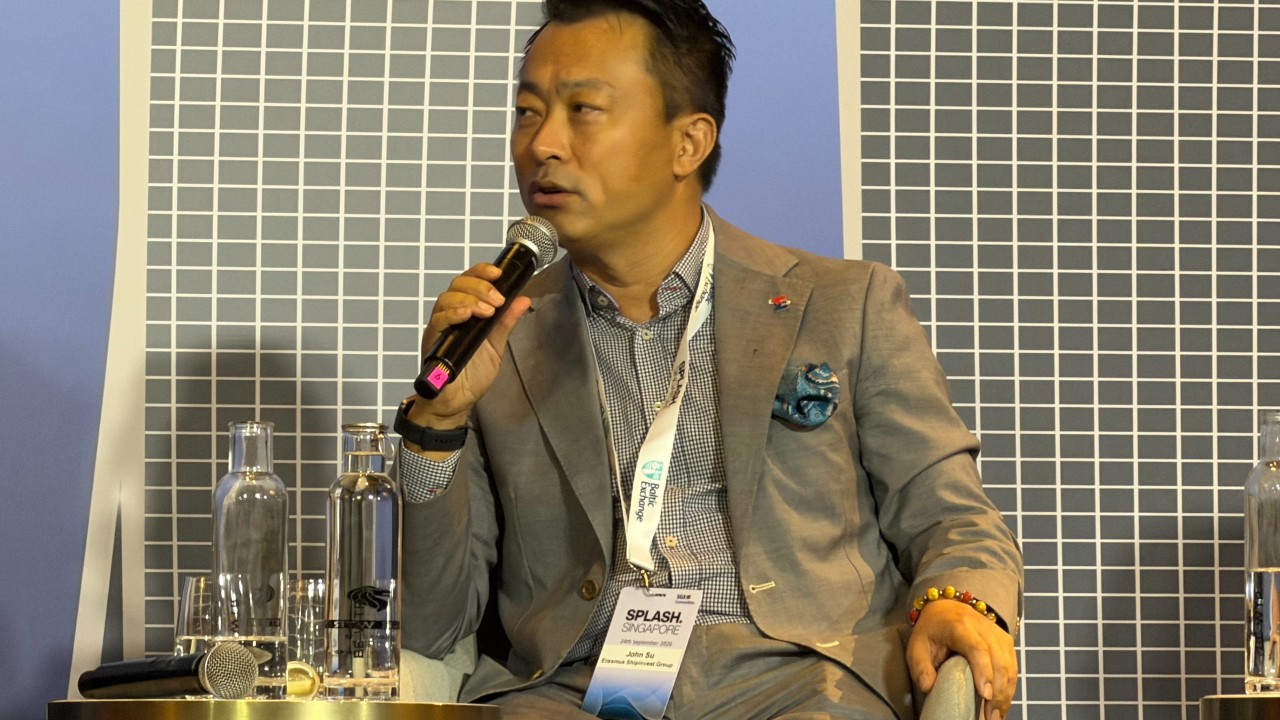
Yet when Su discussed the company’s rapid growth at Splash Singapore 2026’s “The Big Issues” session on September 24, he repeatedly returned to survival. Recalling the severe downturn in dry bulk and the collapse of Hanjin Shipping, he stressed that growth must always be considered alongside the ability to withstand another weak market. For a fleet moving towards 100 vessels, that principle has practical implications for every acquisition, charter agreement and new business segment.
More vessel types require the same discipline in choosing customers
Su acknowledged that Erasmus has expanded substantially over the past five years and become more diversified. Across dry bulk, containers and gas shipping, however, its approach to customers has remained consistent: placing vessels with carefully selected charterers and serving core customers. He described these relationships as a foundation of the business. The fleet’s composition can change while the standards applied to counterparties remain intact.
This helps explain the commercial logic behind Erasmus’s expansion. Diversification creates access to additional markets, but each sector brings different cargo flows, chartering practices and operational requirements. Entering a new segment requires an owner to understand who will employ its ships, how durable that demand is and whether the customer can fulfil its commitments. If vessel acquisitions outpace customer development and service capabilities, additional tonnage can increase an owner’s exposure to the market.
Several of Erasmus’s vessel deployments this year illustrate its customer focus. According to the group’s public disclosures, the Kamsarmax bulker ES Matsuyama entered a multi-year charter with Louis Dreyfus Company the day after Erasmus took delivery in March. The 7,500-cbm fully pressurised LPG carrier Gas Joy, delivered in July, also immediately began multi-year employment with a core oil and gas customer. Different assets serve different trades, but each needs a concrete commercial requirement behind it.
In his earlier Xinde Marine interview, Su also explained how the group allocates freight-market exposure across its fleet. Older vessels held for many years, with limited remaining debt, can take greater exposure to spot or short-period employment. Younger vessels and newbuildings generally carry financing obligations, making longer-term charter coverage more attractive. This approach allows part of the fleet to participate in strong markets while providing more predictable income for assets that must continue servicing debt. The appropriate balance between spot exposure and period coverage therefore depends on each vessel’s financing, costs and customer arrangements.
Smaller ships reflect a choice about long-term risk
At the Singapore discussion, Su also addressed vessel size. He said Erasmus had deliberately shifted towards relatively smaller ships roughly seven or eight years ago, influenced by uncertainty over decarbonisation regulation, taxation and new technologies. The group had previously owned several Capesize bulkers, but subsequently became more cautious about investing in that segment. This change in fleet structure reveals an aspect of its investment strategy that is less visible than the growth in vessel numbers.
Ships remain in service for many years, during which fuel pathways, compliance requirements and customer demand can change repeatedly. An investment case established at acquisition must withstand those changes throughout the holding period. Smaller vessels have their own supply cycles and operating risks. Su’s approach reflects the uncertainties Erasmus was prepared to accept at a particular stage, and the assets it considered best suited to its business.
That approach also leaves room for reassessment. Su said the group had recently begun looking again at opportunities in larger vessels. Erasmus’s development therefore involves both entering new sectors and reconsidering familiar ones. A market previously approached cautiously can return to the investment agenda when prices, customer requirements or the broader risk environment change. Maintaining the ability to revisit an investment thesis remains important as a fleet grows.
Decide who carries the risk before the downturn arrives
Su’s emphasis on survival found a complementary perspective in the remarks of Hor Weng Yew, Managing Director and CEO of Pacific Carriers Limited. Hor argued that shipping cycles have become shorter, more intense and more extreme. Owners still invest in assets that may trade for 20 to 25 years, but familiar historical patterns cannot fully account for changes in fuels, technology and regulation.
His response is to establish which risks the company is willing to underwrite. Shipowners can use their expertise to assess asset values and operating risks. They should also consider whether they are prepared to carry all the uncertainty surrounding technology, fuel availability and competitiveness over the next 15 to 20 years. Charterers may have a clearer understanding of where a vessel will trade, what fuel it will need and what price they are willing to pay. Discussing the allocation of risk and reward with customers can therefore provide a stronger basis for long-term investment.
This connects with Erasmus’s focus on core charterers. Customer relationships can contribute to investment decisions as well as vessel employment. When a charterer makes a long-term commitment and works with an owner on technical and operating requirements, the parties have an opportunity to reduce the uncertainty each faces independently. Those arrangements must still withstand market changes and counterparty risk. Their value depends on the commitments being commercially sound and capable of being fulfilled.
Hor’s questions were particularly relevant to surviving a downturn: how much loss can the company absorb, for how long, and what other opportunities will it give up by pursuing a particular investment? These questions place risk within the limits of the business itself. An owner can ultimately be right about a market and still encounter financial pressure before that judgment pays off. Investment decisions must account for the time and resources required to wait.
Financial and cost discipline in strong markets creates room in weak ones
AET President and CEO Nick Potter approached resilience through the balance sheet, portfolio structure and cost management. He emphasised the need for a robust financial position and a portfolio that protects the downside while retaining access to the upside. He also warned that strong freight rates can make it easy to lose focus on costs, even when inflation makes cost control especially important.
That observation has clear relevance for expanding shipowners. Strong earnings can support acquisitions, newbuilding orders and entry into additional sectors, but repayment and operating obligations continue after the investment is made. Committing too much peak-cycle income to new obligations can reduce flexibility when markets weaken. Expansion consequently needs to be matched to sustainable cash generation. Financial room preserved during a strong market can determine whether an owner continues operating normally, serves its customers and remains able to pursue opportunities during a downturn.
Potter also stressed that uncertainty cannot bring long-term decision-making to a halt. With newbuilding delivery positions extending towards 2030, and an assumed operating life of around 20 years, investment decisions taken today affect the fleet’s position in 2050. Companies must address immediate volatility while continuing to prepare for fleet renewal and long-term competitiveness. Financial strength helps sustain those plans through periods of short-term pressure.
A 100-ship fleet must still be able to fulfil its commitments
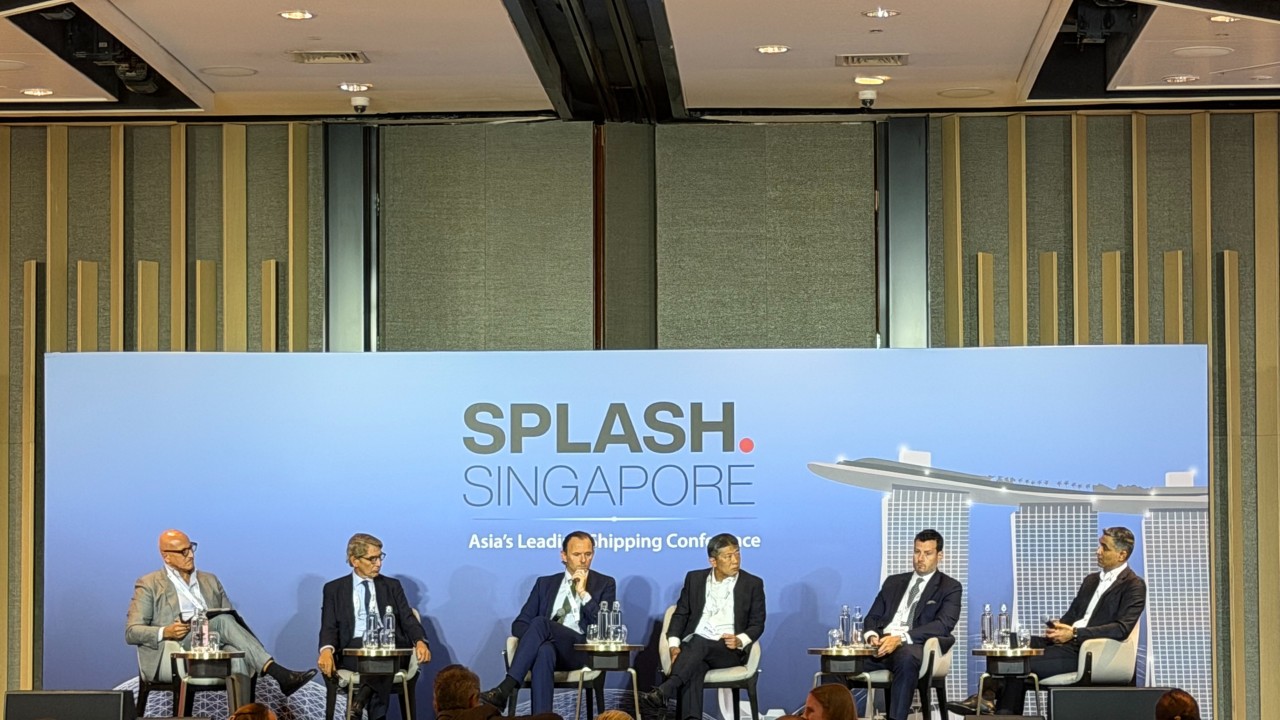
Moderator Sam Chambers brought the relationship between scale and resilience into focus when he asked whether more ships, sectors, counterparties and geographical exposure made an owner safer—or simply created more things that could go wrong. Diversification can broaden revenue sources. But if several business segments take on substantial financing at similar times, receive ships together or depend on the same market assumptions, risks can still emerge simultaneously during a downturn. Assessing a fleet’s resilience requires a closer look at its earnings, debt, customers and operating arrangements.
Su said he still averages around four hours of sleep a night, works intensely and enjoys developing the business. As Erasmus moves from its early focus on a single sector into several markets, customer selection, charter arrangements, investment judgment and management capabilities must

READ MORE
 Tankers
Uni-Tankers Secures Eight Stainless Steel Chemical Tankers to Be Built at Haidong
 Tankers
Tankers Are Earning $1 Million a Day. Why Shipowners Fear “World Peace”
 Tankers
Transpetrol Makes LR1 Debut with Two 75,000-dwt Tankers at Yangzijiang
 Tankers
Oil Majors Are Eyeing Ships Delivering in 2030. What Are They Worried About?
 Tankers
Nanjing Tanker Seeks Four More LR2s as Product Tanker Expansion Accelerates
 Tankers
Trafigura Moves Deeper into Shipowning as Volare Shipping Heads for an Oslo Listing
 Tankers
$64,569 !!! Record ClarkSea Index Masks a Shipping Boom Built on Different Forces
 Tankers
Trump angin. US Shadow Fleet Law Raises New Risks for China’s Russian Oil Trade
 Tankers
Seven Months, $78 Million: George Procopiou Reaps Windfall on Hengli-Built VLCC
 Tankers