


Oil Majors Are Eyeing Ships Delivering in 2030. What Are They Worried About?
Some oil companies are already discussing five- to seven-year charters for ships that will not be delivered until 2029 or even 2030.
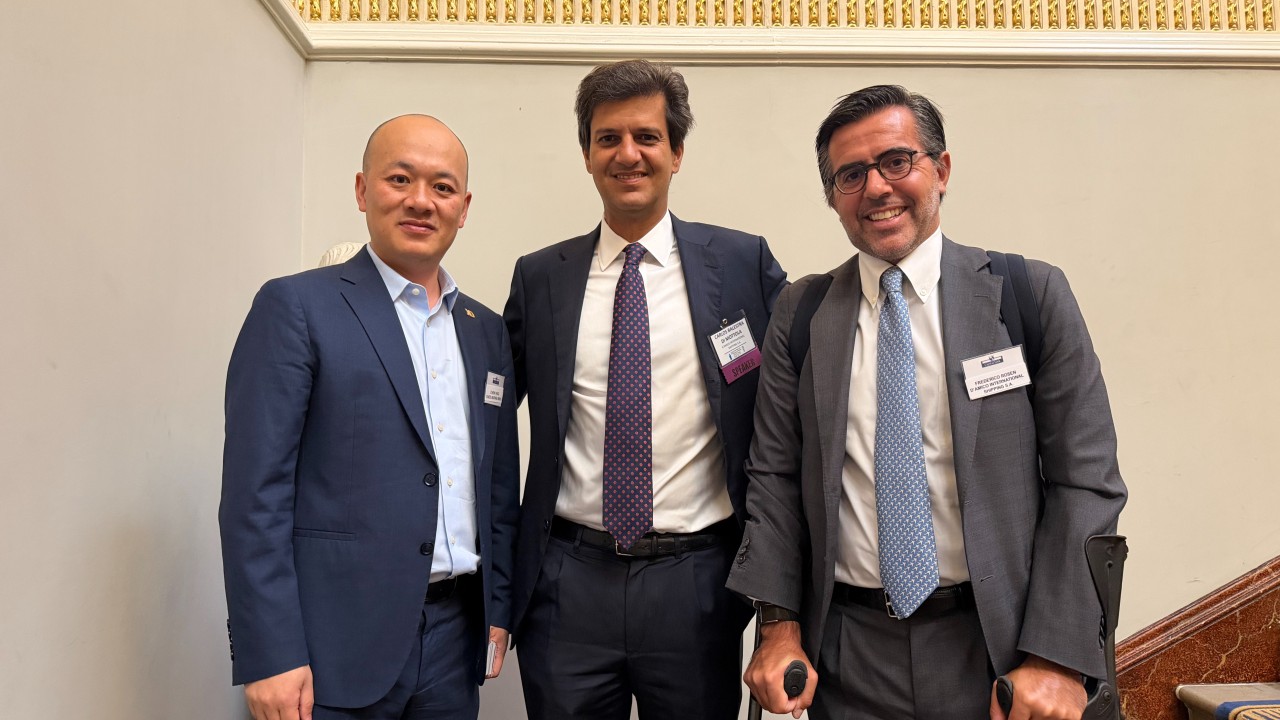
Carlos Balestra di Mottola , Chief Executive Officer of d’Amico Shipping Group International Shipping, highlighted this development during a recent discussion in London. Some of the company’s oil industry customers are looking further ahead when securing transportation, opening discussions with owners about employment, vessel specifications and management standards several years before a ship enters service.
High freight rates have helped bring those conversations forward. Fleet ageing and uncertainty over the future availability of suitable vessels are giving them a longer strategic horizon.
Their interest points to a concern extending well beyond today’s freight bill: when the next waterway disruption, trade realignment or shortage of available ships occurs, who will be able to keep their cargo moving?
At the 18th Capital Link Shipping & Marine Services Forum in London on 15 September, the “Energy Security and Shipping” panel offered a revealing view of how that concern is influencing chartering decisions, fleet investment and the allocation of risk between shipowners and their customers. Rising freight rates are the most visible consequence. Stronger, longer transportation relationships could have a more lasting effect.
Securing Transport Well Into the 2030s
For refiners, producers and traders, the spot market offers flexibility and access to competitive freight when vessels are readily available. Disrupted shipping routes and regional supply shortages can quickly change that calculation. A company may have purchased its crude, committed to refinery throughput and promised deliveries to customers, yet still struggle to find the right ship in the right place at the right time.
Harrys Kosmatos , Chief Financial Officer of TEN, said interest in longer contracts among major oil customers had increased. Discussions that previously centred on one- to three-year charters were increasingly extending to five or seven years. The interest in 2029–2030 newbuilding deliveries described by Balestra di Mottola takes that planning horizon further into the future.

If concluded, some of these contracts could secure transportation well into the second half of the 2030s. Cargo interests would gain access to future capacity, while owners would obtain a revenue foundation capable of supporting investment in new ships.
The negotiations would also encompass much more than the daily hire rate. Vessel type, energy efficiency, equipment, management quality and adaptability to future regulation all become relevant when a customer is making a commitment stretching across so many years.
Balestra di Mottola said some oil companies were willing to develop projects with shipowners, participate in defining vessel specifications and ensure that a dependable ownership and management organisation stood behind the asset. Such involvement creates an opportunity to align the newbuilding order, financing and employment within a common commercial arrangement.
Securing that certainty comes at a price, however. Mads Mads Peter Zacho , Chief Executive Officer of Navigator Gas , described a familiar difficulty: charterers want more period coverage but are reluctant to accept the long-term rates implied by a strong market. Owners are open to longer employment, while also considering the spot earnings they would surrender.

Interest therefore needs to be distinguished from completed business. The discussions reveal a growing willingness to consider future access to ships in today’s procurement decisions. Whether they result in contracts will depend on how owners and charterers share the risks of the next market cycle.
Strong Freight, a Less Efficient Supply Chain
The pressures driving these conversations also explain why strong tanker demand can coexist with a less efficient energy supply chain.
Longer voyages increase tonne-mile demand. Mismatches between cargo availability and vessel positions generate additional ballast movements. Waiting, diversions and transfers absorb ship time. Together, these effects can support freight rates while requiring more vessels and working capital to move a given quantity of energy.
Balestra di Mottola traced this process through successive disruptions. The war in Ukraine and associated sanctions redirected Russian exports and European sourcing, replacing some shorter trades with longer voyages. Disruption in the Middle East subsequently encouraged refiners and traders to seek alternative supplies, creating cargo movements that the existing distribution of ships could not immediately accommodate.
Naphtha provided one example. When Middle Eastern supplies were disrupted, opportunities increased for shipments from the United States and Europe to Asia. Suitable vessels were not necessarily available in sufficient numbers in the loading regions. Wider cargo arbitrage opportunities, longer distances and tight vessel availability combined to support high freight on some long-haul voyages.
This distinction between energy consumption and transportation demand matters. Final consumption does not have to rise proportionately for shipping requirements on particular routes to increase sharply. A tonne of cargo travelling further, a vessel spending longer repositioning, or a greater imbalance between laden and ballast voyages can all reduce the fleet’s effective transport capacity.
For cargo owners, the consequences extend into procurement lead times, inventory requirements, refinery scheduling and delivery reliability. The potential cost of failing to secure transport can exceed the additional hire paid under a period charter. That helps explain why a ship still several years from delivery can already attract commercial interest.
Restocking Could Provide the Next Source of Demand
Inventory adds another dimension to the outlook.
Kosmatos pointed out that commercial stocks and strategic reserves drawn down during a disruption would eventually need replenishment. Inventories allow importing countries to sustain consumption and industrial activity when supply routes are constrained. Their usefulness nevertheless depends on location and product composition as well as volume.
Crude accumulating in an exporting region cannot automatically resolve a diesel shortage elsewhere. Adequate aggregate stocks can coexist with acute shortages in individual markets. Balestra di Mottola also described how uneven inventory distribution was amplifying dislocations in product markets, creating trading opportunities and changing vessel deployment.
Kosmatos saw the rebuilding of inventories after conditions ease as a potential source of additional tanker demand. That remains a conditional market scenario. Restocking requires available export supplies, usable transport routes and importers willing and able to purchase the cargo.
At the same time, reopening routes can shorten voyages, reduce waiting and release capacity previously absorbed by disruption. Additional replenishment cargoes and improving fleet productivity would influence the market simultaneously.
The freight outcome after a crisis therefore depends on cargo volumes, voyage distances, stockbuilding and vessel turnaround. Owners considering forward charters need to assess how much of today’s earnings environment could survive until their new ships are delivered.
Surviving the Downturn to Capture the Upswing
James Frew , Global Head of Advisory at Lloyd's Register , brought the discussion back to the resilience required to navigate those uncertainties. Balestra di Mottola’s response was straightforward: companies can benefit from exceptional markets only if they remain financially capable of reaching them.
d’Amico’s balance sheet illustrates the point. The company reported net debt equivalent to 72.9% of its fleet’s market value at the end of 2018. By the end of June 2026, it had reached a net cash position of approximately $19.2 million. Years of debt reduction changed its exposure to a downturn and increased its freedom to renew the fleet and choose when to invest.
Balestra di Mottola said the company sought to retain a degree of time-charter coverage because many of the forces affecting shipping could neither be controlled nor reliably predicted. Fleet renewal still had to continue through the sale of older vessels and investment in replacement capacity. Excessive debt can undermine survival during a weak market; prolonged underinvestment can gradually erode a fleet’s appeal to customers.
TEN’s approach shows how contracted income and participation in market upside can coexist. Kosmatos described the company’s longstanding use of different vessel types and employment structures, including profit-sharing provisions in some contracts. Those arrangements combine a revenue floor with the ability to benefit when markets strengthen.
Investors had at times preferred concentrated fleets with extensive spot exposure. Repeated shocks have made the value of stable cash flow and employment flexibility easier to appreciate.
A recent TEN delivery provides a concrete example. In its 10 September announcement, the company reported that the shuttle tanker Anfield DP, delivered in July, had entered a ten-year contract with a US oil major. Options could extend the employment until the vessel reaches 20 years of age.
Shuttle tankers serve specialised operations, so their contracts cannot be treated as representative of the entire conventional tanker market. The arrangement nevertheless demonstrates how an energy customer can secure transport capacity through a commitment spanning a substantial part of a vessel’s commercial life.
For the owner, the benefits become particularly apparent in a downturn. Predictable revenue can preserve investment capacity when competitors are raising funds, selling assets or postponing orders. Strong freight markets generate cash; employment structures and balance-sheet strength influence how effectively that cash supports the business through the next cycle.
Building Flexibility Into the Ship
Operational flexibility provides a further layer of resilience. Zacho described Navigator’s approach in terms of financial strength and the ability to adapt as markets change.
In the small and midsize gas carrier trades, part of that adaptability comes from cargo capability. Where vessel specifications permit, access to LPG, ammonia and petrochemical gas trades gives owners alternative employment opportunities as demand shifts. Moving between cargoes, customers and regions can reduce dependence on any single market.
That flexibility has to be established through vessel design, equipment, crew competence and commercial relationships. It is difficult to create at short notice once a particular trade has weakened.
Navigator’s 48,500-cubic-metre liquefied ethylene carrier newbuildings at Jiangnan Shipyard reflect this approach. Their design accommodates cargoes including ethylene, ethane, LPG and ammonia. The vessels feature ethane dual-fuel propulsion and provision for a future conversion to ammonia fuel.
Cargo flexibility and fuel flexibility address different commercial questions. Cargo capability determines which markets a vessel can serve. Fuel options influence operating costs and the ability to meet future environmental requirements.
Readiness for conversion also leaves work to be done. Any eventual switch will require fuel availability, a viable technical solution and an acceptable commercial return. The investment preserves an option for an asset expected to operate for more than two decades.
The oil companies’ interest in helping define tanker specifications follows a related logic. Customers seeking future capacity need ships that can continue meeting their operational requirements. Age, efficiency, management standards and adaptability consequently become part of the chartering decision.
For Chinese shipyards and equipment suppliers, this brings an opportunity to contribute more directly to long-term commercial planning. Alongside building and delivering the vessel, they can help owners explain how it will remain competitive and what practical modifications will be possible as operating conditions change.
Energy Security Meets the Fuel Transition
The relationship between energy security and decarbonisation also featured prominently in the discussion.
Kosmatos emphasised the immediate priority of maintaining supply. Nick Potter , President and Chief Executive Officer of AET , stressed the need to provide affordable, reliable energy today while developing lower-carbon supplies for the future. Both objectives depend on production capacity, transportation, infrastructure and skilled people.

Potter cited China as an example of how concerns over imports can encourage diversification of supply while strengthening the case for electrification and renewable energy. Energy security can therefore support longer-distance conventional energy trades in the near term while also encouraging economies to reduce their longer-term dependence on imported fossil fuels.
Shipowners have to consider both developments when committing to assets with long operating lives.
AET’s response includes fleet renewal, dual-fuel investment and efficiency improvements to existing vessels. Lower fuel consumption has an immediate operating benefit and can also support compliance with future emissions requirements. Such measures connect present commercial needs with the longer transition.
Potter also discussed the Clean Energy Marine Hubs initiative, which brings energy production, ports, transportation and fuel use into a shared framework for cooperation. Its purpose includes addressing the difficulty of developing fuel supply, demand and infrastructure at compatible speeds.
According to the International Chamber of Shipping, Potter became co-chair of the initiative’s steering committee in July 2026 and chairs its private-sector working group.
The commercial challenge has much in common with forward chartering. Owners, cargo interests and energy suppliers need earlier visibility of one another’s requirements and a workable division of investment, cost and risk. Credible long-term demand commitments can help support both fleet renewal and the development of new fuel supply chains.
Crew Safety Underpins Every Transport Commitment
Any commitment to reliable transport must also account for the people expected to deliver it.
When discussing resilience, Potter began with seafarers. Crew and vessel safety establish boundaries for AET’s operations and shape how the company maintains service during disruption.
He described maritime security as a persistent challenge whose form continues to evolve. Alongside piracy and other established threats, relatively inexpensive drones have changed the risk environment. Existing protection arrangements need to be assessed against those developments, supported by stronger systems, procedures and organisational capabilities.
A charter can specify hire and duration, but safe performance also depends on training, shore support and sound operational decisions. Financial resources help a company withstand disruption; they still have to be matched by the capacity to manage events at sea.
Potter consequently argued for closer engagement with customers during uncertain periods, with discussions extending to long-term cooperation and a fair allocation of risk and reward. Shipowners are investing in assets expected to work for 20 years or more. Energy customers require dependable supply over similarly long horizons. A durable relationship needs a commercial foundation extending beyond the highest freight rate available today.
Securing Capacity Before the Next Disruption
Across the panel, the discussion of newbuildings delivering in 2029–2030, longer charters, multi-cargo capability and stronger balance sheets revealed connected priorities. Energy companies want greater confidence that suitable ships will be available. Owners want to turn current earnings and commercial opportunities into more dependable income and adaptable fleets.
Those arrangements can improve an individual project’s investment case, while leaving substantial exposure to the wider cycle. Long contracts depend on reliable counterparties and workable terms. Technical flexibility needs viable markets. Future restocking demand must be assessed alongside shorter voyages, improving productivity and new vessel deliveries.
The opportunity for shipowners increasingly includes helping customers plan how their transport needs will be met under different conditions. Appropriate vessels, consistent management, credible safety performance and a willingness to invest around shared requirements can all strengthen the case for a relationship lasting across market cycles.
The fact that ships delivering in 2030 are already entering charter discussions suggests that some oil companies are taking that planning seriously. When another disruption arrives, they want vessels they can call upon, cargoes they can deliver and a supply chain that continues to function.


READ MORE
 Tankers
Tankers Are Earning $1 Million a Day. Why Shipowners Fear “World Peace”
 Tankers
Transpetrol Makes LR1 Debut with Two 75,000-dwt Tankers at Yangzijiang
 Tankers
Nanjing Tanker Seeks Four More LR2s as Product Tanker Expansion Accelerates
 Tankers
Uni-Tankers Secures Eight Stainless Steel Chemical Tankers to Be Built at Haidong
 Tankers
Trafigura Moves Deeper into Shipowning as Volare Shipping Heads for an Oslo Listing
 Tankers
$64,569 !!! Record ClarkSea Index Masks a Shipping Boom Built on Different Forces
 Tankers
Trump angin. US Shadow Fleet Law Raises New Risks for China’s Russian Oil Trade
 Tankers
Seven Months, $78 Million: George Procopiou Reaps Windfall on Hengli-Built VLCC
 Tankers
VLCCs top $1m a day — but what price is TD3C actually discovering?
 Tankers