


Trafigura Moves Deeper into Shipowning as Volare Shipping Heads for an Oslo Listing
Ticker “VLCC”: the commodity trading giant plans to take a 14-supertanker platform public while retaining majority control and commercial management

Global commodities trader Trafigura is placing the VLCC assets it has accumulated over recent years into a dedicated capital-markets platform.
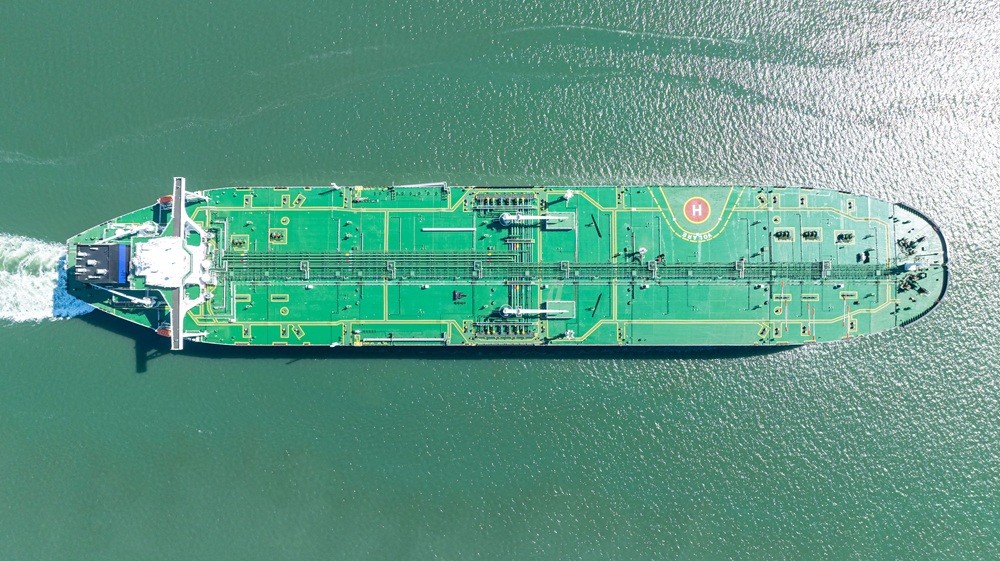
On 21 September, Trafigura announced the establishment of Volare Shipping Ltd., a Singapore-incorporated company that currently owns and operates six very large crude carriers and has another eight newbuildings scheduled for progressive delivery between 2026 and 2028. Volare is contemplating a private placement of approximately $500m, followed by a proposed listing on Euronext Growth Oslo. Subject to the successful completion of the placement and approval by Euronext Oslo Børs, trading is expected to begin on or about 5 October under the unusually direct ticker “VLCC”. Trafigura will remain the majority shareholder after the listing and its global shipping division will continue to manage the fleet commercially.
The transaction brings vessel ownership, cargo access, commercial management and public capital into one structure. Volare will hold the physical assets and gain an independent route to equity funding, while Trafigura contributes its global oil trading, chartering, customer and analytics capabilities. Outside shareholders, in turn, will receive direct exposure to a modern VLCC fleet backed by one of the world’s largest tanker charterers. The proposed $500m placement is expected to fully fund the existing newbuilding programme. When all 14 vessels have been delivered in October 2028, the fleet will have an average age of approximately three years, placing it among the youngest and most technically advanced fleets in the listed VLCC sector.
Volare remains a proposed listing rather than a completed transaction. Trafigura’s initial announcement does not disclose the final offer price, valuation, post-transaction capital structure, full vessel list, commercial management fees or dividend policy. Those details will be central to any assessment of Volare’s net asset value, earnings sensitivity and related-party governance.
A 14-ship platform built around the “trader-owner” model
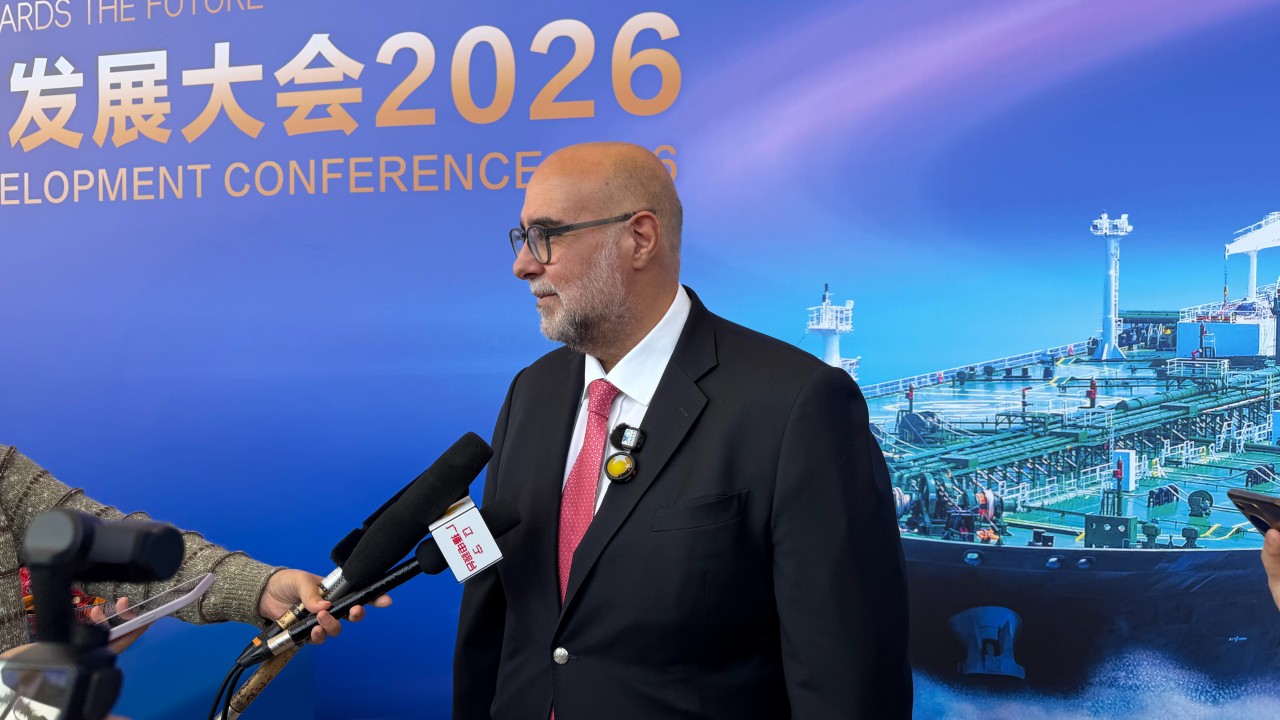
Trafigura currently manages approximately 500 vessels across several segments, including around 250 oil tankers. In an exclusive interview with Xinde Marine News in July 2026, Andrea Olivi, Trafigura’s Global Head of Shipping, explained that the company controlled fewer than 100 vessels when he joined in 2015. Its shipping operation has since developed into a global network spanning Geneva, London, Singapore, Shanghai, Athens, Mumbai, Houston and Montevideo. More than 60% of its shipping business now comes from third-party customers, including Asian refiners, other trading houses, and national oil companies in the Middle East and North Africa.
Those figures show how far the shipping division has moved beyond the role of arranging transport for Trafigura’s internal cargo book. Cargoes, voyage and time charters, freight derivatives, sale-and-purchase activity, bunker procurement, risk management and third-party customers now form an operating platform capable of generating profits in its own right. Volare adds a public equity channel and a separate asset-owning balance sheet to that platform.
Olivi told Xinde Marine News that Trafigura did not intend to turn itself into a conventional shipowner, while making clear that it would not avoid ownership when the right opportunity emerged. For a company already controlling 450 to 500 ships, owning a relatively small proportion of the fleet can materially improve the flexibility of its freight portfolio and reduce its exposure to an expensive or volatile charter market. He also stressed that vessel control does not have to come exclusively through direct ownership. Long-term charters, leasing structures and other arrangements can provide similar control; the decisive question is whether a company can access and deploy compliant, available tonnage when it matters.
Volare converts that thinking into a corporate structure. Trafigura retains majority ownership, commercial management, cargo access and customer connectivity, while external shareholders provide part of the long-term capital required by a heavy-asset business. Volare receives ownership of the ships, an independent financing route and a listed vehicle that could support future acquisitions. Trafigura can therefore preserve much of the capital efficiency associated with a trading house while maintaining a strategically controlled core fleet in the VLCC segment.
Olivi told Reuters that the vessels would be deployed to maximise earnings, whether on internal Trafigura cargoes or third-party business, and noted that most of the group’s VLCC employment has historically involved external customers. He also indicated that Volare could eventually expand into other tanker segments, including smaller vessels. The initial 14 VLCCs therefore look more like the foundation of a scalable shipping platform than a fixed end-state fleet.
Why Trafigura is so positive on VLCCs
Trafigura’s preference for VLCCs rests on changes in both oil trade geography and the structure of the global fleet. Olivi was explicit in his interview with Xinde Marine News: the company likes the VLCC segment. New crude supply is increasingly emerging from Guyana, Venezuela, Argentina and West Africa, all of which are farther from the major Asian refining centres than traditional Middle Eastern sources. Longer voyages increase tonne-mile demand even when absolute oil consumption grows only gradually.
The age profile of the fleet provides another part of the thesis. A significant number of older tankers have moved into sanctioned trades or the so-called shadow fleet, while mainstream charterers, financiers and insurers increasingly require vessels that meet more demanding technical and compliance standards. The result is a widening distinction between the physical number of ships in existence and the pool of younger, efficient and fully compliant vessels available to mainstream trades.
Changes at ports and terminals are reinforcing the economics of larger ships. More facilities are being dredged or upgraded to receive VLCCs, and Atlantic Basin exporters, including those in the United States, have greater incentives to move large parcels on a single VLCC rather than divide the same volume among several Aframaxes. With long-haul trades expanding, scale economics becoming more valuable and compliant capacity remaining constrained, modern VLCCs offer both transportation efficiency and deployment scarcity.
The geopolitical disruption of 2026 has sharply amplified those structural forces. Restricted traffic through the Strait of Hormuz, higher war-risk exposure, weaker owner appetite for hazardous voyages and the expansion of ship-to-ship transfers in the Gulf of Oman have tied up vessels in shuttle operations and waiting time. By mid-September, the Baltic Exchange’s equivalent time-charter earnings for the Oman-to-China VLCC route had approached $871,000 per day, while the West Africa-to-China assessment had risen to around $509,000 per day. The freight shock spread well beyond the Persian Gulf into the Atlantic Basin, raising both the cost and uncertainty faced by commodity traders dependent on the spot charter market.
Volare therefore carries two sources of value. Its vessels can capture earnings during a powerful freight cycle, while also giving Trafigura greater certainty when executing cargo programmes, serving external customers and responding to disruptions. In ordinary markets, the ships generate freight revenue. Under supply-chain stress, they provide operational optionality. That control premium is difficult to capture fully through conventional valuation measures based on daily earnings, vessel age, fuel performance and residual value.
From New Hantong’s first VLCC to a company trading as “VLCC”
Chinese shipbuilding has played a central role in the creation of Trafigura’s VLCC position. The group began building its exposure in China in 2024, initially ordering five VLCCs at Jiangsu New Hantong Ship Heavy Industry. The first two were scheduled for delivery in 2026 and the remaining three in 2027, with ammonia-ready capability incorporated into the designs. Trafigura subsequently expanded its programme. In his July interview with Xinde Marine News, Olivi confirmed that the company had ordered more than ten VLCCs at Chinese shipyards and spoke positively about the quality, capability and progress of the yards involved.
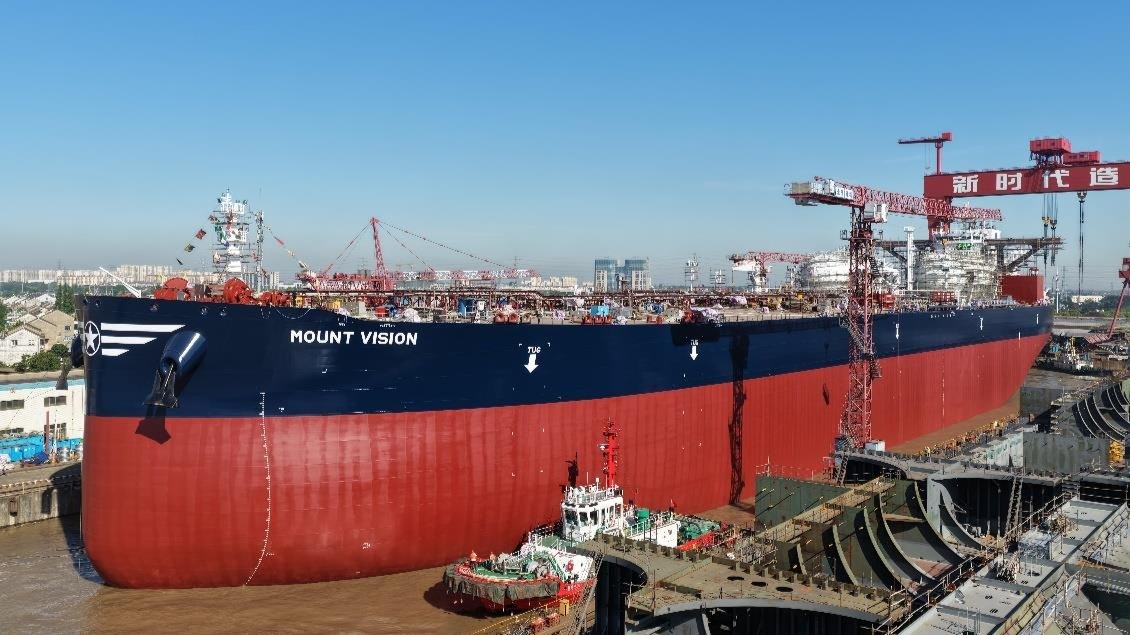
On 26 June 2026, New Hantong delivered the first 319,000-dwt VLCC it had built for Trafigura, VIVE UT VIVAS, hull number HT319-373, approximately 40 days ahead of schedule. The vessel measures 332.9 metres in length and 60 metres in beam. Its delivery marked the conversion of Trafigura’s Chinese newbuilding programme from an orderbook strategy into an operating fleet and represented New Hantong’s entry into the VLCC construction market.
Trafigura has also been linked to opportunities that offer faster access to modern tonnage. Market reports previously cited by Xinde Marine News identified a Trafigura-related buyer as the party behind the acquisition of LAS PALMAS, a near-delivery 306,000-dwt VLCC ordered by Alimia Group at Hengli Heavy Industry, at a reported price of approximately $160m-$163m. With newbuilding berths scarce and prompt tonnage commanding substantial premiums, the transaction indicated that delivery timing and immediate availability formed an important part of Trafigura’s asset strategy.
Volare has not yet published the complete names, builders and individual delivery schedules of its 14 vessels. Trafigura’s previously confirmed Chinese orderbook therefore cannot be mapped mechanically onto Volare’s six operating ships and eight newbuildings. Admission documents will need to clarify how much of Trafigura’s wider VLCC programme has been transferred to the new company and whether additional newbuildings or secondhand acquisitions may later be injected into the listed platform.
The disclosed technical specification nevertheless gives the fleet a distinctive commercial profile. Volare’s newbuildings are larger than standard tankers and can carry greater cargo volumes. Additional internal tank coatings and heating systems will allow them to transport a broader range of cargoes, while the ships also have ammonia-ready dual-fuel capability. For a fleet managed by a commodity trader, wider cargo compatibility creates more trading combinations, improves positioning flexibility and may help reduce ballast exposure.
Why Oslo?
Oslo has one of the world’s deepest and most experienced shipping capital markets. Its investors understand vessel net asset values, spot-rate volatility, dividend models and fleet expansion strategies. By taking Volare to Euronext Growth Oslo, Trafigura can turn a group of VLCCs previously held within a private trading organisation into a platform with its own valuation, financing capacity and publicly traded acquisition currency. The ticker “VLCC” leaves little ambiguity about the investment proposition.
The contemplated $500m placement will fully finance the current newbuilding programme, reducing the amount of vessel capital that Trafigura must provide alone and preserving financial capacity for further growth. Investors receive a relatively pure exposure to a young and technically advanced VLCC fleet with substantial spot-market sensitivity, supported by Trafigura’s cargo book, chartering network, customer relationships and analytics. According to the Financial Times, the transaction would also mark the first time the employee-owned trading group has brought one of its businesses to the public equity market, extending the deal beyond vessel finance into a broader innovation in Trafigura’s capital structure.
That model also creates governance questions. Trafigura will be Volare’s controlling shareholder, commercial manager, an important cargo source and a potential counterparty. The allocation of internal and external cargoes, the pricing of management and chartering services, the transparency of related-party transactions and the mechanism through which minority shareholders participate in market upside will all influence Volare’s valuation. Trafigura’s network offers access to cargoes and market intelligence that an independent owner would find difficult to replicate, but investors will also need clarity on the governance framework surrounding those advantages.
Raising capital at a freight-market peak — and the 2030 supply question
The timing of the transaction is financially compelling. Exceptional VLCC earnings support stronger vessel values and investor expectations, potentially allowing Volare to raise equity on more attractive terms. The newbuilding programme can be fully funded before all vessels arrive, while Trafigura shares part of the asset and cycle exposure with outside investors.
The cycle, however, still matters. Signal Group data cited by Reuters put global VLCC contracting at 217 vessels in 2026, more than double the 93 recorded in 2025 and representing investment of more than $20bn. Allied Shipbroking, using a different methodology, counted 164 VLCC orders. Although the totals vary, both datasets show an extraordinary contracting wave, with deliveries now extending into 2029 and 2030. Around 20% of the existing VLCC fleet is more than 20 years old, creating substantial replacement demand, and future pressure on shadow-fleet vessels could further reduce the pool of mainstream compliant tonnage. Even so, a concentrated inflow of new ships will eventually alter the supply balance.
Olivi maintained a measured view when speaking to Xinde Marine News. He remained positive about the VLCC market over the next two years but warned that the industry would need to monitor orderbook growth and expanding shipbuilding capacity as 2030 and 2031 approached. Volare’s long-term competitiveness therefore cannot depend solely on today’s extreme freight rates. Its ability to secure high-quality cargoes, maintain cost discipline, use its multi-cargo technical configuration effectively and convert Trafigura’s trading and data capabilities into consistently high utilisation will determine whether it can outperform through a full market cycle.
Completing the cargo-vessel-bunker-capital chain
Volare is one component of a much larger Trafigura shipping system. The group manages approximately 500 vessels across wet and dry markets, with the majority of its shipping business now generated by third-party clients. TFG Marine, the bunkering platform led by Trafigura, extends that system into marine fuel supply, quality control, digitalisation and the emerging multi-fuel market. Cargoes, ships, bunkers, finance, data and risk management are increasingly being organised within a connected operating network.
During his July interview, Olivi agreed that ships were becoming strategic assets and added ports to the same equation. The Strait of Hormuz crisis has reinforced that assessment. An energy company may own the cargo and hold the sales contract, yet still struggle to find a vessel whose owner is willing to enter a high-risk area, whose insurance and sanctions status is acceptable, and whose crew and bunker supply can be protected. The efforts of national oil companies, trading houses and industrial groups to own or secure long-term control of more tonnage reflect rising supply-chain security requirements and the limits of relying exclusively on the open charter market during extreme disruption.
The structure also carries a clear message for China. Chinese yards are building high-specification VLCCs for global commodity traders. Chinese leasing companies have participated in numerous international shipping-asset transactions, while Chinese refiners remain important customers that Trafigura wants to develop further. Volare illustrates how modern ships built in China can enter a global trading platform and then receive valuation, financing and growth capital from the Oslo market. Chinese shipbuilding is supplying more than steel hulls: it is producing sophisticated maritime assets capable of being operated, financed and securitised within global capital markets.
Trafigura has expanded from controlling fewer than 100 vessels to managing approximately 500 and is now placing a core pool of VLCC assets into a separately listed company. Its shipping operation has progressed from an internal transport function into a profit centre and then into a global third-party platform. Volare adds a new organisational layer: Trafigura retains cargo, chartering and commercial coordination; a core owned fleet provides capacity control when it is most valuable; and public investors supply part of the long-term capital required for expansion.
Two months before the Volare announcement, Olivi told Xinde Marine News that ships and ports were becoming strategic assets. On 21 September, Trafigura turned that argument into a corporate structure — a company called Volare Shipping whose proposed stock-market ticker says everything about its ambition: VLCC.


READ MORE
 Tankers
CMB.TECH’s Tanker Sales Set to Generate Nearly $680m in Gains
 Tankers
INTERTANKO Press Statement -- Easing of US sanctions
 Tankers
International Seaways Agrees $370 Million Bruton Takeover to Expand VLCC Fleet
 Tankers
69 Ships for Prokopiou, 10 for Centrofin: Why Owners Keep Choosing Hengli
 Tankers
Kinetai Holdings Opens Singapore Base with Fleet Expansion and Tanker Plans
 Tankers
Emarat Maritime Adds Six LR1s as China Newbuilding Programme Reaches 22 Ships
 Tankers
China Merchants Energy Shipping Establishes European Marketing Hub in London to Expand Global Reach
 Tankers
Guohang expands Hong Kong platform for tanker and heavy-lift push
 Tankers
A 15-Year-Old VLCC Sells for $161 Million as Tanker Asset Prices Surge
 Tankers