


World’s 1st Operational Ammonia Bunkering Vessel Enters Service,Backed by CMB.TECH
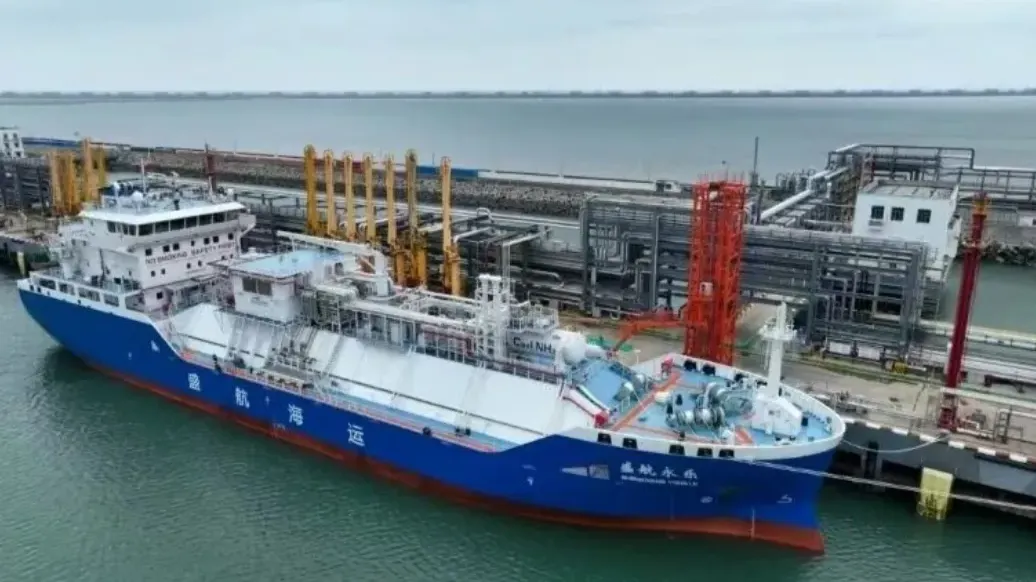
The conversion of Shenghang Yongle marks the first time an operating vessel has been classed for ship-to-ship liquid ammonia fuel bunkering. The breakthrough also highlights the increasingly important role of CMB.TECH, which is simultaneously building an ammonia-powered fleet, securing Chinese green ammonia supply and participating in another pioneering bunkering project with ITOCHU and MOL in Singapore.
The global race to establish an ammonia marine fuel supply chain has reached a significant new milestone in China.
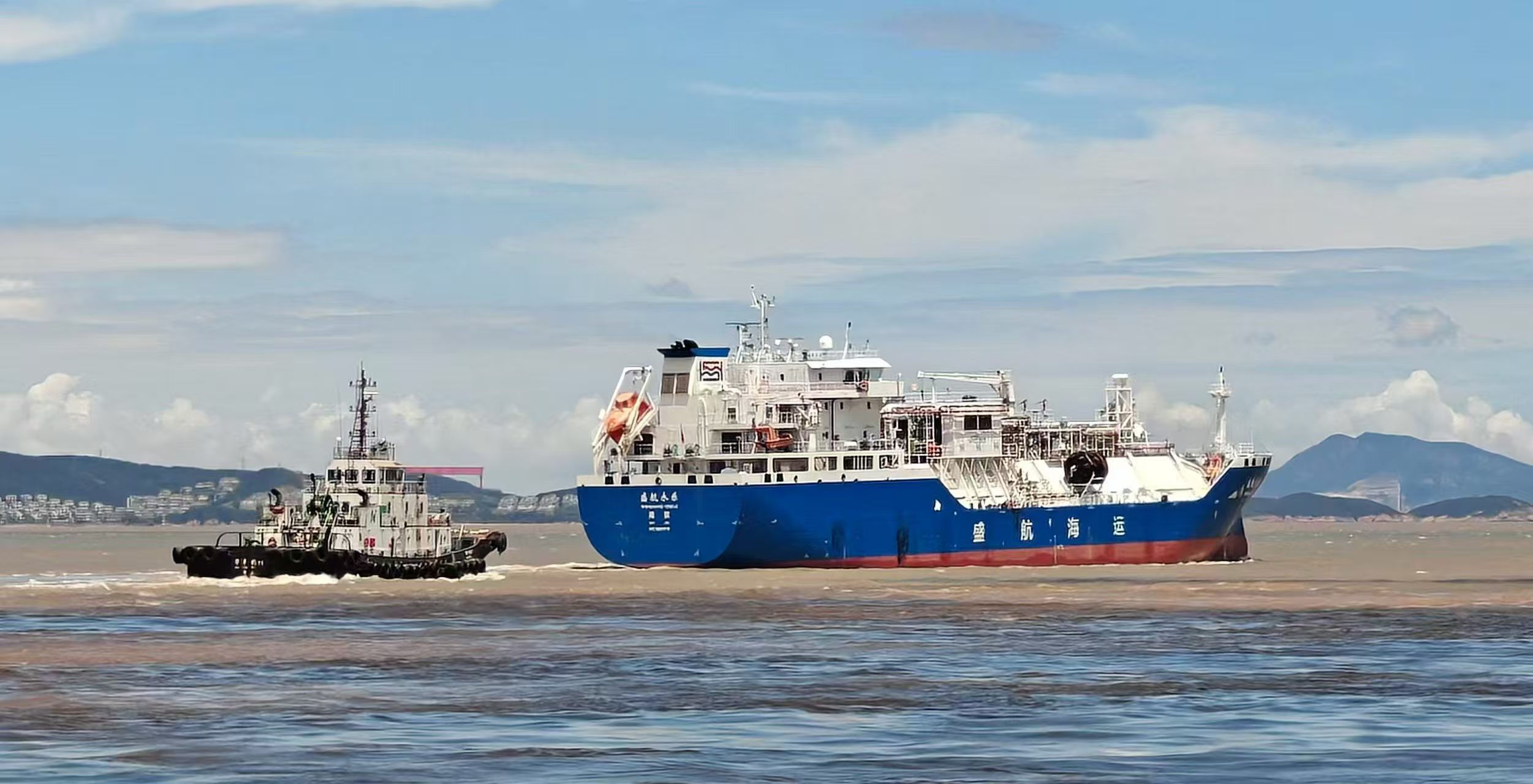
Shenghang Yongle, operated by Jiangsu Andefu Energy Development Co., Ltd., has completed a conversion enabling ship-to-ship, or STS, liquid ammonia fuel bunkering, becoming the world’s first operational vessel equipped with such capability. At the same time, the vessel has received the first ammonia bunkering class certificate issued by China Classification Society, or CCS. The milestone moves ammonia bunkering beyond conceptual studies, approval-in-principle projects and newbuilding plans into an existing commercial vessel that has been physically converted and classed for the task.

The wording of that “world first” is important. Shenghang Yongle is an existing operating ammonia carrier converted to perform fuel bunkering. It has not yet completed what could be described as the world’s first commercial STS ammonia fuel transfer, with commissioning, safety drills and actual vessel-to-vessel bunkering operations still to follow. Nevertheless, the vessel now provides something the global ammonia-fuel market has so far lacked: an operational shipping asset that has gone through the technical conversion, class review and onboard verification required to function as an ammonia bunker vessel.
That distinction also helps clarify the relationship between the Chinese project and another closely watched initiative led by Japan’s ITOCHU Corporation. ITOCHU ordered a 5,000-m³ ammonia bunkering vessel from Sasaki Shipbuilding in 2025 and describes that project as the world’s first newbuilding ammonia bunkering vessel. The Singapore-flagged vessel is scheduled for delivery in September 2027, with ammonia bunkering demonstrations planned in Singapore afterwards. In other words, the two projects represent different firsts: Shenghang Yongle is the first operational vessel converted and classed for STS liquid ammonia bunkering, while ITOCHU is developing the first purpose-built newbuilding ammonia bunker vessel. (伊藤忠商事)
This distinction matters because it reveals two different pathways through which ammonia bunkering infrastructure may develop. One is to design and build dedicated bunker vessels from scratch, as ITOCHU is doing in Singapore. The other is to convert suitable existing ammonia carriers that already possess much of the cryogenic and cargo-handling infrastructure required for ammonia transportation. The Shenghang Yongle project suggests that the second route could provide the industry with a faster way to bridge the infrastructure gap as ammonia-fuelled ships begin entering service.
From ammonia carrier to bunker vessel
Shenghang Yongle is a 5,546.80-m³ semi-refrigerated, semi-pressurised liquefied gas carrier with a deadweight of 4,626 tonnes. Built by China Merchants Jinling Dingheng Shipbuilding, the Chinese-flagged vessel is managed by Shenghang Shipping and is designed for unrestricted navigation and both domestic and international trading.

The ship can transport liquid ammonia, LPG and vinyl chloride monomer, or VCM. Its cargo tanks have a minimum design temperature of minus 48 degrees Celsius, while the vessel is also equipped with a low-temperature reliquefaction system. Those characteristics gave the ship a substantial technical head start for conversion: it already possessed tanks, piping, cargo-handling equipment and low-temperature systems designed around ammonia and other liquefied gases.
The conversion therefore involved more than simply adding another cargo transfer connection. Marine fuel bunkering introduces a different operational relationship between two vessels and requires dedicated procedures and safeguards covering transfer rates, emergency shutdown, leak detection, hazardous zones, personnel protection and emergency response.
Andefu, as the vessel’s operator, led the bunkering-system adaptation, preparation of operating procedures, risk assessments and emergency-response arrangements. Together with CCS, the company carried out multiple rounds of drawing review, onboard surveys and safety verification addressing issues including ammonia toxicity, material compatibility, low-temperature operation, leak detection and STS bunkering risk control.
This is one reason the project could prove relevant beyond a single vessel. There is already a global fleet of small and medium-sized ammonia and LPG carriers with technical characteristics that could potentially make some of them candidates for bunkering conversion. If the Shenghang Yongle model proves commercially and operationally successful, conversion could become one route for expanding ammonia bunkering capacity without waiting several years for an entirely new dedicated bunker fleet to be constructed.
CMB.TECH is becoming a key part of the story
The Shenghang Yongle project is also closely connected with one of the shipping industry’s most aggressive adopters of ammonia propulsion: CMB.TECH.
In December 2025, Antwerp-headquartered CMB.TECH announced an investment in the Chinese ammonia supply chain, including a minority interest in Andefu and an offtake agreement for renewable ammonia produced by China Energy Engineering Corporation’s CEEC Songyuan project in Jilin Province. CMB.TECH said the partnership was intended to create an integrated supply chain capable of delivering green ammonia to its growing fleet of ammonia-powered ships.

The Songyuan project provides the upstream fuel source. In its first phase, CMB.TECH said the project would produce approximately 158,000 tonnes of renewable ammonia annually. Andefu, meanwhile, provides a large part of the logistics infrastructure required to move that fuel towards maritime consumers. Its infrastructure programme includes a 49,000-m³ low-temperature ammonia storage tank in Nanjing and another ammonia storage terminal planned in Panjin, while the company has been targeting commercial STS ammonia bunkering deployment in 2026.
Shenghang Yongle now adds the critical final marine link.
The logic is straightforward: green ammonia can be produced hundreds or thousands of kilometres away from a port, but producing renewable molecules does not by itself create a marine fuel market. The fuel must be certified, traded, transported, stored at suitable terminals and ultimately transferred safely into an ammonia-powered ship. A bunker vessel is therefore not simply another ship type; it is the physical link connecting upstream renewable-energy projects with oceangoing vessel propulsion.
CMB.TECH has a particularly strong incentive to solve that problem because it is creating its own ammonia demand at considerable scale. In its December 2025 announcement, the company said 11 ammonia-powered ships were scheduled for delivery during 2026, including ten 210,000-dwt Newcastlemax bulkers and a 1,400-TEU container vessel. More recently, CMB.TECH disclosed in its August 2026 results that it and Fortescue had signed an agreement covering the charter of up to 12 ammonia-powered 210,000-dwt Newcastlemax vessels.
The significance is that CMB.TECH is approaching ammonia not simply as a shipowner ordering alternative-fuel tonnage. It is simultaneously working on the vessels, the fuel, the offtake arrangements, logistics infrastructure and bunkering capability required to operate those vessels.
That is becoming one of the defining characteristics of the first phase of ammonia shipping. For early adopters, ordering an ammonia dual-fuel engine is only part of the investment decision. Without credible access to fuel at the ports and along the routes where the vessels actually trade, an ammonia-capable ship risks spending much of its operating life burning conventional fuel.
CMB.TECH’s investment in Andefu therefore addresses a fundamental chicken-and-egg problem in maritime decarbonisation: bunker suppliers have been reluctant to invest before sufficient ammonia-fuelled tonnage exists, while shipowners have been reluctant to commit to ammonia vessels without confidence that the fuel will be available.
CMB.TECH also links China’s project with ITOCHU’s Singapore initiative
There is an additional connection that makes CMB.TECH’s position particularly notable.
ITOCHU’s purpose-built 5,000-m³ ammonia bunker vessel is scheduled to conduct demonstration bunkering operations in Singapore with Mitsui O.S.K. Lines. The planned receiving ships are ammonia dual-fuel Capesize bulkers jointly owned by MOL and CMB.TECH.
Singapore’s Maritime and Port Authority granted ITOCHU authorisation in April 2026 to conduct ammonia bunkering trials, and ITOCHU has said that demonstrations are planned for the fourth quarter of 2027, subject to the relevant regulatory approvals. The ammonia will be supplied from ITOCHU’s dedicated newbuilding bunker vessel to the CMB.TECH/MOL dual-fuel bulk carriers. (伊藤忠商事)
CMB.TECH therefore finds itself connected to two of the most advanced ammonia bunkering vessel projects in the world.
In China, it is an investor and future ammonia buyer in the Andefu supply chain behind Shenghang Yongle, the first operational vessel equipped for STS liquid ammonia bunkering.
In Singapore, CMB.TECH-linked ammonia-powered bulkers are expected to become receiving vessels in ITOCHU and MOL’s pioneering bunker-vessel demonstration programme.
This is more than coincidence. It reflects CMB.TECH’s attempt to create fuel availability around the routes where its future ammonia-powered fleet will operate rather than waiting for a global bunkering network to emerge independently.
The missing “last mile” of ammonia shipping
Ammonia has attracted extensive attention as a marine fuel because the molecule contains no carbon and therefore produces no CO₂ at the point of combustion. Its lifecycle emissions, however, depend heavily on how the ammonia itself is produced, while combustion also creates other technical and emissions-control challenges, particularly nitrogen oxides and potentially nitrous oxide.
Its physical properties also make bunkering considerably more complex than conventional marine fuels. Ammonia is toxic, and safe handling requires rigorous control of leakage, ventilation, materials, transfer systems, emergency shutdown arrangements and crew exposure.
The bunkering vessel therefore sits at the intersection of several regulatory systems: ship design and classification, hazardous cargo transportation, port rules, bunker licensing, environmental requirements and occupational safety. Establishing commercially scalable ammonia bunkering will require all of these systems to operate together.
That is why Shenghang Yongle matters.
Many ammonia-powered ship projects have already been announced. Engine makers have moved from laboratory development towards full-scale ammonia engines. Shipyards are building the first generation of ammonia dual-fuel vessels. Large energy companies are simultaneously developing renewable ammonia production.
The infrastructure connecting those developments has moved more slowly.
The conversion of Shenghang Yongle is an early indication that the gap is beginning to close.
From a “world first” to a commercially functioning network
The next milestone will be more important than the certificate itself: actual bunkering.
Andefu plans to continue process commissioning, safety drills and real-vessel bunkering operations with Shenghang Yongle. Only once repeated STS operations take place under commercial conditions will the industry begin to accumulate the data needed to assess transfer efficiency, turnaround times, safety performance, operating costs and the economics of using converted ammonia carriers as bunker vessels.
But the direction of travel is becoming clearer.
ITOCHU is building a dedicated ammonia bunker vessel for Singapore. Andefu has converted an existing ammonia carrier in China. CMB.TECH is investing in fuel production and logistics while simultaneously creating demand through a large ammonia-powered fleet. MOL, Fortescue and other major shipping and commodity groups are increasingly connecting new ships with specific fuel-supply arrangements.
The ammonia transition is therefore entering a different phase. The question is gradually shifting from whether an ammonia-powered ship can technically be built to whether an entire commercial ecosystem can support that ship throughout its operating life.
With Shenghang Yongle, one of the most critical pieces of that ecosystem — the vessel capable of delivering liquid ammonia from the supply chain directly into another ship — has now moved from the drawing board onto an operating hull.
For an industry searching for a viable pathway towards zero- and near-zero-emission fuels, that may ultimately prove more consequential than the “world first” title itself.

READ MORE
 Sustainability
World’s First Operational Ammonia Bunkering Vessel Emerges
 Sustainability
Ships Built Today May Still Be Sailing in 2050 — So How Should We Design Them?
 Sustainability
Hapag-Lloyd Completes First Biomethanol Bunkering
 Sustainability
At SMM Hamburg I Saw Seven Changes Reshaping Global Shipping
 Sustainability
How Do You Bet on the Next 30 Years When Uncertainty Becomes the Norm?
 Sustainability
Energy efficiency may be shipping’s safest bet in an uncertain transition
 Sustainability
How much more does a methanol dual-fuel ship really cost?
 Sustainability
From a Nuclear-Powered Ship to a Nuclear Shipping Corridor: What Maersk, LR and UK-US Ports Are Really Trying to Build
 Sustainability
IMO Working Group Focuses on Methanol/Ethanol Fuel Safety Rules
 Sustainability