


World’s First Operational Ammonia Bunkering Vessel Emerges
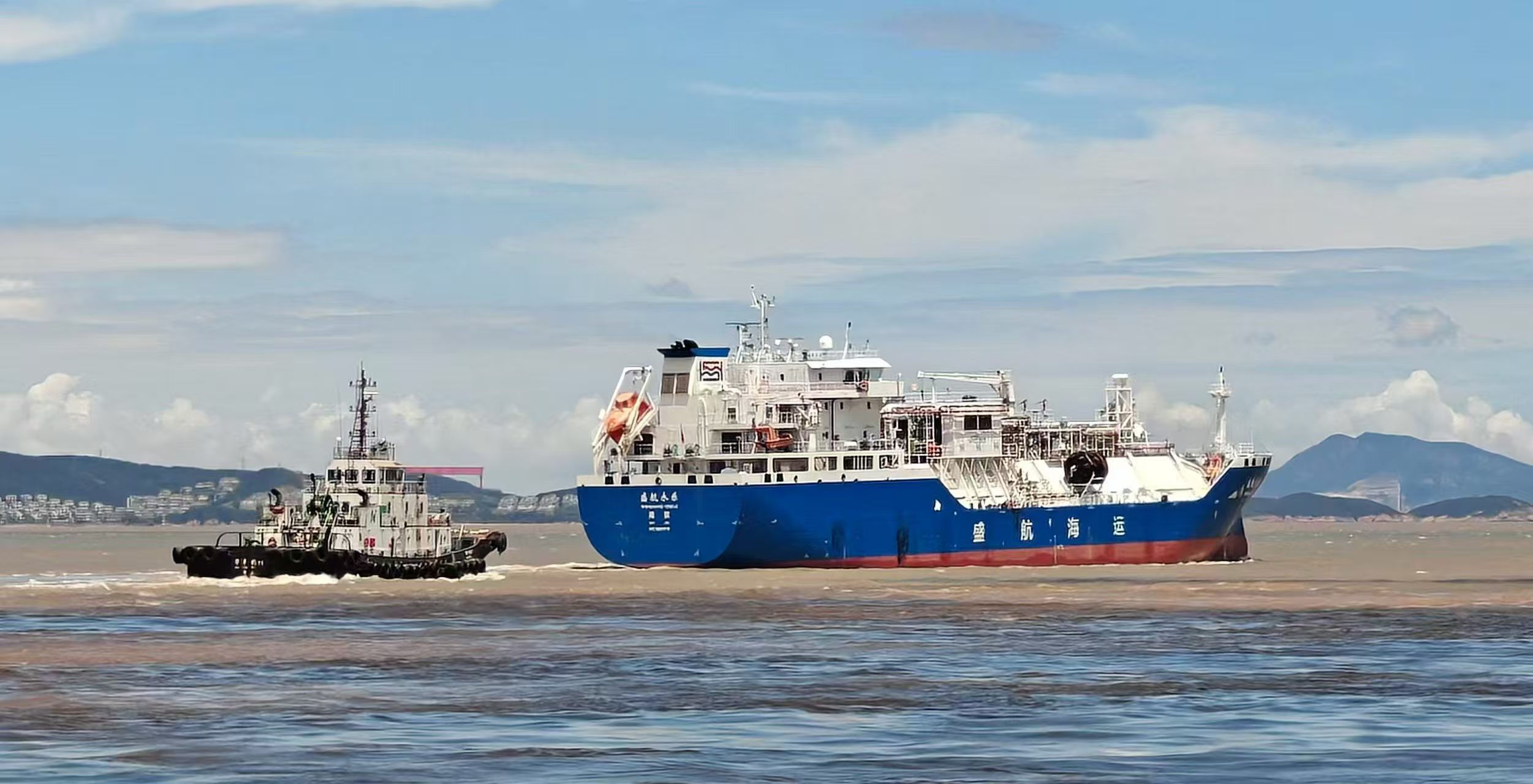

China has taken another step toward building a commercial green ammonia bunkering chain, with the Shenghang Yongle completing a conversion that enables it to perform ship-to-ship liquid ammonia fuel bunkering.
The vessel, operated by Jiangsu Andefu Energy Development Co., Ltd., has become the world’s first operational vessel equipped with liquid ammonia ship-to-ship bunkering capability, while also receiving the first ammonia bunkering class certificate issued by China Classification Society (CCS).
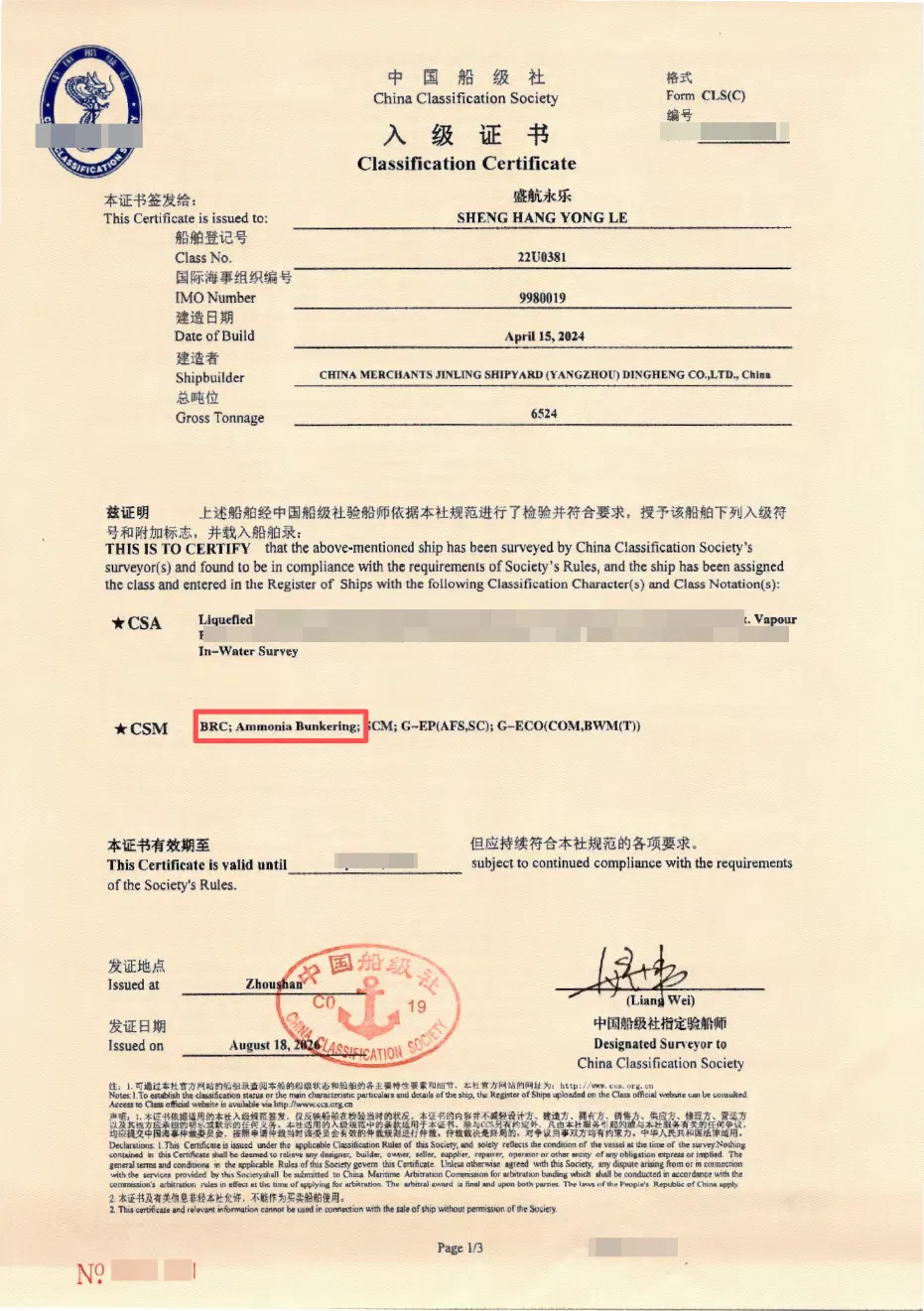
The conversion marks a shift for ammonia bunkering vessels from concept design and project development toward actual operational deployment.
Following the upgrade, Shenghang Yongle has been transformed from a conventional liquid ammonia carrier into a dual-purpose vessel capable of both ammonia transportation and marine fuel bunkering.
Most ammonia bunkering vessel projects worldwide have so far remained at the design, feasibility, construction or preparation stage. The completion of the Shenghang Yongle conversion therefore provides an early operational reference for future vessel conversions, class approval, bunkering procedures and emergency response systems.
A 5,547-cbm gas carrier converted for bunkering
Shenghang Yongle is a 5,546.8-cbm semi-refrigerated and semi-pressurised liquefied gas carrier with a deadweight of 4,626 tonnes.
The vessel was built by China Merchants Jinling Dingheng Shipbuilding and is managed by Shenghang Shipping. Flying the Chinese flag and certified for unrestricted navigation, it is capable of serving both domestic and international trades.
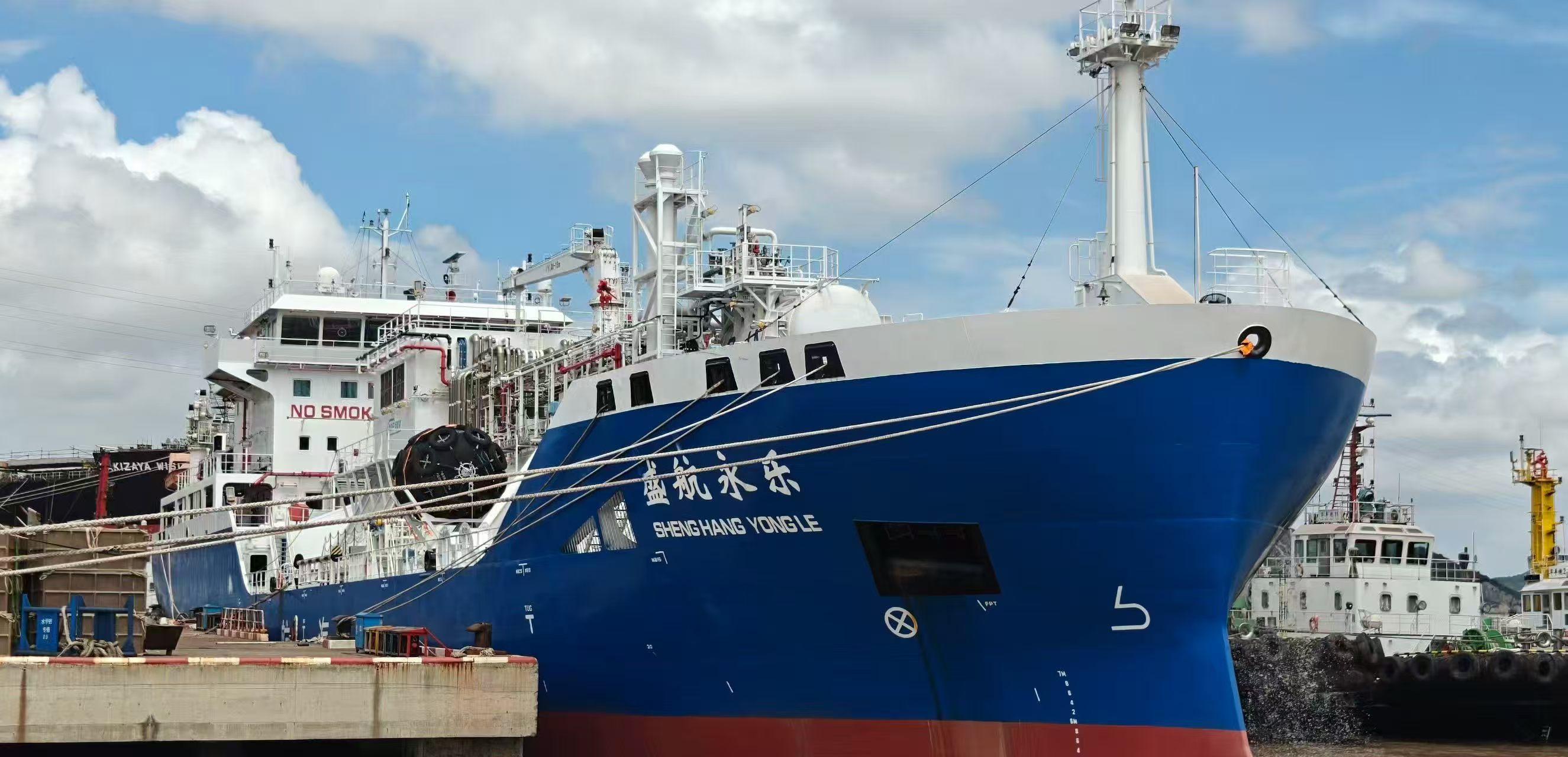
The ship can carry liquid ammonia, LPG and vinyl chloride monomer (VCM). Its cargo tanks have a minimum design temperature of minus 48 degrees Celsius, while the vessel is also equipped with a low-temperature reliquefaction system.
These existing cargo-handling and low-temperature systems provided the technical foundation for adding ammonia bunkering capability.
As the vessel’s operator, Jiangsu Andefu Energy led the conversion and certification process, covering modifications to the bunkering system, development of operating procedures, risk assessments and emergency response arrangements.
The project involved several rounds of drawing review, onboard inspection and safety verification with CCS, focusing on key issues including ammonia toxicity, material compatibility, low-temperature operations, leak detection and risk control during bunkering.
Ammonia is widely regarded as one of the potential zero-carbon fuel pathways for deep-sea shipping because the molecule contains no carbon and therefore does not directly emit carbon dioxide when combusted onboard.
Its use, however, comes with significantly greater safety requirements. Ammonia is toxic and requires specific arrangements for low-temperature storage and transportation, material compatibility, leakage monitoring, emergency shutdown and crew protection.
Connecting upstream green ammonia with shipping demand
The significance of the Shenghang Yongle project extends beyond the vessel itself.
Andefu has already been building both the upstream supply and downstream demand sides of a green ammonia bunkering chain.
The company is involved in China Energy Engineering Corporation’s Songyuan Green Hydrogen-Ammonia-Methanol Integrated Project in Jilin province.
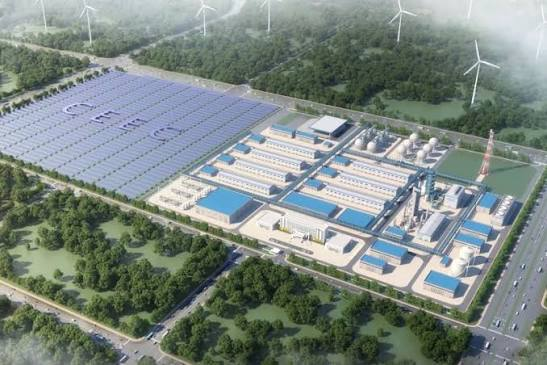
The project uses renewable electricity from wind and solar resources to produce green hydrogen, which is then converted into green ammonia and green methanol.
Its first phase entered operation in late 2025 and includes 800 MW of renewable power capacity, with planned annual output of around 45,000 tonnes of green hydrogen and 200,000 tonnes of green ammonia, together with green methanol production capacity.
Andefu is also participating in the logistics and market delivery side of the project.
The first qualified batch of liquid ammonia produced at the Songyuan project was dispatched in December 2025, with Andefu arranging dedicated road transport for the cargo.
On the downstream side, Andefu signed a long-term green ammonia ship-to-ship bunkering sales agreement with its shareholder CMB.TECH on 14 November 2025.
China Energy Engineering’s hydrogen business, Andefu and CMB.TECH subsequently also entered into a green ammonia sales arrangement for ocean shipping, linking green ammonia output from the Songyuan project with future fuel demand from ammonia-powered vessels.
According to Andefu’s earlier plans, green ammonia from the Songyuan project is also expected to provide fuel for the initial bunkering operations involving Shenghang Yongle.
This is beginning to create a physical supply chain extending from green ammonia production in Songyuan, through inland and waterborne logistics, to port delivery, bunker vessels and ultimately ammonia-fuelled oceangoing ships.
Andefu has been developing an integrated green ammonia supply-chain business covering production, trading, storage, road transport, rail transport and waterborne logistics.
The addition of Shenghang Yongle brings the final marine bunkering link into that system.
The vessel will next undergo further bunkering process commissioning, safety drills and preparations for actual ship-to-ship ammonia bunkering operations.
Once commercial operations begin, it is expected to support future ammonia-fuelled bulk carriers and other oceangoing vessels trading on domestic and international routes.
For the emerging ammonia-fuel market, the project is therefore more than the conversion of a single gas carrier. It represents one of the first attempts to connect certified green ammonia production, logistics, bunker delivery and real shipping demand within the same commercial chain.

READ MORE
 Sustainability
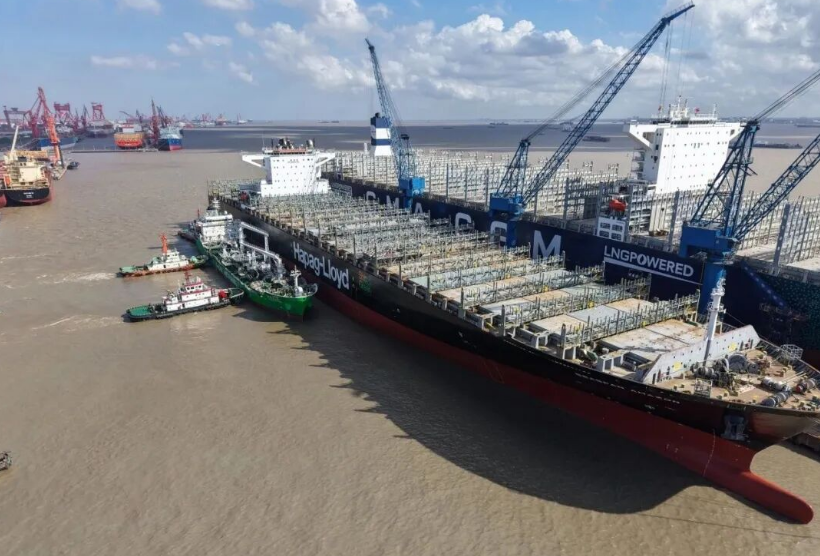
Hapag-Lloyd Completes First Biomethanol Bunkering
 Sustainability
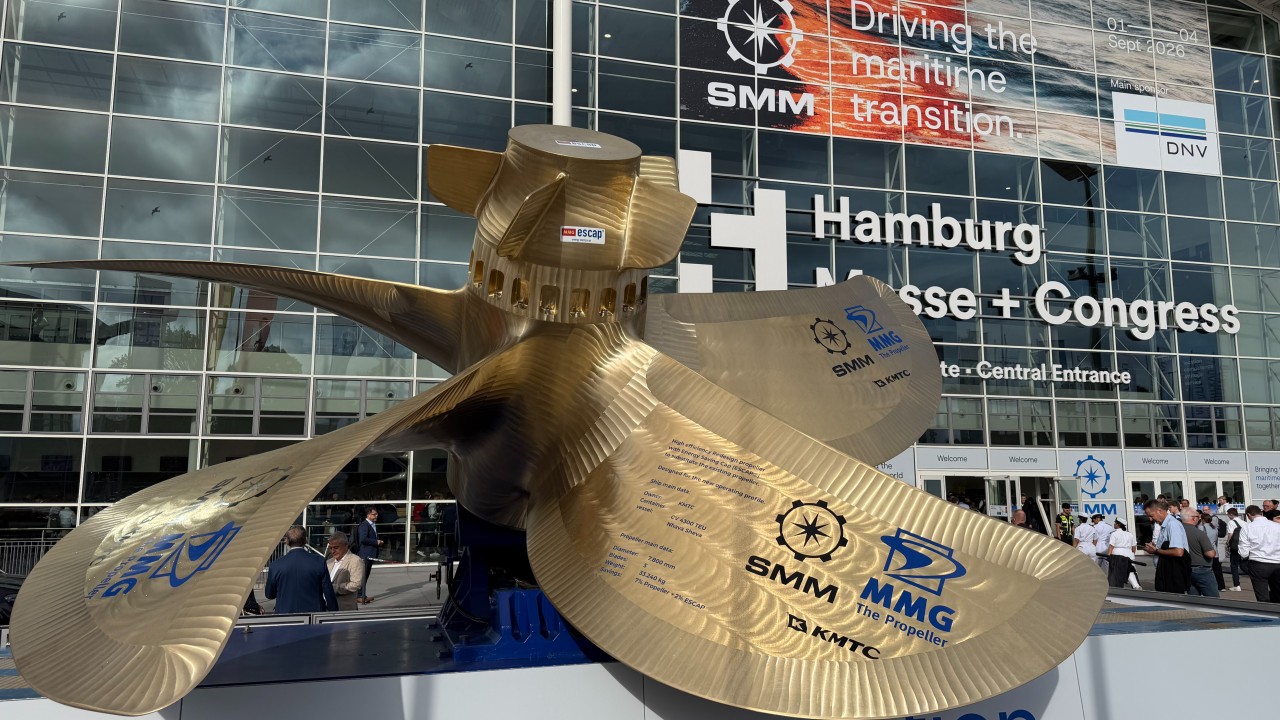
How Do You Bet on the Next 30 Years When Uncertainty Becomes the Norm?
 Sustainability
Energy efficiency may be shipping’s safest bet in an uncertain transition
 Sustainability
Ships Built Today May Still Be Sailing in 2050 — So How Should We Design Them?
 Sustainability
How much more does a methanol dual-fuel ship really cost?
 Sustainability
From a Nuclear-Powered Ship to a Nuclear Shipping Corridor: What Maersk, LR and UK-US Ports Are Really Trying to Build
 Sustainability
IMO Working Group Focuses on Methanol/Ethanol Fuel Safety Rules
 Sustainability
China’s Methanol Bunkering Network Expands to Guangzhou Port
 Sustainability
Ships Built Today May Still Be Trading in 2050. Shipping Is Paying for Optionality
 Sustainability