


Ships Built Today May Still Be Sailing in 2050 — So How Should We Design Them?

What the first panel of the China-Europe Maritime Summit revealed about energy efficiency, optionality, platform-based design and lifecycle capability
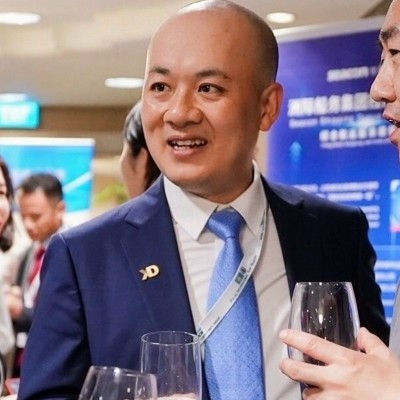
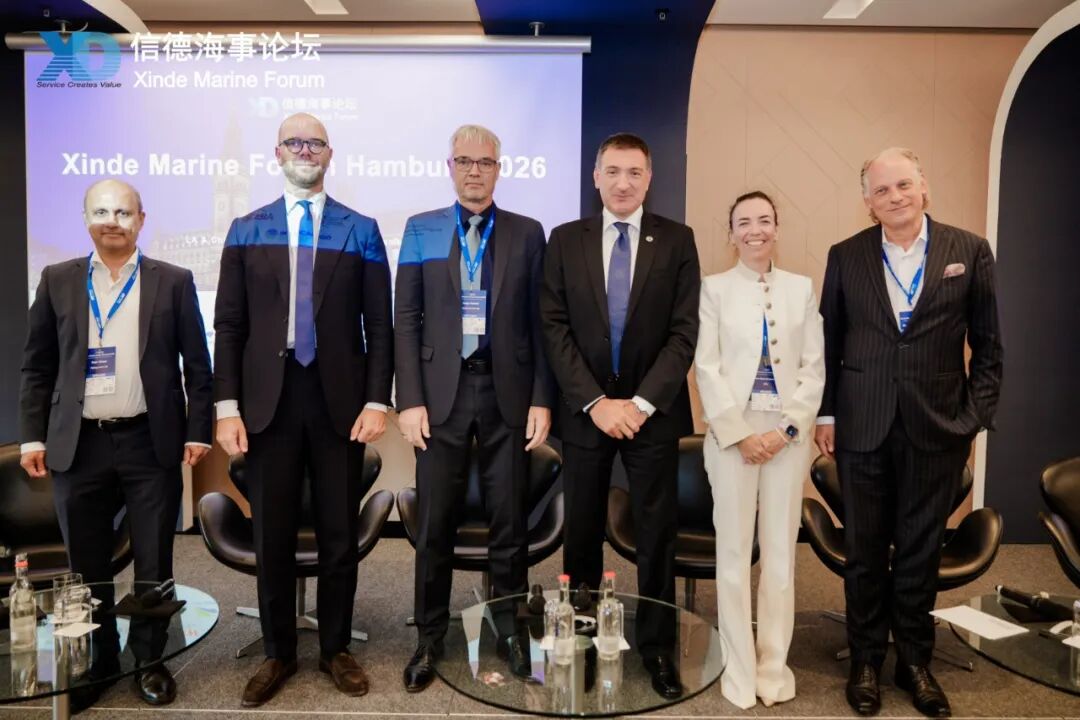
At the inaugural China-Europe Maritime Summit, held during SMM Hamburg 2026, senior shipbuilding executives, designers and shipowners from China and Europe gathered for a panel discussion on “Future Fleets and Future Partnerships”.
Opening the session, Dr. Martin Kröger , Chief Executive Officer of the German Shipowners Association , VDR, framed the challenge facing the industry.
Geopolitics is changing. Trade flows are changing. Fuels, technologies and regulations are changing. Yet shipowners and shipyards cannot wait until every uncertainty has been resolved before taking investment decisions.
A vessel ordered today may still be trading in 2040 — or even in 2050.
The central question, therefore, is what capabilities a ship designed today should possess if it is to remain safe, compliant, commercially viable and operationally useful over the next two or three decades.
The five panellists represented different parts of the Chinese and European maritime industries: @Zhou Xuhui, General Manager of Guangzhou Shipyard International, GSI; Lü Zhiyong, President of the Shanghai Merchant Ship Design and Research Institute, SDARI; Jens-Michael Arndt , CEO of H. Vogemann Reederei Services GmbH & Co. KG ; Wilke Briese , CEO of Briese Schiffahrts GmbH & Co. KG ; and @Claus Usen Jensen, Chief Technology Officer of Neu Seeschiffahrt GmbH .
Their business models differ considerably, but the discussion gradually converged around four broad principles.
Ships must first reduce their underlying energy consumption. They should preserve as much technical and fuel optionality as economically practical. Standardised and platform-based designs must be reconciled with shipowners’ need for operational flexibility. And the competitive relationship between shipyard and owner increasingly needs to extend beyond delivery into global service, operational support and a continuous data feedback loop.
The scale of the issue is significant.
According to information released by DNV around the summit, Chinese shipbuilding now accounts for roughly 70% of the global shipbuilding orderbook, while European shipowners operate more than one-third of the world fleet.
One side therefore controls the world’s largest concentration of newbuilding capacity. The other controls a vast pool of operating assets, chartering relationships and regulatory experience.
How these two sides define the next generation of vessels will influence the pace, technological direction and economics of global fleet renewal.
Everything is changing — but owners and yards cannot wait
The question had already surfaced elsewhere in Hamburg.
At Mare Forum Germany, also held around SMM Hamburg , maritime executives debated Europe’s competitiveness relative to Asia, the future of commercial shipbuilding and the distribution of critical maritime technologies.
At the China-Europe Maritime Summit, however, the first panel translated those macro-level concerns into concrete newbuilding decisions.
For a shipowner preparing a fleet renewal programme, debates over global industrial market share do not determine the technical specification of the next vessel. Owners still have to decide hull form, propulsion configuration, cargo capacity, energy-saving technologies, machinery layout, future conversion allowances and delivery windows.
For a shipyard, a large orderbook does not remove the need to understand how customers will actually operate their vessels, how regulation may evolve or how design choices will affect residual asset value.
Fuel represents one major uncertainty.
LNG, methanol, ammonia, biofuels, synthetic fuels and battery-hybrid systems each have different technical and commercial limitations. Their future availability, price, lifecycle emissions and supporting port infrastructure are still evolving.
Regulation is equally complicated. Ships must deal with IMO requirements while also complying with regional regimes such as the EU Emissions Trading System and FuelEU Maritime.
Changing trade patterns and charter markets can further alter the economics of particular technologies.
A ship’s economic life is far longer than a political cycle, a regulatory cycle or a fuel-price cycle. Newbuilding design must therefore manage risks that cannot yet be quantified with precision.
Kröger deliberately framed the panel around how the industry should prepare rather than asking speakers to predict which fuel would ultimately win.
That distinction matters.
The next generation of ships increasingly needs to be understood as both an engineering solution and a commercial framework for managing uncertainty. Some capabilities should be installed immediately. Others should be preserved as future options. Still others require joint development between owners, shipyards, designers, equipment suppliers and classification societies.
Efficiency first: every tonne of fuel saved reduces future exposure
With fuel pathways still unsettled, Jens-Michael Arndt identified energy efficiency and decarbonisation as among the most dependable areas for investment.

Jens-Michael Arndt, CEO of H. Vogemann Reederei Services
Regardless of whether a vessel ultimately burns conventional fuel, LNG, methanol or another energy source, lower propulsion and auxiliary power demand reduces fuel expenditure, emissions and compliance costs.
These improvements do not depend on one particular alternative fuel succeeding.
They also remain valuable if infrastructure for new fuels develops more slowly than expected.
Wilke Briese added another constraint from the perspective of smaller ships.

Alternative-fuel propulsion systems can impose proportionally greater capital costs and space penalties on small vessels than on large ships. Waiting indefinitely for the cheapest and most widely available “final” fuel could therefore delay fleet renewal for years.
Briese said his company was continuing to renew its fleet while using new ship designs to reduce its carbon footprint. In his segment, he said, newer designs could deliver improvements of around 25%.
The significance lies less in the exact percentage than in the underlying investment logic: shipowners are treating efficiency gains as a decarbonisation measure that can be implemented immediately.
Lü Zhiyong described a design philosophy at SDARI that closely matches this requirement.

Lü Zhiyong, President of the Shanghai Merchant Ship Design and Research Institute, SDARI
With both fuel and regulation uncertain, SDARI is prioritising reductions in the vessel’s basic energy demand through hull-form optimisation, lightweight design, overall performance improvement, energy-saving devices and digital systems that support more efficient operations.
Many of these characteristics become structurally embedded in the vessel during the design phase. Correcting them after delivery is typically far more expensive.
Lower resistance, better power matching and more precise operational optimisation create value on every voyage.
DNV reached a similar conclusion in its latest Maritime Forecast to 2050, released during SMM Hamburg. The classification society described energy efficiency as one of the most immediate and cost-effective decarbonisation levers available to shipowners and argued for strategies capable of functioning under multiple possible regulatory futures.
The overlap with the panel discussion was clear.
For an industry uncertain about the fuel of the future, the safest fuel strategy begins by using less of it.
Fuel readiness: using today’s investment to buy future optionality
Energy efficiency creates the common foundation. Fuel readiness addresses the possibility that different technology pathways may diverge.
Arndt argued that new ships should, where economically justified, preserve options such as shore-power capability and future conversion to different fuels.
In the summit’s second panel, Sebastian Ebbing of MPC Oceanic placed the same idea within a wider lifecycle-cost framework.
Owners, he argued, need to evaluate more than newbuilding price or spot fuel cost. The real comparison includes design, operations, the EU ETS, FuelEU Maritime and future IMO requirements, all of which feed into the eventual cost of transporting cargo.
Fuel-ready design allows some decisions to be deferred until more information becomes available.
But optionality is not free.
Reserved tank space, structural reinforcement, piping interfaces and additional safety zones all increase upfront costs. Poorly conceived arrangements can also impose long-term deadweight or cargo-capacity penalties.
“Fuel-ready”, therefore, cannot simply function as a marketing label.
A credible fuel-ready design must define a practical engineering pathway for conversion: what needs to change, what has already been prepared, which systems are included, what operational triggers would justify conversion and what the expected cost range might be.
The owner is purchasing an executable future option, not a vague promise.
That also changes the nature of newbuilding cooperation.
Traditionally, an owner might issue a specification and ask the yard to price it. When fuel pathways and regulations are evolving simultaneously, the specification itself increasingly needs to be developed collaboratively.
The shipowner understands routes, charterers and operating data. The designer and shipyard understand general arrangement, system integration and construction constraints. Equipment manufacturers understand technology maturity. Classification societies provide the framework through which innovation becomes demonstrably safe.
The greater the uncertainty around the technology pathway, the earlier these parties need to work together.
Shipyards want repeatability. Owners need flexibility.
Claus Usen Jensen used one word to describe a central requirement for future ships: flexibility.

Claus Usen Jensen, Chief Technology Officer of Neu Seeschiffahrt
A vessel may serve different charterers, routes and cargoes during its lifetime. It may eventually operate in a commercial environment entirely different from the one for which it was originally ordered.
Its ability to adapt therefore affects utilisation, chartering potential and residual value.
Shipyard economics, however, favour repetition.
The more standardised the design, the more stable engineering and procurement become. Production rhythm improves. Quality becomes easier to control. Costs become more predictable.
This creates a long-standing tension between the owner’s desire for customisation and the yard’s need for series production.
Jensen offered an automotive analogy:
“An ID.4 is still an ID.4, but it can come in different versions, colours and configurations.”
The same logic can be applied, cautiously, to shipbuilding.
A stable hull platform, core interfaces and proven machinery systems can remain unchanged while cargo arrangements, propulsion options, efficiency packages, automation levels and future retrofit provisions are configured around different owner requirements.
Platform-based shipbuilding does not mean making every ship identical.
It requires designers and yards to decide which elements should remain fixed, which can be configured and which interfaces should be preserved for future upgrades.
Ships are, of course, far more complicated than cars. Platformisation still has to accommodate flag requirements, class rules, trading areas, port limitations, cargo characteristics and charterer requirements.
Yet its industrial value is clear.
A mature platform can accumulate operational experience and reduce repeated design risk, while modular configuration preserves commercial differentiation.
Jensen also noted the steep improvement in the efficiency, quality and design capabilities of Chinese shipbuilding — including institutions such as SDARI — over the past five to ten years.
The next stage of competition will increasingly depend on whether shipyards can understand a customer’s business model and translate it into products that are both highly repeatable in construction and sufficiently flexible in operation.
The 17th-generation MR tanker: when scale becomes engineering iteration
Zhou Xuhui offered a concrete example of how Chinese shipbuilders are approaching product evolution.

General Manager of Guangzhou Shipyard International, GSI
He said future ship products need to become more advanced, greener and more intelligent, while shipbuilding companies themselves need to improve environmental performance, production efficiency and working conditions.
Discussing engineering resources across CSSC, he noted that the group has more than 80,000 engineers, while GSI itself employs around 2,000 engineers who continue to drive product and technology development.
His most memorable remark concerned GSI’s MR product tanker design.
“We upgrade our MR product tanker every year. We are now at the 17th generation — only one generation behind the iPhone.”
He went further, joking that the ship type was evolving “even faster than the iPhone”.
The comparison between a commercial ship and consumer electronics should not be taken literally. But the reference to a “17th generation” points to an important feature of large-scale shipbuilding: repeated orders, substantial engineering teams, mature supply chains and operating feedback can create a continuous product-development cycle.
Hull forms can be refined. Fuel consumption can be reduced. Cargo capacity and equipment arrangements can be adjusted. Production processes can be improved.
Scale becomes a competitive advantage only when it enters such a learning loop.
More orders provide purchasing power and higher capacity utilisation, but they also generate more operational data and more opportunities to identify design deficiencies.
If designers, yards and suppliers can feed maintenance experience, fuel-performance differences, equipment failures and charterer feedback into the next generation of the design, scale can become greater quality consistency, delivery certainty and faster technological iteration.
Discussions at Mare Forum had earlier highlighted long-term planning and execution as important components of China’s industrial strength.
Zhou’s MR example showed what that can mean at company level: industrial strategy ultimately has to become one deliverable product generation after another.
There is still room for this model to develop further.
Generational improvements should be supported by transparent performance verification, comparable benchmarks and long-term operational data. Version numbers cannot substitute for measurable improvement.
European shipowners, with extensive experience in fuel management, charterer relations, multi-region operations and regulatory compliance, possess precisely the type of operating data that can help Chinese shipyards identify which changes create real lifecycle value.
Combining China’s engineering and manufacturing scale with Europe’s operational experience can extend product development beyond the shipyard and into the vessel’s working life.
Delivery is no longer the end point
The latter part of the panel moved beyond newbuilding delivery.
Arndt noted that once a vessel enters service, the owner’s day-to-day technical relationship is often with equipment manufacturers rather than the yard itself.
Chinese marine equipment suppliers have improved rapidly, he said, but there is still a need for stronger service centres and spare-parts networks in Hamburg and elsewhere in Europe.
Jensen made a similar point: a vessel built in China may never return to China after delivery.
A globally trading asset cannot depend exclusively on technical support located near the original shipyard.
Zhou responded that CSSC and GSI were willing to expand lifecycle services.
Turning that ambition into a mature capability would require support covering warranty claims, remote diagnostics, spare-parts logistics, software updates, cybersecurity, drydocking arrangements and green retrofits — while coordinating a large network of equipment suppliers.
A shipyard does not need to become a repair shop in every port.
It does, however, need to provide clear responsibility interfaces and accessible service channels for ships trading globally.
As ships become more software-intensive, after-sales capability will increasingly depend on data access, digital maintenance and cross-border technical support.
Briese summarised the commercial foundation of such cooperation in three words: quality, trust and collaboration.
He said:
“You cannot put everything into a contract. The ideal situation is that once the contract is signed, you can put it in the drawer.”
The point was not that contracts matter less.
It was that complex shipbuilding projects inevitably produce circumstances that cannot be predicted and documented in advance.
Briese recalled working jointly with Chinese shipyards through delivery delays, while also observing that some yards have subsequently improved to the point where early delivery has become possible.
Arndt nevertheless warned that earlier delivery should never come at the expense of quality or design integrity.
The resulting test is straightforward.
Schedules must be credible. Quality must be verifiable. Problems must be solved jointly. And support must continue after the ship has left the yard.
AI matters when operational data returns to the next design
Digitalisation and artificial intelligence also ran through both summit panels.
Jensen observed that a decade ago, installing sensors and collecting vessel data could be expensive.
Today, the greater challenge — and the more valuable part of the process — is analysing that data.
Shipowners increasingly want to understand how AI can improve everyday operational efficiency and decision-making.
Briese discussed fleet analytics, ship design and equipment integration. Lü described the use of AI in design management, generative design, autonomous navigation and systems that support CII-related operational decisions.
Together, these applications can create a closed loop from design to operation and back again.
The design model predicts theoretical performance. Real ship data reveals how that performance changes under different sea states, speeds, draughts and maintenance conditions. AI can identify fuel-consumption patterns and failure modes. The next version of the platform can then incorporate what has been learned.
Data cooperation, however, requires governance.
Owners, yards, equipment suppliers and charterers hold different parts of the operational dataset. Commercial confidentiality, cybersecurity, data quality and algorithmic accountability all need clear boundaries.
During the summit’s second panel, Norbert Kray, DNV Regional Manager for Greater China, emphasised the role of independent verification, common rules and trusted data in reducing the risks associated with large capital investments.
AI can support human decision-making.
Responsibility for design and operations still has to remain within clearly defined governance and safety systems.
The next phase of China-Europe cooperation: defining products together
The next stage of cooperation could develop around four interfaces.
The first is a common set of verifiable metrics for underlying energy efficiency.
The second is jointly defined conversion pathways for fuel-ready designs.
The third is platform architecture that distinguishes standardised modules from customer-specific configuration.
The fourth is a lifecycle service model that combines global support networks with an operating-data feedback mechanism.
Every one of these areas requires shipowners to provide operational scenarios earlier in the project. It also requires designers, shipyards, equipment manufacturers and classification societies to work on the same engineering problem at an earlier stage.
In his keynote address at the summit, CSSC Chairman Xu Peng proposed expanding China-Europe cooperation across the entire maritime value chain — from R&D, design and construction to financing, operations, repair, retrofit and eventually recycling.
He also called for joint innovation in alternative-fuel vessel designs, intelligent navigation, digital delivery and lifecycle support.
VDR President Gaby Bornheim, meanwhile, stressed that a newbuilding represents a commitment lasting several decades and that long-term investment depends on dependable partnerships.
Those keynote messages closely matched the conclusions emerging from the first panel.
Full-chain cooperation ultimately has to be translated into individual projects — into specific design choices, construction quality, delivery obligations and long-term operating performance.
Returning to Kröger’s opening question, a vessel intended to remain in service until 2050 may not be able to identify the one “correct” future fuel today.
But it can still be designed with lower underlying energy demand.
It can preserve credible technical options.
It can be built around a stable yet configurable platform.
It can receive continuous software, service and technical support.
And it can generate operating experience that feeds directly into the next generation of ships.
Those capabilities, collectively, will determine the competitiveness of future fleets.
China’s engineering scale, supply chain depth and series-production capability provide the industrial foundation for rapid product iteration.
European shipowners bring global operating experience, charterer requirements, regulatory knowledge and a strong focus on lifecycle economics.
The depth of future China-Europe maritime cooperation will ultimately be measured ship by ship.
Will the vessels consume less energy? Will they remain flexible and reliable? Can they preserve asset value as fuels and regulation change? And will they still be supported technically two decades after delivery?
The first panel of the China-Europe Maritime Summit was, in effect, about writing those requirements into the ships being designed today.


READ MORE
 Sustainability
Hapag-Lloyd Completes First Biomethanol Bunkering
 Sustainability
How Do You Bet on the Next 30 Years When Uncertainty Becomes the Norm?
 Sustainability
Energy efficiency may be shipping’s safest bet in an uncertain transition
 Sustainability
World’s First Operational Ammonia Bunkering Vessel Emerges
 Sustainability
How much more does a methanol dual-fuel ship really cost?
 Sustainability
From a Nuclear-Powered Ship to a Nuclear Shipping Corridor: What Maersk, LR and UK-US Ports Are Really Trying to Build
 Sustainability
IMO Working Group Focuses on Methanol/Ethanol Fuel Safety Rules
 Sustainability
China’s Methanol Bunkering Network Expands to Guangzhou Port
 Sustainability
Ships Built Today May Still Be Trading in 2050. Shipping Is Paying for Optionality
 Sustainability