


Shipyard Retrofit Capacity Could Run Short: ABS Warns Decarbonization Bottleneck May Emerge as Early as 2028
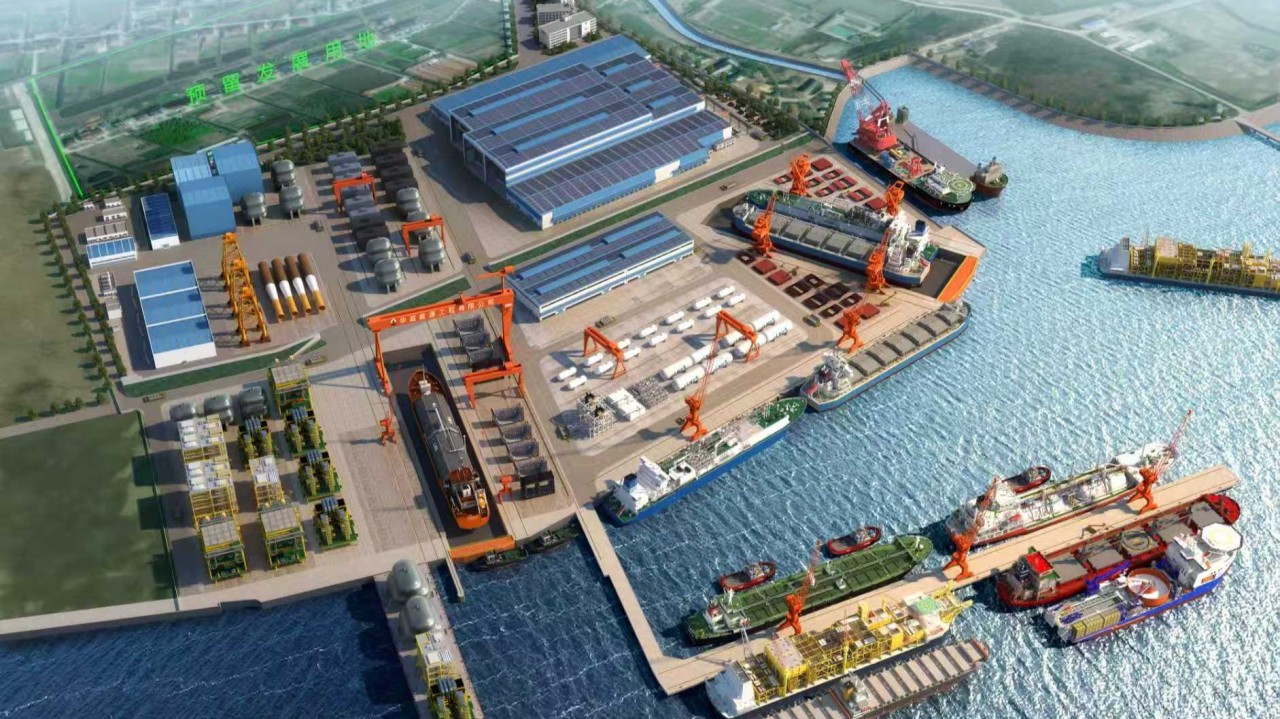

The maritime industry’s debate over alternative fuels is entering a much more practical phase.
For the past several years, shipowners, shipyards and equipment suppliers have devoted enormous attention to determining which fuel pathway — LNG, methanol, ammonia, hydrogen or biofuels — is most likely to dominate shipping’s energy transition. But as carbon costs in Europe rise and vessel-efficiency requirements tighten, another constraint is moving rapidly into focus.
Even if a shipowner has selected the technology, secured the financing and decided to proceed, will there be enough shipyard capacity, engineering manpower, equipment availability and experienced project teams to carry out the retrofit on time?
That question sits at the heart of ABS’s latest report, 2026 Sustainability Outlook: Decision Point — Practical Pathways to 2035. The classification society argues that the shipping industry does not necessarily lack technical options for decarbonization. Increasingly, the limiting factor may be execution capacity: shipyard slots, engineering resources, equipment lead times, skilled labor and project-management capability.
For shipowners seeking to remain competitive over the next decade, securing access to these increasingly scarce resources could become almost as important as choosing the right alternative fuel.
An Alternative-Fuel Conversion Can Occupy a Yard for an Average of 67 Days
The scale of the challenge becomes clearer when looking at retrofit duration.
According to ABS, conventional energy-efficiency retrofits require a median shipyard stay of around 22 days. More complex alternative-fuel conversions, involving modifications to engines, fuel storage, fuel-supply systems, safety systems and ship structures, require an average of approximately 67 days.
That difference is substantial. An alternative-fuel conversion cannot simply be treated as another routine drydocking. In many cases, it resembles a small-scale vessel reconstruction project.
Typical energy-efficiency upgrades may include energy-saving ducts, propeller boss cap fins, shaft generators, air-lubrication systems, wind-assisted propulsion, waste-heat recovery systems, propeller modifications, rudder improvements or localized hull optimization. Many of these technologies can be installed during scheduled drydockings, keeping off-hire periods within manageable limits.
Alternative-fuel conversion is significantly more complicated.
A shipyard may need to replace or modify the main engine, install new fuel tanks and fuel-supply systems, reroute piping and electrical systems, redesign ventilation and firefighting arrangements, introduce explosion-protection and gas-detection systems, and complete risk assessments, classification approvals and sea trials.
For LNG, methanol or ammonia conversions, questions surrounding tank location, space utilization, vessel stability, hazardous-area classification and crew safety may all require renewed engineering analysis.
The 67-day figure represents only the average period during which the vessel physically occupies shipyard capacity. It does not include the feasibility studies, basic engineering, equipment procurement, class approval and supply-chain preparation that may begin months — or in some cases more than a year — before the vessel arrives at the yard.
A shipowner planning a fleet-wide retrofit program for a particular year may therefore need to make investment decisions one or even two years in advance.
This means the emerging capacity constraint is not simply a question of how many drydocks are available. It also concerns the number of engineering companies capable of designing complicated fuel conversions, the availability of experienced project teams and the manufacturing capacity for engines, fuel tanks, pumps, valves, control systems and safety equipment.
Retrofit Capacity Could Tighten as Early as 2028
ABS warns that, under a high-retrofit-demand scenario, global vessel-conversion capacity could begin facing shortages as early as 2028.
That date should be interpreted carefully. It represents the earliest potential bottleneck under an aggressive retrofit scenario, rather than a definitive forecast that the global repair-yard market will inevitably run out of capacity in 2028.
Nevertheless, the timing is significant.
A large number of shipowners may begin making similar investment decisions within the same period. As the EU Emissions Trading System, FuelEU Maritime and other regional carbon regulations progressively raise vessel operating costs, an increasing proportion of the existing fleet could enter a period between 2027 and 2030 in which owners must either improve efficiency, reconsider fuel strategy or accept materially higher carbon-related costs.
The strength of the newbuilding market is adding another layer of pressure.
ABS notes that, of newbuilding contracts signed in 2026 up to the relevant reporting date, around 57% are scheduled for delivery after 2028. This indicates that a substantial amount of forward production capacity at the world’s major shipyards has already been committed.
Newbuilding yards and repair or conversion yards are not identical markets. However, sophisticated alternative-fuel conversions often require many of the same scarce resources: large docks, heavy-lifting capacity, specialized engineering expertise and experience integrating alternative-fuel systems.
The result could be a situation in which a shipowner has a suitable vessel, has selected mature technology and is prepared to invest — but cannot secure the right shipyard slot at the desired time.
Even when yard capacity remains available, concentrated demand could drive up shipyard pricing, equipment costs and project-management expenses.
There is also the cost of taking the vessel out of service.
A ship spending more than two months in a conversion yard loses earning days and may require replacement tonnage, schedule adjustments or chartering arrangements. For large containerships, tankers and gas carriers, the opportunity cost of off-hire alone can materially affect the economics of a retrofit project.
Waiting for Fuel Certainty Could Create a Different Kind of Cost
The ABS assessment changes the timing logic behind shipowners’ decarbonization strategies.
Some owners have preferred to wait until global regulation, green-fuel availability and alternative-fuel pricing become clearer before committing to major vessel conversions. That strategy reduces the risk of investing too early in a fuel pathway that may later prove commercially disadvantaged.
But waiting can also create an opportunity cost.
As retrofit demand becomes more concentrated, owners delaying technical evaluation and shipyard negotiations may find themselves facing fewer available slots, longer equipment lead times, higher conversion costs and greater difficulty meeting regulatory requirements on schedule.
That does not mean every vessel should immediately undergo an alternative-fuel conversion.
The investment case still depends heavily on vessel age, remaining useful life, technical configuration, trading pattern, fuel availability, charter arrangements and expected future carbon costs.
For older vessels with limited remaining life, particularly those trading in less predictable spot-market patterns, major propulsion-system conversion may never generate an acceptable return.
For relatively young vessels expected to remain in service for another decade or more — particularly ships operating on fixed liner networks where alternative-fuel supply can be secured — early planning for fuel conversion combined with energy-efficiency upgrades may offer a much stronger commercial case.
ABS therefore emphasizes the importance of layered retrofit preparation.
Even where a full alternative-fuel conversion is not yet justified, owners can conduct retrofit-readiness assessments, three-dimensional vessel scanning, preliminary engineering and structural reservation work. Mature efficiency technologies can also be installed during the next scheduled docking.
By breaking a major future conversion into several preparatory stages, shipowners can reduce the pressure associated with a single large retrofit campaign while preserving flexibility as fuel markets and regulation evolve.
A 14,000-TEU Containership Could Face Nearly $20 Million in Annual Carbon Costs
One reason retrofit capacity is becoming strategically important is that the cost of doing nothing is rising quickly.
Under its baseline carbon-price assumptions, ABS estimates that a conventional-fuel 14,000-TEU containership with substantial exposure to European trades could face annual carbon-related costs approaching $20 million by 2035.
The figure is highly dependent on fuel consumption, exposure to EU-related voyages, allowance prices under the EU ETS, the vessel’s FuelEU Maritime compliance deficit and operating profile. It should therefore not be applied universally to every 14,000-TEU vessel.
But it illustrates the scale of the financial exposure that carbon regulation may create for large ships.
Once annual carbon costs reach several million dollars — or potentially tens of millions — the economics of efficiency investment begin to change fundamentally.
Historically, the value of an energy-saving device was largely measured through bunker savings. In the emerging regulatory environment, the same investment may also reduce EU ETS allowance purchases, lower FuelEU Maritime compliance costs, improve CII performance and reduce the quantity of expensive low-GHG fuels required to operate the vessel.
Every percentage point of energy saved can therefore generate both fuel-cost savings and carbon-cost savings.
This is also where the latest assessments from ABS and DNV increasingly converge.
DNV has argued that energy-efficiency measures and slower operating speeds could materially reduce global fleet energy demand before 2030. ABS takes the analysis one step further by warning that, if a large number of vessels attempt to install efficiency technologies and convert to alternative fuels within the same period, the industry could run into a shortage of shipyard and engineering capacity.
Taken together, the two reports suggest that vessel retrofitting is evolving from an individual shipowner’s technical decision into a global industrial-capacity challenge.
Environmental Performance Is Starting to Affect Charter Rates and Asset Values
ABS also points to another important development: vessel environmental performance is increasingly influencing both charter markets and secondhand asset values.
According to the report, vessels rated D may face charter-rate discounts of approximately 5% to 15%. In some market segments, E-rated ships may find it more difficult to secure employment, while secondhand values can potentially suffer discounts of around 12% to 15%.
These figures should not be treated as universal pricing rules across every vessel type, age profile or market cycle. But they indicate that poor environmental performance is beginning to move beyond regulatory compliance and into vessel cash flow and asset valuation.
Charterers increasingly have to consider fuel efficiency, allocation of EU ETS costs, FuelEU Maritime compliance obligations and their own supply-chain decarbonization targets when selecting ships.
A less efficient vessel may burn more fuel, generate greater emissions-liability costs and make it harder for a charterer to reduce Scope 3 emissions.
As a result, two vessels of similar age, size and technical condition may no longer command the same commercial terms if their energy and emissions performance differ significantly.
Once charter-rate discounts and secondhand-value discounts begin appearing at the same time, the shipowner’s retrofit calculation also changes.
The decision is no longer simply whether the fuel savings justify the equipment cost. Retrofitting can affect future chartering opportunities, financing conditions, insurance assessments, residual asset values and liquidity in the sale-and-purchase market.
Shipping decarbonization is therefore entering a stage in which charter income, asset value and retrofit investment increasingly interact.
Higher-efficiency vessels may secure stronger commercial performance, allowing owners to continue investing in those assets. Less efficient vessels that remain unimproved could gradually be pushed toward the margins of the market.
2027–2028 Could Become a Critical Preparation Window
ABS considers the period around 2027 and 2028 potentially important for shipowners seeking to secure shipyard, equipment and engineering capacity ahead of a possible increase in demand.
“Securing capacity” does not necessarily mean committing immediately to an expensive alternative-fuel conversion.
It means identifying early which vessels deserve long-term investment, which can benefit from proven efficiency technologies, which are technically suitable for future dual-fuel conversion, which should remain in service through speed reduction and operational optimization, and which may be better candidates for disposal before regulatory costs rise further.
For major owners operating dozens or even hundreds of vessels, retrofit planning will also need to be aligned with scheduled drydockings, charter expiries and the geographic distribution of repair facilities.
If too many ships enter conversion programs during the same year, the owner’s own technical-management organization may become a bottleneck.
The leading shipowners of the next decade may therefore need to develop internal project systems covering engineering, procurement, financing, shipyard supervision, crew training and operational verification — while continuously using real operating data to assess whether different energy-saving technologies are delivering their promised performance.
Equipment manufacturers and repair yards, meanwhile, could be entering a new market cycle.
As the volume of vessel upgrades rises, companies with expertise in air lubrication, wind-assisted propulsion, shaft generators, waste-heat recovery, onboard carbon capture and alternative-fuel conversion could see substantial new demand.
Major repair centers in China, Singapore, Türkiye, the Middle East and Europe may increasingly compete for large decarbonization retrofit projects.
Yards and technology suppliers capable of providing standardized engineering, modular installation, financing support and shorter off-hire periods could gain a meaningful competitive advantage.
Shipping Decarbonization Is Moving Into the Large-Scale Engineering Phase
Installing an energy-saving device on one vessel may require only a few weeks.
The challenge arises when thousands of ships around the world begin requesting similar work within a relatively narrow period.
At that point, drydock space, engineers, specialist equipment and skilled workers all become scarce resources.
That is arguably the most important message in the ABS outlook: shipping decarbonization needs to be considered not only in terms of fuels and technologies, but also in terms of the industrial capacity required to implement them.
Competition in shipping over the next decade will increasingly take place on several fronts simultaneously.
Owners will compete for competitively priced low-GHG fuels. They will compete through fleet efficiency. They will compete on their ability to control carbon costs. And they may increasingly compete for access to shipyard conversion capacity itself.
The long-term fuel pathway remains uncertain, but the direction of travel is much clearer when it comes to vessel efficiency, rising carbon exposure and increasing retrofit demand.
The signal from ABS is therefore straightforward: shipowners can remain flexible in their fuel choices, but they cannot afford to postpone execution planning indefinitely.
With a large newbuilding orderbook consuming future shipyard resources and sophisticated fuel conversions requiring an average yard stay of around 67 days, waiting until regulatory pressure becomes acute could mean higher prices, longer queues and greater operational disruption.
By around 2028, the scarce resources in shipping’s decarbonization transition may no longer be limited to green methanol, low-carbon ammonia or sustainable biofuels.
A confirmed shipyard slot capable of delivering a complex retrofit on schedule could become just as valuable.
The owners that complete fleet screening, engineering preparation and capacity planning earlier will be better positioned to manage the carbon-cost competition that is likely to intensify between 2030 and 2035.
Sources: ABS, “2026 Sustainability Outlook: Decision Point — Practical Pathways to 2035”; ABS public releases; DNV industry research; and publicly available market data.


READ MORE
 Sustainability
WMMF 2026 Promotional Film Debuts in London
 Sustainability
Xinde Marine Forum London 2026: Green Shipping Enters a Strategic Reset
 Sustainability
Shipping Has a Net-Zero Target — but Still Lacks the Rules to Deliver It
 Sustainability
Fueling Now and the Future: IBIA Hong Kong Forum on Alternative Marine Energy
 Sustainability
Chimbusco completes first ammonia bunkering operation
 Sustainability
324 days ahead of schedule — another milestone for China’s shipbuilding industry
 Sustainability
The Next Shipping Race Will Be About Who Can Burn Less Fuel
 Sustainability
World’s First Wind-Assisted LNG Carrier Named, Featuring Two 49-Metre Hard Sails
 Sustainability
World’s 1st Operational Ammonia Bunkering Vessel Enters Service,Backed by CMB.TECH
 Sustainability