


CMA CGM’s 13,000-TEU Giant Starts “Drinking” Too
.
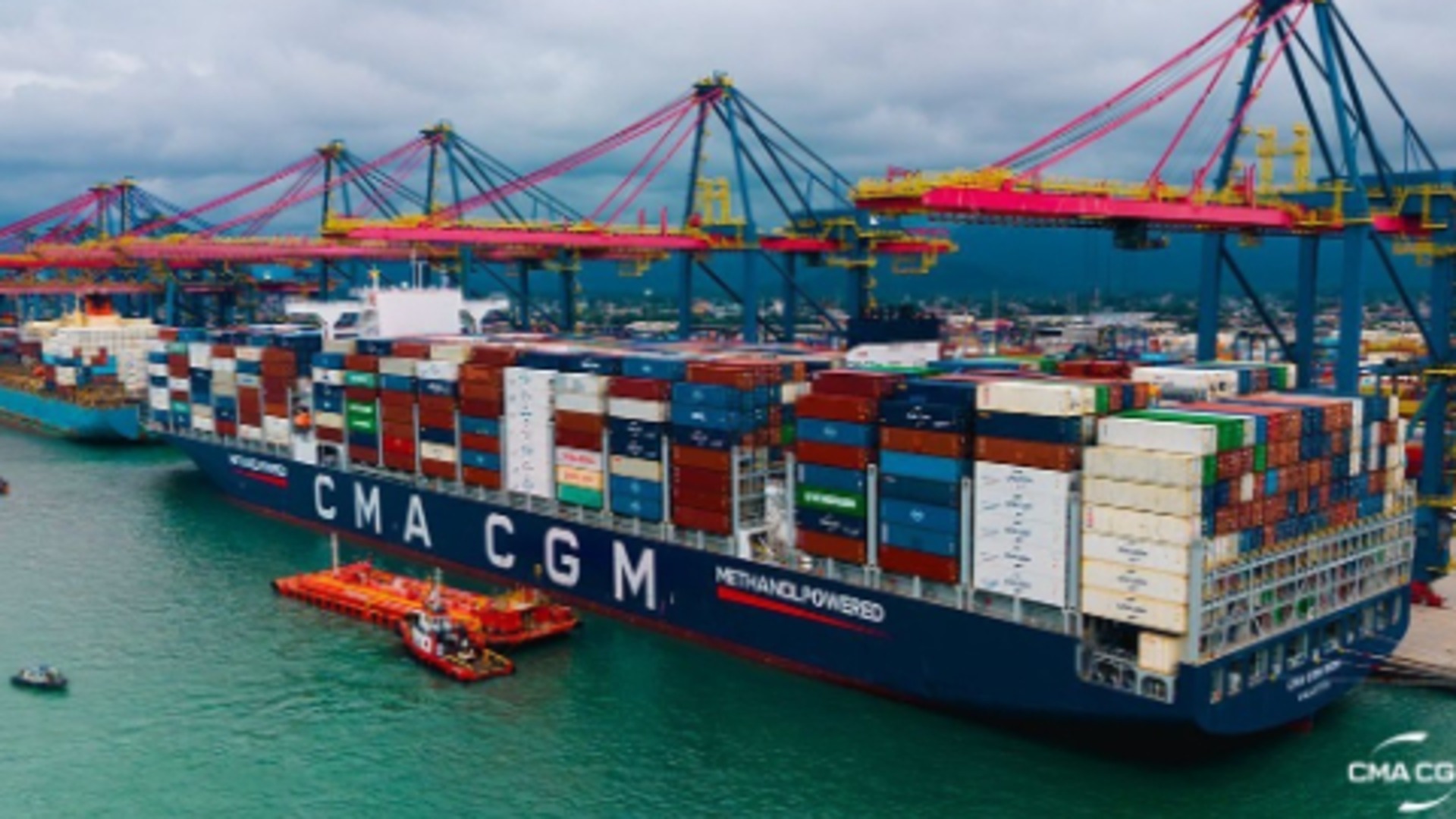
Following Maersk’s 100% ethanol trials, CMA CGM has taken the next step by bunkering 500,000 litres of Brazilian bioethanol into the 13,000-TEU CMA CGM IRON. The operation at the Port of Santos brought together an entire marine-fuel supply chain—from certified production and terminal storage to barge delivery and engine approval—before the vessel departed for Asia and China. Together with growing activity from Maersk, X-Press Feeders, Vale and major engine manufacturers, the project suggests ethanol is moving rapidly from an experimental option towards a commercially deployable marine fuel.
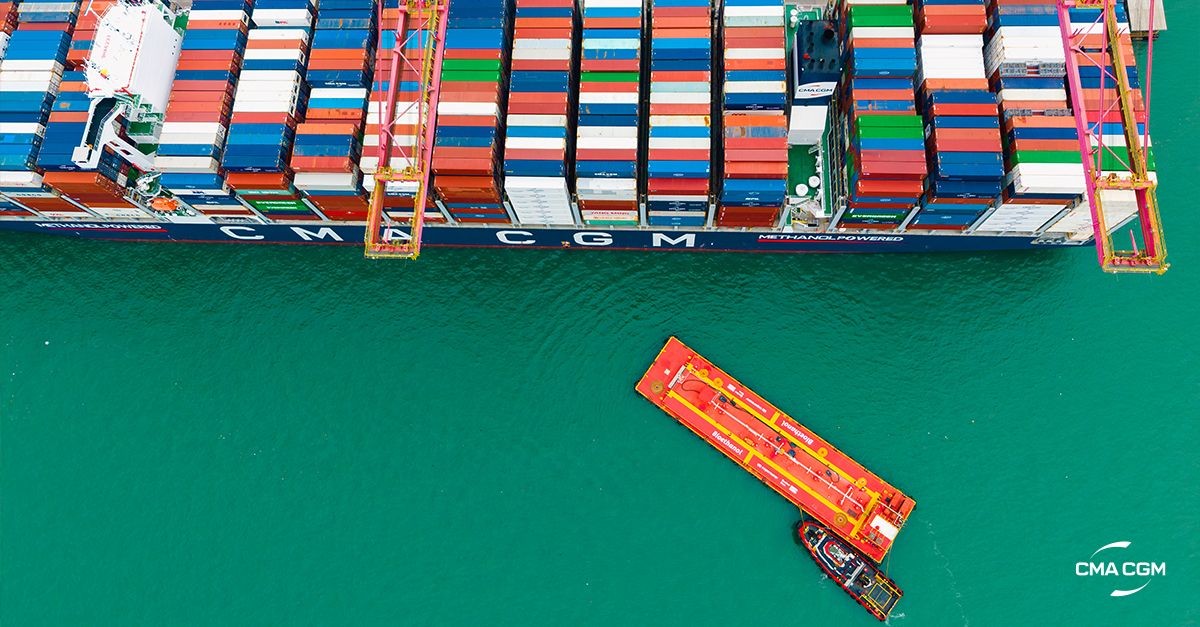
CMA CGM has joined the growing group of shipowners testing ethanol as an alternative fuel for ocean-going vessels.
On July 12, the 13,000-TEU containership CMA CGM IRON completed a bioethanol bunkering operation at the Port of Santos in Brazil. CMA CGM described it as the first operation of its kind involving a deep-sea containership in the country, while fuel supplier Bunker One called it Latin America’s first bioethanol bunkering operation for an ocean-going vessel.
Bunker One disclosed that the vessel received 500,000 litres of anhydrous bioethanol supplied by Brazilian sugar and bioenergy group Copersucar. The fuel was transferred ship-to-ship by Bunker One’s bunker barge DONA ISA.
After completing the operation, CMA CGM IRON departed Santos on July 14 carrying a range of containerised cargoes. The vessel is scheduled to call in Sri Lanka and Singapore before reaching its final destination in China.
More than a single fuel transfer
The significance of the operation extends beyond the volume of ethanol delivered.
The project involved CMA CGM, Copersucar S.A. , Santos Brasil , Ageo Terminais , Bunker One and engine manufacturer Everllence . Copersucar organised the fuel supply, AGEO provided dedicated liquid-bulk storage infrastructure at Santos, Santos Brasil coordinated terminal activities, Bunker One handled delivery and ship-to-ship bunkering, while Everllence supported the technical application of ethanol in the vessel’s propulsion system.
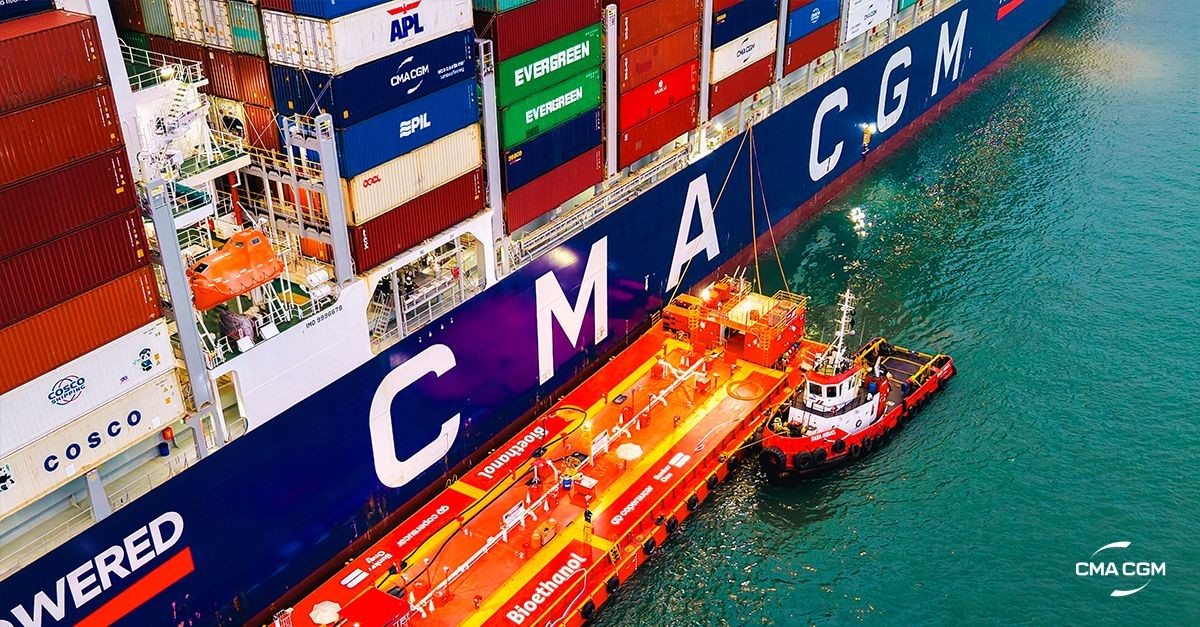
The bioethanol had to be transported to the port, stored in dedicated facilities and transferred by specialised barge under low-flashpoint fuel procedures. Regulatory, port, maritime and operational authorities were also involved in confirming the safety and compliance of the transport, storage and bunkering process.
This makes the Santos project materially different from an engine-bench test or a small-volume blend trial. It demonstrated an end-to-end marine ethanol supply chain at commercial scale, linking certified Brazilian production with port storage, marine delivery infrastructure and an ocean-going vessel operating on an international service.
For ethanol to become a regular marine fuel, production capacity alone will not be sufficient. Ports will need approved storage systems, trained personnel, fuel-quality procedures, specialised barges, emergency-response arrangements and clear regulatory frameworks. The Santos operation tested many of these elements together.
From a methanol vessel to a certified tri-fuel ship
Delivered in 2025, CMA CGM IRON is the first of twelve 13,000-TEU vessels in CMA CGM’s new methanol-capable series. The ship was constructed by HD Hyundai Samho in South Korea and originally entered service as a methanol dual-fuel containership.
Following the latest technical certification, CMA CGM now describes the vessel as the first 13,000-TEU containership equipped with a certified tri-fuel engine capable of operating on conventional marine fuel, methanol and bioethanol.
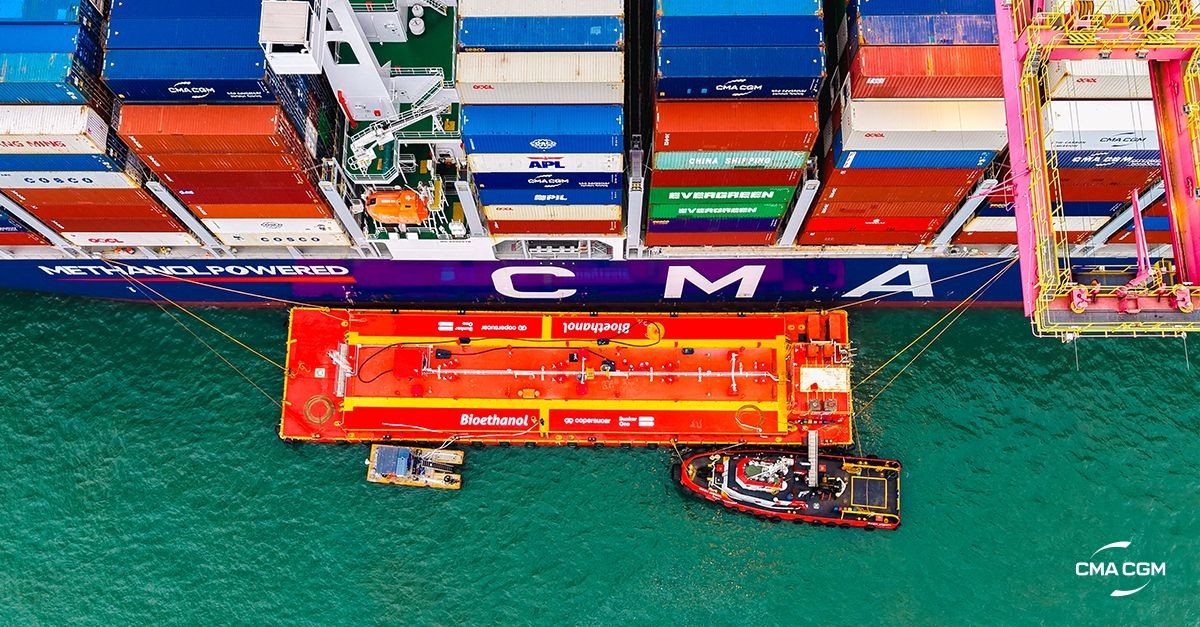
The vessel is powered by an Everllence-B&W G95ME-C10.5-LGIM main engine. The LGIM platform was originally developed around liquid alcohol fuels, particularly methanol, but similarities between methanol and ethanol allow the engine concept to be adapted for ethanol use through fuel-system validation, control modifications, material checks and formal approval.
This does not mean every methanol-powered vessel can automatically begin burning ethanol. Compatibility must still be established for the specific engine, fuel-supply system, tanks, seals, control equipment and safety procedures, followed by approval from the relevant class society and authorities.
Nevertheless, the ability to expand an existing methanol platform to ethanol without replacing the entire propulsion system is one of the fuel’s strongest commercial arguments.
Everllence has separately signed a cooperation agreement with Brazilian mining group Vale to develop an advanced ethanol-powered engine based on its established ME-LGI platform. The manufacturer highlights ethanol’s liquid state under normal conditions, low sulphur content and compatibility with established handling methods as potentially valuable attributes for shipping. (Everllence)
GCGF: from technical feasibility to commercial deployment
The Singapore-based Global Centre for Green Fuels, or GCGF , has been following the development of marine ethanol closely.
Global Centre for Green Fuels is a not-for-profit think tank working with policymakers, regulators and industry stakeholders on biofuel policy, technology and market development. Its work includes marine applications for ethanol and methanol, lifecycle emissions, sustainable supply potential and the development of commercially workable fuel pathways.
According to materials shared with Xinde Marine News, GCGF held a small technical exchange with CMA CGM’s team in Singapore in late June, focusing on ethanol and methanol bunkering safety. GCGF maritime adviser Chris Chatterton also attended activities connected with the bunkering project at the Port of Santos.
Commenting after the operation, Chris Chatterton said the project may represent the first commercial-scale ship-to-ship ethanol bunkering of a containership. He stressed that its importance went beyond the transfer itself, demonstrating that ethanol had moved beyond technical feasibility and into real-world commercial deployment.
The project also illustrated the broad cooperation required to introduce a new marine fuel. Producers, bunker suppliers, terminal operators, shipowners, ports, regulators and technology providers all had to work within the same operational framework.
Chatterton had previously identified Santos and Singapore as likely early centres for commercial marine ethanol bunkering. He argued that ethanol could be introduced incrementally into methanol-capable fleets, offering shipowners greater fuel flexibility without immediately committing capital to a single future-fuel pathway.
The successful Santos operation arrived only weeks after that assessment.
Maersk moved first with 100% ethanol
CMA CGM’s bunkering follows a series of ethanol trials conducted by Maersk.
Maersk initially tested a blend containing 10% ethanol and 90% methanol aboard Laura Mærsk, followed by a 50:50 blend. The company said the early results showed ethanol could be blended with methanol without compromising engine performance, supporting trials with progressively higher ethanol content.
Maersk subsequently completed two sailings using 100% ethanol, moving beyond blended-fuel trials and demonstrating the fuel’s use in a vessel originally designed around methanol propulsion. The company views ethanol as a complement to methanol because it has an established global market, existing infrastructure and similar fuel characteristics.
The difference between the Maersk and CMA CGM projects is mainly one of scale and supply-chain configuration.
Maersk’s work established a progressive technical pathway from E10 and E50 blends to pure ethanol operation. CMA CGM’s project involved a 13,000-TEU deep-sea ship and a commercial-scale, ship-to-ship supply operation at one of South America’s largest ports.
Together, the two programmes show how ethanol is moving through successive stages: combustion testing, blended operation, 100% ethanol sailing and large-scale port bunkering.
The two carriers also have a history of cooperation on shipping decarbonisation. In 2023, Maersk and CMA CGM agreed to work together on lifecycle emissions assessment, standards for sustainable alternative fuels, safe handling and bunkering procedures for methanol-powered ships, and research into additional net-zero solutions. Their original announcement did not specifically identify ethanol as a separate workstream, and there is no evidence that the Santos operation resulted directly from that agreement. However, both carriers are now expanding the fuel flexibility of their methanol-capable fleets.
Ethanol activity is spreading across shipping
CMA CGM and Maersk are not alone.
Singapore-based X-Press Feeders has also tested a blend of 10% ethanol and 90% methanol on a containership in Rotterdam, adding another operational example within the container sector.
In dry bulk shipping, Vale and Shandong Shipping have agreed to introduce two 325,000-dwt Guaibamax ore carriers capable of using ethanol, methanol and conventional bunker fuel. The vessels are scheduled to enter service from 2029 under long-term arrangements serving Vale’s iron-ore trades. Their design will also include options for future conversion to LNG or ammonia.
and WinGD Ltd. has secured the first orders for ethanol-optimised X-DF-M/E engines for the two Shandong Shipping vessels, which will be constructed by Beihai Shipbuilding in China. The engines are intended to operate primarily on ethanol and are based on WinGD’s existing methanol engine platform, with modifications reflecting the different energy density of the two alcohol fuels.
Everllence, meanwhile, is advancing its own ethanol engine programme with Vale, showing that both of the major low-speed engine technology groups are now developing commercial solutions for the fuel.
These developments suggest three parallel markets are beginning to emerge: ethanol use in existing methanol-capable vessels, dedicated ethanol-optimised engines for newbuildings, and port-based ethanol bunkering infrastructure.
Brazil and Santos matter
Brazil is central to the emerging marine ethanol market because it already possesses large-scale production, logistics and certification systems developed primarily for road transport.
The fuel supplied to CMA CGM IRON came from Copersucar’s established and certified supply chain. Brazil’s RenovaBio framework regulates the carbon performance and sustainability of biofuels, while the project partners said the relevant sugarcane supply was subject to sustainability and zero-deforestation requirements.
Santos offers another critical component: proximity to production, export infrastructure, liquid-bulk terminals, container operations and international shipping services.
CMA CGM completed its acquisition of Santos Brasil in 2025. The group now intends to use its port position, local partnerships and access to Brazilian renewable-energy resources to support the development of Santos as a future low-carbon marine-fuel hub for South America.
By 2031, CMA CGM expects to operate around 200 containerships capable of using lower-carbon energy sources. Bioethanol is now emerging alongside methanol, biomethane and other alternative fuels as another option within that strategy.
Commercial promise, but significant work remains
Ethanol offers several potential advantages. The United States and Brazil already have large production bases, the fuel is liquid under ambient conditions, and it contains around 35% more energy per unit of mass than methanol. In some markets, its price has also been competitive with low-sulphur fuel oil and significantly below that of green methanol.
Those advantages do not eliminate the remaining challenges.
Lifecycle emissions vary widely depending on feedstock, farming practices, land-use effects, production energy, transport distance and certification methodology. Ethanol also has lower energy content than conventional fuel oil, meaning ships require more fuel by weight to generate the same amount of energy.
Broader adoption will therefore depend on robust sustainability certification, recognition under international and regional regulations, competitive long-term supply contracts, engine approvals and the development of bunkering networks beyond a small number of pioneering ports.
One bunkering operation does not create a mature global fuel market. But the Santos project has completed an important missing link: certified bioethanol was moved through dedicated port infrastructure, delivered by specialised barge to a large deep-sea containership and placed into commercial operation on an international voyage.
From Maersk’s E10 and E50 trials to 100% ethanol sailings, and now CMA CGM’s 500,000-litre bunkering in Brazil, ethanol’s progress in shipping is accelerating.
As CMA CGM IRON sails from Brazil towards China, the vessel is carrying more than containerised cargo. It is also testing whether one of the world’s most established biofuels can become a practical part of the future marine-energy mix.

READ MORE
 Containers
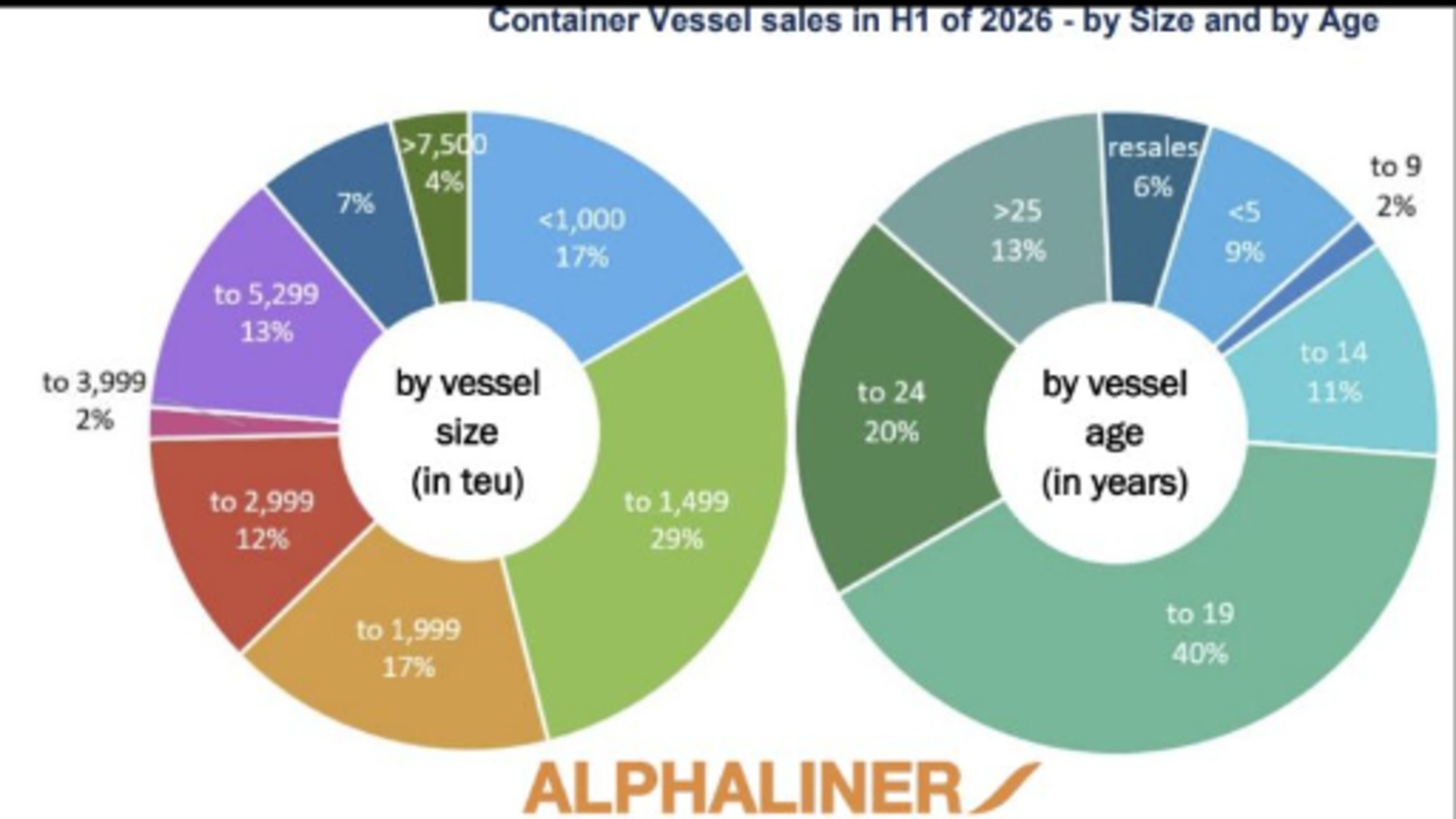
Secondhand containership sales fell sharply in the first half of 2026 — but vessel prices remained firm.
 Containers
Ningbo Containerized Freight Index Weekly Commentary Overall Shipping Demand Declined; Freight Rates Fell on Multiple Routes
 Containers
After 1,000 ships, MSC is still not slowing down.
 Containers
20 Days From China to Europe: Sea Legend Relaunches CAX Arctic Express with Eight Weekly Sailings
 Containers
Spot Rates Surge on Major Trades as US West Coast Tops $6,000/FEU, East Coast Nears $8,000/FEU
 Containers
Ningbo Containerized Freight Index Weekly Commentary Freight Rates Declined on Select Routes; Composite Index Gain Narrowed
 Containers
From 96 Containers to a Three-Storey Office Building in Just 11 Days
 Containers
COSCO SHIPPING Adds Another Full-Electric Container Vessel
 Containers
Hormuz Fallout Fuels One of Container Shipping’s Biggest Rate Spikes in History
 Containers