

From Vessel Seizure to Prison: U.S. Shadow-Fleet Enforcement Reaches the Master
1848892_2
Walter (宏利)
Published 10:29

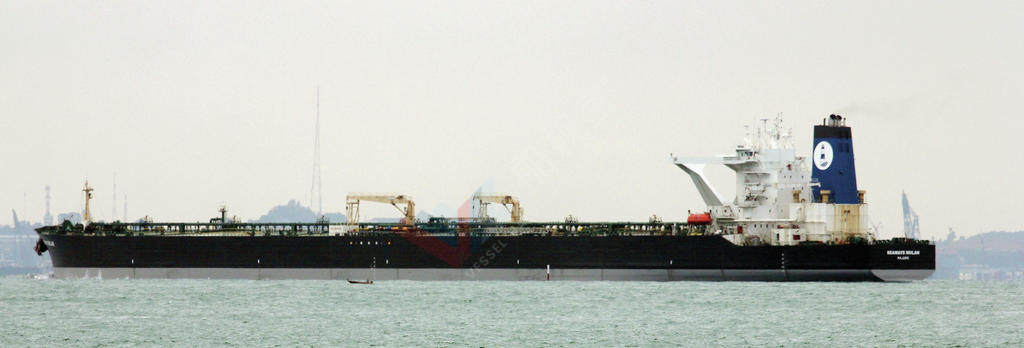
A tanker refused a U.S. Coast Guard order to stop and sailed across the Atlantic to evade interdiction. After a pursuit lasting more than two weeks, the vessel was seized in the North Atlantic. Months later, its former master was sent to prison—and the tanker was sold for recycling.

The U.S. Department of Justice announced on 7 August that Avtandil Kalandadze, a 47-year-old Georgian national and former master of the Bella 1, had been sentenced to 10 months in federal prison. He will be deported after completing his sentence.

The case sends a clear signal: U.S. enforcement against the so-called shadow fleet is moving beyond vessels, owners and operators to the seafarers who carry out operations on board.

A pursuit across the Atlantic

According to the U.S. Department of Justice, Kalandadze served as master of the Bella 1 from September until late December 2025. During that period, the tanker transported approximately 1.8 million barrels of Iranian-origin oil to Asia.

Prosecutors said the vessel used concealment methods commonly associated with shadow-fleet operations. These included sailing with its Automatic Identification System switched off and obscuring its name while conducting a ship-to-ship transfer of Iranian oil.

In December 2025, the Bella 1 was heading towards Venezuela when it was intercepted by the U.S. Coast Guard cutter Munro. The tanker ignored orders to heave to and continued into the Atlantic, triggering a pursuit lasting more than two weeks.

The DOJ disclosed another important detail. During the escape, Kalandadze allegedly acted on instructions from a corporate representative of the vessel’s operator, repeatedly refusing orders from U.S. law-enforcement officers and destroying records and information on board.

During the pursuit, the tanker was renamed Marinera and reflagged to Russia. U.S. authorities maintained that the change did not alter its legal status because it had allegedly been sailing under a false flag when the Coast Guard first approached it.

On 7 January 2026, U.S. Coast Guard and military personnel ultimately seized the tanker in the North Atlantic under a judicial seizure warrant.

Kalandadze pleaded guilty on 12 June. Under U.S. law, knowingly failing to obey an authorised federal law-enforcement officer’s order to heave to carries a maximum sentence of five years’ imprisonment. He was ultimately sentenced to 10 months.

He was not convicted simply for working on a shadow-fleet vessel

The legal boundary in this case matters.

“Shadow fleet” is a policy and industry label, not a standalone criminal offence. Kalandadze pleaded guilty to one count under Title 18, Section 2237 of the U.S. Code: knowingly failing, as the master or person in charge of a vessel, to obey an authorised federal officer’s order to heave to.

The Bella 1’s Iranian oil cargoes, AIS shutdowns, concealed identity, STS operations and destruction of records formed an important part of the prosecution’s account of the case. However, the DOJ’s public sentencing announcement shows that Kalandadze’s conviction was limited to failing to heave to. These other actions were not disclosed as separate convictions.

The judgment therefore should not be interpreted to mean that merely serving aboard a sanctioned tanker automatically results in imprisonment. Individual criminal exposure depends on factors including the seafarer’s conduct and knowledge, the vessel’s legal status, the enforcement authority’s jurisdiction and the specific laws allegedly violated.

The legality of the Bella 1 seizure also attracted debate under international law. During the pursuit, the vessel obtained Russian registration, raising questions over whether it remained stateless and whether the United States had authority to board and seize it under the law of the sea.

Kalandadze’s guilty plea meant those jurisdictional questions were not fully tested at trial. The case is a significant warning, but it should not be treated as establishing automatic U.S. criminal jurisdiction over every sanctioned foreign vessel and its crew. A detailed assessment published by Just Security concluded that the publicly available legal basis for the seizure remained open to challenge.

The enforcement chain is extending on board

The United States has traditionally targeted sanctions-evading shipping through OFAC designations, asset freezes, transaction restrictions and the exclusion of vessels from financial and maritime services.

The Bella 1 had been added to the U.S. sanctions list in June 2024, together with its then-registered owner, Louis Marine Shipholding Enterprises. The U.S. Treasury alleged that the tanker transported sanctioned cargo for networks connected to Iran’s Islamic Revolutionary Guard Corps-Qods Force. U.S. Treasury announcement

Washington had also previously imposed sanctions directly on individual tanker masters involved in sanctioned trades. The Bella 1 prosecution advances that approach further: once a maritime interdiction begins, a master may face criminal investigation and imprisonment for refusing orders, obstructing a boarding, destroying evidence or providing false information.

When announcing Kalandadze’s guilty plea in June, the DOJ explicitly directed its warning at shadow-fleet owners and operators, as well as those who crew or otherwise support such vessels.

That language suggests investigators are increasingly following the operational chain from the vessel and its registered owner to the operator, shore-based decision-makers, master and senior officers.

Instructions from shore management do not automatically shield a master from personal responsibility. Orders to switch off AIS without a legitimate safety reason, conceal the vessel’s identity, use questionable registration documents, destroy records or resist an interdiction can expose those carrying them out to direct legal consequences.

Before joining a vessel, masters and senior officers increasingly need to check its IMO number, flag registration, ownership and management history, sanctions status, classification and insurance arrangements.

If a vessel is intercepted, the master should promptly contact the flag administration, owner’s designated person ashore, P&I insurer and qualified legal counsel. Communications, logbooks, AIS records and shore instructions should be preserved. Destroying information, making false statements or attempting a dangerous escape can dramatically increase individual exposure.

According to a Reuters report published on 10 August, the former Bella 1—subsequently renamed Marinera and later Era—has now been sold by the U.S. government to vessel-recycling company GMS and is expected to be dismantled in India.

From sanctions designation and an Atlantic pursuit to vessel seizure, the master’s imprisonment and the tanker’s eventual recycling, the Bella 1 case illustrates an increasingly complete enforcement chain.

For international seafarers, the practical message is clear: sanctions risk is no longer confined to company accounts and vessel assets. Those who knowingly carry out high-risk instructions on board may also become enforcement targets.


PURCHASE MEMBERSHIP

You need to purchase a membership to read this article

Payment