


WS1,200. $25m for One Voyage: Sinokor’s VLCC Gamble Is Paying Off in Hormuz
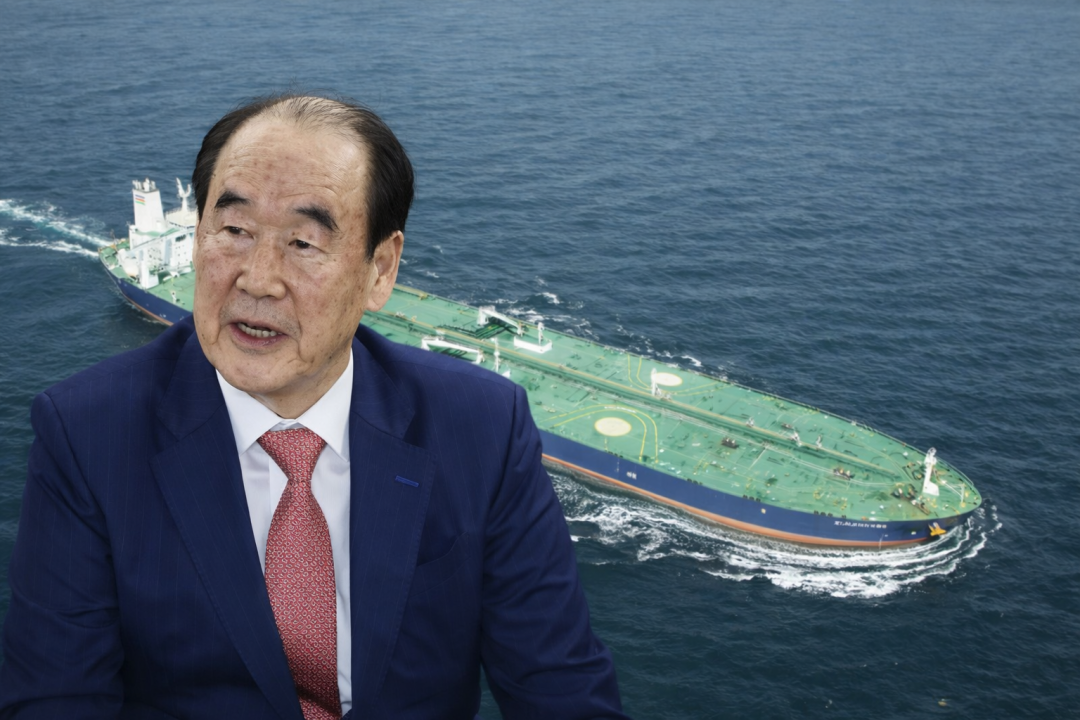

From buying 35 VLCCs in a single month, to MSC moving to acquire a 50% stake, and then becoming a key provider of emergency tanker capacity for ADNOC, Sinokor’s aggressive VLCC expansion is now taking on a very different meaning. The latest Basrah-India fixture at WS 1,200 shows that what Sinokor accumulated was not simply ships — it was control over scarce, executable capacity.
A single VLCC voyage is now costing as much as $25 million.
India’s Reliance Industries has reportedly chartered a VLCC controlled by South Korea’s Sinokor Merchant Marine to load around 2 million barrels of crude from Basrah, Iraq, at an extraordinary rate of around WS 1,200.
The total freight bill is estimated at $23 million to $25 million.
Before the outbreak of war, a comparable voyage would typically have cost around $2 million, with Worldscale levels closer to WS 80–90.
In other words, the cost of moving the cargo has risen to roughly 12 times pre-war levels.
On a 2-million-barrel cargo, freight alone now works out at approximately $11.5 to $12.5 per barrel.
The immediate question is obvious: why would Reliance still agree to pay it?
One reason is that Iraq is offering exceptionally deep discounts on Basrah crude. SOMO has reportedly offered August-loading Basrah Medium at discounts of around $25–27 per barrel, while Basrah Heavy discounts have reached approximately $27.80–29.80 per barrel.
Even after paying record VLCC freight, the buyer may therefore still retain a meaningful economic margin.
But for the tanker market, the more important point is something else.
Once again, the ship is coming from Sinokor.
Xinde Marine News has been following the South Korean company’s VLCC expansion for much of this year.
Looking back now, the aggressive accumulation of tanker tonnage that appeared extraordinary at the beginning of 2026 is beginning to show a much broader strategic value under the extreme conditions created by the Strait of Hormuz crisis.
January: 35 VLCCs Bought in One Month
On January 30, Xinde Marine News examined Sinokor’s rapid VLCC expansion under the headline: “35 VLCCs Bought in One Month — Is This Shipping Company Trying to Control the Market?”
By January 26, Sinokor had been linked to 35 out of 45 reported VLCC secondhand transactions during the year, accounting for around 78% of the market.
Industry sources at the time suggested that if purchases made since December 2025 were included, the real number could already have exceeded 40 vessels.
Sinokor was also locking in ships through the time-charter market.
Frontline disclosed that seven VLCCs had been fixed for one year at an average rate of approximately $76,900 per day, with Sinokor widely linked to the chartering programme.
At the time, market estimates suggested that if owned tonnage, secondhand acquisitions and ships controlled under one- to three-year charters were all included, Sinokor’s broadly defined controlled VLCC fleet could be approaching 130 vessels.
That figure requires some qualification.
It did not mean Sinokor owned 130 VLCCs outright. It represented a broader estimate of vessels under ownership, charter or commercial control.
A separate figure reported shortly before the war offers a clearer picture of Sinokor’s position in the trading market.
By February 24, Sinokor was reportedly operating around 78 VLCCs in the active spot market, with the number expected to rise to at least 88 and potentially exceed 100.
At 88 vessels, Signal Group estimated that Sinokor could control approximately 24% of the actively traded VLCC spot fleet, equivalent to roughly 12% of the entire global VLCC fleet.
The timing matters.
Much of this expansion occurred before the war fundamentally changed shipping conditions around Hormuz.
That means it would be misleading to suggest that Sinokor “bet on war”.
Its original bet was on the VLCC market itself: crude-trade growth, ageing tonnage, limited availability of high-quality compliant vessels, fleet renewal requirements and the long-term value of large crude carriers.
What the Hormuz crisis did was add another layer of value to an already enormous capacity platform.
When only a limited number of vessels can actually perform a voyage, control over ships becomes control over pricing power.
Then MSC Appeared
Another piece of the puzzle emerged on March 19.
Regulatory filings in Cyprus showed that MSC subsidiary SAS Shipping Agencies Services was moving to acquire a 50% stake in Sinokor, with MSC expected to jointly control the company alongside existing shareholder Ga-Hyun Chung.
Xinde Marine News subsequently examined the development in an article on the emerging MSC-Sinokor relationship.
The transaction should not be over-interpreted.
There is currently no public evidence showing that MSC financed all of Sinokor’s January VLCC purchases, nor can it be assumed that every acquisition had been jointly planned by the two groups from the beginning.
But from a corporate strategy perspective, MSC’s arrival materially changes the significance of Sinokor’s expansion.
The world’s largest container shipping group would gain exposure to a rapidly scaled crude tanker platform, while Sinokor would potentially gain a far stronger capital and maritime-asset partner.
MSC has already expanded into car carriers through its acquisition of Gram Car Carriers, while continuing to build positions in containerships, terminals, towage and logistics.
Sinokor adds something different to that portfolio: a major crude transportation platform.
The common pattern is increasingly visible.
Instead of building specialist shipping businesses from scratch, large capital groups can acquire or jointly control existing platforms that already have ships, operating teams, customers and market expertise.
The Hormuz crisis then began to test what Sinokor’s expanded VLCC platform could actually do.
From “Owning Ships” to “Owning Ships That Can Actually Go”
This is the most important distinction in the Sinokor story.
The world is not short of VLCCs in absolute terms.
Recent market data cited by Xinde Marine News showed that around 486 VLCCs globally were in ballast condition, representing approximately 53.4% of the fleet.
Around 120 were positioned near the Indian Ocean-Middle East Gulf region.
At first glance, supply therefore appears abundant.
Yet the number of vessels realistically able to compete for Middle East Gulf cargoes within the relevant laycan window was reportedly only around 25 ships, concentrated among 12 operators.
That gap — between 486 ballast VLCCs and perhaps 25 genuinely executable candidates — is one of the defining features of the present tanker market.
A vessel being empty on AIS does not mean it can simply sail into Basrah or the Persian Gulf.
It still has to satisfy charterer vetting requirements.
Insurance has to be available.
The vessel’s flag, age and sanctions exposure must be acceptable.
Its position must fit the laycan.
Its charterparty must allow entry into a high-risk area.
Its technical management system must be prepared to execute the voyage.
The owner has to accept the commercial and physical risk.
And finally, the crew has to be willing to sail the vessel through the Strait of Hormuz.
This has created a sharp distinction between nominal supply and effective supply.
In a normal market, Sinokor’s large fleet provides scale.
In the Hormuz market, that scale provides something more valuable:
optionality.
The larger the fleet, the more flexibility Sinokor has to select suitable ships for higher-risk trades while continuing to deploy other vessels in West Africa, the Atlantic Basin, South America and Asia.
For an owner with only a handful of VLCCs, sending one ship into a war-risk area creates a significant concentration of asset exposure.
For a platform controlling dozens of vessels, that risk can be allocated across a much larger pool.
That is where fleet scale starts turning into strategic control.
ADNOC Chartered Around 25 Sinokor Tankers
The clearest evidence of Sinokor’s changing strategic position may not be a single record freight fixture.
It may be ADNOC.
As the Hormuz and Red Sea crises continued to reshape Middle East crude logistics, ADNOC reportedly chartered around 25 crude tankers from Sinokor.
Around 15 vessels were said to be involved in shuttle operations, moving crude from loading facilities inside the Strait of Hormuz toward Fujairah and Oman, while the remaining vessels were used for direct customer deliveries.
This matters more strategically than one exceptionally profitable spot fixture.
ADNOC is one of the world’s most important national oil companies.
When a critical maritime chokepoint becomes unreliable, the problem for an energy producer is no longer simply freight cost.
It is:
Can the crude still move?
Sinokor’s ability to provide more than 20 tankers to such a customer demonstrates that its fleet has evolved from a collection of market assets into something closer to an emergency transportation platform for major energy players.
At that point, ships are no longer performing only an earnings function.
They provide supply-chain redundancy, emergency flexibility and continuity of exports.
That is one reason why energy companies and state-linked commodity groups are increasingly reassessing the strategic value of controlled shipping capacity.
From WS 897 to $510,000 a Day — and Now WS 1,200
Freight prices tell the story of how that control has gradually been repriced.
In late June, Sinokor was linked to a VLCC voyage from the Middle East Gulf to India at around WS 897, already an extraordinary level.
Xinde Marine News reported at the time that such a voyage could generate total freight revenue of roughly $25 million to $35 million, depending on the final terms and voyage assumptions.
By early August, the market had moved even further.
Sinokor’s 2021-built, 299,940-dwt Angola Prosperity was fixed for a Middle East Gulf voyage, with market calculations suggesting earnings of around $510,604 per day.
At the same time, the TD3C Middle East Gulf-China benchmark stood at around WS475.6, equivalent to a TCE of approximately $481,286 per day.
For comparison, West Africa-China earnings were around $107,000 per day and US Gulf-China around $119,000 per day.
The shorter Middle East Gulf trade was producing returns several times higher than longer Atlantic Basin routes.
Then came the Reliance fixture:
WS 1,200.
$23 million to $25 million for one voyage.
Before the war, around $2 million.
Traditional VLCC freight pricing is largely driven by cargo volumes, tonne-miles, vessel positioning and fleet supply.
The Hormuz market has added another critical variable:
execution certainty.
Can the owner actually put a ship into the area, load the crude, and bring the cargo back out?
Sinokor is increasingly being paid for that certainty.
Even Crew Availability Has Become Part of Effective Capacity
Fleet scale cannot become real capacity without one final component:
the crew.
Xinde Marine News reported in July that Sinokor had offered special incentives to certain seafarers willing to perform high-risk Hormuz voyages, with additional compensation reportedly equivalent to six months of salary for completing a relevant voyage.
The issue does not need to become the central theme of the article.
But it demonstrates an important commercial reality.
Buying a VLCC does not automatically create usable capacity.
Effective capacity requires the simultaneous availability of ships, insurance, technical management, contractual flexibility, crew and risk tolerance.
Sinokor is effectively paying to organise all of those elements.
That helps explain why it remains among the relatively small number of operators still capable of consistently providing large tankers for Hormuz-related trades.
What Sinokor Is Really Monetising Is Control
Reducing Sinokor’s current position to “making huge profits” would miss the more important development.
There is no question that extreme freight markets are producing extreme cash flows.
WS 897.
More than $500,000 per day.
WS 1,200.
Those numbers are extraordinary.
But the deeper value created by Sinokor’s multi-billion-dollar VLCC expansion lies in its ability to provide large-scale executable capacity at a time when many owners are unwilling or unable to do so.
That changes its position in several ways.
It gains greater negotiating leverage with customers such as Reliance, ADNOC, CNOOC and other major energy companies.
Its large fleet provides far more flexibility in positioning ships inside and outside Hormuz, across the Indian Ocean and in alternative VLCC markets.
When competitors withdraw because of insurance restrictions, crew concerns, contractual limitations or lower risk tolerance, Sinokor’s share of effective market capacity can become far larger than its nominal share of the global fleet.
Most importantly, Sinokor is evolving from a major VLCC asset buyer into a shipping platform that energy companies can turn to when transportation certainty becomes scarce.
That is the real strategic shift.
But the Strategy Remains a Double-Edged Sword
High returns are inseparable from high risk.
If the Strait of Hormuz returns to stable navigation, insurance costs decline and conventional owners begin accepting Middle East Gulf voyages again, the current shortage of executable capacity could narrow rapidly.
The roughly 486 ballast VLCCs globally have not disappeared.
Risk is what currently excludes many of them from the Middle East Gulf market.
Once that risk falls, potential capacity can quickly become actual supply.
At the same time, the VLCC newbuilding orderbook is expanding, creating another source of supply pressure from 2028 through 2030 and beyond.
Sinokor therefore faces a classic shipping-cycle challenge.
It has built one of the world’s most influential VLCC platforms in an exceptionally short period.
The Hormuz crisis has now pushed the strategic value of that platform to an extreme.
The question is how long that extreme premium can last.
But at least for now, one conclusion is becoming increasingly clear.
When Sinokor was buying VLCCs aggressively at the beginning of the year, the market mainly saw a huge deployment of capital.
Six months later, the Hormuz crisis has revealed another side of that balance sheet.
When a critical maritime chokepoint loses certainty, the scarce commodity is no longer simply the number of VLCCs in the world.
It is the number of VLCCs that can actually sail.
Sinokor bought ships.
What it is monetising now is control over capacity.


READ MORE
 Tankers
$510,000 a Day: Sinokor VLCC Fixture Sends Tanker Market Into Uncharted Territory
 Tankers
13-Year-Old VLCC Sells for $120m as ADNOC’s Buying Spree Reprices Tanker Control
 Tankers
Frontline Sells Two Nine-Year-Old VLCCs for $270 Million — Almost the Price of Newbuildings
 Tankers
Shell-Backed MR Newbuilding Programme Expands to 11 Ships as Ordering Momentum Builds
 Tankers
Crisis Windfall: Bahri Earns More in Three Months Than in All of 2025
 Tankers
Global MR Tanker Orders Reach 94 Vessels in 2026
 Tankers
Is a Tanker Scrapping Wave Approaching? More Than 20% of the Fleet Is Over 20 Years Old
 Tankers
China CMES Says Tanker “Supercycle” Could Run to 2030 as Strait Disruptions Reshape Global Shipping
 Tankers
Chinese Chemical Tanker Owner Dingheng Secures Million-Tonne Contract with PETRONAS
 Tankers