


Over 1,300 Delegates, New Partnerships: Why WMMF 2026 Matters to Hong Kong

Three port and maritime cooperation agreements, the first policy issued by Hong Kong’s new local protection and indemnity club, new weather-routing and electronic logbook tools, and a major study of seafarer health and rights gave the 2026 World Maritime Merchants Forum a series of practical outcomes. Together, they connected discussions about shipping resilience, decarbonisation, digitalisation and risk management with partnerships and services that the industry can develop further.
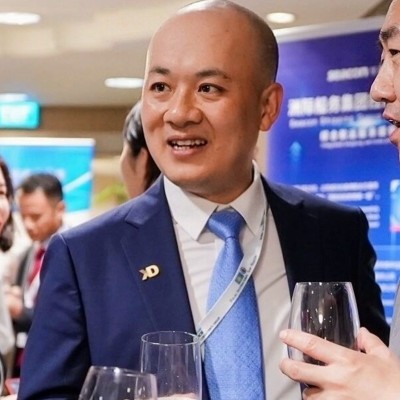
Held under the theme “Linking the World, Anchoring the Future”, the main forum brought more than 1,300 delegates to Hong Kong on 16 November. Led by China Merchants Group (CMG), the event was jointly organised with the Hong Kong government’s Transport and Logistics Bureau, BIMCO, the International Chamber of Shipping (ICS) and the Hong Kong Shipowners Association. Nine thematic forums across Hong Kong, Shenzhen and Shanghai on 16–18 November extended the discussions into different shipping markets, technologies and professional

Through its participation in the event, Xinde Marine News observed a question running through these exchanges: as transport corridors, energy supplies, technologies and regulations change, what capabilities do shipping companies need to keep serving customers, protect seafarers and invest with confidence?
Government officials, international organisations, shipowners and specialists in finance, insurance, law, technology and research approached that question from different positions. Their discussions showed how a forum can contribute to the industry: by helping participants understand one another’s requirements, identify work they can undertake together and establish relationships that continue beyond the event.
Building confidence through open trade and cooperation
Shipping depends on open markets, navigable trade routes and rules that participants can understand and apply. Against geopolitical disruption and changing supply chains, WMMF 2026 delivered a clear message in support of cooperation, connectivity and maritime safety.
Hong Kong Chief Executive John Lee said the industry needed greater certainty and strategic coordination. He said that Hong Kong would continue to use its institutional strengths and international networks to support the industry’s development and provide businesses with space to plan and grow. He stressed the importance of maintaining economic cooperation across regions.

Leung Chun-ying, Vice-Chairman of the National Committee of the Chinese People’s Political Consultative Conference, made a similar point, saying that shipping’s continued success depended on keeping international routes open and predictable.
These contributions connected policy with the conditions under which maritime businesses operate. Resilience, in the sense used at the forum, was not only about withstanding shocks: it also meant keeping the routes, financing, insurance and logistics networks working as those conditions changed.
IMO Secretary-General Arsenio Dominguez placed trust at the foundation of resilience: trust in international rules, in ports and shipping companies that perform as promised, and in a shared determination to keep supply chains moving.
BIMCO President and Fednav President and CEO Paul Pathy offered a perspective grounded in shipping’s daily operations. He described the resilience of Hong Kong’s shipping community, the determination of owners to keep trading and the way in which owners and ports worked together to remain connected to the wider world.

Their messages provided a basis for confidence. Global trade continues to require shipping, and participants in the industry can build on long-standing partnerships that have adapted to successive changes.
Assessing competitiveness across the entire supply chain
A central contribution of the forum was to examine shipping competitiveness across the wider network of cargo, ports, shipyards, vessels, finance and insurance. Rather than looking only at ship size or freight rates, speakers described services that included cargo flows, vessels, berths, logistics, finance, insurance and dispute resolution.
CMG Chairman Miao Jianmin called for collaborative ecosystem development to replace competition focused on scale. His proposals covered ecosystem collaboration, collaborative green industry chains, green finance, data sharing, technology sharing and closer alignment of standards.

These proposals address the practical demands of a broader service commitment. Vessels provide ocean transport, and cargo flows require efficient connections between berths, yards and hinterland infrastructure. Ports, terminals, shipping companies and energy providers must work together, because a green corridor has little meaning if a vessel cannot bunker alternative fuel at the relevant ports.
Christine Cabau Woehrel, CMA CGM’s Executive Vice President, Assets and Operations, explained that relationship from an operator’s perspective. She said that shipping competitiveness was determined less by a fleet’s total capacity than by the ability of ports, terminals and carriers to operate as a coherent system. In Hong Kong, the CMA CGM group’s presence included container terminals, logistics services and a regional office, giving the company an integrated view of how routes, facilities and customer needs interacted.
She described resilience as the availability of alternatives that can be used in practice: multiple port calls, a diverse supplier base and access to different transport modes and logistics routes. The network of a company should be flexible enough to use alternatives when needed, and the resilience of the sector would grow as those alternatives were developed.
For investment decisions, this connects infrastructure with customer outcomes. A terminal can improve handling capacity, but its value depends on whether the services it supports work smoothly for cargo owners and recipients. The Hong Kong forum made that link explicit by discussing the port together with the people who used it, rather than in isolation.
At Xinde Marine Forum Hong Kong 2026 on 17 November, held as part of the WMMF programme, Wang Yongxin, President of China Merchants Energy Shipping (CMES), made a related point about scale: fleet size alone was not enough, because the industry’s competitiveness depended on safety, quality, reliability, service and cost control, as well as the ability to keep pace with changes in shipping markets, technologies, fuels and regulations.
Together, these contributions gave operational substance to resilience, linking industrial cooperation and green development with a practical approach to competitiveness: not only building more ships, but also connecting industrial chains, integrating resources and developing markets that shipping could serve.
Connecting green corridors with fuel-market development
Decarbonising shipping requires coordinated development of vessels, fuels, ports and markets. Several initiatives presented at the forum focused on the connections between them, showing how partnerships can align fuel production and supply with port infrastructure and ship demand.
Hong Kong signed a memorandum of cooperation with Hainan’s Yangpu Port to establish a partner-port relationship. The same day, the city signed memoranda of cooperation with two green energy enterprises in Inner Mongolia and one green methanol enterprise in Shandong, with the intention of forming the green energy supply chain that could serve the shipping industry.
The partnerships connect three related areas: regional port cooperation, green energy supply and international shipping networks. They are intended to give shipowners clearer signals on where green fuels will be available, which ports will be prepared to handle them and how fuel costs can be managed.
The two types of green corridor have distinct functions. An energy corridor connects fuel production with ports so that vessels can bunker low-carbon fuels where needed. A route corridor connects a ship’s port of departure with its port of arrival so that a vessel can complete a voyage using those fuels, with the port infrastructure to support it.
The International Green Fuel Alliance’s second council meeting and business seminar, also held on 16 November, brought together supply and demand in one place. Fuel producers presented their products, shipowners described their requirements and shipowners met port operators to discuss infrastructure and fuel availability. Hong Kong signed a memorandum of cooperation with the International Green Fuel Alliance to create an international green fuel trading and settlement centre.
Each addresses a practical investment issue. Infrastructure determines where fuel can be obtained; contract arrangements determine how fuel prices are managed; and market information determines whether a shipowner can commit to a particular fuel.
On the same day, Hong Kong’s Transport and Logistics Bureau announced a working group on developing Hong Kong as a green maritime fuel bunkering centre. The group brings together representatives from government, shipowners, fuel suppliers and research institutions to consider the infrastructure, regulation and commercial arrangements needed to support green fuel bunkering.
These initiatives give participants clearer partners and areas of work. Supply-and-demand matching, price transparency and technical standards are practical steps that could make green fuel use more predictable for the shipping companies that need it.
Making Hong Kong’s maritime services more tangible
The issuance of the first policy by Hong Kong Shipowners Mutual Assurance Association Limited, known as the Hong Kong P&I Club, was a concrete outcome from the forum. It was the first insurance policy issued by a Hong Kong-based local P&I club. The club, which began operating in October, completed the city’s maritime services by adding a local mutual insurer to its legal, arbitration, finance and ship management services.
For an international shipowner, liability cover is connected with a wider network of support: casualty response, insurance broking, legal advice and arbitration. The Hong Kong P&I Club’s first policy therefore has a significance beyond a single insurance contract: it shows that a local insurer can work alongside Hong Kong’s other maritime services to support the wider shipping industry.
The forum also examined how maritime businesses can resolve disputes while maintaining commercial relationships. Hong Kong’s legal framework, which includes the city’s courts and the use of English law, remains a practical resource for the industry. Dispute resolution needs to be quick and practical, so that parties can continue to work together after a dispute has been settled.
She described a charterparty dispute involving parties from China and Singapore that had been resolved without the parties resorting to litigation. The successful resolution of that dispute depended on careful management of the relationship between the parties and the use of mediation, and it showed the value of the city’s alternative dispute resolution services.
A BIMCO–IOMed seminar on 18 November developed the discussion through contractual issues involving energy, supply chains and the shipping industry. It brought together legal experts and commercial representatives from China, Singapore, Hong Kong and London to examine how disputes can be resolved efficiently.
Taken together, insurance and dispute resolution demonstrate how Hong Kong’s professional services can support the shipping industry: the first local P&I policy shows that a local insurer can operate alongside other maritime services, and the dispute-resolution discussions show that Hong Kong’s legal framework can provide practical solutions for shipping companies. The value of these services lies in their connection with the wider maritime community, not in isolation, adding to Hong Kong’s underwriting capabilities.
Bringing investment discipline and operational risk into the same discussion
The main forum’s two panel discussions examined capital, cycles and compliance alongside energy security and fuel transition. Panel participants included senior representatives from shipowners, banks, insurers and shipbrokers, as well as a classification society and energy companies.
John Denholm, President of ICS, encouraged owners to maintain liquidity and investment discipline during the current market upturn, which he described as the strongest shipping market since 2008. He warned that new orders could lead to overcapacity and advised owners to resist the temptation to order new vessels solely on the basis of attractive freight rates. This discipline, he suggested, would provide the resilience needed to navigate a down cycle.
These perspectives explain the relationship between an investment opportunity and its funding. Owners can order ships only if they can finance them, and the timing of their decisions can affect whether a vessel is delivered at a favourable or unfavourable point in the cycle. This cycle influences the entire shipping industry: shipyards, owners, banks and insurers are all affected by the same cycle, although they experience it from different positions.
Baltic Exchange CEO Mark Jackson highlighted trusted information and stable benchmarks. Lee addressed the risks posed by the widespread use of artificial intelligence in shipping: the information that AI uses to make decisions must be accurate and reliable. In this way, the reliability of data is directly connected to the ability of shipping companies to make decisions.
The energy and fuel-transition panel then considered how long-lived assets can adapt to changing conditions. Shipping companies face a practical question: how should they plan for assets that may operate for decades, while fuel and technology requirements change over time? The discussion focused on the time it would take for new technologies to be adopted and the need to plan for the transition from one fuel to another.
INTERTANKO Managing Director Tim Wilkins focused on whether voyages remain safe, insurable and operable as the industry uses new fuels and technologies. He described the industry’s work on training, safety and risk management, and explained that operational risk remains a central concern even as the industry adopts new technology.
IUMI President Sean Dalton called for earlier engagement between insurers, classification societies, owners and shipyards. He said that early involvement in vessel design and construction could reduce later claims, and that claims were often the result of decisions made at an early stage.
These exchanges brought commercial detail to the transition debate. Technology, fuel availability, costs and insurance are all important, but their importance is best understood in combination with the timing of investment decisions and the operational conditions in which vessels will work.
Testing digital innovation against operational needs
The forum’s digitalisation discussions connected changes in business strategy with tools for everyday operations. Participants described how digital technology is used in route planning, documentation and asset management.
Edward Tse, founder and CEO of GaoFeng Advisory, examined the potential impact of AI agents on work processes. He noted that AI agents could take over specific tasks within shipping companies, such as handling documentation, and that their use would have implications for staffing and the organisation of work.
For shipping companies, this widens the assessment of AI beyond individual tasks. Technology may affect the number of employees required, the skills they need and how work is organised. The forum provided a space in which participants could consider these questions together.
The launch of the MAZU Marine Weather Routing Suite connected innovation directly with navigational decisions. The system analyses weather data to help vessels choose routes that avoid severe weather and reduce fuel consumption. It was developed by Maersk’s subsidiary in Hong Kong and uses data from the Hong Kong Observatory.
This complemented Cabau Woehrel’s discussion of using data to activate transport alternatives. Earlier, she had described how data could help a company use different ports and transport routes when needed. The MAZU system shows how that approach can be applied to a specific operational decision: the choice of a route.
The SeaTrust E-log System provided another practical example. According to China’s Ministry of Transport, an electronic logbook can provide the data needed to manage a vessel, including its fuel consumption, emissions and maintenance schedules. The system was developed by China Classification Society and has been tested on vessels including a 60,000 DWT bulk carrier.
Logbooks support daily management, inspections and casualty investigations. Improving how records are kept is therefore a practical step in improving safety and efficiency. A digital logbook can also support environmental reporting by recording emissions data.
The forum brought users, regulators, researchers and technology providers into contact around these issues. A product launch is a useful opportunity to show how a technology works, but its value depends on whether it can be used by the shipping companies that need it.
Keeping seafarers central to resilience
Seafarers remained an important concern throughout discussions of resilient networks, greener vessels and new technology. The people who operate ships are central to the industry’s ability to respond to change.
The IMO Secretary-General called for investment in maritime professionals. Dalton linked welfare and working conditions to the retention of seafarers: if conditions were poor, seafarers would leave the industry. The discussion therefore covered both the recruitment of seafarers and the retention of experienced crew.
Their perspectives connect workforce support with operational performance. New technologies require crews who are trained to operate them, and the industry must ensure that seafarers have the skills and support they need.
The Global Seafarer Health and Rights Report 2026, released at the forum, added an evidence base to these discussions. It drew on 4,445 valid seafarer questionnaires and more than 1,100 additional interviews. Its findings include health risks, challenges faced by women at sea, career development and the rights of seafarers.
Its findings give companies specific management questions to examine: how workloads are organised during voyages, how the impact of heat on seafarers is assessed, how ships operate when a seafarer is unwell and what support is available in ports. Health risks, they noted, can also lead to significant compensation claims.
The study also continues a programme of research associated with WMMF. The forum’s ESG team has produced research on 12 topics, including governance, energy transition, ship finance and seafarer welfare.
According to the project team, its ESG work has assessed 136 listed shipping companies globally in the 2025-26 period, covering 87.3% of the sector’s market capitalisation. The percentages describe the survey respondents. 26096087-China Merchants(c)_pri…
This provides a route through which conference-related research can enter regular practice. Exchanges at the forum allow research findings to reach shipping companies, which can then incorporate them into their operations.
Nine thematic forums extend participation across the industry
The main forum established shared questions, while the thematic programme allowed different businesses and professions to examine those questions in detail. The nine forums covered the International Green Fuel Alliance, marine insurance, maritime sustainability, maritime technology, finance, port and shipping, seafarers, and professional talent and the Hong Kong Shipowners Association’s own forum.
This structure accommodated both common challenges and operational differences. Container shipping, bulk shipping, energy transport and port operations face different constraints, and the forum format allowed those differences to be discussed separately.
In Hong Kong, insurance and sustainability discussions connected risk protection, governance and responsibility. In Shanghai, digitalisation and financial services were the focus. In Shenzhen, port operations and technology were discussed. The same themes were examined from different angles, showing how regional strengths could be used to address shared challenges.
Xinde Marine Forum Hong Kong linked commodity transportation, green fuel development, investment and seafarer welfare. Hong Kong’s position as a centre for shipping services and its connection with the Greater Bay Area gave the forum a practical basis for examining these topics.
The three-city programme also broadened access to resources: international maritime and professional services in Hong Kong, shipbuilding and ship finance in Shanghai, and port development and innovation in Shenzhen. The forums provided a space for the industry to examine its future from different perspectives.
Turning Hong Kong’s connections into lasting maritime value
From the Maritime Night welcome event on 15 November through the main forum and thematic sessions, WMMF 2026 made visible a network of people, institutions and companies that together shape shipping. The value of that network lies in its use: in the ability to bring together shipowners, ports, financiers, insurers, lawyers and technologists.
This year’s outcomes made the uses of those connections clearer. Port agreements established frameworks for cooperation, a new insurer provided local services, digital tools were launched, and a major study gave the industry evidence to work with. Each outcome represented a step toward a more connected and capable maritime industry.
Hong Kong Secretary for Transport and Logistics Mable Chan set out priorities of maintaining container throughput, strengthening green shipping, widening the use of the city’s maritime services and drawing on Hong Kong’s position as an international shipping centre. The policy statements made at the forum connected the city’s maritime services with its wider ambitions.
For Xinde Marine News, an important contribution of WMMF 2026 was to connect discussion of supply-chain resilience with the development of maritime services. The forum showed how a city could combine a strong shipping industry with a concentration of maritime services, and how that combination could support the wider shipping industry.
The continuing value will emerge as those relationships are put to work: ports coordinating more efficiently, insurers and legal professionals providing support for the shipping industry, and shipping companies developing new services. By bringing these participants together, Hong Kong has provided a setting in which those relationships can develop.


READ MORE
 Ports & Terminals
Singapore Retains Position as World’s Leading Maritime City in 2026
 Ports & Terminals
China and US Extend Suspension of Maritime Measures Until January 2027: Implications for Global Shipping
 Ports & Terminals
China Extends Suspension of Special Port Fees on US Ships Until January 2027
 Ports & Terminals
Why China's Shipping Industry Needs Hong Kong
 Ports & Terminals
Qingdao Port and Singapore MPA Sign Green and Digital Shipping Work Plan
 Ports & Terminals
Global Dockworker Strike Reaches 113 Ports: Greek Ferry Services Disrupted as Unions Mobilise Worldwide
 Ports & Terminals
US Proposes Extending Port Fee Relief for Chinese-Owned and Chinese-Built Ships
 Ports & Terminals
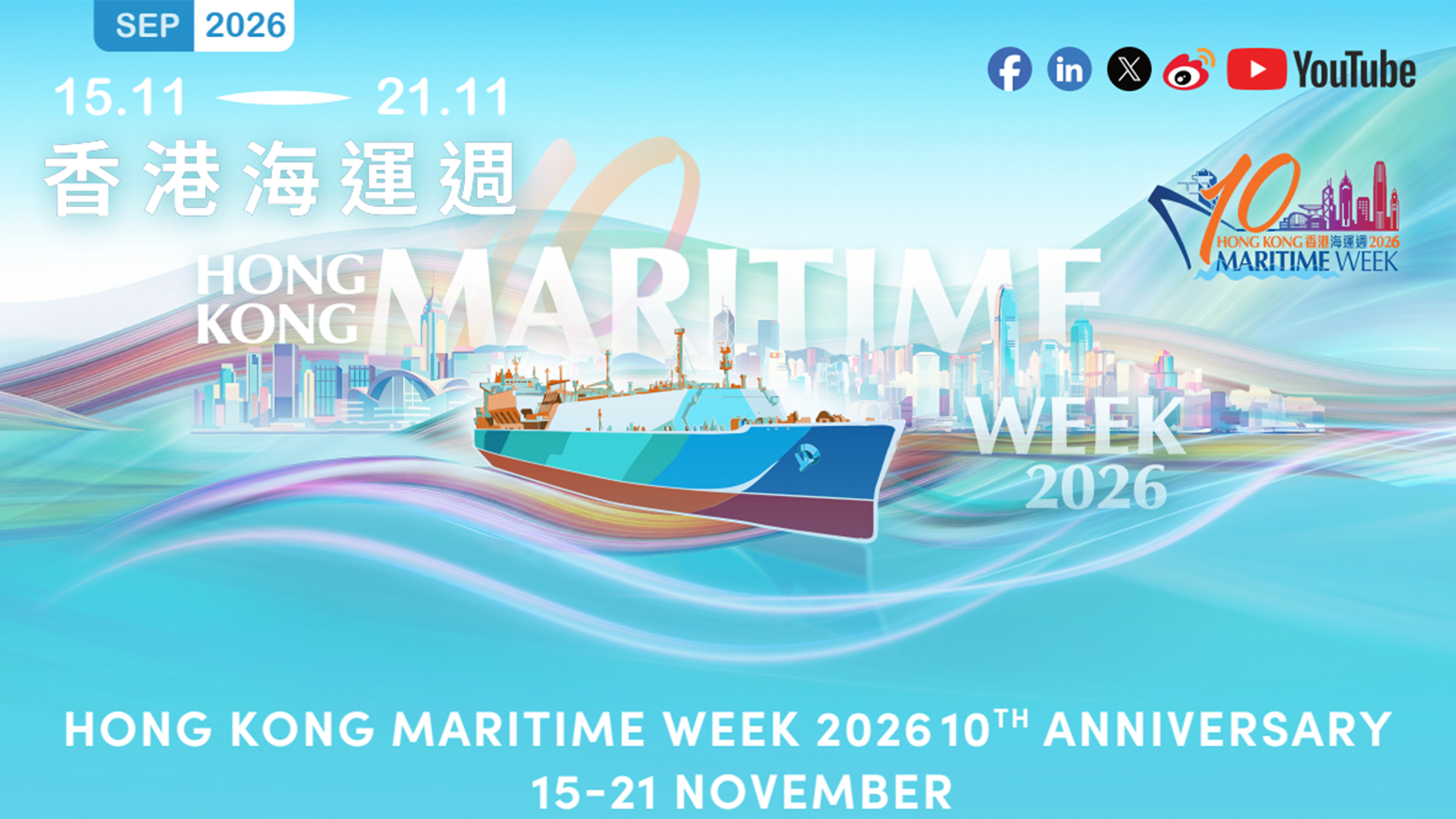
HONG KONG MARITIME WEEK 2026 10TH ANNIVERSARY 15-21 NOVEMBER
 Ports & Terminals
Chancay Port: Defending Legitimate Investment Through the Rule of Law
 Ports & Terminals