


Chancay Port: A Gateway for Trade, Competition and Shared Prosperity
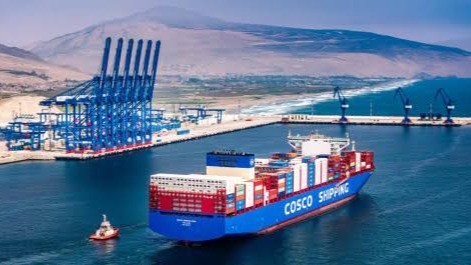

Peru’s Port of Chancay has expanded the country’s connections with Asia and introduced a new competitor into its port market since opening in November 2024. Its early operating record offers a practical basis for assessing a project that has also become the subject of a continuing debate over regulatory oversight and competition. For exporters, importers and local communities, the central questions concern the services it provides, the costs it reduces and the economic opportunities it creates.
A commercial investment within a familiar shipping model
Developed by COSCO SHIPPING in partnership with Peruvian mining group Volcan, Chancay was financed through corporate investment and market-based funding, without adding to Peru’s sovereign debt. The port received its formal commercial operating licence in June 2025, following its inauguration and trial operations from November 2024. With a water depth of 17.8 metres and four initial berths, it was designed to handle 1 million TEU, 6 million tonnes of bulk and general cargo, and 160,000 vehicles annually.
Shipping lines investing in terminals is an established feature of the industry. APM Terminals, part of the Maersk group, operates Callao’s North Terminal, while CMA CGM has built its own international terminal interests. COSCO SHIPPING’s investment in Chancay follows the same commercial logic: securing terminal capacity, improving vessel turnaround, strengthening schedule reliability and connecting ocean transport with inland logistics. For carriers and their customers, a terminal’s value lies partly in how effectively it supports the wider transport network.
Growing volumes and broader connections
From its opening through July 2026, Chancay handled approximately US$4.29 billion in imports and exports, more than 584,900 TEU, 2.7476 million tonnes of bulk and general cargo, and 49,800 vehicles. Trade passing through the port generated more than 1.959 billion Peruvian soles in tax revenue. Its cargo mix ranged from blueberries, avocados and grapes to minerals, fishmeal, soybeans, maize, cement, cars and construction equipment, demonstrating the breadth of demand for a multipurpose gateway.
Growth continued during the first seven months of 2026. Container throughput reached 247,800 TEU, up 60.6% year on year, while bulk and general cargo increased 32.5% to 1.0664 million tonnes. Vehicle handling rose 280% to 22,800 units. By July, the port had established three mainline and five feeder services, linking major Chinese ports with destinations including Colombia, Ecuador, Chile, Panama and Costa Rica.
A subsequent update from COSCO SHIPPING Ports showed container throughput reaching 295,000 TEU in January–August 2026, up 51.6% year on year. By the end of August, cumulative trade through Chancay since its opening had risen to approximately US$4.57 billion, with associated tax receipts of 2.107 billion soles. The operator also reported its first vehicle-handling operation using specialised transport racks, extending the terminal’s ability to accommodate different automotive logistics requirements.
A new entrant changes the competitive landscape
Chancay’s contribution extends beyond the cargo moving across its own quays. Its arrival gives shipping lines and cargo owners another option on Peru’s central coast, where container traffic had previously been concentrated at the DP World and APM Terminals facilities in Callao. Chancay’s published tariffs have generally been around 10% below the regulated maximum rates at Callao’s North Terminal and within a similar range to those at the South Terminal. Direct Chancay–Shanghai services have also shortened the voyage from approximately 35–38 days to 22–25 days, with reported logistics cost savings exceeding 20%.
Research by the Centre for China and Asia-Pacific Studies, or CECHAP, at Universidad del Pacífico supports examining Chancay and Callao as competing gateways within a common geographic market. Its modelling projects a reduction of approximately 27.7% in container-market concentration between 2025 and 2029 as Chancay gains traffic. The estimates cited for the Herfindahl–Hirschman Index fall from 4,196 to 3,033 over that period. This remains a concentrated market, but the forecast points to stronger competition as a third operator develops its position. (SEE:FacultyUP — Universidad del Pacífico)
Chancay’s share has risen from zero to approximately 10%, while DP World’s has declined from around 56% to 50%. Investment at Callao is also reshaping the available capacity: DP World has expanded its Bicentennial Pier, and APM Terminals has announced further development plans. CECHAP interprets DP World’s expansion as evidence of strategic rivalry in anticipation of Chancay’s entry. (FacultyUP — Universidad del Pacífico )The practical benefit for customers is a wider choice of terminals, services and commercial arrangements, alongside additional capacity to ease pressure on existing facilities.
Connecting Peru’s producing regions with Asian consumers
The port’s economic reach extends into Peru’s agricultural and industrial supply chains. Fresh produce, including blueberries, grapes and avocados, accounts for about half of its export cargo. Around 58% of Peruvian agricultural exports shipped to China pass through Chancay. For these products, shorter voyages can help preserve quality, reduce the time that working capital remains tied up in transit and improve the economics of reaching distant consumers.
Figures cited for the port’s cargo origins indicate that 69% comes from Peru’s producing regions, including La Libertad, which accounts for 44%, Lambayeque at 8% and Ica at 7%. These connections illustrate how the benefits of a coastal gateway can extend across regional economies. Farms, packing facilities, refrigerated transport providers and exporters all depend on the reliability and cost of the route between production and the final market.
Estimates by Peruvian economists put the port’s potential contribution to GDP growth at up to 0.9 percentage points, approximately three times its estimated construction-phase contribution. Realising that potential depends on the port’s ability to support sustained export growth, attract related logistics activity and deepen commercial links across the South Pacific.
Local employment and a predictable operating environment
Employment provides another measure of the port’s local impact. Peruvian employees account for 98.77% of its operating team, women represent approximately 20%, and around 55% of employees come from Chancay and surrounding areas. The operator has also participated in community initiatives. Following a fire in Chancay in April 2026, it supplied assistance to 45 affected households and worked with healthcare providers to deliver 340 free medical consultations. Its other activities have included community environmental programmes and events involving local residents.
Sustaining these benefits requires clear and predictable rules. The scope of regulatory oversight has been contested through administrative and judicial proceedings. In July 2026, OSITRAN, Peru’s transport infrastructure regulator, reported that Lima’s Second Constitutional Chamber had reversed an earlier ruling restricting its supervisory powers over Chancay. The debate involves both institutional responsibilities and the way competition between port services should be assessed. Plataforma del Estado Peruano
That assessment should consider actual tariffs, service quality, access conditions, competing capacity and the choices available to customers. CECHAP’s research recommends clarifying institutional responsibilities while monitoring prices and access and evaluating competition across the wider port market. FacultyUP — Universidad del Pacífico A consistent framework would give investors greater certainty while allowing authorities to address demonstrated problems.
Chancay’s commercial success and Peru’s economic interests can reinforce each other as the port develops. More reliable shipping connections can help producers reach overseas buyers, additional terminal capacity can strengthen competition, and sustained operations can create employment and demand for local services. Preserving those gains will depend on effective port management, continued engagement with surrounding communities and rules that support fair competition across Peru’s maritime gateways.
By Yao Ling and Qian Hao
Yao Ling is with the Chinese Academy of International Trade and Economic Cooperation under China’s Ministry of Commerce. Qian Hao is with the China–Central and Eastern European Countries Expo Cooperation and Promotion Centre in Ningbo, Zhejiang.


READ MORE
 Ports & Terminals
Can a 134-Kilometre Canal Redraw China’s Shipping Map?
 Ports & Terminals
Yantian Port plans RMB3.79bn Zhangjiagang terminal
 Ports & Terminals
Vietnam’s Cai Mep Terminals Open 1,200-Metre Shared Berth
 Ports & Terminals
Chancay Port: Defending Legitimate Investment Through the Rule of Law
 Ports & Terminals
Ningbo Port’s September Box Volumes Rebound 9.3%
 Ports & Terminals
Germany Blocks COSCO’s Zippel Deal, Testing Inland Logistics Expansion
 Ports & Terminals
Keep buying!Inside the Maersk Family’s Infrastructure Buying Spree——From 70-Plus Ships to 50-Plus Terminals
 Ports & Terminals
US Fees on Chinese-Built Ships May Be Delayed Until January, Pending USTR Action
 Ports & Terminals
COSCO SHIPPING and Shanghai Post Launch 28-Day Postal Sea Route to Peru via Chancay
 Ports & Terminals