


Chancay Port: Defending Legitimate Investment Through the Rule of Law
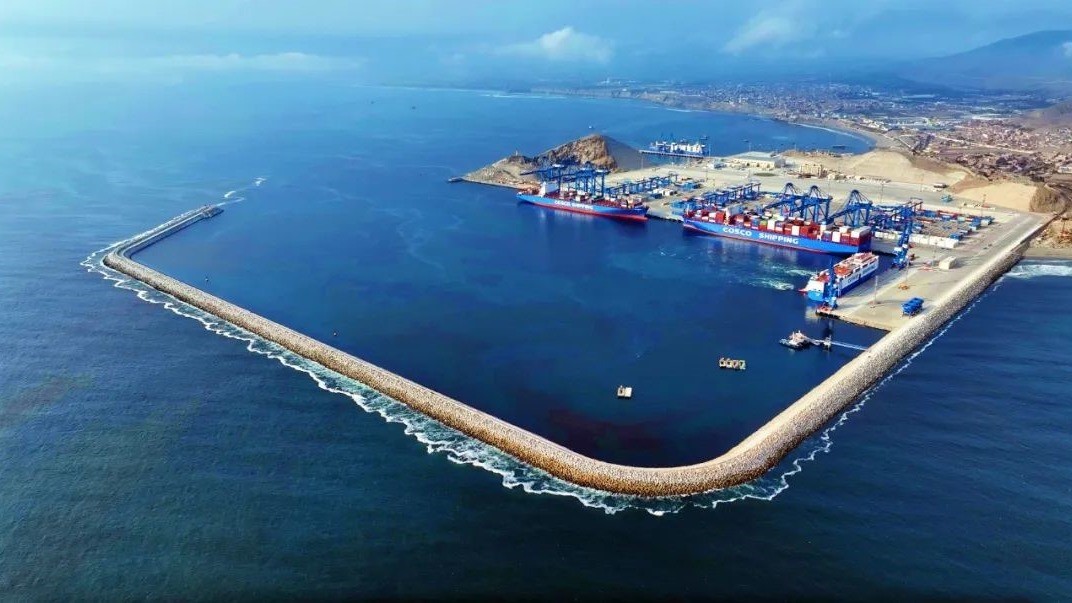

Fair treatment, predictable regulation and access to legal remedies are essential to the confidence on which international investment depends.
COSCO SHIPPING’s decision to defend its investment in Peru’s Chancay Port through the Peruvian legal system is a legitimate exercise of investor rights. A company that commits capital, develops infrastructure and assumes commercial risk is entitled to seek clarity over the obligations imposed on it and to challenge measures it considers inconsistent with the law. That principle applies to Chinese investors as it does to investors from every other country.
Chancay is a commercial partnership between Chinese and Peruvian interests that has created a new gateway for trade across the Pacific. Its operator’s pursuit of judicial remedies should be understood within that commercial and legal context. The central issue is whether a substantial investment receives the fair treatment, legal certainty and reasoned regulatory decisions that responsible international business requires.
An investment delivering value for Peru
Chancay was developed through corporate investment and market financing, without adding to Peru’s sovereign debt. Its operator, COSCO SHIPPING Ports Chancay Perú S.A., holds authorisations from Peru’s National Port Authority, APN. The terminal is privately owned infrastructure serving public users, developed through a different legal structure from a conventional concession transferring the operation of state-owned assets to a private enterprise.
The commercial results provide substance to the partnership. According to a September 2026 update from COSCO SHIPPING Ports, Chancay handled 295,000 TEU in the first eight months of the year, up 51.6% year on year. Cumulative trade through the port since its November 2024 opening reached approximately US$4.57 billion by the end of August, with associated tax receipts of 2.107 billion Peruvian soles. ports.coscoshipping.com
For Peru’s producers and consumers, the benefits arise through more direct shipping connections, additional cargo-handling capacity and another route to international markets. Shorter voyages to Asia improve the commercial prospects of exports such as blueberries, grapes and avocados. Chinese investment and Peruvian economic development reinforce each other through these practical connections. The success of that cooperation deserves recognition when the project’s regulatory future is discussed.
Private investment requires clear and proportionate rules
The legal dispute centres on the relationship between Chancay’s private ownership, its public-use status and the powers of OSITRAN, Peru’s transport infrastructure regulator. The operator argues that its authorisations and investment model require a different regulatory treatment from infrastructure operated under public concession arrangements. OSITRAN maintains that public use brings the terminal within its statutory remit.
A fair resolution requires careful attention to the legal instruments under which the project was developed and the specific powers granted to each authority. Public use creates legitimate responsibilities towards customers. Private ownership and the rights attached to an investment also carry legal significance. Investors should be able to understand which obligations apply, how those obligations arise and how the exercise of regulatory powers can be reviewed.
Peru’s own legal framework recognises these interests. Article 70 of its Constitution protects property while requiring its exercise to remain compatible with the common good and the limits established by law. Law No. 32048, enacted in 2024, expressly recognised arrangements under which privately owned ports serving public users may provide essential port services exclusively. These provisions deserve coherent interpretation so that investment rights, public responsibilities and regulatory authority remain predictable. www3.congreso.gob.pe
One disputed obligation is a regulatory contribution equivalent to 1% of sales. A company executive stated earlier in 2026 that the contribution had been paid under protest. That is an important example of the operator meeting an asserted obligation while preserving its legal objection. The company is entitled to ask for the charge’s application to its particular investment structure to be examined through the appropriate procedures. rpp.pe
Competition should be assessed through market evidence
The competition assessment is equally important. INDECOPI, Peru’s competition and intellectual property authority, concluded in its 2025 technical assessment that effective competition was absent in four relevant service markets associated with Chancay. The operator disputes that analysis, including the weight given to APN’s assessment of the competitive benefits created by the new terminal.
There are substantial economic reasons to examine competition across Chancay and Callao together. A new terminal gives carriers and cargo owners an additional option, introduces capacity and can strengthen their bargaining position. Exclusive provision of certain services within a terminal must be considered alongside the ability of customers to use competing gateways. The analysis should explain the alternatives available in practice and how entry, expansion and changing shipping networks affect them.
Research by the Centre for China and Asia-Pacific Studies at Universidad del Pacífico supports a broader geographic assessment of Chancay and Callao. Its modelling projects a reduction of approximately 27.7% in container-market concentration between 2025 and 2029 as Chancay gains traffic. This is a forecast, but it provides an independent analytical basis for taking the new entrant’s competitive contribution seriously. Regulatory decisions with lasting commercial consequences deserve a transparent response to such evidence. faculty.up.edu.pe
Using Peru’s courts respects Peru’s institutions
The operator’s legal challenges have encountered adverse decisions. In the OSITRAN case, the appeal decision made public on 1 July 2026 reversed its first-instance victory and declared the constitutional protection claim, or amparo, inadmissible. The chamber addressed the absence of a demonstrated certain and imminent threat to fundamental rights and also reasoned that the terminal’s public-use status subjected the operator to OSITRAN’s statutory powers. In the separate INDECOPI case, reporting in early September confirmed that the Huaura Superior Court upheld the rejection of the operator’s challenge. img.lpderecho.pe
Those decisions have legal consequences and must be reported accurately. The legitimacy of seeking judicial protection, however, does not depend on winning every stage of a case. Reporting in August stated that the appellate chamber had allowed the operator’s constitutional appeal in the OSITRAN dispute to proceed to Peru’s Constitutional Court. Pursuing that remedy uses the mechanisms Peru’s own legal order provides for reviewing contested decisions. rpp.pe
For an overseas investor, engaging local counsel, presenting evidence and pursuing the available appeals demonstrates a willingness to resolve disagreement through institutions and established procedures. A mature investment environment accommodates that process. Judicial scrutiny can clarify the respective rights and responsibilities of the investor and public authorities, improving the basis for future cooperation.
Chinese investors deserve consistent legal treatment
Chinese companies investing abroad should receive the same access to legal remedies and the same protection of lawful commercial interests as other international investors. Their nationality should not alter the standards by which authorisations, property rights, regulatory charges or competition evidence are assessed. Consistent treatment is fundamental to confidence in any jurisdiction seeking long-term international capital.
China–Peru cooperation gives Chancay a foundation of shared economic interests. Clear legal rights make that cooperation more durable. Contracts, licences and authorisations allow companies to commit capital, while transparent regulation protects users and supports confidence in the market. Effective legal remedies help resolve differences when investors and authorities interpret those arrangements differently.
Chancay has a legitimate case for seeking certainty over the scope and cost of regulation. Recognising that legitimacy allows the dispute to be considered on its evidence, legal reasoning and commercial consequences. It also supports a healthier public discussion in which a company can defend its investment without being expected to secure an uninterrupted series of courtroom victories.
Fair treatment strengthens the partnership
A stable outcome for Chancay can serve the interests of its Chinese and Peruvian investors, Peru’s exporters and importers, and the communities connected to the port. Predictable rules support continued investment; sound competition analysis protects customer choice; and clearly defined regulatory responsibilities make compliance more effective. These objectives belong together in a successful port economy.
The broader principle is straightforward: legitimate investment deserves fair treatment, and investors are entitled to use the law to protect it. Chancay’s decision to pursue legal remedies is a proper exercise of that right. Giving the investment, its commercial contribution and its legal arguments fair consideration would strengthen confidence in Peru as an investment destination and in the long-term partnership that the port represents.
Niu Xianzhong is a researcher at the Party School of the CPC Central Committee (National Academy of Governance).


READ MORE
 Ports & Terminals
Can a 134-Kilometre Canal Redraw China’s Shipping Map?
 Ports & Terminals
Yantian Port plans RMB3.79bn Zhangjiagang terminal
 Ports & Terminals
Vietnam’s Cai Mep Terminals Open 1,200-Metre Shared Berth
 Ports & Terminals
Chancay Port: A Gateway for Trade, Competition and Shared Prosperity
 Ports & Terminals
Ningbo Port’s September Box Volumes Rebound 9.3%
 Ports & Terminals
Germany Blocks COSCO’s Zippel Deal, Testing Inland Logistics Expansion
 Ports & Terminals
Keep buying!Inside the Maersk Family’s Infrastructure Buying Spree——From 70-Plus Ships to 50-Plus Terminals
 Ports & Terminals
US Fees on Chinese-Built Ships May Be Delayed Until January, Pending USTR Action
 Ports & Terminals
COSCO SHIPPING and Shanghai Post Launch 28-Day Postal Sea Route to Peru via Chancay
 Ports & Terminals