


Why China's Shipping Industry Needs Hong Kong

Hong Kong helps connect China's shipyards, fleets, ports and cargo flows with the capital, contracts, insurance, expertise and commercial networks required to operate internationally. As Chinese shipping companies expand their overseas business, their need for services that can structure transactions, share risks and sustain partnerships grows alongside their physical assets. Hong Kong's contribution lies in helping turn that industrial scale into broader market access, more dependable operating conditions and additional business across maritime services.
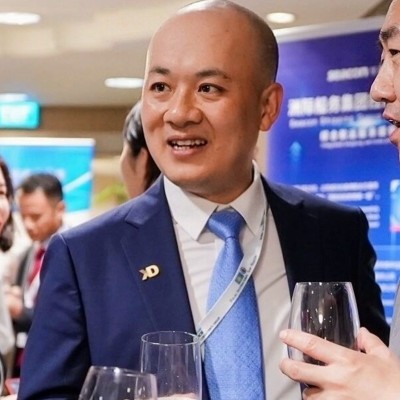
The third Hong Kong Global Maritime Trade Summit, held on 16 November 2026, offered a practical examination of that role. Government officials discussed port development and maritime services, cargo owners described their responses to disruption, and shipowners, banks and insurers examined investment and risk. Together, their contributions showed how much cooperation sits behind the movement of a single vessel or cargo. Hong Kong's relevance depends on its ability to help those participants conclude transactions and keep their businesses operating when conditions change.
Port Competitiveness and Maritime Services Reinforce Each Other
In her closing remarks, Hong Kong's Secretary for Transport and Logistics, Mable Chan, set out a strategy with two priorities: improving port competitiveness and strengthening the ecosystem of high value-added maritime services. The port agenda encompasses digitalisation, automation, decarbonisation and transport connections. The services agenda includes ship registration, trading, finance and other professional activities. Both form part of the city's intended transition from volume to value.
Richard Hext, Chairman of the Hong Kong Shipowners Association, described the commercial history behind that approach: "The ships came first. Then trade, then finance." Shipowners attracted brokers, financiers, lawyers and ship managers, while those services helped owners develop their businesses. Much of Hong Kong's financial and professional expertise was built through actual shipping transactions and operating relationships.

Financial Secretary Paul Chan illustrated the same relationship through a voyage. A container crossing a quay generates handling revenue, while the voyage also requires financing, insurance, management, fuel and, occasionally, arbitration. A ship built on the Chinese mainland, or cargo moving through another port, can therefore still generate business for institutions and service providers in Hong Kong. Delivery begins a long period of chartering, insurance renewals, financing, maintenance and asset transactions.

The port and its surrounding services support one another. Shipping connections and cargo flows keep the city engaged with the practical requirements of transport. The concentration of shipowners, traders and professional firms creates customers and opportunities for the port. Within China's maritime economy, that interaction can help manufacturing, transport, trading and services capture value at successive stages of a vessel's working life.
Giving Supply Chains More Options
Moses Cheng, Chairman of the Hong Kong Maritime and Port Development Board, brought resilience down to a practical question during the second panel: what alternatives does a business have when its established route is disrupted? Companies must consider schedule reliability, alternative routing, customs clearance and legal certainty. Hong Kong's free-port status, available port capacity and professional services can help businesses assemble those options.

Emma Roberts, BHP's Vice President, Maritime and Supply Chain Excellence, described how the company maintains flexibility through a diversified freight portfolio, different vessel types, contract structures, and a combination of term and spot arrangements. Scenario planning helps test that portfolio against possible disruptions. She placed particular emphasis on long-standing relationships with shipping companies: when problems arise, counterparts can speak directly and work on solutions together, helping maintain the flow of commodities from mines to customers.
Andreas Enger, Chief Executive Officer of Höegh Autoliners, similarly described the need to manage different operating conditions across several regions at once and to find solutions with long-term customers when transport is interrupted. He also pointed to strong Asian demand, driven by Chinese growth, as an important source of support for the business. China's role in international shipping consequently extends deep into global owners' customer relationships, deployment decisions and commercial planning.
These experiences help identify the services Hong Kong can offer. A concentration of owners, charterers, traders, brokers and advisers can make it easier to match cargo with capacity, renegotiate arrangements and organise alternative transport. For mainland companies expanding internationally, access to those relationships can shorten the time needed to find a counterparty and develop a workable response.
Mable Chan's emphasis on cooperation with Greater Bay Area ports and other mainland gateways, wider cargo catchment areas and multimodal transport complements that commercial role. The value of port partnerships ultimately depends on the routes, connections and capacity that businesses can actually use. Closer links between Hong Kong and mainland ports can give cargo owners and operators more choices when established arrangements come under pressure.

Long-Term Capital Needs Predictability
Kenneth Lam, Founder and Chief Executive Officer of SeaKapital and Chair of the International Chamber of Shipping's Shipping Policy Committee, identified a basic requirement of maritime investment during the third panel. Owners need stability in taxation, law and regulation, together with common rules on which they can base investment decisions. The industry wants to attract sound capital, and that capital also needs a predictable environment.
Mable Chan linked Hong Kong's proposition to the arrangements under "one country, two systems": a stable bilingual common law system, a trusted legal framework, the flow of capital and information, and an established concentration of professional expertise. For shipping businesses, these conditions provide a platform within China that can connect transactions with international commercial practices.
A vessel may operate through several market cycles between ordering and retirement. Lending, leasing and equity decisions require an assessment of asset values, charter income, technology choices and eventual disposal. Investors also need to understand how contracts will be performed and what happens if a transaction encounters difficulties. Hong Kong's financial, legal and maritime specialists can work together on those assessments.
The city's ship-finance capability therefore needs to be demonstrated through suitable funding structures, repayment profiles that fit operating cash flows and continuing risk management. Cooperation can help mainland financial institutions understand international owners' requirements, while expanding the range of customers and capital available to Chinese owners and shipyards. Finance, insurance, legal advice and asset management all contribute to the conditions for completing a transaction and sustaining performance over its life.
Mable Chan also discussed ship-registration reform and proposed tax concessions for physical commodity trading. Government statements on 16 November indicated that the relevant legislative work was still being advanced. The measures are intended to accommodate different commercial operating models and attract businesses with real trading, chartering and financing requirements.
The location of trading decisions and treasury activity helps determine where related services gather. Attracting substantive commercial operations would enable Hong Kong to connect China's cargo base more closely with international owners, traders and investors.
Insurance and Law Support Global Fleet Operations
André Kroneberg, Executive Vice President and Chief Underwriting Officer, Asia, at Gard, argued during the third panel that insurance forms part of shipping's critical infrastructure. High asset values and potentially substantial third-party liabilities make appropriate cover essential to the functioning of supply chains. He described how the International Group of P&I Clubs supports owners through risk sharing, collective reinsurance, casualty response and claims services.
The implications extend across China's maritime expansion. Larger fleets and wider international operations bring greater responsibilities. Insurance provides risk-sharing and casualty support, while legal services establish contractual obligations and remedies. Both interact with financing and influence a company's ability to maintain stable operations.
There was a concrete development later that day. At the separate Hong Kong Maritime Week opening event on the afternoon of 16 November, the Hong Kong Shipowners Mutual Assurance Association issued its first protection and indemnity policy. It marked a practical starting point for the development of that locally based insurance business.
Building such services requires sustained underwriting, reinsurance, claims, casualty-response and international cooperation capabilities. Kroneberg also discussed the changing risks associated with altered trading routes and the scope for insurers to offer more proactive loss-prevention advice. Information about salvage resources, local infrastructure and emerging operational risks can affect how an owner plans a voyage.
Legal and dispute-resolution services can support businesses throughout the transaction cycle. Under the mainland–Hong Kong Interim Measures Arrangement, parties to arbitrations seated in Hong Kong and administered by eligible designated institutions may apply to the relevant mainland courts for interim measures. The Hong Kong Maritime Arbitration Group is among those designated institutions, providing a specific connection between international maritime dispute resolution and the protection of rights involving mainland assets.
As owners operate across more jurisdictions, the ability to draw on professional support across regions becomes more important. Hong Kong can help connect vessel investment, daily operations and the response when something goes wrong.
Connecting Mainland Fuel Supply with International Demand
The energy transition provided one of the clearest examples of the potential for cooperation between Hong Kong and mainland China. Paul Chan highlighted the uncertainty facing both sides of the market: owners need to know where clean fuel will be available and at what price, while producers need sufficiently clear demand to support investment. Moses Cheng described Hong Kong's ambition to develop services spanning bunkering, trading, financing and fleet transition.
The commercial constraints remain substantial. Enger argued that widespread adoption of green fuels requires an economic incentive through carbon pricing. Roberts identified issues involving scale, infrastructure, regulation and safety readiness. Their comments pointed to the need to align production capacity, vessel technology, procurement and the allocation of additional costs.
Fei Yan, Deputy Director General of the Global Sustainable Transport Innovation and Knowledge Centre, also emphasised cooperation across transport, energy, technology and infrastructure, and discussed the role of sustainability certification in building trust. International buyers evaluating Chinese green fuels will consider specifications, lifecycle emissions, traceability, delivery arrangements and supply reliability. Those requirements influence both procurement contracts and project financing.
Hong Kong can help organise the commercial relationships around these requirements. Connecting producers with international owners, and coordinating procurement, finance, insurance, emissions accounting and delivery, could bring mainland production capacity closer to shipping demand. Buyers would also gain access to Chinese supply through established commercial and professional networks.
Cooperation announced on the afternoon of 16 November provided a framework for that work. Hong Kong signed memoranda of understanding with Zhanjiang in Guangdong to establish its first Green Energy Corridor, and with the Port of Piraeus in Greece to establish its first Green Shipping Corridor and a partner-port relationship. The initiatives address fuel-supply connections and shipping applications respectively; implementation will depend on subsequent projects and transactions.
A working group on the development of a green maritime fuel trading platform was also established that day, bringing together government and market expertise. The commercial value of these initiatives will depend on competitive prices, dependable delivery and sustained international purchasing.
Making Data and Skills Work in Practice
Yvonne Lee, Head of Sales, Mid-Market Banking at HSBC in Hong Kong, connected trade digitalisation with corporate cash flow during the third panel. Governments need to provide a legal foundation for electronic trade documents, businesses need to identify practical friction between documentation, data and financing, and international organisations can help align standards. Interoperability determines how much of the potential can be realised.
This gives digital maritime services a specific commercial purpose. China's cargo and transport networks generate substantial information. When that information can be reliably verified and shared with appropriate consent, it can help banks understand genuine transactions, reduce repeated document submissions and streamline manual checks.
CargoX Connect, developed through cooperation between the Hong Kong Monetary Authority and the Shanghai Data Bureau, offers an example. In October, the HKMA reported that an initial group of five pilot banks could access trade-declaration data from the Yangtze River Delta for trade verification and counterparty due diligence. By that point, the pilot had enabled approval of ten trade-finance loans totalling HK$180 million, approximately US$23.1 million. The initiative connects mainland trade data with financial services in Hong Kong to improve financing processes for cross-border businesses.
Data also has applications in vessel and personnel management. Nick Brown, Chief Executive Officer of Lloyd's Register, argued during the first panel that resilience needs to be built across ships, voyages and people. Rapid shipyard expansion and accelerated construction require continued attention to safety and quality. He also described the potential to use AI to generate training tailored to a particular vessel, cargo, fuel and voyage risk.
Stephen Cotton, General Secretary of the International Transport Workers' Federation, emphasised seafarer safety, legal protections and industry cooperation. Together, these contributions highlighted the need for fleet growth to be accompanied by skills and operating standards. Cooperation between ship managers, educational institutions, classification societies and international training providers in Hong Kong can help develop people capable of handling technical, commercial, legal and cross-cultural responsibilities.
Cooperation That Produces Commercial Results
ICS Chairman John S. Denholm warned that international shipping depends on stable common rules, and that competing requirements across jurisdictions increase uncertainty and cost. Lam's comments on long-term investment, alongside the concerns raised by cargo owners, banks and insurers, demonstrated how directly those rules enter commercial decisions.
For China, with interests across shipbuilding, ports, fleets and cargo, the effects run throughout the maritime supply chain. Hong Kong's participation in international industry organisations and its concentration of commercial and professional experience can support communication between mainland businesses and their overseas counterparts. That work can take practical forms: developing proposals on contracts, fuel standards, financing conditions, insurance and training, then organising cooperation and following through on implementation.
Hong Kong also needs effective working relationships with other Chinese maritime centres. Shanghai, Shenzhen, Guangzhou and other port cities have their own industrial strengths, customers and professional capabilities. Hong Kong's institutions and international networks can work alongside those capabilities. Trade-data connections, port partnerships and green-fuel cooperation already offer different models for doing so.
Mable Chan's closing remarks called for closer alignment between government policy, operating objectives and investment plans. For businesses, the task is to turn those connections into usable services, skilled people and workable transactions. The commercial tests are specific: financing that fits cash flow, contracts that allocate responsibilities clearly, dependable insurance, sustained fuel procurement and transport alternatives that can be called upon when needed.
For owners, charterers, lenders and suppliers worldwide, Hong Kong's relevance will be demonstrated through those results. Its opportunity is to help connect a major concentration of maritime assets and cargo with the commercial arrangements required to keep global trade moving.
Currency note: The US dollar equivalent uses an indicative conversion of HK$7.80 per US$1, the HKMA's monetary-policy reference, checked on 17 November 2026.


READ MORE
 Ports & Terminals
China and US Extend Suspension of Maritime Measures Until January 2027: Implications for Global Shipping
 Ports & Terminals
China Extends Suspension of Special Port Fees on US Ships Until January 2027
 Ports & Terminals
Qingdao Port and Singapore MPA Sign Green and Digital Shipping Work Plan
 Ports & Terminals
Singapore Retains Position as World’s Leading Maritime City in 2026
 Ports & Terminals
Global Dockworker Strike Reaches 113 Ports: Greek Ferry Services Disrupted as Unions Mobilise Worldwide
 Ports & Terminals
US Proposes Extending Port Fee Relief for Chinese-Owned and Chinese-Built Ships
 Ports & Terminals
HONG KONG MARITIME WEEK 2026 10TH ANNIVERSARY 15-21 NOVEMBER
 Ports & Terminals
Chancay Port: Defending Legitimate Investment Through the Rule of Law
 Ports & Terminals
Chancay Port: A Gateway for Trade, Competition and Shared Prosperity
 Ports & Terminals