


Xinde Marine Forum London 2026: Green Shipping Enters a Strategic Reset
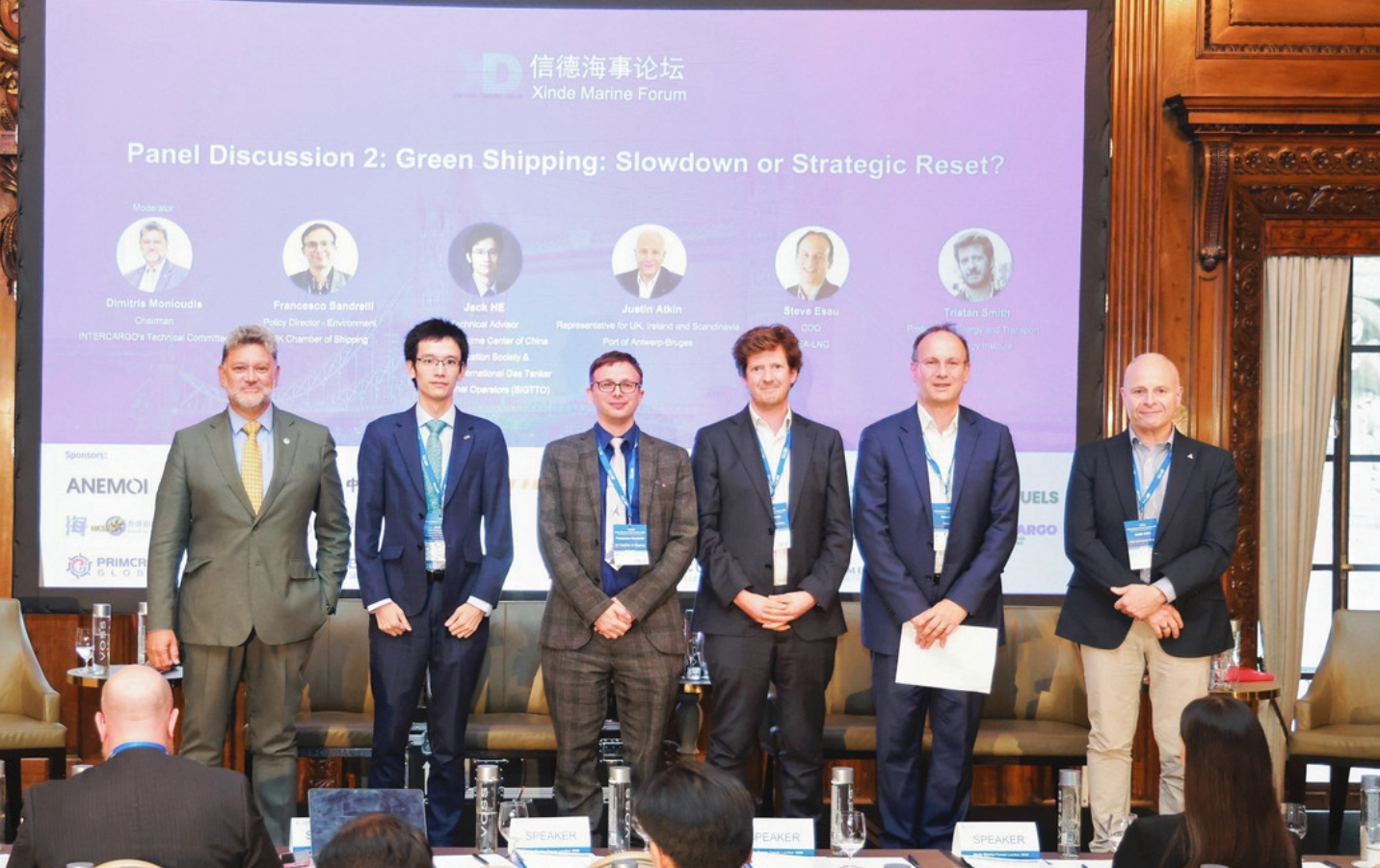

Industry leaders at the Xinde Marine Forum London 2026 said shipping’s decarbonisation drive is not slowing, but moving beyond the search for a single winning fuel towards a more practical strategy built around fuel availability, port infrastructure, safety, crew competence and energy efficiency.
The maritime industry is not retreating from decarbonisation. It is entering a more commercially disciplined phase in which fuel supply, infrastructure, safety and investment risk must be addressed together.
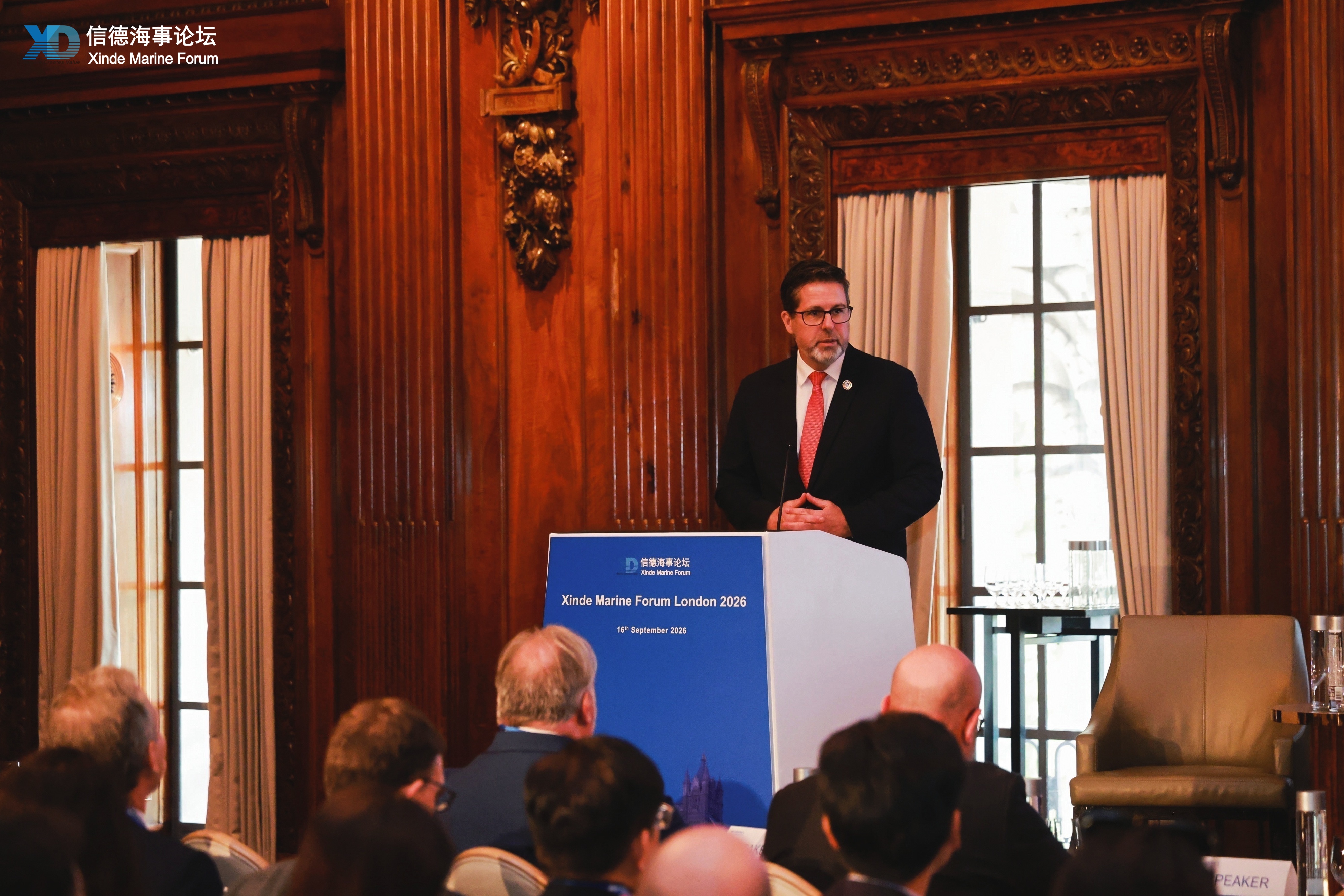
That was the central message from the green shipping session at the Xinde Marine Forum London 2026, held at the Four Seasons Hotel London at Tower Bridge on 16 September under the theme Shipping in Transition: Resilience, Risk and Repricing.
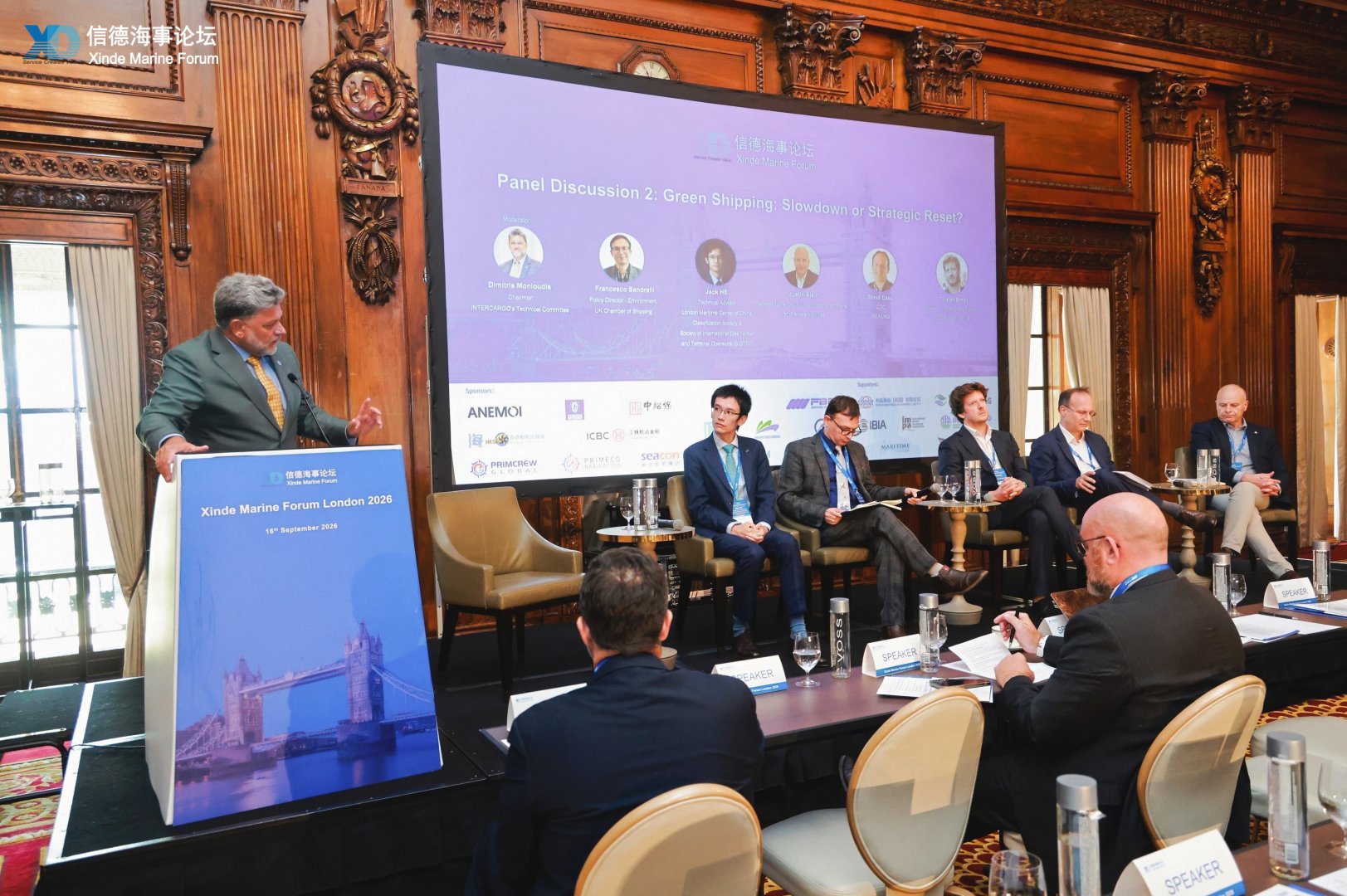
The session, titled Green Shipping: Slowdown or Strategic Reset?, was moderated by Dimitris Monioudis, Chairman of the INTERCARGO Technical Committee. Panellists included Francesco Sandrelli, Policy Director for Environment at the UK Chamber of Shipping; Steve Esau of SEA-LNG; Justin Atkin, the UK and Ireland representative of the Port of Antwerp-Bruges; Jack He, representing China Classification Society and the Society of International Gas Tanker and Terminal Operators; and Tristan Smith of the UCL Energy Institute.
The panel followed a special presentation by Baijian Jiang, Technical Sales Manager at Anemoi Marine Technologies, who examined the role of wind-assisted propulsion in reducing fuel consumption and emissions while uncertainty continues over future marine fuels.
Together, the speakers argued that the industry’s direction of travel has not changed. What is changing is the way investment decisions are being made.
Instead of focusing overwhelmingly on which alternative fuel will ultimately prevail, shipowners and other stakeholders are asking whether those fuels can be produced at scale, supplied at the right ports, handled safely and verified as genuinely low-carbon across their full lifecycle.
The discussion also produced a clear near-term priority: reducing the amount of energy ships require in the first place.
Hull and propeller optimisation, wind-assisted propulsion, air lubrication, voyage optimisation, just-in-time arrival, shore power and electrification can all reduce exposure to future fuel costs and supply constraints. In that sense, energy efficiency is becoming shipping’s “first fuel” — the energy that does not need to be produced, purchased or carried onboard.
A reset driven by implementation risk
The distinction between a slowdown and a strategic reset matters.
The International Maritime Organization’s 2023 GHG Strategy retains the ambition of reaching net-zero greenhouse gas emissions from international shipping by or around 2050.
It also establishes indicative checkpoints for cutting total GHG emissions by at least 20%, while striving for 30%, by 2030, and by at least 70%, while striving for 80%, by 2040, compared with 2008 levels.
Zero- and near-zero-GHG emission fuels, technologies and energy sources are expected to account for at least 5%, while striving for 10%, of the energy used by international shipping by 2030.
Yet the route towards those targets remains commercially and politically uncertain.
The IMO’s Marine Environment Protection Committee finalised the draft legal text of the proposed IMO Net-Zero Framework in April 2025. The framework combines a goal-based marine fuel standard with an economic mechanism for pricing GHG emissions.
However, formal adoption was subsequently deferred, leaving shipowners without the full regulatory certainty needed for investment decisions that may determine how vessels operate over the next 20 to 30 years.
Sandrelli told the forum that a strategic reset should not mean abandoning climate ambition. Instead, it should make the transition implementable through clearer responsibilities, realistic timelines and credible incentives.

Shipowners can choose vessel designs, improve onboard efficiency and adjust operating practices. They cannot independently create renewable power capacity, global alternative-fuel production or bunkering infrastructure.
The transition therefore cannot be delivered by placing every obligation and investment risk on one link in the maritime value chain. Fuel producers, ports, cargo owners, financiers and governments will all influence its speed, cost and ultimate credibility.
Shipping must compete for green energy
Esau placed marine fuel availability within the wider global energy system.

Shipping represents only one source of future demand for renewable electricity, hydrogen and low-carbon molecules. Aviation, steelmaking, chemicals and other hard-to-abate industries will be competing for many of the same resources.
This creates a fundamental investment problem.
Fuel producers are reluctant to build large-scale capacity without reliable long-term demand. Shipowners, meanwhile, are cautious about committing to a particular fuel without greater visibility over its future availability, price and regulatory treatment.
Long-term offtake agreements could help bridge that gap, particularly where they bring together fuel producers, shipowners and cargo interests. Policy support may also be necessary to absorb some of the additional cost and risk associated with early projects.
The forum discussion did not identify a single fuel capable of serving every ship type, route and operating profile. LNG and its renewable derivatives, methanol, ammonia, hydrogen, biofuels, electricity and other pathways each involve different trade-offs in production capacity, onboard storage, safety, infrastructure, cost and lifecycle performance.
Existing fuel infrastructure could therefore retain an important role during the transition, even as genuinely zero- and near-zero-GHG energy sources are developed.
The commercial question is not simply whether a fuel is technically available. It is whether the entire supply chain can expand at sufficient scale, at a viable cost and without locking the industry into high emissions.
Ports face an early-investment dilemma
Ports occupy the difficult middle ground between global fuel production and demand from ships.
Atkin said ports cannot supply fuels that are not being produced at scale. They can, however, prepare infrastructure, establish industrial clusters and connect shipping demand with producers and other large energy users.
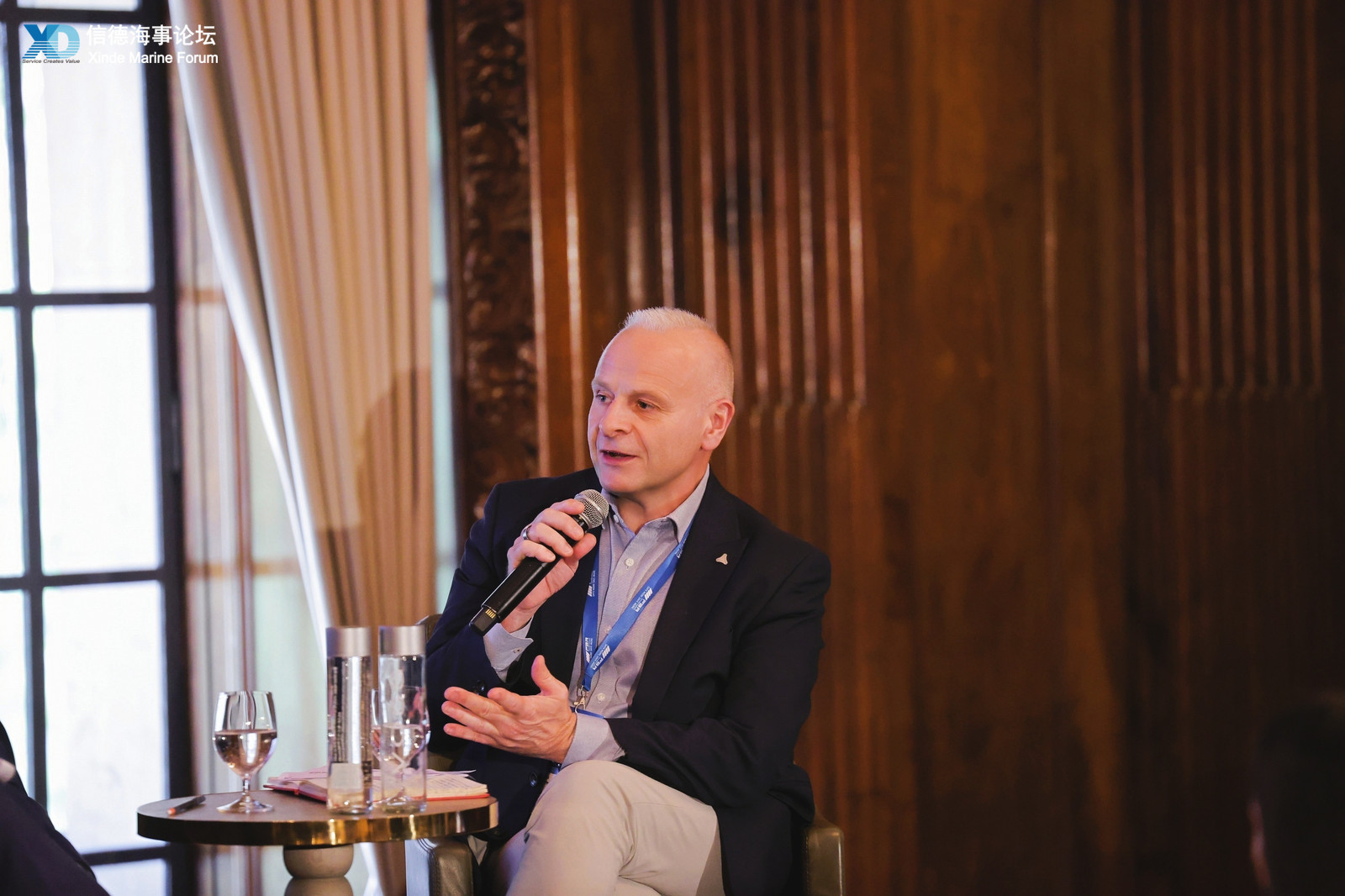
The Port of Antwerp-Bruges is working across several areas, including shore power, hydrogen, methanol, ammonia and carbon capture, utilisation and storage.
Its experience illustrates the dilemma confronting the world’s major bunkering hubs. Infrastructure decisions often need to be made before the future composition of the marine fuel market becomes clear.
A port that waits until demand is fully visible risks becoming a bottleneck. A port that invests too early, or backs the wrong pathway, risks creating expensive and underused infrastructure.
Closer coordination is therefore becoming essential.
Port authorities need credible indications of future vessel calls and fuel demand. Shipowners require confidence that compatible fuels and appropriate safety arrangements will be available along their trading routes. Fuel producers need long-term demand signals before committing capital to new production facilities.
This interaction is particularly important for China.
The country is the world’s leading shipbuilding nation, a major shipping market and home to several of the world’s busiest container and cargo ports. Chinese shipyards may build a substantial share of the future alternative-fuel fleet, but the operational value of those vessels will still depend on fuel availability, terminal readiness and safety standards across international trading networks.
China’s position across shipbuilding, ports, renewable energy, equipment manufacturing and maritime finance gives it an opportunity to participate in multiple parts of the transition. It also means that decisions taken by Chinese yards, owners and ports will affect the pace at which new technologies become commercially scalable.
Safety cannot be added later
Alternative-fuel adoption is also constrained by the time required to establish a mature safety system.
Jack He pointed to LNG as an example. Its present operating and safety framework is the result of years of technical development, rulemaking, training and accumulated experience.

Methanol, ammonia, hydrogen and other alternatives will require their own combination of vessel rules, bunkering procedures, terminal standards, emergency-response systems, maintenance arrangements, certification and crew competence.
Ship design represents only one component of that system.
A technically advanced vessel cannot operate safely if terminal staff, bunker suppliers, seafarers, surveyors and emergency services are not prepared for the characteristics of the fuel involved.
The issue is particularly important for ammonia because of its toxicity and for hydrogen because of its storage, handling and leakage characteristics. A serious incident during the early stage of deployment could affect confidence not only in an individual project but in the wider fuel pathway.
The IMO has begun developing a broader safety regulatory framework for ships using new technologies and alternative fuels. Interim guidelines have already been developed for several technologies and fuels, including methyl and ethyl alcohol, fuel cells, LPG and ammonia.
Formal rules, however, must be accompanied by practical experience.
Crew members need opportunities to work with the systems for which they have been trained. Ports and emergency services must understand the relevant hazards, while shipowners need maintenance procedures and onboard management systems that reflect real operating conditions.
For shipyards and classification societies, the challenge extends beyond approving a fuel system on paper. They must consider the complete operational chain, including bunkering interfaces, ventilation, detection systems, emergency shutdown arrangements, crew protection and the consequences of equipment failure.
Green labels require lifecycle evidence
The forum also challenged the tendency to define a fuel as green solely by what comes out of a ship’s exhaust.
A proper assessment must consider emissions from primary production, the source of the electricity used, processing, transport, storage, leakage and final onboard consumption.
Under the IMO’s lifecycle assessment framework, well-to-wake emissions combine two components.
Well-to-tank covers emissions generated from primary production until the fuel reaches the ship’s tank. Tank-to-wake covers emissions arising from the fuel’s onboard use.
That distinction can produce very different results for fuels with the same chemical composition.
Hydrogen-based fuels produced using renewable electricity, for example, can have a substantially different carbon footprint from equivalent products made using unabated fossil energy. Methane slip and hydrogen leakage can also reduce the claimed climate benefit of particular pathways.
Smith argued that no lifecycle methodology is likely to be perfect from the outset because production technologies and supply chains will continue to evolve. The absence of a perfect system should not become a reason to delay action.

Instead, shipping needs a transparent framework that can be improved as evidence develops and aligned, where possible, with the systems used in other industries and jurisdictions.
The underlying objective is to reward genuine emissions reductions and prevent emissions from simply being shifted from ships to another part of the energy supply chain.
Certification integrity will also become an increasingly important commercial issue.
The future earnings and financing prospects of a vessel may depend on whether its fuel can demonstrate compliance with carbon-intensity regulations, regional emissions systems and charterers’ environmental requirements. A fuel’s environmental credentials will therefore need to be measurable, auditable and trusted by regulators, financiers and customers.
Who controls the transition — and who pays?
The allocation of responsibility remains one of the most difficult questions.
Shipowners can invest in efficient vessels, alternative-fuel engines and operational improvements. They do not control the rate at which renewable electricity is developed or the availability of alternative fuels in every port.
Ports can prepare infrastructure, but they cannot guarantee demand. Fuel suppliers can develop production projects, but they need bankable customers. Cargo owners may demand lower-emission transport, but they do not always accept the full cost premium.
Sandrelli said transition costs will ultimately move through the supply chain to cargo interests and consumers.
This means decarbonisation will increasingly influence freight contracts, charter-party terms, long-term transport agreements and cargo procurement strategies. Questions over who supplies the fuel, who controls vessel speed and routing, who provides emissions data and who bears compliance costs will require clearer contractual allocation.
The strategic reset is therefore not solely a technical reassessment. It is also a commercial negotiation over cost, control and risk.
Efficiency is the first fuel
The strongest point of agreement was that shipping’s transition debate has become too fuel-centric.
Reducing energy demand lowers the volume of expensive low-carbon fuel that must be produced. It also limits exposure to shortages and can deliver benefits regardless of which fuel ultimately powers a vessel.
For the existing fleet, this is particularly important. Many ships operating today will remain in service well into the next decade and cannot wait for a fully developed global alternative-fuel network.
Hull and propeller optimisation, air lubrication, voyage optimisation, weather routing, just-in-time arrival and better coordination between ships, terminals and ports can all reduce energy use.
These measures also provide a response to regulatory uncertainty. An owner may remain unsure whether methanol, ammonia, LNG-derived renewable fuels, hydrogen or another pathway will dominate a particular trade, but reducing the vessel’s overall energy requirement remains valuable under almost every scenario.
Wind propulsion offers a test case
Wind-assisted propulsion illustrates this approach.
In his presentation, Baijian Jiang described rotor sails as a means of reducing propulsion-energy demand rather than replacing the wider fuel transition.
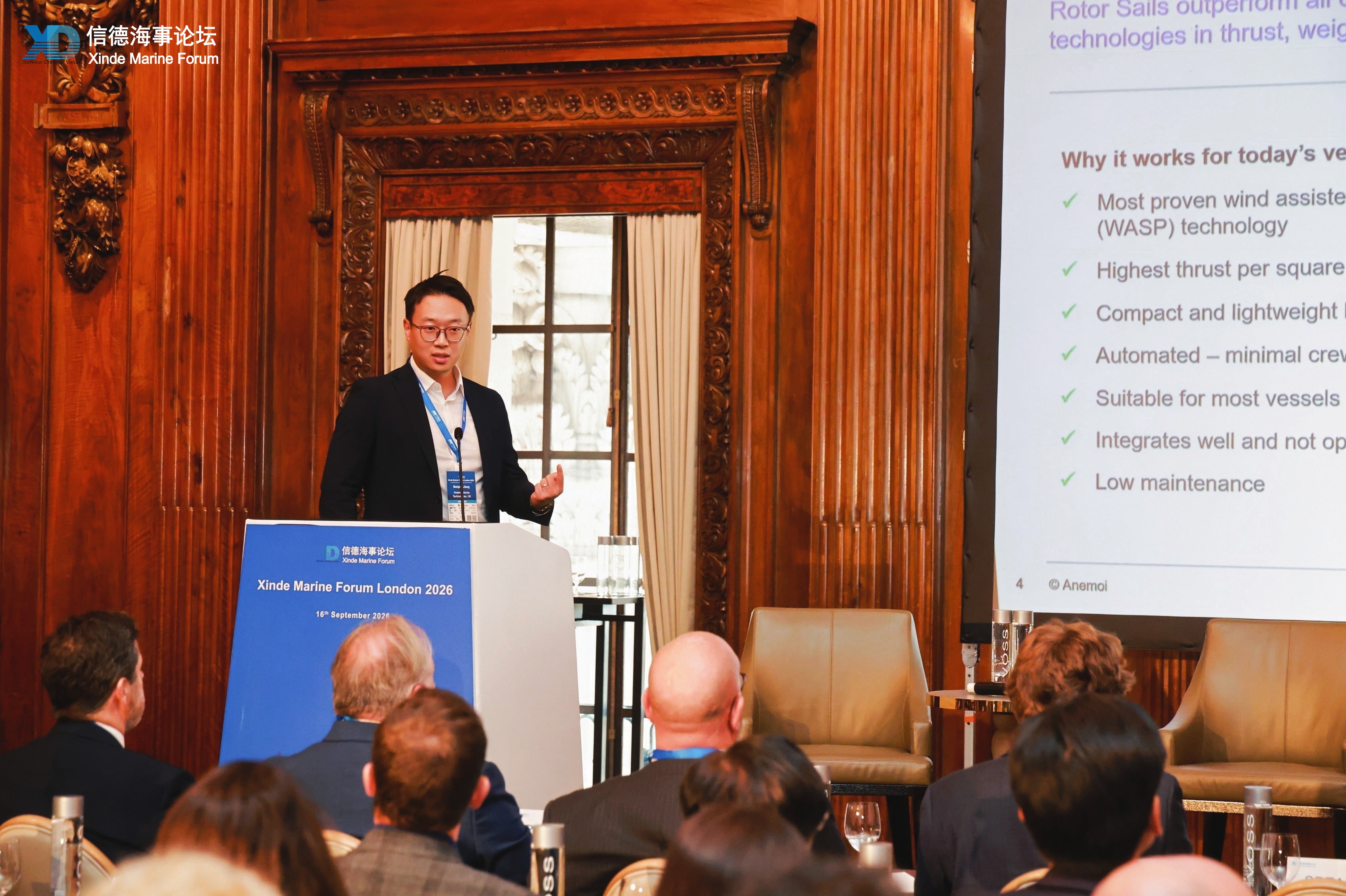
Rotor sails use the Magnus effect to convert wind into additional forward thrust. They can be incorporated into newbuildings or retrofitted to existing vessels.
Their commercial performance, however, depends on vessel type, trading route, prevailing wind conditions, installation arrangement and operating profile. They must also be integrated without compromising cargo handling, bridge visibility, vessel stability or access to working areas.
Verified operational data and realistic payback assumptions are therefore more valuable than generalised fuel-saving claims.
The same principle applies to other efficiency technologies. A system that performs well on one ship or route may deliver a different result elsewhere. Owners must evaluate actual speed profiles, weather conditions, utilisation, fuel prices and operational constraints.
Wind propulsion nevertheless has one important strategic advantage: its value is not tied to a single future fuel.
Reducing the energy demand of a conventionally fuelled ship lowers current fuel consumption. Applied to a vessel using a more expensive low-carbon fuel, the same reduction may become even more valuable.
Wind assistance can therefore reduce emissions now while also lowering future fuel-supply and compliance risks.
What the reset means for maritime investment
The strategic reset changes the order in which the industry approaches decarbonisation.
Shipowners do not necessarily need to wait for a definitive fuel winner before acting. They can reduce energy demand, improve operational performance and preserve fuel or conversion options in newbuilding designs.
Shipyards will increasingly compete on more than their ability to install a dual-fuel engine. Integrated efficiency, fuel flexibility, safe system design and future conversion potential will influence the commercial value of new vessels.
This creates opportunities for Chinese shipbuilders and equipment suppliers, particularly as global owners seek designs capable of managing both regulatory uncertainty and changing fuel availability. It also raises expectations for engineering integration, safety validation and lifecycle technical support.
Ports will need to align investment with the fleets and trades they actually serve rather than attempting to build every form of alternative-fuel infrastructure simultaneously.
Classification societies, insurers and training providers will play a larger role in turning new technologies into safe, repeatable operating practices. Cargo owners will also become more directly involved as transition costs move through green premiums, freight rates and long-term transport contracts.
Green shipping is therefore not entering a period of retreat. It is moving from ambition expressed primarily through fuel announcements to the more difficult phase of implementation.
The industry may not yet know which fuel will dominate each trade. But it already knows that using less energy, building credible supply chains and preparing people to operate new systems safely are investments that do not depend on predicting a single winner.

READ MORE
 Sustainability
Chimbusco completes first ammonia bunkering operation
 Sustainability
324 days ahead of schedule — another milestone for China’s shipbuilding industry
 Sustainability
The Next Shipping Race Will Be About Who Can Burn Less Fuel
 Sustainability
Shipping Has a Net-Zero Target — but Still Lacks the Rules to Deliver It
 Sustainability
World’s First Wind-Assisted LNG Carrier Named, Featuring Two 49-Metre Hard Sails
 Sustainability
World’s 1st Operational Ammonia Bunkering Vessel Enters Service,Backed by CMB.TECH
 Sustainability
At SMM Hamburg I Saw Seven Changes Reshaping Global Shipping
 Sustainability
World’s First Operational Ammonia Bunkering Vessel Emerges
 Sustainability
Ships Built Today May Still Be Sailing in 2050 — So How Should We Design Them?
 Sustainability