

China’s Shipyards Are Selling 2030 Slots as New Orders Hit Record Highs

ChatGPT Image 2026年9月7日 13_37_35
Walter (宏利)
Published 14:38

Chinese yards took 76% of global newbuilding orders by CGT in the first eight months of 2026, while several leading builders are already scheduling deliveries into 2030. The immediate constraint is no longer a lack of orders, but how yards allocate scarce capacity — and whether today’s order boom will eventually translate into another wave of fleet oversupply.

China’s shipbuilding boom has reached a point where the industry’s most valuable commodity is increasingly not the next order, but the next available delivery slot.

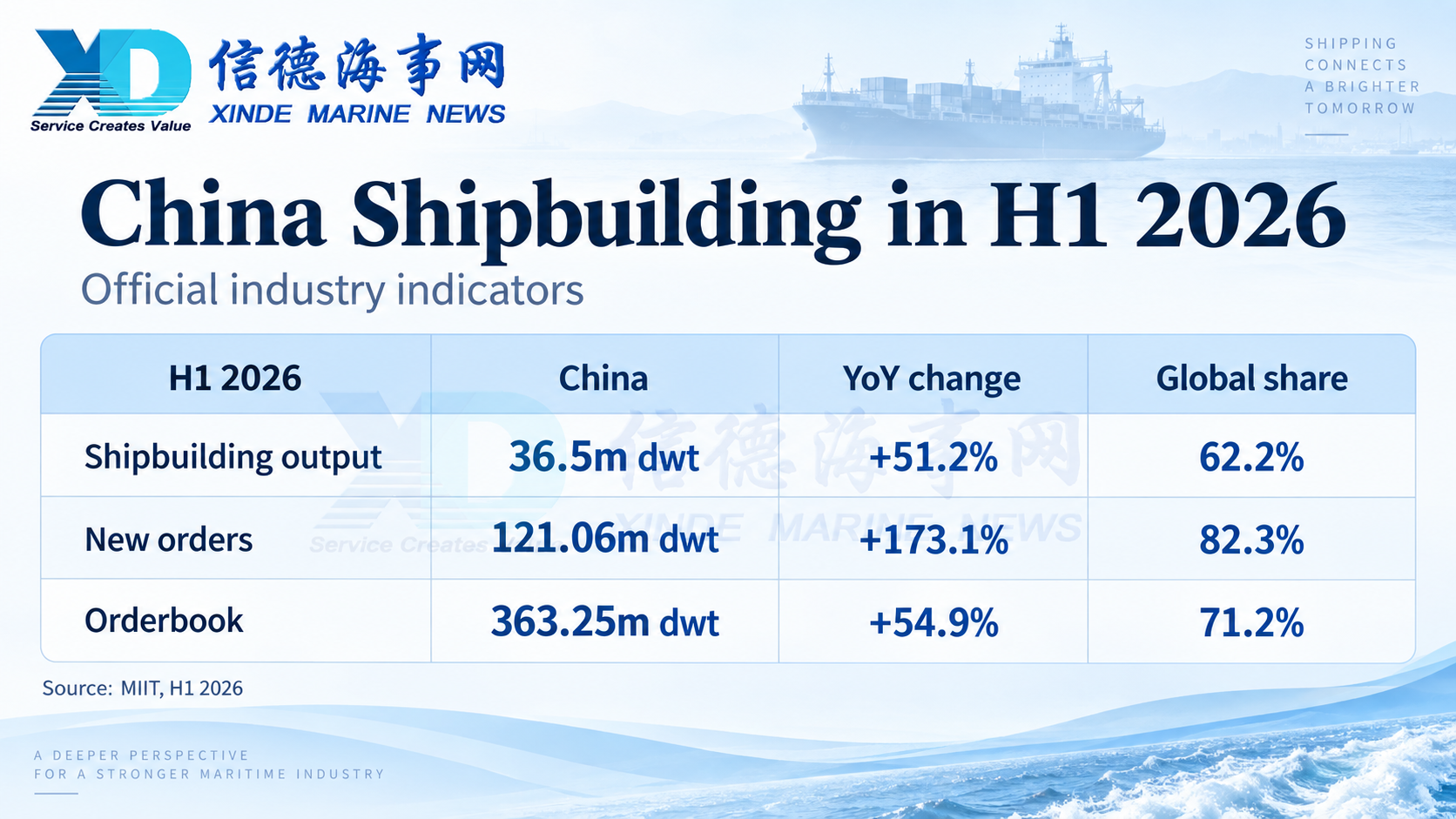
In the first half of 2026, Chinese yards completed 36.5 million dwt of ships, up 51.2% year on year, while new orders surged 173.1% to 121.06 million dwt. The orderbook reached 363.25 million dwt at the end of June, up 54.9%.

China accounted for 62.2% of global completions, 82.3% of new orders and 71.2% of the global orderbook by deadweight, according to data released by the Ministry of Industry and Information Technology. New contracting in just six months exceeded China’s previous full-year record.


The 82.3% figure is a deadweight-based share, not a vessel count. A 300,000-dwt tanker and a feeder containership obviously do not represent equivalent amounts of shipbuilding work.

On compensated gross tonnage, or CGT — the industry measure designed to better reflect differences in ship complexity — China’s dominance is somewhat lower, but still remarkable.

Clarksons Research data reported in early September showed that 59.72 million CGT of new ships were contracted worldwide in the first eight months of 2026. Chinese yards secured 45.39 million CGT, or 76%, while South Korea took 9.38 million CGT, or 15.7%.

At the end of August, China held 67.2% of the global orderbook by CGT, compared with 17.5% for South Korea.

The more consequential development, however, is what those orders are doing to forward shipyard capacity.

2029 is filling up, and 2030 is already being sold

A growing number of China’s leading yards now have production visibility through the end of the decade.

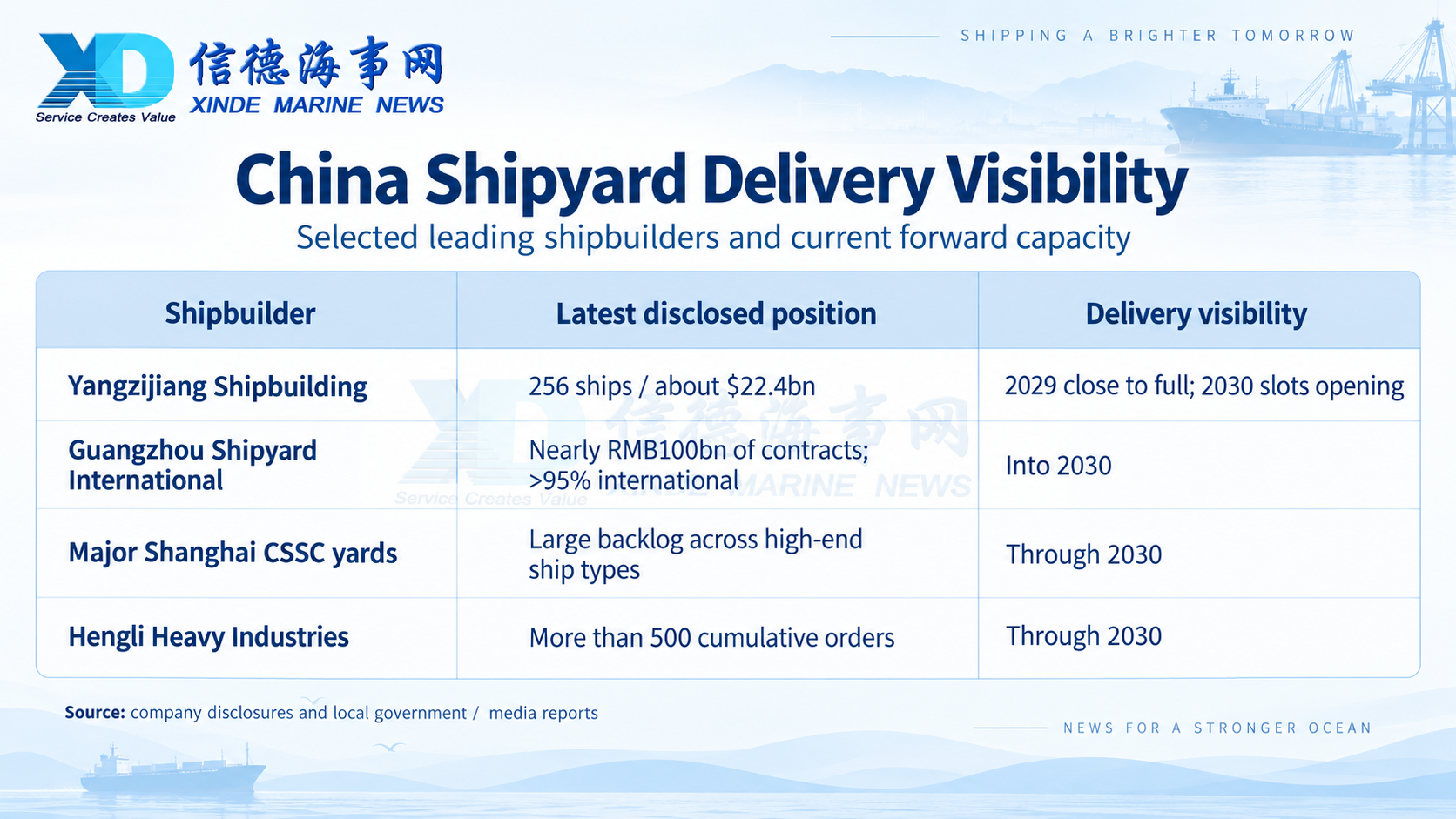
Yangzijiang Shipbuilding held 256 vessels worth about $22.4 billion in its orderbook at the end of June. The group has indicated that its 2029 delivery positions are close to fully committed and that it is progressively opening 2030 slots.

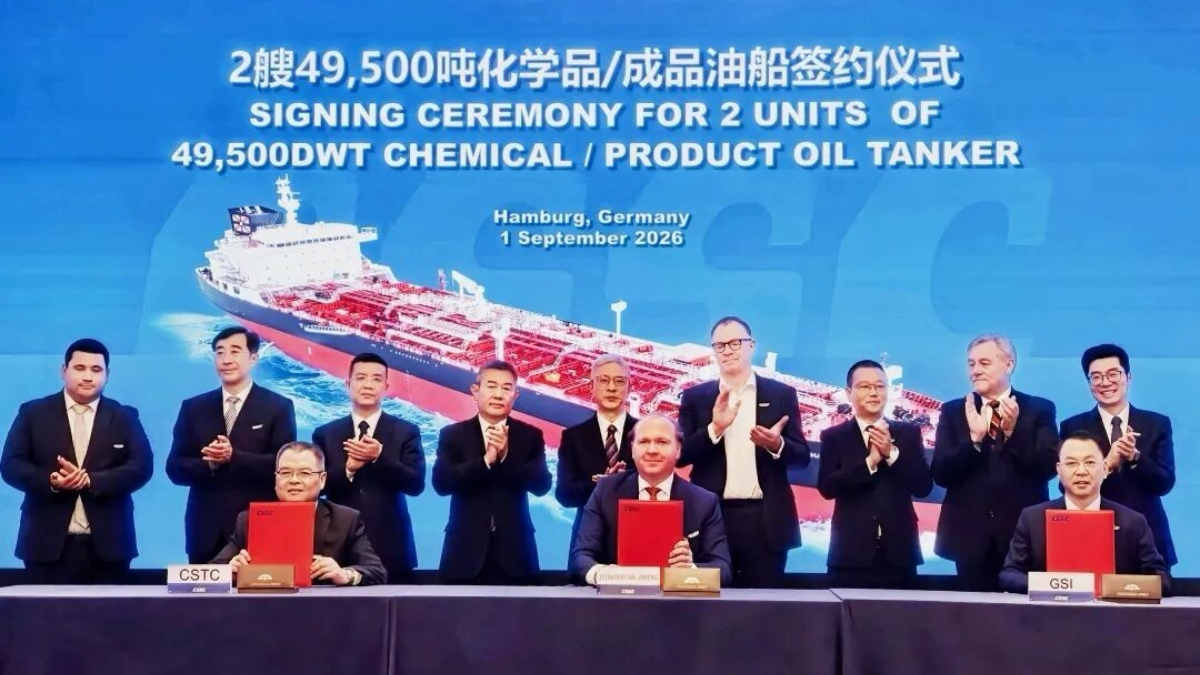
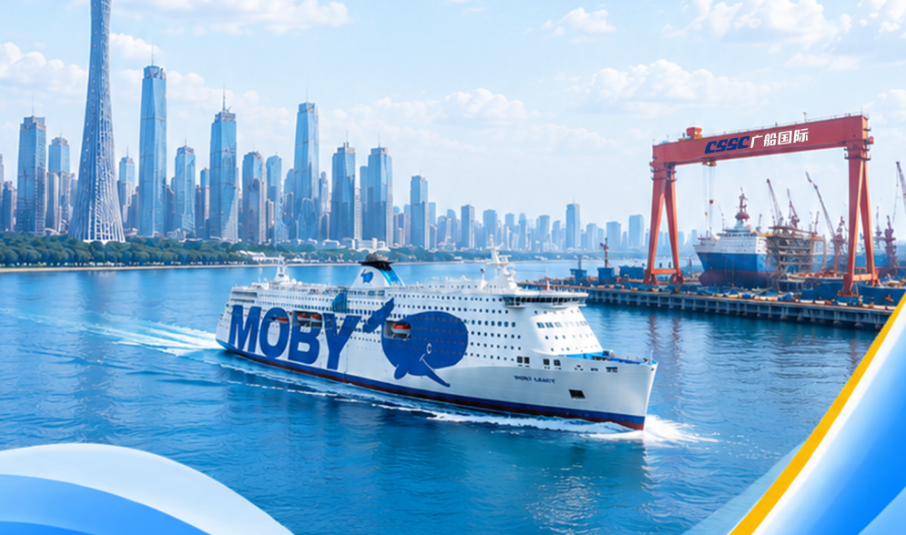
At Guangzhou Shipyard International, a major CSSC tanker and ro-ro builder, contracts in hand have approached RMB100 billion ($14 billion), with international orders accounting for more than 95% of the total. General manager Zhou Xuhui said the yard’s production schedule now extends into 2030.

The same pattern is visible in Shanghai.

The city government said in April that the orderbooks of Jiangnan Shipyard, Hudong-Zhonghua Shipbuilding and Shanghai Waigaoqiao Shipbuilding were scheduled out to 2030. By August, Shanghai authorities said the major yards were operating at high utilisation, with some production schedules already extending to the end of the decade.

Hudong-Zhonghua is particularly exposed to the high-value LNG carrier market. It had 57 LNG carriers on order at the end of January, giving it what the company described as the largest LNG orderbook globally by capacity, while total orders in hand exceeded RMB150 billion at the end of 2025.

Its LNG production schedule was already fully booked through 2030, with close to 50 LNG ships planned for construction and delivery.

Hengli Heavy Industries, meanwhile, has become one of the most striking examples of capacity and orderbook expansion. The Dalian-based private builder secured 207 new vessel orders in the first half of 2026, including 49 bulkers, 56 containerships, 94 tankers and eight very large ammonia carriers.

Its cumulative contracting has exceeded 500 vessels and deliveries are scheduled through 2030.

For shipowners looking for large containerships, tankers, gas carriers or sophisticated dual-fuel tonnage, the negotiation is increasingly about delivery timing as well as price.

From filling docks to choosing orders

That changes the economics of the shipyard business.

When yards have spare capacity, keeping docks and production lines occupied is a priority. When the next three or four years of core capacity are substantially committed, builders can afford to become more selective.

The relevant questions become: Which contract offers the best price? How many sisterships does it include? What are the payment terms? How credible is the owner? How much engineering risk does the project carry? And is a scarce dock slot better used for a conventional bulker or a more valuable LNG carrier, VLCC, dual-fuel containership or gas carrier?

Yangzijiang has already described its forward contracting approach as disciplined and market-oriented, focusing on the remaining 2029 positions while gradually adding 2030 business.

This represents an important evolution in China’s shipbuilding cycle.

For much of the industry’s earlier development, the headline measure was market share. Today, volume still matters, but contract value per unit of capacity, ship complexity, margin and customer quality are becoming increasingly important.

A yard that can fill the same dock period with a higher-value, repeat-series contract does not need to maximise deadweight tonnage at any cost.

Fewer active yards — but capacity is starting to return

One reason delivery slots have become so valuable is the long restructuring of global shipbuilding after the 2008 financial crisis.

Clarksons data show that, using a measure of yards beginning a year with at least one ship of more than 20,000 dwt on order, the number of active shipyards fell from 325 in 2009 to 167 in 2025.

A modern commercial shipyard is also difficult to recreate quickly.

A dock is only one part of the equation. Competitive output depends on design capabilities, skilled labour, block fabrication, production engineering, engines and equipment, supplier networks, classification approvals and the ability to deliver large series consistently.

That makes near-term supply relatively inflexible when ordering accelerates suddenly.

Yet capacity is not fixed.

The same high prices and long orderbooks that are strengthening shipyard bargaining power are also encouraging builders to expand.

Yangzijiang is investing in new capacity at its Yangzi Hongyuan facility, with the new yard designed to support larger and more sophisticated vessels.

Guangzhou is advancing additional shipbuilding facilities, including expansion around GSI’s Longxue operations, while Hengli continues to increase capacity at its Changxing Island complex.

Hengli currently operates four major building docks, and provincial government information puts its annual steel-processing capacity at 3 million tonnes.

The balance is therefore more nuanced than a simple claim that global shipbuilding capacity cannot grow.

Effective capacity is tight today, but China is already investing to increase it.

That distinction will become increasingly important from 2027 onward.

Newbuilding prices remain close to historic highs

Scarce slots and strong demand continue to support ship prices.

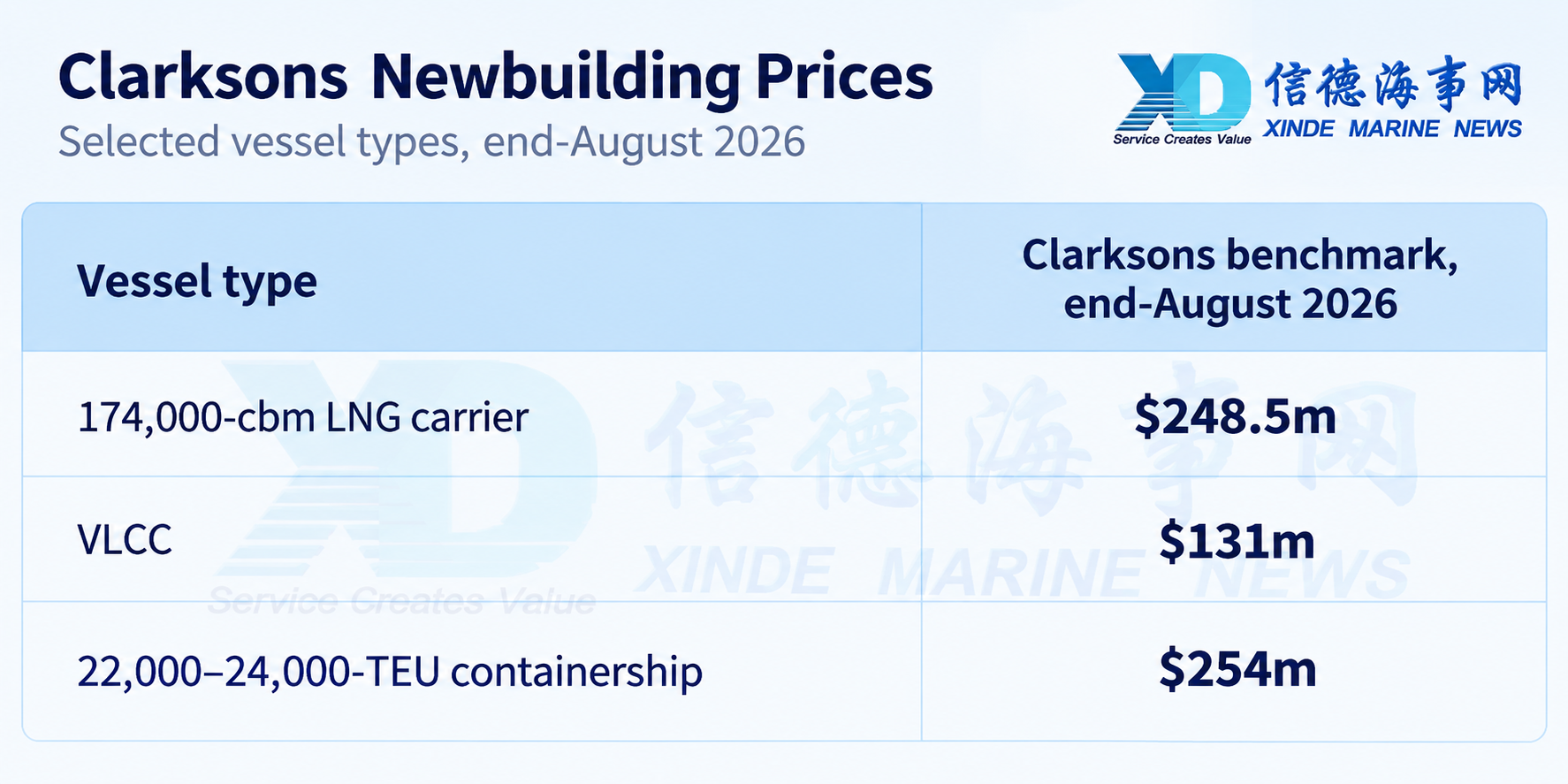
The Clarksons Newbuilding Price Index stood at 186.34 points at the end of August, up from 185.49 a month earlier and 28% above its level five years earlier.

Indicative prices for major vessel types included:


Those prices cannot be attributed solely to greater bargaining power at Chinese yards.

Steel, engines, cryogenic equipment, labour and environmental systems all contribute. Modern vessels are also increasingly complex, particularly where dual-fuel propulsion, alternative-fuel storage and increasingly demanding efficiency requirements are involved.

Long delivery periods create another risk premium: yards taking orders for 2029 or 2030 must price against several years of uncertainty in labour costs, currencies, materials and equipment.

The result is a market in which both physical capacity and contractual risk are being priced more aggressively.

China is capturing more of the green ship market

China’s rapid move into higher-value vessels is also visible in alternative-fuel and environmentally optimised ship orders.

Official Chinese data show that the country secured more than 68% of global new orders for “green” vessels in the first half of 2026.

That figure refers to China’s share of the international green-ship market; it does not mean that 68% of all ships ordered at Chinese yards are alternative-fuel vessels.

The distinction matters because the current ordering boom is being driven by a much wider combination of forces.

Fleet renewal and decarbonisation are important, but they sit alongside strong tanker earnings, changes in trading distances, container-route disruption, commodity demand and the accumulation of cash on shipowners’ balance sheets after several profitable freight cycles.

In other words, 2026 is not simply an “IMO replacement cycle”.

It is a broad newbuilding investment cycle across multiple shipping segments.

Contracting is again approaching 2007 levels

The scale of that cycle is becoming increasingly difficult to ignore.

Clarksons Research said 1,778 ships of 50.9 million CGT and 159.9 million dwt were ordered globally in the first seven months of 2026.

The pace of investment was running at a level similar to the 2007 record year and roughly double the average of the previous decade.

That comparison is important because it introduces the other side of the shipbuilding story.

Today’s market is structurally different from 2007. The number of major active yards is lower, shipbuilding has become more concentrated, the world fleet is older, environmental regulation is tighter and many vessels are considerably more technologically complex.

But none of those factors eliminates the shipping cycle.

Orders signed in 2026 do not enter the fleet in 2026. They become deliveries in 2027, 2028, 2029 and beyond.

As those deliveries accumulate, the question shifts from whether yards have enough work to whether shipping markets can absorb the new tonnage.

The container orderbook offers an early warning

Containerships provide one of the clearest examples.

By June, the global containership orderbook had climbed to around 13.28 million TEU across 1,630 vessels, equivalent to 39% of the existing fleet, according to Linerlytica data reported by Splash. Clarksons data showed 332 containerships ordered in the first five months of 2026 alone, while Alphaliner expected 2029 to become the heaviest delivery year.

That does not mean a container downturn is inevitable.

Trade growth, slower steaming, scrapping, congestion and route diversions can all absorb capacity. But the size of the backlog means assumptions about future trading distances matter enormously.

If Red Sea diversions eventually ease and ships return to shorter routings while newbuildings continue arriving, effective capacity could rise much faster than nominal fleet growth alone suggests.

Tankers, bulkers and gas carriers face different orderbook dynamics, so the same conclusion cannot simply be applied across every segment.

But the broader point stands: today’s shipyard shortage and tomorrow’s shipping capacity are two sides of the same orderbook.

The next phase is about the value of capacity

China’s position in global shipbuilding has rarely been stronger.

It secured 76% of worldwide contracting by CGT in the first eight months of 2026, holds roughly two-thirds of the global CGT orderbook, and several of its most important yards already have substantial production committed through 2030.

For the yards, that visibility creates an opportunity to improve more than volume.

Scarce forward slots allow builders to prioritise better-priced contracts, larger series, stronger counterparties and technically more valuable ships. That can support margins and accelerate the shift from dominance in output toward dominance in higher-value vessel segments.

But the same boom is also encouraging investment in new capacity, while the global contracting pace is again approaching the levels last seen before the previous shipbuilding peak.

The key measures over the next several years will therefore be increasingly specific: what owners are prepared to pay for 2030 delivery, how quickly new Chinese capacity comes online from 2027, how orderbook-to-fleet ratios evolve across individual shipping segments, and whether owners remain prepared to order for delivery four or five years ahead.

Those variables will determine whether today’s shortage of shipyard slots becomes a prolonged period of stronger pricing and profitability — or eventually gives way to another cycle dominated by heavy fleet deliveries.

PURCHASE MEMBERSHIP

You need to purchase a membership to read this article

Payment