


Ageing Fleet Meets China-Led Project Cargo Boom as MPP Owners Return to Newbuildings

Multipurpose and heavy-lift shipping is entering a selective fleet-renewal cycle, supported by an ageing vessel base and continued demand for wind-energy, storage and industrial cargoes from Asia. But owners are not converging on one ship size. From 5,000-dwt flexible traders to 60,000-dwt heavy-lift units, the investment case increasingly depends on cargo access, port flexibility and long-term customer relationships.
HAMBURG — Multipurpose shipping companies are returning to the newbuilding market, but the emerging investment cycle looks very different from a simple race for larger ships.
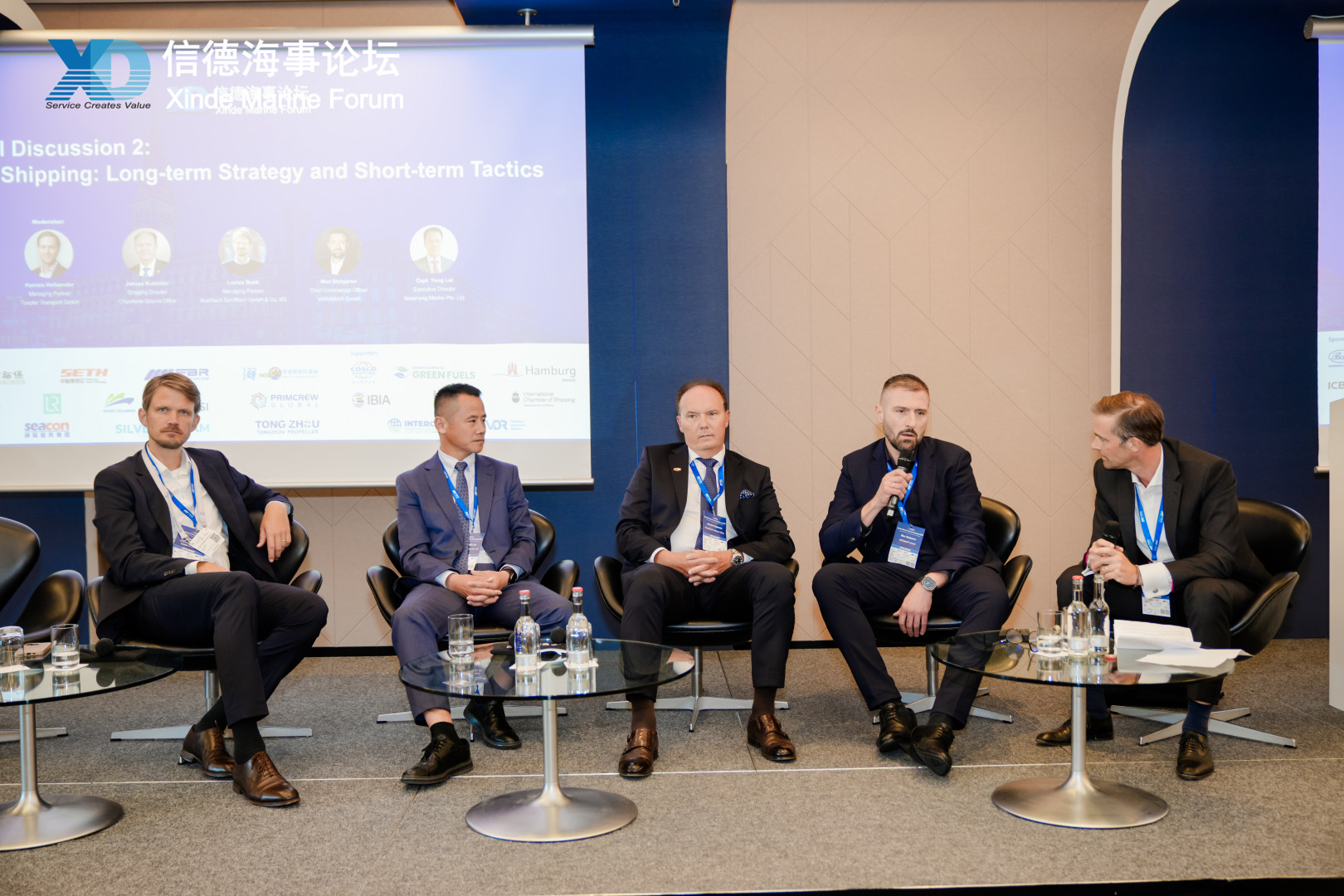
At the Xinde Marine Forum Hamburg 2026, held on September 1 alongside SMM Hamburg, executives from Chipolbrok, Auerbach Schifffahrt, VARAMAR and Singapore-based Baosheng Marine presented four distinct approaches to fleet renewal — ranging from large heavy-lift vessels capable of switching into bulk cargoes to smaller tonnage designed around port access and charterer requirements.
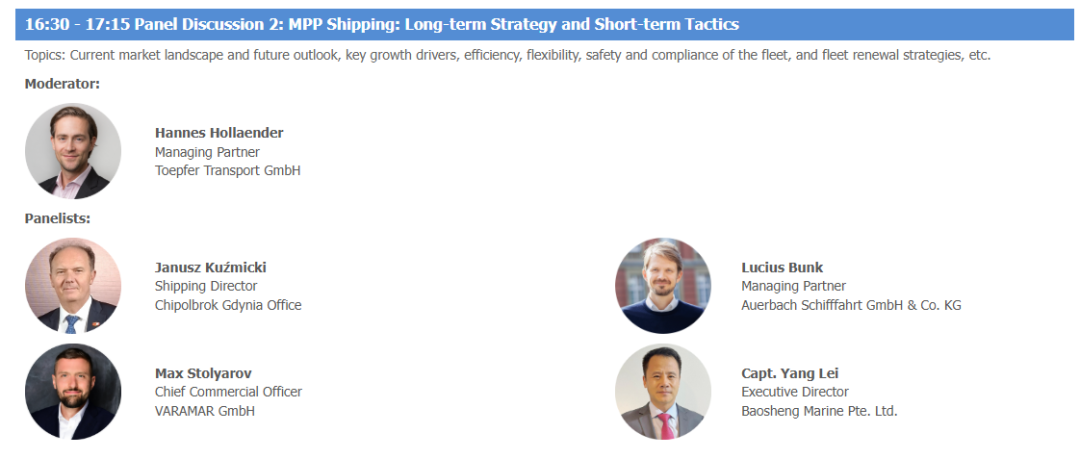
The panel, “MPP Shipping: Long-term Strategy and Short-term Tactics,” was moderated by Hannes Hollaender, managing partner of Toepfer Transport GmbH. Joining him were Janusz Kuźmicki, shipping director at Chipolbrok’s Gdynia office; Lucius Bunk, managing partner at Auerbach Schifffahrt GmbH & Co. KG; Max Stolyarov, chief commercial officer of VARAMAR GmbH; and Capt. Yang Lei, executive director of Baosheng Marine Pte. Ltd.
They differed sharply on the ideal vessel size and business model.
But when Hollaender closed the discussion by asking whether the market should order more ships, the answer was broadly yes.
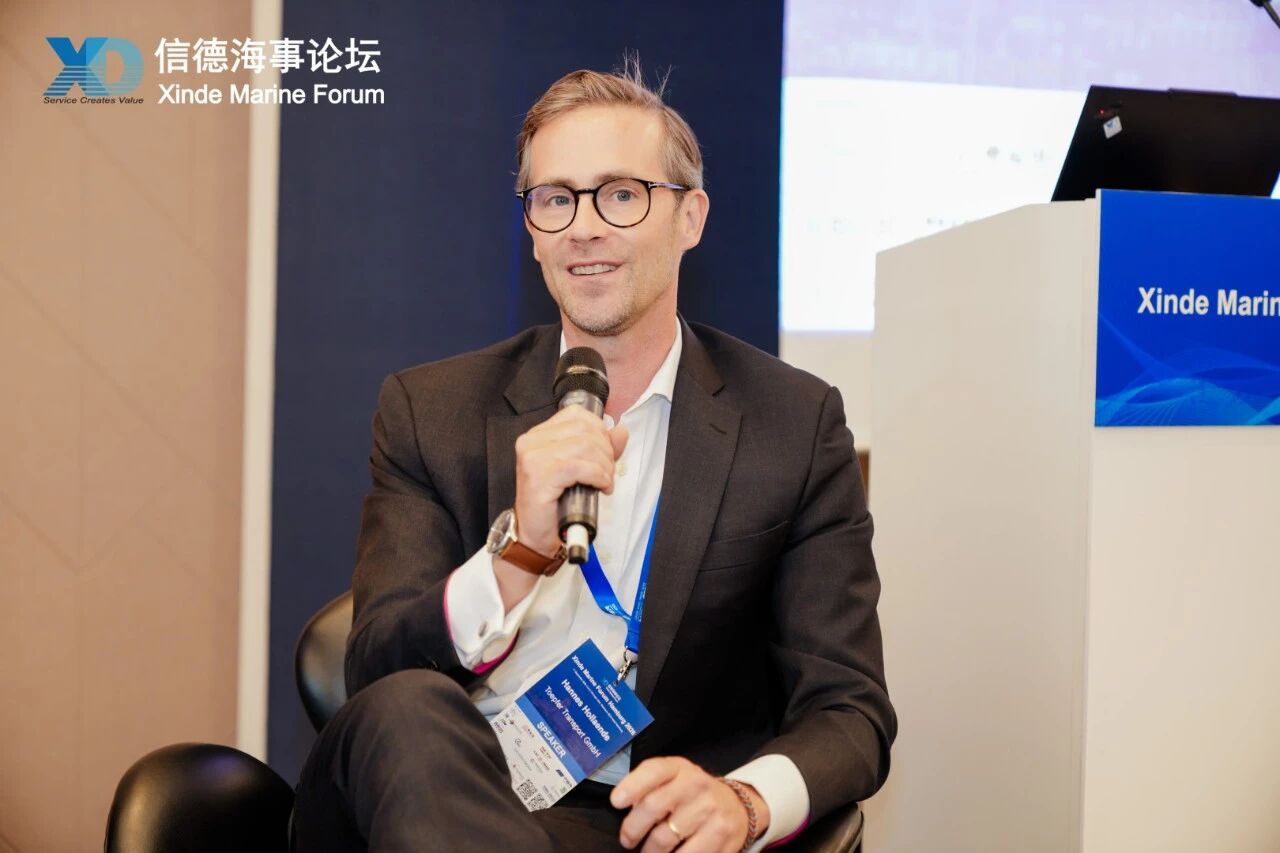
Hannes Hollaender, managing partner of Toepfer Transport GmbH
VARAMAR’s Stolyarov added the qualification that captured much of the discussion: “We should order more vessels. But we should order the right kind of vessels.”
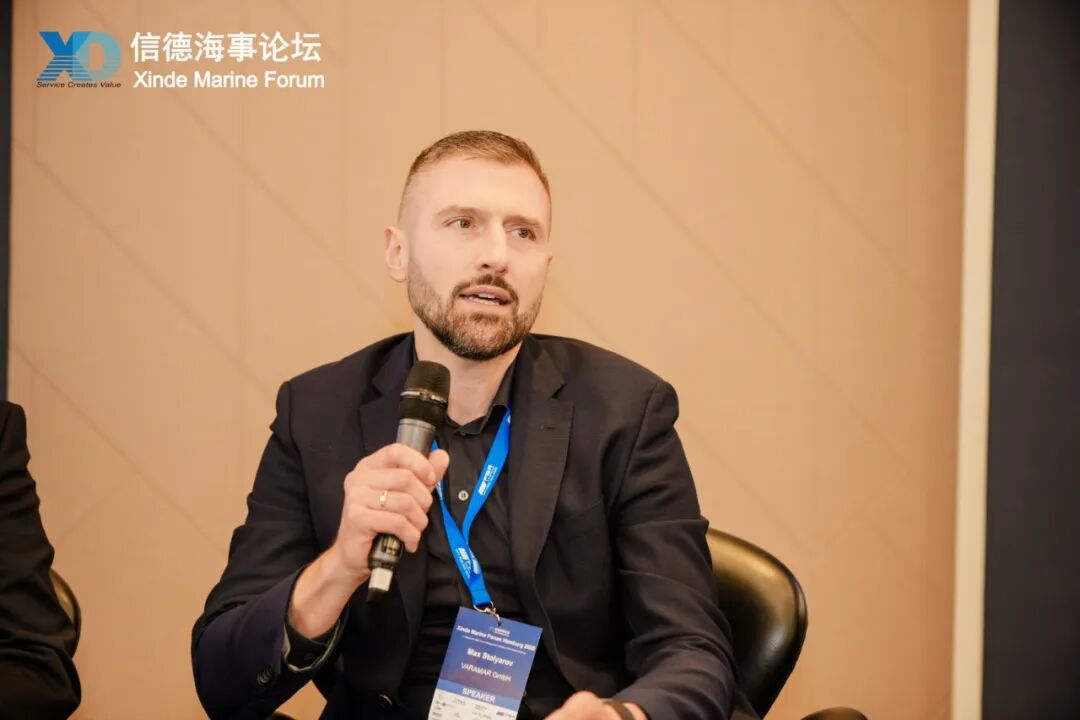
Max Stolyarov, chief commercial officer of VARAMAR GmbH
Renewal pressure is building
The immediate MPP market remains healthy, but the more structural argument for new investment comes from the age profile of the existing fleet.
Hollaender told the panel that the Toepfer Multipurpose Index for E/F-type vessels was around $12,500 per day at the time of the discussion.
Auerbach’s Bunk argued that current earnings were only part of the picture. The MPP fleet in the segment he monitors has an average age of roughly 17–18 years, he said, after a prolonged period between 2014 and 2024 in which relatively few new vessels entered service.
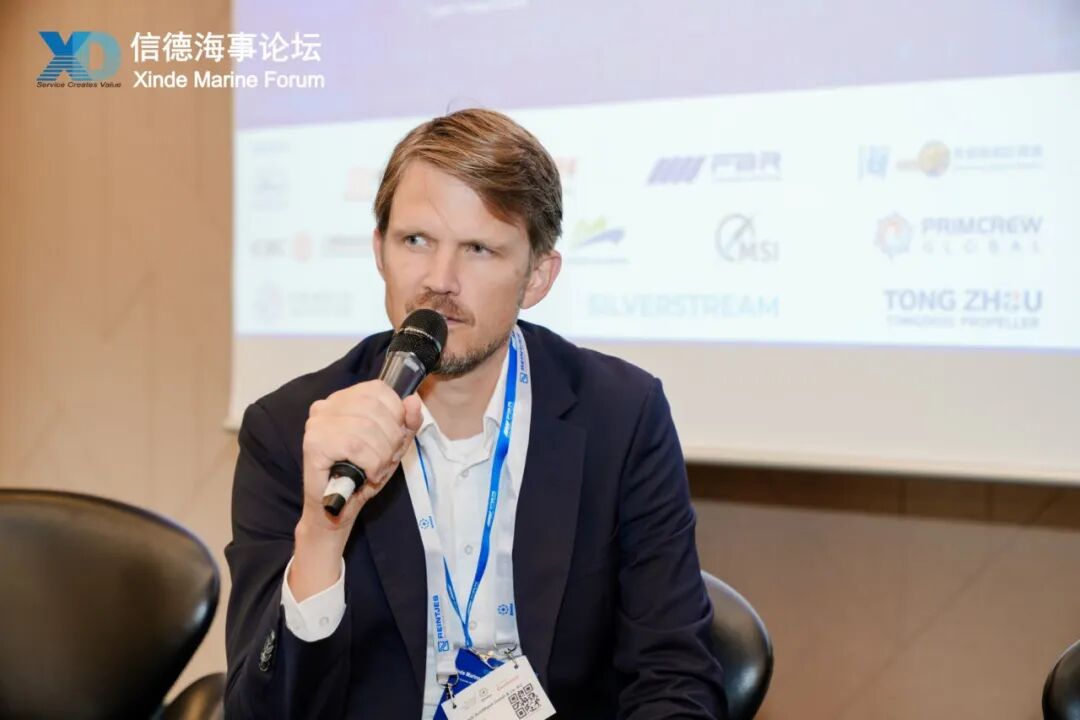
Lucius Bunk, managing partner at Auerbach Schifffahrt GmbH & Co. KG
New-generation ships, meanwhile, can achieve fuel-consumption improvements of around 35–40% under comparable operating parameters, according to Bunk.
The ageing issue extends particularly into the heavy-lift-capable fleet.
Breakbulk, citing DNV data, reported in September that there are about 2,300 multipurpose project carriers globally, but only 457 have cranes rated above 99 tonnes. More than 100 of those heavy-lift-capable ships are already over 20 years old, with ageing especially visible in the 5,000–8,000 dwt range.
That does not mean every old MPP will automatically be replaced one-for-one.
The sector is far less standardised than containerships or bulk carriers. Crane capacity, hatch dimensions, deck strength, tween-deck arrangements, draught and access to smaller ports can be as important commercially as deadweight.
Fleet renewal is therefore becoming a question not simply of how much capacity to add, but what type of capacity will still find employment across the next cycle.
China-origin project cargo remains a major demand pillar
Cargo demand provides the second half of the investment case.
Chipolbrok’s Kuźmicki said export markets from Asia — and China in particular — remain strong, supported by wind-energy equipment, energy-storage systems and other project cargoes moving towards Europe, the Mediterranean, the US and Canada.

Janusz Kuźmicki, shipping director at Chipolbrok’s Gdynia office
The picture is much less balanced in the opposite direction. Traditional European project and investment-goods cargoes moving eastbound are below the levels seen in earlier years, increasing the importance of cargo flexibility on return voyages.
Wind power is one of the clearest examples of the underlying cargo pipeline.
The Global Wind Energy Council said 9.3 GW of new offshore wind capacity was connected worldwide in 2025, of which China accounted for 6.6 GW. More than 50 GW of offshore wind projects are already under construction globally, while GWEC forecasts that roughly 327 GW could be added over the coming decade, taking worldwide offshore wind capacity to about 420 GW by the end of 2035.
Those gigawatts do not translate directly into MPP tonne-miles. But turbines, blades, towers, nacelles, foundations and associated industrial equipment create precisely the oversized, irregular and technically demanding cargo flows on which project carriers depend.
Chipolbrok’s own fleet illustrates the connection.
Its 62,000-dwt De An began its maiden employment with a shipment of 12 complete wind turbine units for the Suez Wind Power Project in Egypt.
The company’s 62,000-dwt ships combine bulk-cargo capacity with around 5,000 sq m of open deck space, allowing them to target both conventional cargoes and large renewable-energy components.
For MPP owners, that means the current investment story is increasingly tied to two long-duration trends at once: fleet replacement and the movement of industrial and energy equipment out of Asia.
Bigger ships solve one problem — but create another
Chipolbrok is one of the companies betting on the larger end of the MPP market.
Kuźmicki explained that major project programmes can generate full or near-full shiploads from Asia to Europe or the US, while the return voyage may offer few comparable project cargoes.
A larger MPP therefore needs another source of employment.
Chipolbrok sees the ability to lift 50,000–55,000 tonnes of commodity cargo as one answer. A vessel that can move large project parcels outbound and switch into bulk or commodity trades on the return leg can reduce its exposure to structurally imbalanced project-cargo flows.
The company is investing accordingly.
In January 2026, Chipolbrok signed for six 60,800-dwt new-generation multipurpose heavy-lift vessels, with options for another four.
At the same time, it is adding a new intermediate class of about 37,450 dwt.
The first vessel in the series, Wyspiański, was launched at ZPMC’s Qidong yard in China in May. The ships are fitted with three 350-tonne cranes providing up to 700 tonnes of tandem lifting capacity, and are designed for oversized industrial, offshore and wind-energy cargoes. Two further units in the series are already under construction.
The strategy is not simply “bigger is better”.
It is about building ships capable of combining project-cargo specialisation with a wider employment envelope.
Smaller MPPs are defending a different market
Auerbach and VARAMAR see the market from another angle.
Bunk acknowledged that larger project carriers inevitably compete for some of the same cargoes, particularly when shipments can be consolidated at major ports.
But he argued that this does not amount to a wholesale displacement of smaller MPPs.
Traditional tramp and project shipping frequently involves shallow draughts, length restrictions, smaller ports, shipboard cranes, single-parcel cargoes and destinations where large 60,000-dwt vessels are simply impractical.
Auerbach therefore remains comfortable in the 10,000–20,000 dwt range, where the company believes operational flexibility and market expertise provide a defensible niche.
VARAMAR’s Stolyarov made a similar case from an operator’s perspective.
Large ships gain efficiency from scale, but they can also face greater overlap with containerships and other vessel types. Smaller vessels provide more port choices, can reduce transhipment requirements and can shift between deepsea and shortsea employment as markets change.
For a project-cargo operator that creates value by combining parcels and repositioning ships between trades, flexibility itself becomes part of the freight product.
That distinction is important.
MPP capacity cannot be treated as interchangeable in the same way as standardised commodity tonnage. A 5,000-dwt vessel, a 17,500-dwt twin-decker and a 60,000-dwt heavy-lift ship may all be described as multipurpose tonnage, yet compete in substantially different cargo pools.
Baosheng lets the charterer help design the ship
Baosheng Marine offers a fourth model — one that is particularly relevant to the growing role of Asian owners in the global project market.
Capt. Yang described how the Singapore-headquartered company developed from operating much smaller 2,000, 5,000 and 8,000 dwt general cargo vessels into 12,000-dwt geared ships and later 14,000-dwt designs.
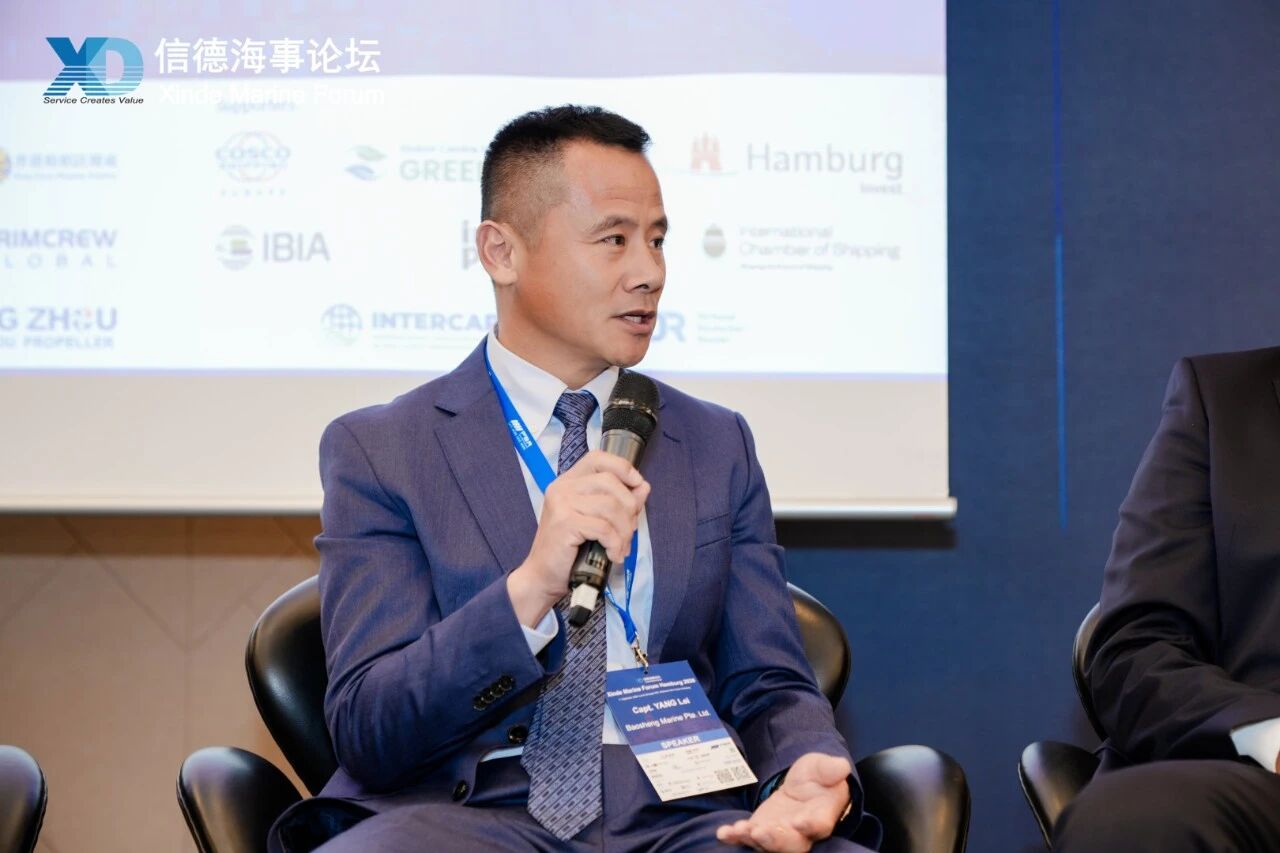 Capt. Yang Lei, executive director of Baosheng Marine Pte. Ltd
Its move towards more sophisticated MPP tonnage was increasingly driven by charterers rather than by a unilateral decision to move up in size.
Customers began asking Baosheng for specific ships and cargo capabilities. Those requirements then shaped the next vessel designs.
Yang said the investment logic remains straightforward: if a reliable charterer requires a particular ship, offers long-term employment and the return is acceptable, Baosheng is prepared to build around that requirement.
A 17,500-dwt MPP developed with Danish shipping group NORDEN provides a concrete example.
Steel cutting was held in Zhejiang in April 2025 for the ship, which Baosheng initiated and tailored to NORDEN’s operational requirements. The design is intended to carry containers and extra-long project cargoes and was developed to meet EEDI Phase III requirements.
Baosheng says it now owns 24 vessels, with trades extending from China, Japan, Korea and Southeast Asia into the Middle East, Africa, Europe and South America.
The company’s development reflects a broader shift in Asia’s role in the MPP sector.
Asian companies are no longer only cargo providers or tonnage suppliers. Some are moving further into ship ownership, vessel design and long-term partnerships with established international operators.
China is appearing on both sides of the MPP equation
China’s role in this cycle is therefore unusually broad.
On the cargo side, Chinese manufacturers are exporting wind-energy equipment, storage systems, industrial machinery and other oversized products.
On the asset side, Chinese yards are building an increasing share of the specialised ships intended to carry them.
Chipolbrok’s new 37,450-dwt heavy-lift series is being built at ZPMC in Qidong. Its 2026 programme also includes six firm 60,800-dwt heavy-lift MPP newbuildings plus four options.
Baosheng is using Chinese shipbuilding and design capacity to develop ships around international charterers’ requirements.
The result is not a simple displacement of European expertise.
German, Polish, Dutch, Scandinavian and other European project-cargo companies continue to hold deep commercial relationships, engineering knowledge and operating expertise.
What is emerging instead is a more integrated model linking international project-cargo expertise, Chinese industrial exports, Chinese shipbuilding capacity and a growing pool of Asian shipowning capital.
That combination may prove one of the defining features of the next MPP fleet-renewal cycle.
Can containerships take the cargo away?
The bullish case is not without risks.
One is competition from other vessel classes.
Containerships can carry some oversized and project cargo on deck or specialised equipment when capacity is abundant. Bulk carriers, pulp carriers and open-deck tonnage can also overlap with parts of the MPP cargo base.
Kuźmicki acknowledged that the large containership orderbook would inevitably compete for some oversized project cargo.
But containerships cannot handle every project shipment, he argued, particularly where cargo dimensions, lifting requirements, port constraints and discharge arrangements become more complex.
This is why aggregate deadweight alone gives an incomplete picture of supply.
Two fleets can add the same amount of dwt while targeting almost entirely different employment.
For an MPP operator, commercial capability depends on a more complicated set of questions: where the ship can trade, what it can lift, which ports it can enter, how its deck and holds can be configured, and whether the operator can combine different parcels profitably.
Geopolitics can tighten supply — temporarily
The second major risk is mistaking disruption-driven scarcity for a permanent shortage.
Red Sea diversions, Black Sea disruption, risks around the Strait of Hormuz, Panama Canal constraints and new trade barriers can all increase sailing distances or reduce effective vessel availability.
Bunk noted that geopolitical crises have often supported shipping rates by creating additional tonne-mile demand.
But he also drew a clear distinction between temporary capacity absorption and structural undersupply.
A ship waiting weeks at a congested port or diverting around the Cape of Good Hope has not disappeared from the global fleet.
If Suez traffic normalises or congestion clears, that capacity can return quickly.
Long-term freight economics eventually return to the basic balance between actual vessel supply and cargo demand.
That is the central risk facing owners ordering today.
A newbuilding decision cannot assume that all of today’s geopolitical inefficiencies will still exist when the vessel is delivered.
Bunk nevertheless said he did not expect the MPP market to fall into serious oversupply over the next three to five years, even if conditions in containershipping deteriorate, pointing to ageing tonnage and continuing project-cargo demand.
A replacement cycle — but not a repeat of the last fleet
Chipolbrok provided the clearest indication of how much expansion some owners are preparing for.
Kuźmicki told the Hamburg forum that the company expects to receive around 10 vessels during this year and next, taking its owned fleet from about 32 ships to 42, with a longer-term target of around 50. It is also employing roughly 16 chartered vessels, according to his remarks.
Yet the wider panel showed why the coming MPP renewal cycle is unlikely to produce one dominant vessel design.
Chipolbrok is adding large 60,000-dwt-class ships alongside roughly 38,000-dwt heavy-lift vessels.
Auerbach is defending the 10,000–20,000 dwt segment.
VARAMAR sees commercial value in smaller, highly adaptable tonnage.
Baosheng is allowing long-term charterer demand to shape its next generation of vessels.
All four see reasons to invest.
They simply do not agree that the same ship is right for everyone.
That may be the most important distinction between MPP shipping and more commoditised vessel sectors.
Wind, energy storage, infrastructure investment and Asian machinery exports provide a visible project-cargo base, while an ageing fleet creates replacement demand.
But the value of a newbuilding will ultimately depend less on whether the market is described as bullish or bearish today than on whether the vessel can still find the right cargo when trade flows, routes and freight cycles change again.
The answer in Hamburg to “Should you order more vessels?” was broadly yes.
The more important question was what came next:
Which vessel will still be useful when the market changes?


READ MORE
 Shipbuilding
GSI Seals $1bn-Plus PCTC Deal as Ray Car Carriers Is Linked to China Newbuilding Debut
 Shipbuilding
ABB Sets 8.2MWh Hybrid Power Package for GSI-Built New Zealand Rail Ferries
 Shipbuilding
CSSC Shipping Signs $481m Contracts for 10 Grain Carriers
 Shipbuilding
Putin Visits Zvezda as Russia Pushes Ahead with Arc7 LNG Carrier Localisation
 Shipbuilding
Peter Döhle Adds Two More 14,000 TEU Boxships at Hudong-Zhonghua After Five-Month-Early Delivery
 Shipbuilding
Breaking from Hamburg: CSSC and NOR Cruises have signed an MoU for up to five new cruise ships.
 Shipbuilding
US$148 Million for Six Ships: Shenghang Launches a New Fleet Renewal Cycle
 Shipbuilding
World’s First 325,000-dwt Methanol Dual-Fuel Ore Carrier Named in China
 Shipbuilding
Europe Is Losing More Than Ship Orders: The System Behind China’s Shipbuilding Lead
 Shipbuilding