


ABB Sets 8.2MWh Hybrid Power Package for GSI-Built New Zealand Rail Ferries
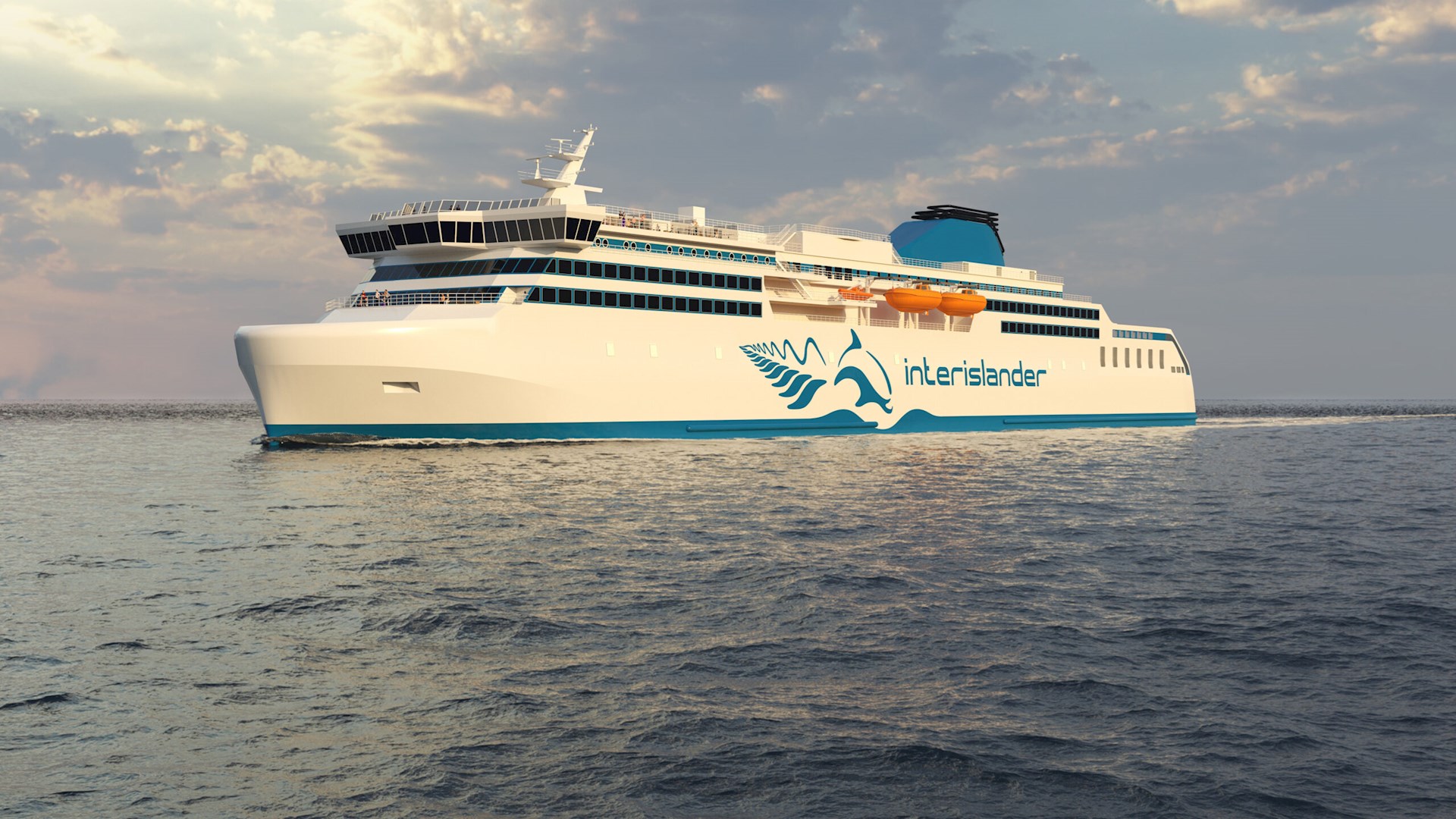

Two 200-metre rail-enabled Ro-Pax ferries being built by Guangzhou Shipyard International will combine 8.2MWh battery storage with ABB Azipod propulsion under New Zealand’s NZ$596 million fixed-price newbuilding programme. The technology package adds another high-specification ferry project to the Chinese yard’s growing international portfolio.
ABB has been selected to supply the integrated power, propulsion and automation package for New Zealand’s two new Cook Strait rail ferries, bringing the technical architecture of one of the country’s most important transport projects into sharper focus.
The vessels, Kupe and Cook, are being built by Guangzhou Shipyard International (GSI), part of state-owned China State Shipbuilding Corporation, for New Zealand government entity Ferry Holdings Limited.
Scheduled for completion in 2029, each ferry will be 200 metres long and 28 metres wide, with capacity for 1,530 passengers, 70 crew and 2,400 lane metres of vehicles and freight. They will also be capable of carrying 40 rail wagons directly across Cook Strait.
The most significant new detail is the propulsion package. ABB, one of the maritime sector’s leading suppliers of electrification, automation and electric propulsion technology, will provide an 8.2MWh battery energy storage system, two Azipod propulsion units, four main alternators, motors and drives for three bow thrusters, power and energy management, and remote diagnostics.
The battery capacity can later be expanded to 12.3MWh, while the electrical architecture allows further development as shore-charging infrastructure becomes available.
For GSI, the project extends a track record in large, technically demanding Ro-Pax vessels that already includes P&O Ferries’ battery-hybrid P&O Pioneer and P&O Liberté.
An 8.2MWh battery system at the heart of the design
The new ferries will use a fuel-agnostic hybrid-electric power and propulsion plant rather than a conventional direct-drive arrangement.
ABB said the installed 8.2MWh battery system will be capable of supporting near-zero-emission harbour operations or providing about 10 minutes of spinning reserve. The system is designed so that battery capacity can later be increased to 12.3MWh, with additional expansion possible as shore charging develops in Wellington and Picton.
Ferry Holdings says the vessels’ diesel-electric architecture is intended to accommodate diesel or biofuel, while batteries can be charged during operation and eventually from shore power.
ABB’s package goes well beyond the supply of individual pieces of equipment.
Its PEMS Power & Energy Management System will continuously balance power between generators, batteries, propulsion and auxiliary loads, effectively operating as the central energy-management layer for the vessels.
The ships will also use ABB Ability Remote Diagnostic System, providing round-the-clock monitoring and access to shore-based technical expertise. ABB says the system is intended to support predictive maintenance, faster troubleshooting and improved vessel availability.
The integration is particularly important for Cook Strait, where ferry reliability has implications beyond passenger transport. The route is a critical freight connection between New Zealand’s North and South Islands, including for rail traffic.
Azipod propulsion addresses a difficult operating environment
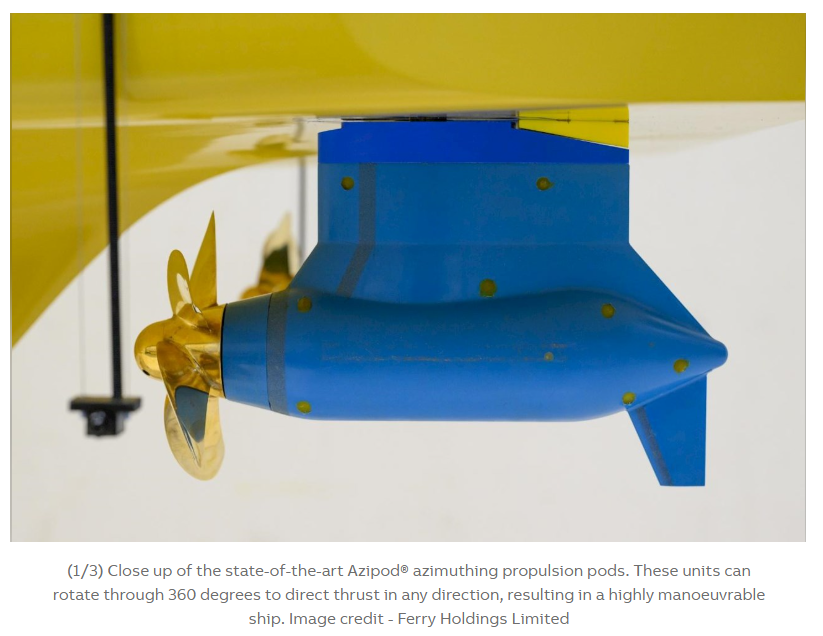
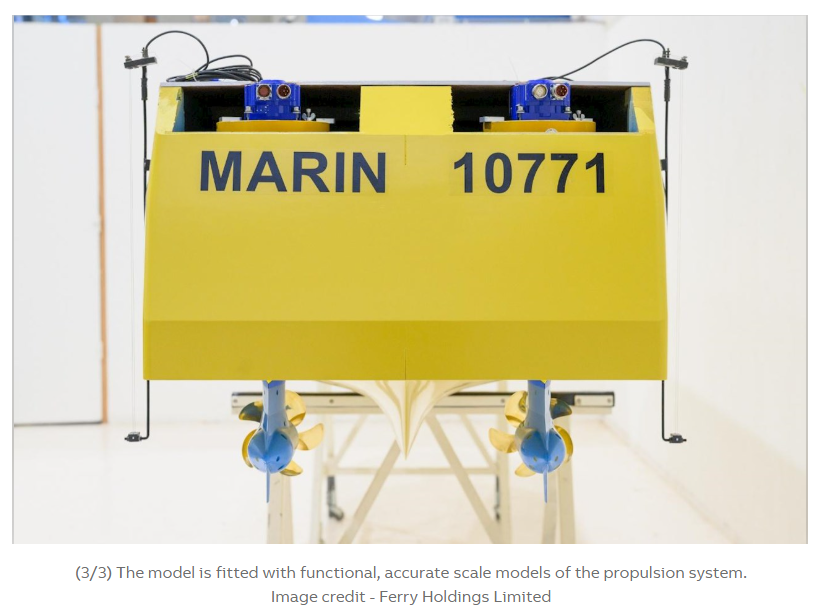
The two vessels will each use two ABB Azipod propulsion units.
Unlike a conventional shaftline, rudder and stern-thruster arrangement, an Azipod unit houses the electric propulsion motor in a pod beneath the hull. The unit can rotate through 360 degrees, allowing thrust to be directed without a conventional rudder.
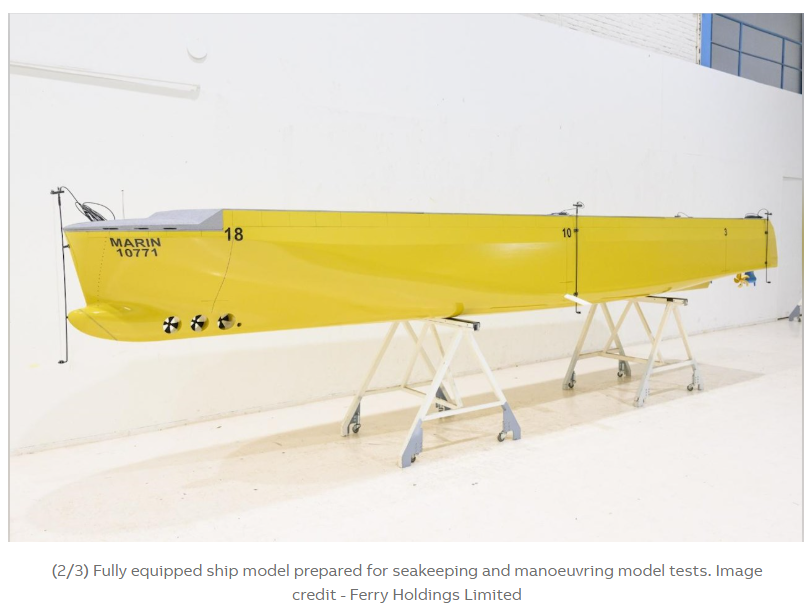
That manoeuvrability is particularly relevant on Cook Strait, where ferries face strong winds, currents and frequently difficult sea conditions.
ABB says Kupe and Cook will be capable of moving laterally at approximately 1 knot in winds of 40 knots from any direction, using the Azipod units together with their bow thrusters.
The ferries will operate the approximately 92-km Wellington-Picton crossing, linking the two islands at the junction of the Tasman Sea and South Pacific.
Noise performance is another design priority. The ships are intended to meet DNV SILENT-E requirements for underwater radiated noise, reflecting efforts to reduce their impact on marine life in the environmentally sensitive Marlborough Sounds.
Ferry Holdings has also placed heavy emphasis on redundancy. Critical power, propulsion, navigation, communications, fire-safety and monitoring systems are being designed around safe-return-to-port principles, with the vessels intended to retain reduced-speed operating capability for up to 12 hours following certain equipment failures.
Ferries that form part of the national rail network
Kupe and Cook are not simply passenger and vehicle ferries.
Their defining feature is rail capability.
Rail wagons will be able to roll directly aboard the ships, cross Cook Strait and reconnect with the rail system on the other island. That avoids additional cargo handling involved in transferring freight between rail wagons, trucks and ships.
The new vessels will accommodate up to 40 rail wagons, alongside road freight, passenger vehicles and passengers. Ferry Holdings says they will provide 44% more freight lane capacity and 63% more passenger space than the existing ferries they replace.
For New Zealand, that makes the ferry service effectively a maritime section of the national land-transport network rather than a standalone shipping operation.
The New Zealand government confirmed in 2026 that KiwiRail will operate the new ferries, continuing its longstanding role on the route. The vessels are expected to have an operational life of around 30 years.
NZ$596 million fixed-price shipbuilding contract
The shipbuilding contract itself is worth NZ$596 million ($350 million at recent exchange rates) for the two vessels on a fixed-price basis.
New Zealand announced the agreement in November 2025 as part of a wider Cook Strait Ferry Replacement Programme expected to cost less than NZ$2 billion, with the government’s taxpayer contribution capped below NZ$1.7 billion.
Ferry Holdings formally signed the construction contract with GSI in Guangzhou later that month.
ABB has not disclosed the value of its own equipment contract.
Publicly available information also does not yet identify all major equipment suppliers, including the specific diesel-engine and battery manufacturers. Those details are expected to emerge as the vessels move into detailed design and construction.
Construction is scheduled to begin in 2027, with both ferries to be completed in 2029 alongside the required port infrastructure in Wellington and Picton.
From the cancelled iReX ferries to a smaller infrastructure footprint
The latest ferry programme has an important predecessor.
In June 2021, KiwiRail signed a binding contract with South Korea’s Hyundai Mipo Dockyard for two large rail-enabled ferries under the Inter-island Resilient Connection, or iReX, programme.
That shipbuilding contract was worth $369 million, equivalent to NZ$551 million at the time, with deliveries originally scheduled for 2025 and 2026.
The vessels were substantially larger than the GSI ships, at around 220 metres in length and with capacity for about 1,900 passengers and roughly 3,600 lane metres of freight.
But the central problem that eventually overwhelmed iReX was not the shipbuilding contract alone.
New Zealand Treasury documents show that the wider programme had been budgeted at NZ$1.45 billion in 2021, but by early 2023 KiwiRail estimated it could no longer be delivered within that figure. A February 2023 reset put the base case at NZ$2.503 billion, with Treasury identifying escalating terminal costs — including larger piles, stronger seawalls and greater structural requirements — as the principal source of the increase.
The government ultimately declined further funding and the project was terminated.
KiwiRail completed its exit from the Hyundai Mipo contracts in August 2025, agreeing a final NZ$144 million settlement. Including earlier payments, NZ$222 million was ultimately paid to the yard, while KiwiRail put the total cost incurred on the abandoned iReX programme at NZ$671 million.
Old iReX programme versus Kupe and Cook
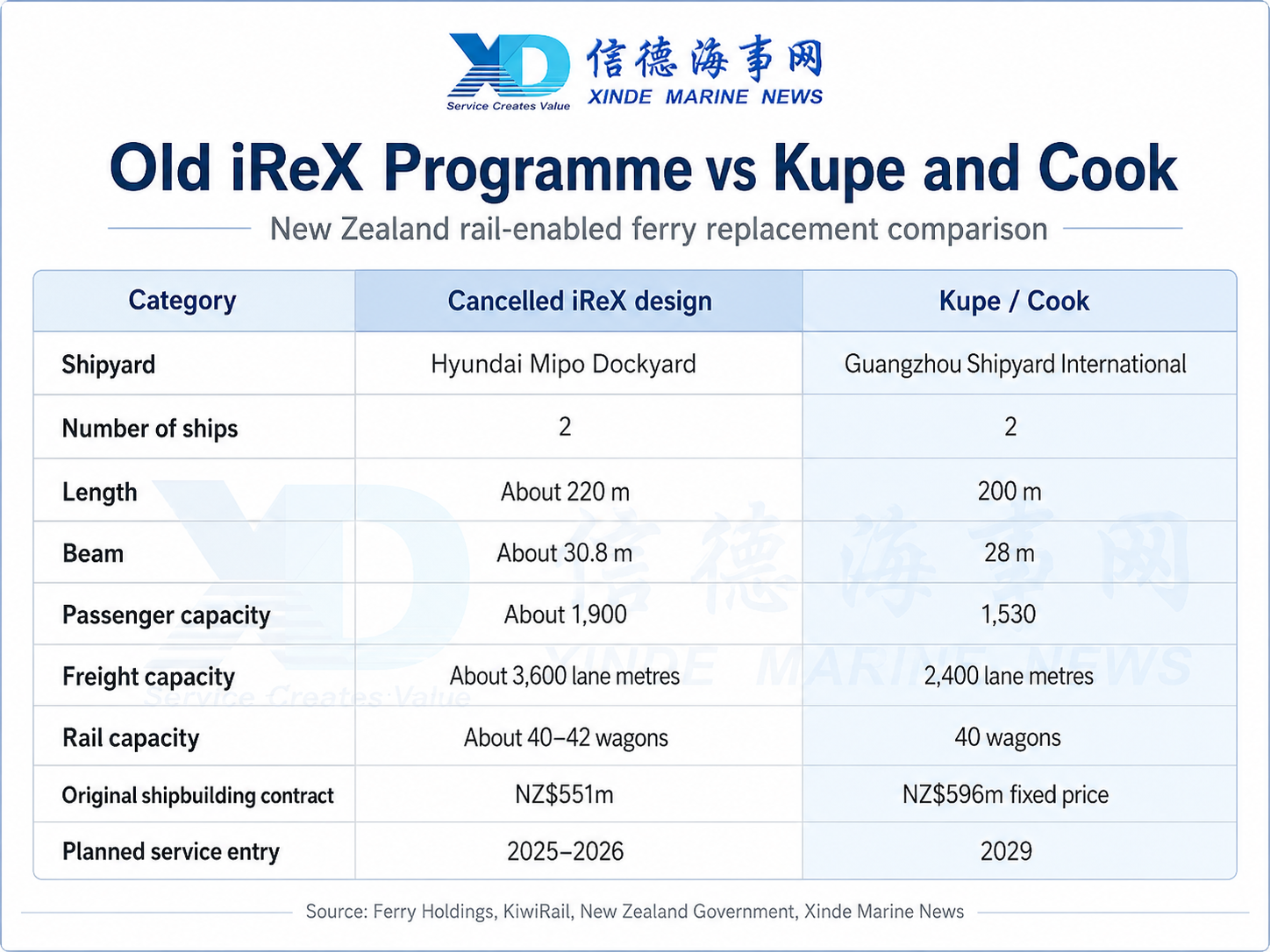
The comparison is important because the replacement programme is sometimes portrayed primarily as a cheaper ship procurement.
It is not.
The new two-ship contract is actually slightly more expensive in nominal New Zealand-dollar terms than the original 2021 Hyundai Mipo agreement. The larger difference lies in the overall project scope.
The GSI vessels are smaller, and the new programme is designed around much greater reuse of existing port, road and rail infrastructure rather than extensive terminal redevelopment. Ferry Holdings says existing facilities will be retained wherever practical, with new marine works and interfaces added only where required.
That distinction is central to understanding why the current programme carries a lower overall cost target even though the shipbuilding price itself has not fallen materially.
Why GSI matters
For overseas readers, GSI’s selection is significant in the context of China’s move up the value chain in commercial shipbuilding.
Chinese yards dominate global ordering by volume in segments such as bulk carriers, tankers and containerships. Large passenger ferries, however, are more heavily customised and require complex integration of hotel systems, passenger safety, vehicle decks, power management, propulsion, noise and vibration control and increasingly battery-electric technology.
GSI has developed a particularly strong position among Chinese builders in this segment.
One of the clearest precedents is P&O Pioneer, the 230-metre double-ended ferry delivered by GSI for the Dover-Calais route in 2023.
Like the New Zealand ships, P&O Pioneer uses an ABB hybrid-electric architecture built around battery storage and Azipod propulsion. The P&O vessel has 8.8MWh of battery capacity and four 7.5MW Azipod units. ABB says the hybrid arrangement reduces fuel consumption by around 40% compared with the previous ships used on the route.
The relevance for the New Zealand contract is less about repeating the same vessel design than demonstrating experience with the underlying integration challenge.
Ferry Holdings says GSI has a team of more than 1,500 engineers, extensive in-house production capability and experience delivering Ro-Pax vessels for major European ferry operators and government customers. GSI emerged from a competitive international procurement in which six shipyards were shortlisted.
That places the New Zealand contract in a wider trend: Chinese shipyards are no longer competing internationally only through high-volume merchant ship capacity, but increasingly in niches where project management, system integration and specialist equipment interfaces are decisive.
The presence of ABB is part of that equation.
Rather than supplying only a propulsion motor or isolated electrical equipment, ABB is acting as a core technology and systems partner, integrating propulsion, generation, batteries, energy management and digital monitoring. That shipyard-supplier combination has already been tested on other GSI-built ferries and is now being applied to a government-backed transport asset designed for three decades of service.
What to watch next
Three areas remain particularly relevant as construction approaches.
The first is the remaining equipment package. ABB’s scope is now clear, but further announcements are expected around engines, battery supply and other major machinery.
The second is shore power. The vessels will initially carry 8.2MWh of batteries, while the architecture allows expansion to 12.3MWh and potentially beyond. How much of that potential is used will depend partly on charging infrastructure at Wellington and Picton.
The third is programme coordination.
Ferry Holdings intends ship construction to start in 2027, with the vessels and their associated port infrastructure ready in 2029. The experience of iReX demonstrated that the risk in a ferry replacement programme does not sit solely with the shipyard.
For Kupe and Cook, the decisive test will be whether the ships, berths, rail interfaces and supporting infrastructure can all be delivered on the same timetable.

READ MORE
 Shipbuilding
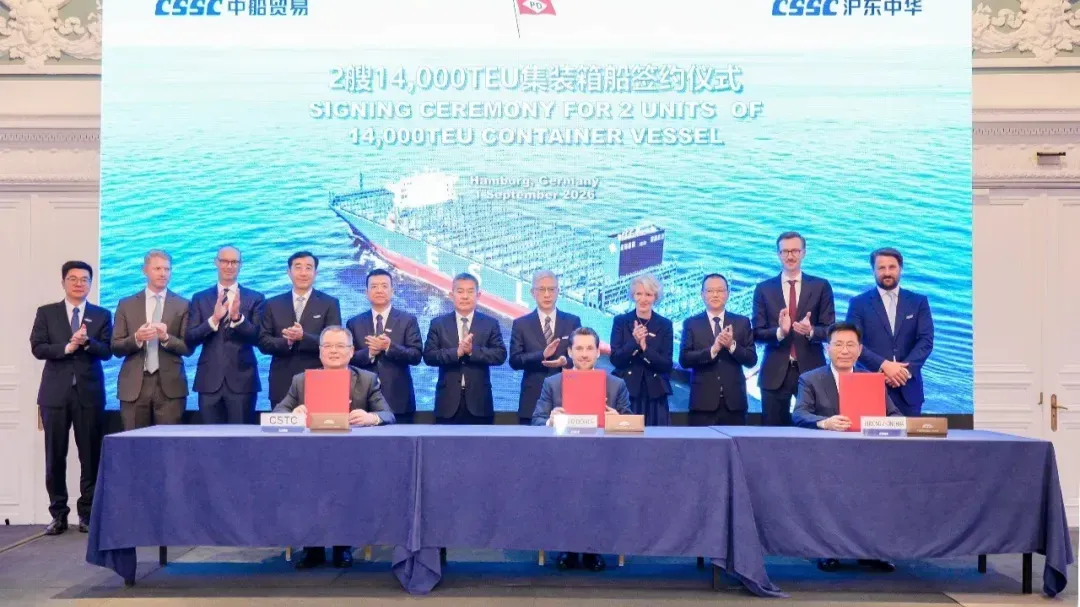
Peter Döhle Adds Two More 14,000 TEU Boxships at Hudong-Zhonghua After Five-Month-Early Delivery
 Shipbuilding
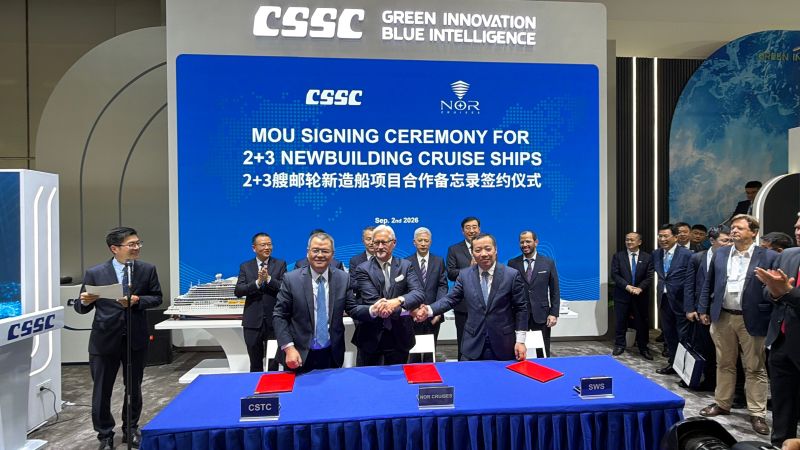
Breaking from Hamburg: CSSC and NOR Cruises have signed an MoU for up to five new cruise ships.
 Shipbuilding
US$148 Million for Six Ships: Shenghang Launches a New Fleet Renewal Cycle
 Shipbuilding
CSSC Shipping Signs $481m Contracts for 10 Grain Carriers
 Shipbuilding
World’s First 325,000-dwt Methanol Dual-Fuel Ore Carrier Named in China
 Shipbuilding
Europe Is Losing More Than Ship Orders: The System Behind China’s Shipbuilding Lead
 Shipbuilding
Nanjing Shenghang Plans CNY995m Fleet Renewal With Six Stainless Steel Chemical Tankers
 Shipbuilding
MSC Adds 15 Firm ULCVs at Chinese Yards, With Five More on Option
 Shipbuilding
From LR2s to 3,200-TEU Boxships: Hengli Expands Its Greek Owner Footprint
 Shipbuilding