

A New “Unconventional” Chinese Shipowner: ContiOcean Completes $28.75m Acquisition of Two Product/Chemical Tankers
Shanghai-based ContiOcean Environment Tech Group has officially become a shipowner after completing the acquisition of two product and chemical tankers for a combined $28.75m.
International law firm HFW said on 27 August that it had advised Hong Kong-listed ContiOcean, or 2613.HK, on the two transactions. The first vessel was delivered on 16 April 2026, followed by the second on 29 July, completing the company’s maiden vessel acquisition programme launched in December 2025.
The deal marks ContiOcean’s expansion from a supplier of marine environmental technologies and equipment into a company that owns and operates commercial vessel assets.
Two tankers complete delivery
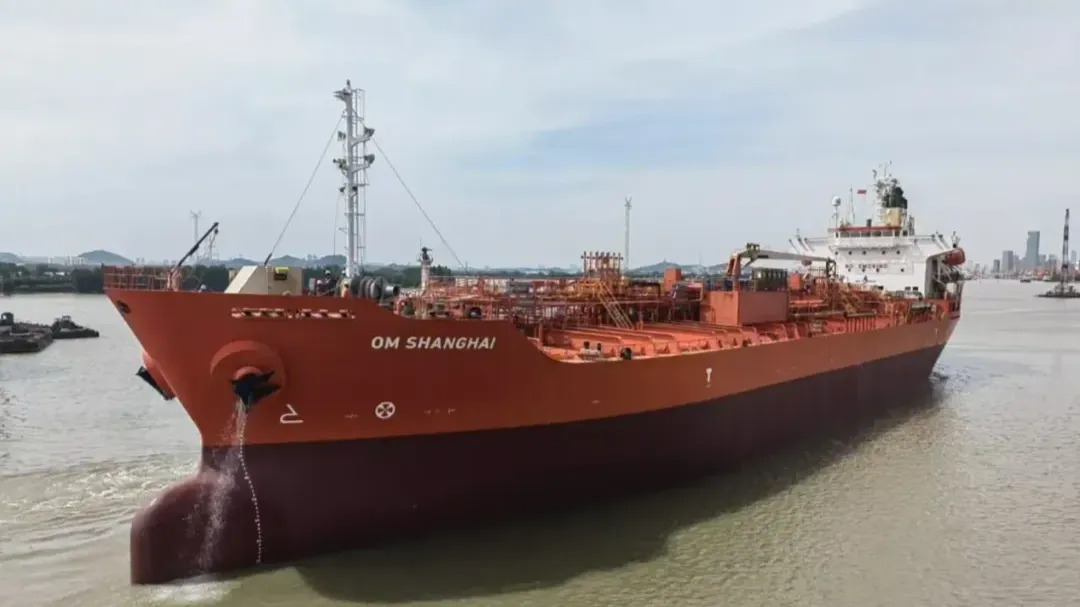
The vessels, OM Shanghai and OM Singapore, were acquired from Singapore-based shipowner OM Maritime for $15m and $13.75m, respectively.
Built in 2007, OM Shanghai is a 19,999-dwt product and chemical tanker with IMO number 9358632. Following the acquisition, the vessel was renamed Conti Shanghai. OM Singapore, also built in 2007, has a deadweight capacity of approximately 29,015 tonnes and carries IMO number 9341433. The vessel formerly traded as Britta Maersk.
Together, the two ships provide ContiOcean with a fleet of around 49,000 dwt.
ContiOcean first announced the transactions on 15 December 2025, when two wholly owned subsidiaries signed separate memoranda of agreement for the vessels. The purchases were financed through a combination of internal resources, part of the proceeds raised from the company’s Hong Kong listing and external loan facilities.
The acquisitions and related guarantees provided by ContiOcean to its subsidiaries were approved at an extraordinary general meeting on 6 January 2026.
HFW’s Hong Kong team advised ContiOcean on the transactions. The cross-practice team was led by Capital Markets Partner Wing Cheung and Shipping Partner Angie Lo, with support from Senior Associate Chloe Chow and Associate Karen Ip.
Cheung described the acquisitions as a strategic milestone that would support ContiOcean’s efforts to develop, test and demonstrate innovative technologies for shipping decarbonisation and sustainability.
From technology supplier to shipowner
Founded in Shanghai in 2017, ContiOcean designs and supplies marine environmental technologies, including exhaust gas cleaning systems, clean-energy supply systems, energy-saving devices and other maritime equipment and services. The company listed on the Main Board of the Hong Kong Stock Exchange in January 2025.
Owning vessels extends the company’s activities into ship investment and operations while giving it direct access to real-world testing conditions.
Under ContiOcean’s plan, the two ships will remain in commercial operation while also serving as maritime research and development platforms and mobile demonstration vessels. The company will be able to install proprietary equipment onboard, collect operating data and assess performance under actual trading conditions. Prospective clients may also be invited onboard during selected port calls to observe the systems in operation.
The proposed chartering arrangements are intended to preserve ContiOcean’s ability to install and test equipment while generating charter income from the vessels.
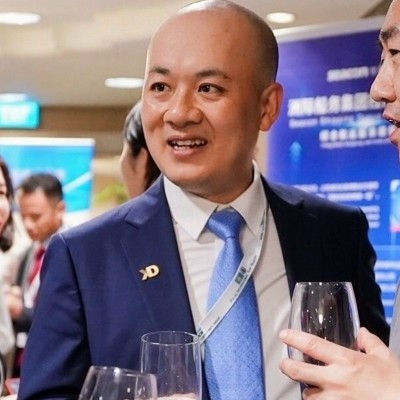
This strategy is consistent with comments made by ContiOcean Chairman Zhou Yang during an interview with Xinde Marine News at Singapore Maritime Week 2026.
Zhou said one of the company’s main reasons for acquiring ships was to establish its own full-scale testing platform. The vessels can continue trading normally while new products and technologies undergo long-term validation in real operating environments. Once their performance has been sufficiently demonstrated, the technologies can be introduced to customers and commercialised more widely.
Real-vessel data supports commercialisation
Marine environmental and energy-efficiency technologies generally pass through several stages before commercial deployment, including engineering design, shore-based testing, class approval, onboard installation and long-term operational validation.
Performance can be affected by a vessel’s trading route, loading condition, engine load, weather, sea state, fuel quality and maintenance practices. Short sea trials cannot reproduce the full range of conditions encountered during years of commercial operation.
With its own ships, ContiOcean can schedule installations and trials according to its product development programme. It can continuously collect data covering fuel consumption, emissions, equipment reliability and maintenance costs, then use that information to refine its designs.
Direct control over the testing platform also reduces the company’s dependence on the availability of third-party vessels and the willingness of external shipowners or charterers to accommodate lengthy trials.
Commercial employment can help offset part of the cost of owning and operating the research platforms. ContiOcean’s latest interim results showed that Conti Shanghai, which was delivered in April, generated approximately RMB10.5m in charter revenue during the first half of 2026.
OM Singapore was delivered after the end of the reporting period, meaning its post-acquisition operating contribution was not included in the first-half figures.
From one larger vessel to two smaller tankers
ContiOcean’s original listing prospectus envisaged acquiring a controlling stake in a company holding a secondhand bulker or tanker of between 60,000 and 80,000 dwt and eight to ten years of age. The acquisition was initially expected to be undertaken with a partner.
The final structure was substantially revised. ContiOcean instead independently purchased two product and chemical tankers of approximately 20,000 to 30,000 dwt, each at least 15 years old. It also shifted from purchasing an equity interest in a vessel-owning company to acquiring the ships directly.
The two-vessel structure gives the company access to different operating profiles and allows it to conduct more than one technology programme at a time. The lower cost of each ship also limits initial capital exposure and reduces the disruption that a single vessel’s drydocking, repair or retrofit could cause to the overall R&D programme.
The age of the vessels may also make them relevant test platforms for the broader existing fleet. A substantial share of the world’s ships requiring energy-efficiency improvements and environmental retrofits consists of older tonnage facing increasingly demanding emissions and ESG requirements.
Ship ownership, however, introduces additional responsibilities involving safety management, crewing, maintenance, insurance, regulatory compliance and exposure to shipping cycles. ContiOcean will need to coordinate technology trials with commercial employment while limiting off-hire and additional retrofit costs.
With both acquisitions now completed, ContiOcean has established the conditions for an integrated model linking in-house development, onboard installation, operational validation and commercial feedback.
For a marine technology company established less than a decade ago, the two tankers will serve simultaneously as revenue-generating assets, floating laboratories and demonstration platforms — placing ContiOcean firmly among China’s emerging “unconventional” shipowners.

READ MORE
 Tankers
Seven Months, $78 Million: George Procopiou Reaps Windfall on Hengli-Built VLCC
 Tankers
VLCCs top $1m a day — but what price is TD3C actually discovering?
 Tankers
Nearly $1 Billion: Dynacom Orders 8More Ships as Hengli Tops Global 2026 VLAC Orders
 Tankers
15-year-old VLCC linked to record $200m sale as tanker asset values surge
 Tankers
$862,150 a Day: VLCC Rates Set Another Record as Global Composite Nears $500,000
 Tankers