


China Not Yet Listed as IAEA Launches Global Push to Build Rules for Nuclear Shipping


The new ATLAS initiative is designed to bridge nuclear regulation and maritime rules on safety, classification, safeguards, liability, insurance and port access. China is not among the countries currently listed as co-sponsors, but Beijing has already signalled that it wants to participate in the initiative.
The International Atomic Energy Agency has launched a global initiative aimed at solving one of the biggest obstacles facing nuclear-powered commercial shipping: not whether a reactor can physically power a ship, but whether such a vessel can be licensed, insured and accepted across multiple jurisdictions.
The IAEA formally launched ATLAS — Atomic Technologies Licensed for Applications at Sea — in Washington on August 26, bringing together around 600 participants from more than 50 countries, including governments, nuclear regulators, port authorities, classification societies and maritime industry representatives.
The initiative covers both nuclear-powered civilian ships and floating nuclear power plants, and will initially work through six expert project groups spanning safety standards, legal and regulatory frameworks, maritime classification, safeguards, nuclear security, and a deployment roadmap covering technology, infrastructure and the fuel cycle.
The IAEA's launch announcement said 25 countries had committed to the initiative. However, the agency's live joint statement page, which remains open to additional co-sponsors, now lists 28 countries as of August 27, including the United States, United Kingdom, France, Japan, South Korea, Singapore, India, Denmark, Norway and the United Arab Emirates.
China is not currently on that list.
That absence is noteworthy for the world's largest shipbuilding nation, but it should not be interpreted as China remaining outside ATLAS altogether.
China's National Nuclear Safety Administration said in July that it was willing to actively participate in ATLAS, alongside other IAEA mechanisms dealing with small modular reactors and regulatory harmonisation. ATLAS project groups are also open to representatives of all IAEA and IMO member states, as well as qualified industry and international stakeholders, subject to IAEA approval.
The more important question, therefore, is not whether China signed the launch statement, but how deeply it will participate as the rules governing the next generation of maritime nuclear technology begin to take shape.
ATLAS is not a commercial green light
The launch comes amid a sharp revival of interest in nuclear propulsion across the global maritime sector, driven by tighter decarbonisation targets, advances in small modular reactors and growing concern over the cost and availability of alternative marine fuels.
The IAEA says advances in reactor, fuel and marine engineering could allow some maritime nuclear designs to be ready for deployment as early as the 2030s.
But it has also been explicit about the limits of the initiative.
The joint statement says reactor designs, business models and operational concepts remain largely at an early stage. ATLAS is technology-neutral and does not endorse any particular reactor design or vendor.
That distinction matters because a growing number of nuclear-powered ship concepts have already received Approval in Principle, or AiP, from major classification societies.
An AiP is an important technical milestone. It generally indicates that a novel concept has been reviewed against applicable class rules and that no fundamental technical obstacle has been identified at that stage.
It is not, however, permission to build and commercially operate a nuclear-powered merchant ship.
A vessel would still need to navigate nuclear licensing, flag-state requirements, classification, safeguards, security, crewing, insurance, emergency planning and — crucially for an internationally trading ship — acceptance by foreign ports and coastal states.
The gap between a concept drawing and a globally tradable nuclear merchant ship therefore remains substantial.

ATLAS is important precisely because many of these questions sit between regulatory systems that developed separately.
Maritime nuclear rules are still built around a 1981 framework
International shipping already has a regulatory foundation for nuclear-powered vessels, but much of it dates from another technological era.
SOLAS Chapter VIII contains provisions for nuclear ships, while the IMO adopted its Code of Safety for Nuclear Merchant Ships in 1981.
The present revival of maritime nuclear power involves technologies and operating models that were not contemplated when those rules were written, including advanced small modular reactors and potentially mobile nuclear installations operating across multiple jurisdictions.
The IMO has therefore begun revising the framework.
Under the current workplan, the organisation aims to finalise a revised Nuclear Code and amendments to SOLAS Chapter VIII in 2030, with adoption targeted at the Maritime Safety Committee's 118th session.
That creates a significant regulatory window between now and the end of the decade.
ATLAS is designed to work alongside that process. Its first project group will examine where IAEA nuclear safety standards and IMO maritime instruments need to be revised, clarified or better aligned.
Its maritime classification group will tackle another fundamental problem: nuclear regulators and classification societies have historically used different requirements, certification processes and verification systems.
Bringing those systems together may be just as important as the reactor technology itself.
Insurance and liability could become the real commercial bottleneck
Perhaps the most difficult problems are not engineering problems at all.
ATLAS's legal and regulatory workstream explicitly includes licensing, nuclear liability, insurance and jurisdiction.
There is a historical reason for that focus.
The 1962 Brussels Convention on the Liability of Operators of Nuclear Ships was intended to establish an international liability regime specifically for nuclear-powered vessels, but it never entered into force.
That leaves a difficult question for any future internationally trading nuclear ship.
Imagine a vessel registered in one country, operated by a company in another, using reactor technology supplied by a third country, calling at Singapore before sailing to the United States.
If a nuclear incident occurred, which jurisdiction would govern the claim? Would liability sit with the shipowner, reactor operator or another party? What insurance would be required? Would conventional marine liability arrangements be sufficient, or would a separate nuclear liability regime apply?
Until regulators and insurers can answer those questions with enough certainty for owners, financiers, charterers and ports, a technically viable reactor will not automatically translate into a bankable vessel.
The United States is already treating this as a pre-construction issue. Its Maritime Administration launched an SMR initiative for commercial shipping in May and specifically identified liability, insurance, inspection and port access frameworks as areas that need to be established before vessels are built.
Port access may be the ultimate test
Port acceptance presents another challenge unique to merchant shipping.
A conventional land-based nuclear power plant remains under one national regulatory system at a fixed location. A deepsea merchant vessel can pass through multiple exclusive economic zones and call at ports under several different legal regimes during a single voyage.
That turns the vessel into what is effectively a mobile nuclear installation.
The safeguards implications are significant.
ATLAS documents identify issues including continuity of knowledge over nuclear material, inspector access and cross-jurisdictional deployment. Its nuclear security work will also consider physical protection, cybersecurity, threat assessment, personnel reliability and contingency planning.
Ports, meanwhile, must decide whether existing emergency-response, safety and security systems can accommodate nuclear-powered commercial vessels.
A study completed this year by Lloyd's Register, the Port of Rotterdam Authority, CORE POWER and A.P. Moller - Maersk found that existing port safety and risk-management frameworks could provide a credible starting point for assessing nuclear-powered vessel calls.
But the participants also stressed that the study was not a licensing decision or deployment approval.
That caveat neatly captures where the industry stands today: nuclear shipping has moved beyond a purely theoretical discussion, but it remains a long way from unrestricted commercial operation.
China has shipbuilding and nuclear capabilities — but the rulemaking matters too
China's position is particularly significant because of the scale of its shipbuilding industry.
Chinese yards now dominate global merchant ship construction in several major vessel segments, while the country also has a large domestic nuclear engineering and equipment supply chain.
The two industries have already begun to intersect.
In December 2023, Jiangnan Shipyard, part of China State Shipbuilding Corporation, unveiled a concept for a 24,000-TEU nuclear-powered containership. DNV awarded the design an Approval in Principle.
The distinction is important: the vessel was a concept design receiving class AiP, not a confirmed newbuilding order, and there is no basis for describing a 24,000-TEU Chinese nuclear containership as being under construction.
China's nuclear regulator is also preparing for new reactor types. The National Nuclear Safety Administration has been developing regulatory approaches for small reactors and floating applications and, more importantly for the international dimension, publicly stated in July that China was willing to participate actively in ATLAS.
The strategic issue for China is therefore not simply whether Chinese industry can design a nuclear-powered ship.
It is whether Chinese regulators, classification experts, shipbuilders and nuclear technology organisations are sufficiently involved while the international framework governing those ships is being developed.
South Korea, the US and Europe are moving on both technology and rules
Other major maritime economies are already pushing forward.
South Korea has several nuclear shipping programmes under development. HD Korea Shipbuilding & Offshore Engineering, part of HD Hyundai, has developed a 15,000-TEU SMR-powered containership concept and received AiP from major classification societies. DNV said the concept was designed around a 24-knot containership using SMR technology.
In July, ABS separately awarded AiP for another 15,000-TEU nuclear-powered containership concept developed with the Korea Research Institute of Ships & Ocean Engineering and the Korea Atomic Energy Research Institute.
The US Maritime Administration, meanwhile, launched its commercial shipping SMR initiative in May and has subsequently announced partnerships with the Port of Long Beach and Port of Corpus Christi to explore maritime nuclear technologies, including reactor applications, microgrids and vessel propulsion.
In the UK, Lloyd's Register has brought together nuclear, maritime, legal and insurance expertise through a Maritime Nuclear Consortium aimed at developing a path towards commercially viable nuclear-powered shipping.
These programmes remain at different stages and should not be treated as evidence that commercial nuclear merchant fleets are imminent.
What they do show is that the competition is broadening beyond reactor design.
Countries and companies are increasingly working on the regulatory, classification, port and insurance infrastructurethat would be required to make the technology commercially usable.
History shows that building the ship is only half the challenge
Civil nuclear-powered shipping itself is not new.
The US-built NS Savannah, launched in 1959, became the world's first nuclear-powered merchant ship. Germany later operated the nuclear-powered Otto Hahn, while Japan developed the experimental nuclear ship Mutsu.
Those programmes demonstrated that nuclear propulsion at sea was technically possible decades ago.
They also demonstrated why technical feasibility alone was insufficient.
Japan's Mutsu, for example, suffered a radiation leakage incident during power testing in 1974 that was traced to shielding problems. Although the vessel was later modified and eventually conducted successful experimental voyages, the programme experienced years of delay and significant public and local opposition.
For today's developers, advanced reactor technology may change the engineering equation considerably.
It does not eliminate the need for regulatory confidence, port-state acceptance, emergency planning, insurance and public trust.
The next race may be over the system, not the first ship
China's absence from the current ATLAS joint statement is therefore worth watching, but it is too early to describe it as exclusion from international maritime nuclear rulemaking.
Beijing has already expressed its willingness to participate, the project's technical groups remain open to IAEA and IMO member-state representatives, and the detailed work has only just begun.
The more revealing indicators will come next.
Which countries provide experts to the safety and classification groups? Who helps shape rules on nuclear liability and insurance? Which ports develop credible acceptance regimes? How will safeguards work when nuclear material moves continuously between jurisdictions? And can owners eventually obtain financing and insurance on terms that make commercial operation viable?
For China, those questions matter because its competitive advantage in conventional shipbuilding does not automatically translate into an advantage in nuclear shipping.
If maritime nuclear power eventually becomes commercially viable, the winning ecosystem may require much more than a reactor and a shipyard. It will require regulators, class societies, flag states, ports, fuel-cycle providers, insurers, financiers and technology suppliers to function as an internationally accepted system.
The IAEA believes some maritime nuclear designs could be ready for deployment in the 2030s. The IMO is targeting 2030 for adoption of its revised nuclear shipping safety framework.
That makes the second half of this decade an important rule-setting period.
The defining question is therefore no longer simply when the first next-generation nuclear containership will leave a shipyard.
It is whether, when it does, the world's ports will allow it to enter.

READ MORE
 Sustainability
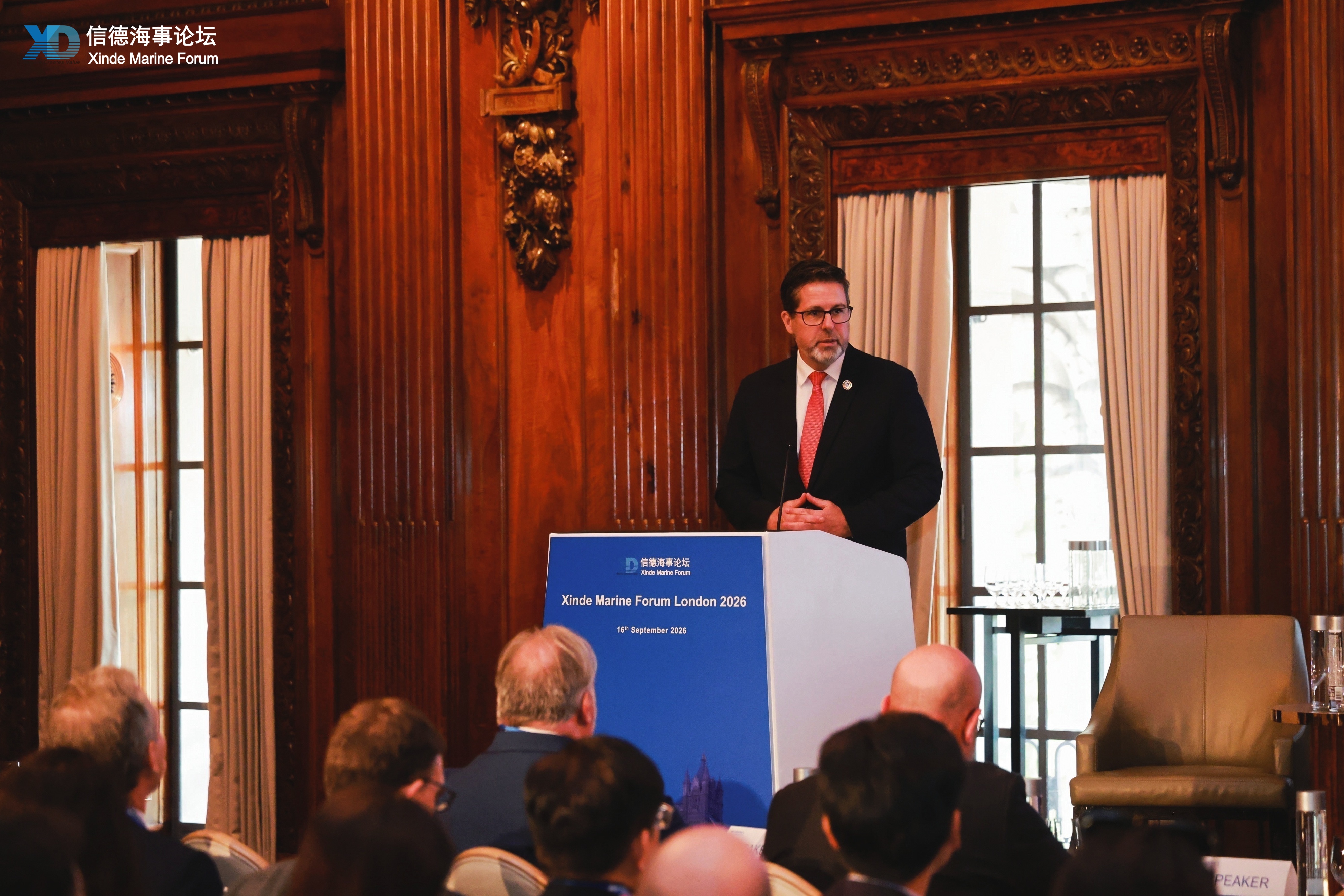
Xinde Marine Forum London 2026: Green Shipping Enters a Strategic Reset
 Sustainability
Shipping Has a Net-Zero Target — but Still Lacks the Rules to Deliver It
 Sustainability
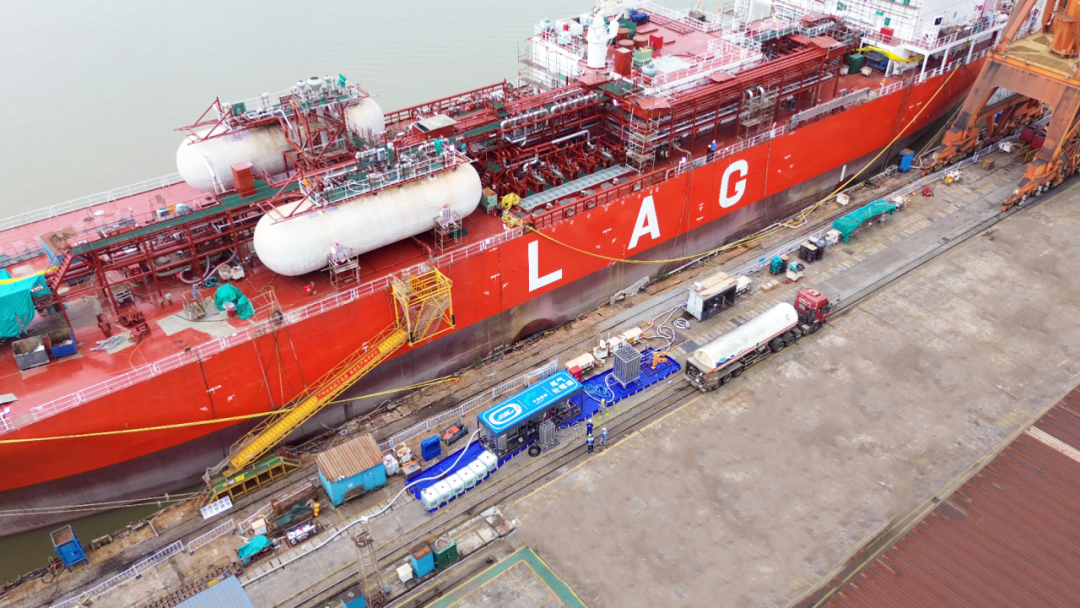
Chimbusco completes first ammonia bunkering operation
 Sustainability
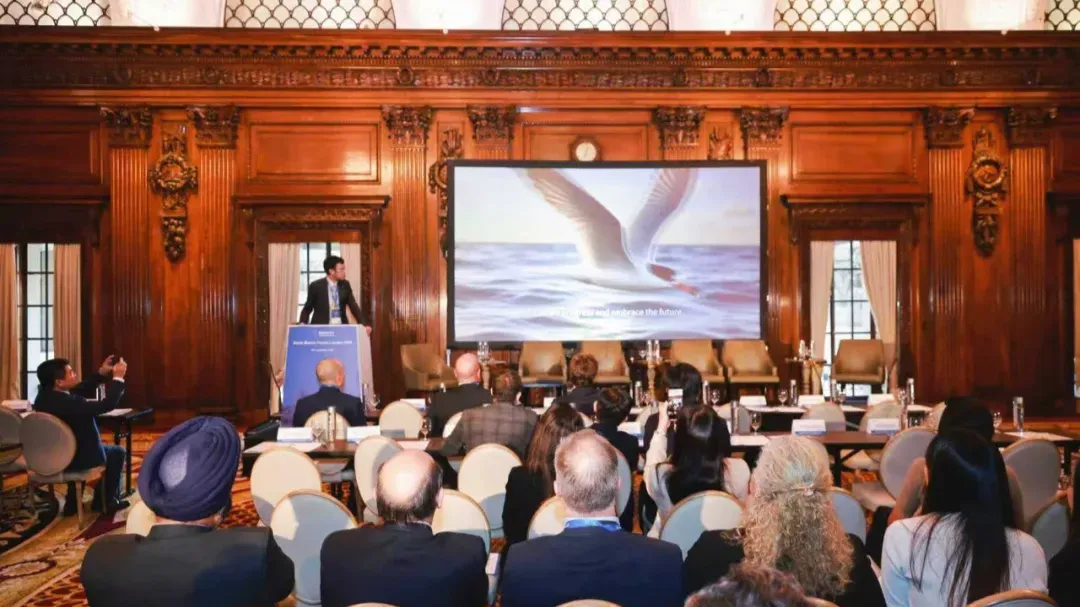
WMMF 2026 Promotional Film Debuts in London
 Sustainability
324 days ahead of schedule — another milestone for China’s shipbuilding industry
 Sustainability
The Next Shipping Race Will Be About Who Can Burn Less Fuel
 Sustainability
World’s First Wind-Assisted LNG Carrier Named, Featuring Two 49-Metre Hard Sails
 Sustainability
World’s 1st Operational Ammonia Bunkering Vessel Enters Service,Backed by CMB.TECH
 Sustainability
At SMM Hamburg I Saw Seven Changes Reshaping Global Shipping
 Sustainability