


Beyond Fuels: The Efficiency Battle Inside the Engine Room
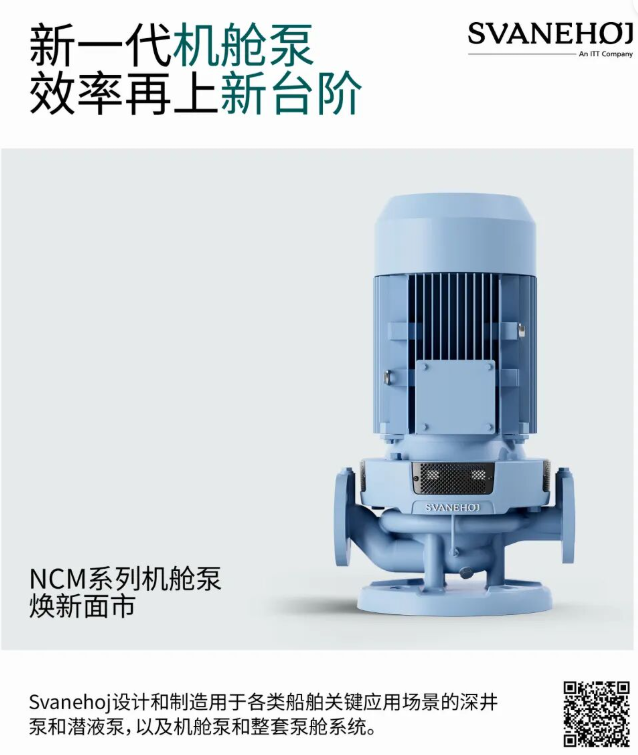

When shipping talks about decarbonization, the first topics that usually come up are fuels, main engines, regulations and carbon costs. Methanol, ammonia, LNG, batteries and carbon capture are all big subjects. They are also the ones that naturally attract industry attention.
But in the daily operation of a vessel, energy is not consumed by the main propulsion system alone. In the engine room, a large number of auxiliary systems keep running: cooling, lubrication, fuel transfer, ballast, firefighting and process fluid handling. Individually, these systems rarely attract much attention. Together, they help determine a vessel’s operational efficiency, maintenance cost and reliability across its full lifecycle.
“A good engine-room pump solution must first perform reliably under real operating conditions, not just look good on paper.”
— Kristian Eis, Director of Engineering and R&D, Svanehøj
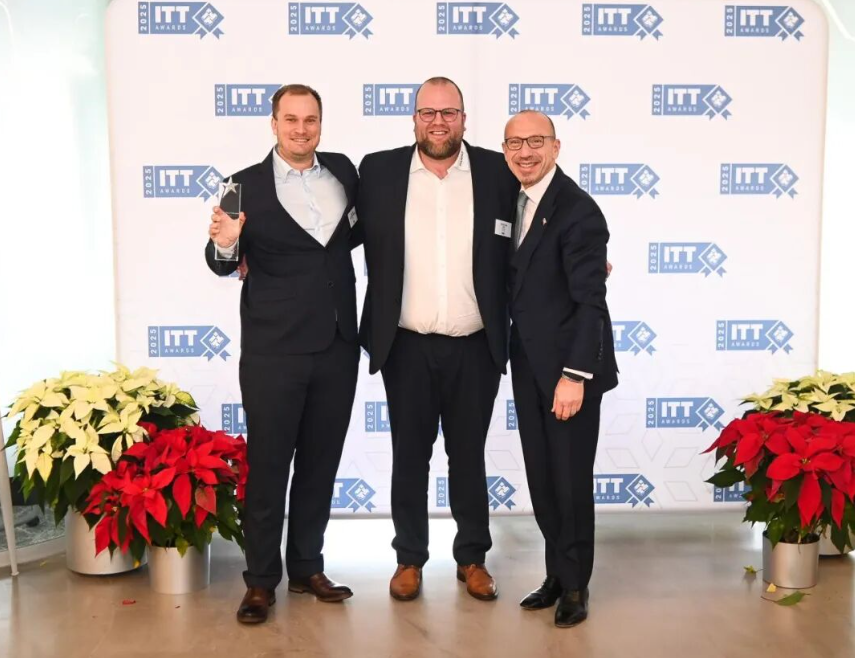
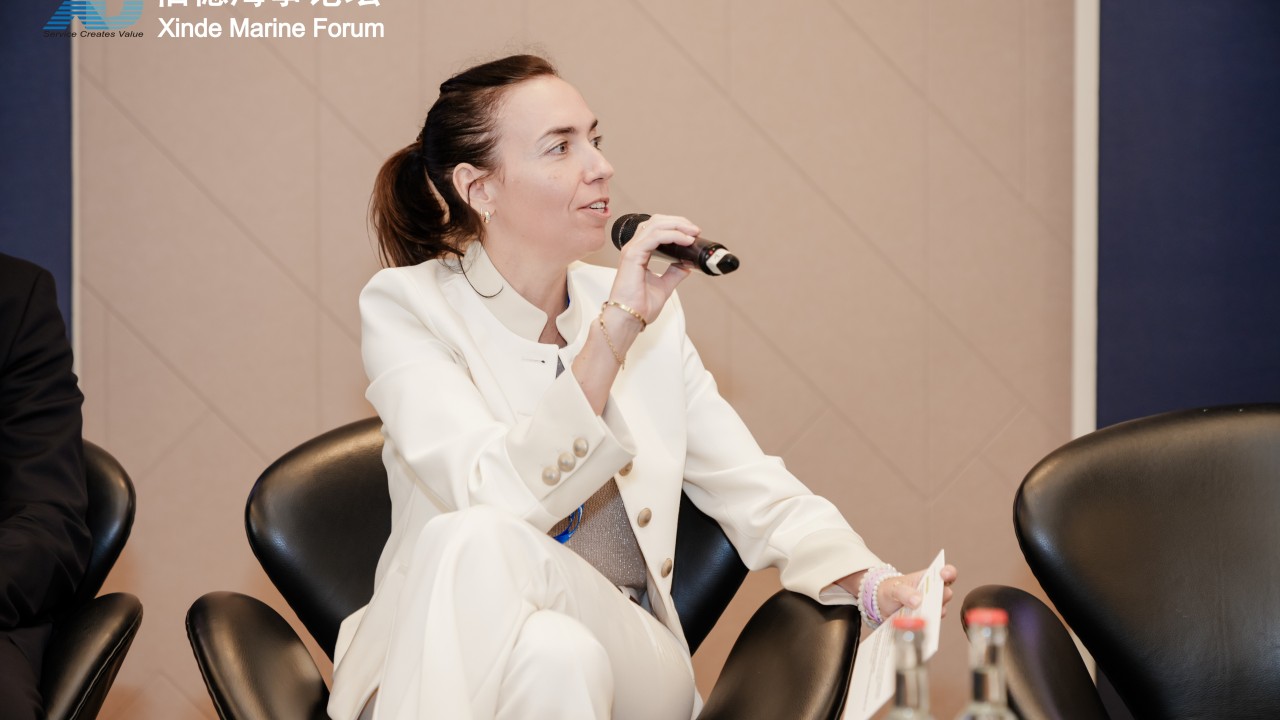
Kristian Eis, Director of Engineering and R&D at Svanehøj, pictured center.
This sentence almost sums up the development logic behind Svanehøj’s new-generation NCM engine-room pump series: simpler, lighter, more efficient and easier to maintain.
The product is not designed to win attention through one single technology story. It is aimed at a set of practical issues that shipowners, shipyards, system integrators and crews have been facing for years: complex installation, too many spare parts, time-consuming maintenance, efficiency losses under varying loads, and growing cost pressure in newbuilding projects.
Customer-driven development is not a slogan
Kristian Eis has a background spanning electromechanical engineering, product development and organizational management. This is why he rarely uses abstract language when talking about innovation. He focuses more on how a product is designed, how it is installed on board, how it is maintained by the crew over time, and how it delivers value throughout the vessel’s lifecycle.
In his view, Svanehøj’s understanding of the engine-room pump market did not begin with one new product. The company has accumulated decades of experience in this field. One of its earlier generations of engine-room pumps was among the inline pumps developed specifically for marine applications. At that time, some shipboard applications still relied on industrial pumps that were not robust enough for marine conditions. True marine pumps had to withstand harsher operating environments and meet higher reliability requirements.
That experience has also shaped how Svanehøj develops products today.
Kristian says that when Svanehøj talks about being “customer-driven”, it does not mean collecting feedback only when a product is almost finished. Instead, feedback is built into the development process itself. It comes from multiple interfaces: design engineers at shipyards and system integrators, shipowners, operators, and service engineers who handle pumps directly during overhaul and daily maintenance.
This information is circulated internally among sales, service, engineering and R&D teams, creating what Kristian describes as a “360-degree understanding” of customer needs.
Shipyards care about ease of installation, delivery schedules and cost. Shipowners care about reliability and lifecycle cost. System integrators care about interfaces and system compatibility. Crews and service engineers care about whether equipment is easy to dismantle, repair and support with spare parts.
These needs may appear scattered, but they ultimately point to the same question: can a pump work stably, efficiently and cost-effectively in real shipboard operating conditions over the long term?
From incremental improvement to clean-sheet design
The NCM series is not only a new product. It can also be seen as the starting point for Svanehøj’s restructuring of its engine-room pump portfolio. Its biggest difference from traditional solutions is not one upgraded component, but a different development method.
Kristian notes that many pump portfolios in the market have evolved through continuous iteration from earlier generations. This approach can reduce development risk. But over time, product families can become complicated. Different models may overlap, and the spare-parts system can expand along with them.
The NCM series takes another route: clean-sheet design.
Svanehøj redefined the position of each pump size within the overall product family and worked to reduce unnecessary model variations. The benefit is direct. The complexity of onboard spare parts can be reduced. Procurement and maintenance become simpler. Costs become easier for shipowners and shipyards to control.
The NCM series also adopts a new hydraulic design. Kristian says pump design and optimization tools have advanced rapidly in recent years. In the past, much of this work required specialized programming capabilities. Today, domain experts can generate and evaluate hundreds of design options within a short period of time, then select the best solution based on multiple criteria.
This change in tools has significantly shortened the path from concept to market-ready product. It has also allowed the team to optimize geometry, topology and hydraulic performance in a more systematic way.
This helps explain why the NCM series could be developed and brought to market within a relatively short time.
But speed is not the key point. What matters more is that faster development did not come at the expense of engineering depth. Kristian says Svanehøj has built a development team with strong experience in hydraulic design, mechanical design and marine applications. Tools improve efficiency. Team experience determines whether a solution can truly work in practice.
How a simpler pump can lower long-term costs for shipowners
In shipping, when equipment suppliers talk about “cost reduction”, the discussion is often understood as lowering the purchase price. Kristian stresses that the cost addressed by the NCM series is not limited to the procurement stage.
The engineering target is to make the pump lighter, simpler and less component-intensive, while maintaining the performance and reliability required in marine applications. This design can reduce maintenance workload, shorten overhaul downtime and lower lifecycle operating costs.
70% Maximum reduction in dismantling and reassembly time for the NCM series
What does this mean for shipowners and crews?
First, fewer spare parts may need to be carried on board, because different pump types share a higher proportion of components. Second, shorter maintenance time means a smaller equipment downtime window. Third, a simpler product structure makes it easier for crews and service teams to identify problems and complete repairs.
For shipowners pursuing higher operational efficiency, these changes may not attract the same attention as a dual-fuel main engine. But they can continue to release value over the long term.
Decarbonization can also start with auxiliary systems
Kristian does not avoid the larger topic of shipping decarbonization. But he approaches it in a very specific way.
He believes pumps and auxiliary systems contribute to green shipping on two levels.
The first level is future applications. If onboard carbon capture systems are deployed on a larger scale in the future, vessels will need stable handling of relevant liquids and process fluids. Svanehøj is already working with major market players and can optimize NCM pump solutions for such applications.
The second level is more practical and closer to today’s vessel operation: daily energy efficiency.
The efficiency improvement of the NCM series should not be assessed only at the best efficiency point, or BEP. Svanehøj says that compared with traditional engine-room pumps, the NCM series offers a small improvement around the BEP, but a more significant improvement when operating away from the BEP.
This matters because real vessels do not always operate under ideal conditions. In actual ship operation, auxiliary systems can avoid unnecessary energy consumption. Over time, lower energy consumption can translate into reduced fuel use and lower carbon dioxide emissions.
This is a more granular form of decarbonization. It does not change the vessel’s fuel. It does not redefine the main engine pathway. But it takes place every day inside the vessel’s operating systems.
China will shape the growth curve of many equipment suppliers
The first order for the NCM series came from a Chinese scrubber supplier. For Svanehøj, this is not only an order. It also reflects the changing position of China’s marine supply chain in global green shipbuilding.
Kristian says China is a key market for Svanehøj. According to the company, as much as 65% of the vessel types it is targeting over the next three to six years are expected to be built in China.
This means that any company hoping to participate in future marine equipment supply cannot view China simply as a sales market. Chinese shipyards, scrubber suppliers and system integrators are becoming important participants in the formation of global marine technology pathways and product requirements.
“Being close to the Chinese shipbuilding market also means being close to where the future of shipbuilding is being shaped.”
— Kristian Eis
There is a clear industry backdrop to this statement. In recent years, Chinese shipyards have continued to expand across container ships, tankers, bulk carriers, car carriers, LNG carriers, dual-fuel vessels and various green ship types. Vessel complexity has increased, and shipowners’ expectations for delivery, cost, energy efficiency and maintenance convenience have risen at the same time.
If equipment suppliers cannot understand the pace of Chinese shipyards, they will find it difficult to enter one of the most active newbuilding markets in the coming years.
What Chinese customers want today
In Kristian’s view, the requirements of Chinese customers are not one-dimensional.
In terms of delivery, Svanehøj’s current lead time of 8 to 10 weeks is broadly aligned with shipbuilding schedules. Cost remains an important factor. This is especially true against the background of rapidly rising metal prices. Material use and structural design must continue to be optimized, with a balance between strength, efficiency and cost.
But customer priorities in China are changing.
In the past, price and delivery may have been the most direct selection criteria. Today, reliability, ease of maintenance and lifecycle cost are becoming increasingly important. When shipowners and shipyards need to control total cost on more complex, greener and higher-specification vessels, they will take a more systematic view of whether a piece of equipment is easy to repair, saves energy, reduces spare parts and lowers long-term operating expenditure.
This is exactly the space that the NCM series is trying to enter.
It is suitable for traditional direct-on-line operation, while also maintaining high efficiency across a wider speed range. This makes it better suited to future vessels that will place greater emphasis on energy management.
Advanced technology should not add unnecessary complexity
In marine equipment, technological upgrades often come with greater system complexity. But the direction Svanehøj has set for the NCM series is the opposite: higher efficiency, fewer components, lower maintenance burden and easier repair.
Kristian believes the market will continue to need pump solutions that are cost-effective, easy to maintain and stable in delivery. At the same time, these products must offer better efficiency and suction performance to help vessels reduce onboard energy consumption.
The key is that these improvements must not significantly increase newbuilding costs. For shipyards, newbuilding cost remains central to competitiveness. For shipowners, if a technical upgrade brings too much upfront investment or maintenance complexity, adoption will be slower.
This is also how Svanehøj sees its future product direction: simplicity, efficiency and service-friendliness will become core priorities in the upgrading of marine auxiliary systems.
Over the past few years, the shipping industry’s discussion of green transition has often focused on larger systems: fuel supply chains, main engine technology, regulatory frameworks and port infrastructure. But whether a vessel can truly reduce energy consumption also depends on whether countless smaller systems can become more efficient together.
The engine-room pump is one of them.
It is not on deck. It rarely appears in the main visual of a shipowner’s press release. It runs for long periods, consumes energy continuously and performs essential fluid-handling tasks in the vessel’s basic systems. Its improvement may not create a dramatic narrative, but it can make a difference in every voyage, every maintenance operation and every energy calculation.
The story Kristian Eis and Svanehøj want to tell is this: the next stage of green shipping will not depend only on which future fuel the industry chooses. It will also depend on whether every basic system on board can become simpler, more reliable and more efficient.
And as Chinese shipyards build more of the vessels of the future, the efficiency battle around the engine-room pump is moving ever closer to the center of global shipbuilding.

READ MORE
 Sustainability
WMMF 2026 Promotional Film Debuts in London
 Sustainability
Xinde Marine Forum London 2026: Green Shipping Enters a Strategic Reset
 Sustainability
Shipping Has a Net-Zero Target — but Still Lacks the Rules to Deliver It
 Sustainability
Fueling Now and the Future: IBIA Hong Kong Forum on Alternative Marine Energy
 Sustainability
Chimbusco completes first ammonia bunkering operation
 Sustainability
324 days ahead of schedule — another milestone for China’s shipbuilding industry
 Sustainability
The Next Shipping Race Will Be About Who Can Burn Less Fuel
 Sustainability
World’s First Wind-Assisted LNG Carrier Named, Featuring Two 49-Metre Hard Sails
 Sustainability
World’s 1st Operational Ammonia Bunkering Vessel Enters Service,Backed by CMB.TECH
 Sustainability