


338 LNG Carriers Already on Order — Why Does GTT Still See Demand for Another 550?
.
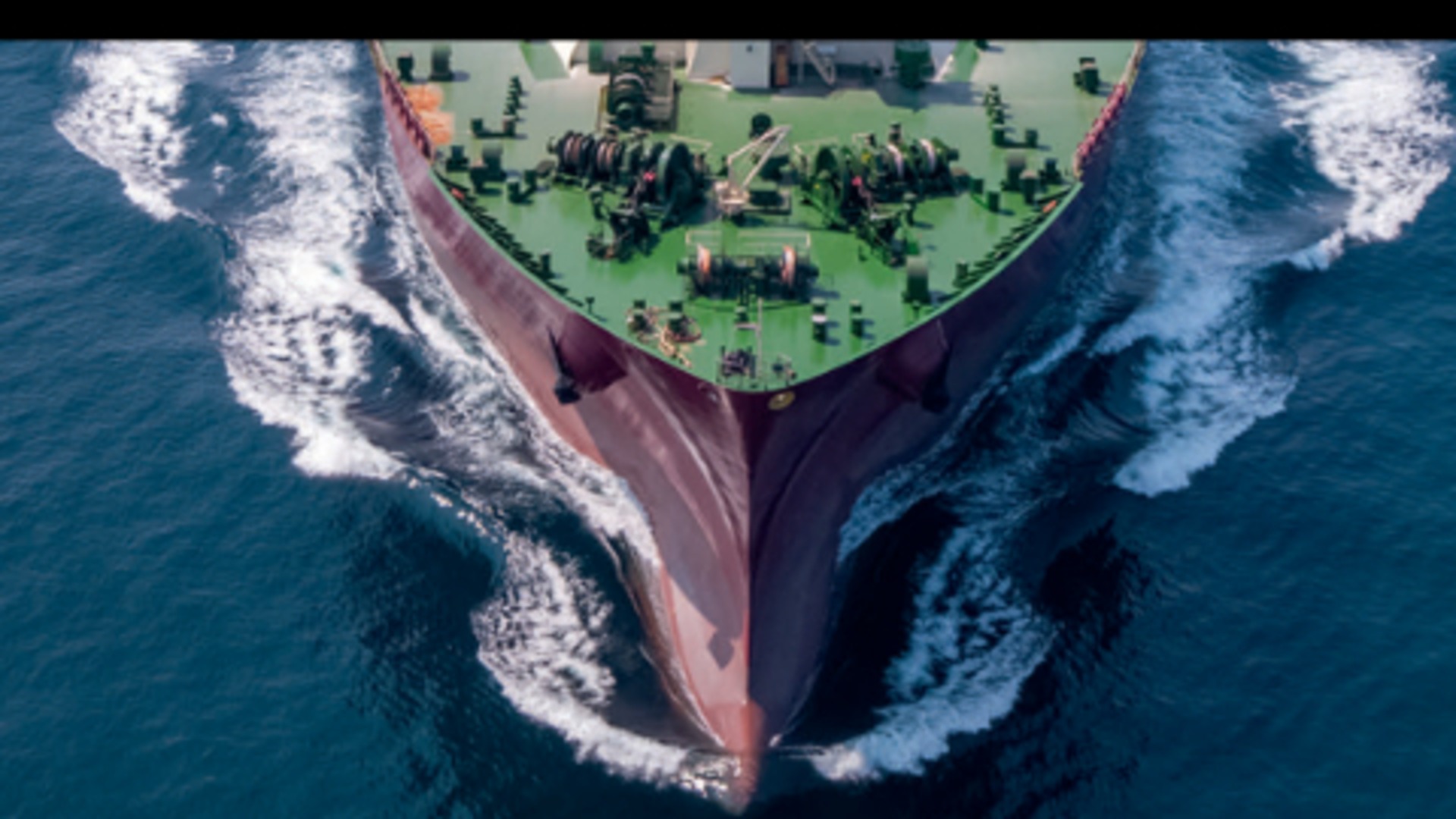

The global LNG carrier orderbook already equals nearly 40% of the existing fleet by capacity. Yet French containment-system specialist GTT believes the market could still generate orders for around 550 additional LNG carriers over the coming decade.
According to GTT’s latest outlook, the company expects approximately 550 LNG carrier orders between 2026 and 2035. It also sees potential demand for 25 to 40 very large and ultra-large ethane carriers, up to 10 floating storage and regasification units, as many as 10 floating LNG production units, and around 30 onshore storage tanks.
The forecast is striking given the scale of the tonnage already under construction.
Clarksons Research counted 908 LNG carriers in service as of 1 July 2026, with combined capacity of approximately 139.7 million cubic metres. A further 338 vessels, totalling 54.3 million cubic metres, were on order, equivalent to 38.9% of the existing fleet by capacity.
At first glance, placing GTT’s forecast alongside the current orderbook could suggest that the LNG shipping market remains severely undersupplied and that the newbuilding supercycle has another decade to run.
The reality is more complex.
The Market Is Not Immediately Short of 550 Ships
GTT’s 550-vessel estimate represents cumulative orders expected between 2026 and 2035. It does not mean the global fleet currently has a deficit of 550 ships, nor does it imply that guaranteed employment already exists for another 550 vessels beyond the 338 ships under construction.
The forecast includes several different sources of demand: fleet expansion, replacement of ageing ships, project-related requirements, changes in trading distances and some speculative or early ordering.
Some of the new ships will replace inefficient steam turbine vessels. Others will be built for liquefaction projects that have yet to begin production. Some may enter the short-term charter market if the projects intended to employ them are delayed.
Part of the 550-vessel forecast has also already begun to convert into firm contracts.
GTT secured orders for 56 LNG carriers during the first half of 2026 and delivered systems for 45 ships. At the end of June, its core orderbook included 272 LNG carriers.
Compared with Clarksons’ global orderbook of 338 vessels, GTT technology appears to have been specified for roughly four out of every five LNG carriers currently on order, although the two figures use slightly different reporting dates and definitions.
Spread evenly across ten years, 550 orders would average approximately 55 vessels annually. GTT received 56 LNG carrier orders in the first six months of 2026 alone, illustrating how ordering activity is likely to arrive in waves rather than at a stable annual rate.
Large LNG carrier orders are normally triggered by final investment decisions, long-term offtake agreements, project financing and charter commitments. A single major export development can therefore generate a sizeable series of ship orders within a relatively short period.
GTT’s previous long-term outlook, published in early 2025, projected more than 450 LNG carrier orders between 2025 and 2034. The latest forecast of approximately 550 vessels indicates stronger confidence, although the time periods are different and the change should not be interpreted as a straightforward increase of 100 ships.
A New Wave of Liquefaction Investment
The strongest support for new LNG carrier demand remains the expansion of global liquefaction capacity.
GTT said ten LNG projects reached final investment decision in 2025, representing a record 84 million tonnes per annum of capacity. These facilities are expected to enter production progressively between 2027 and 2031.
A further 37 million tonnes per annum has reached final investment decision in 2026, including around 21 million tonnes in the United States. Projects referenced by GTT include Qatar’s North Field West, the second phase of Venture Global’s CP2 project, Commonwealth LNG and the first phase of Delfin LNG.
Together, projects sanctioned in 2025 and 2026 represent approximately 121 million tonnes per annum of new liquefaction capacity.
They will not all start production at the same time. However, as engineering, procurement and construction advance, they will gradually generate requirements for long-term shipping contracts and dedicated LNG carrier fleets.
GTT previously estimated that liquefaction projects already under construction at the end of 2024 represented approximately 161.3 million tonnes per annum of capacity and would theoretically require around 255 LNG carriers.
About 180 ships had already been secured for those developments. After accounting for approximately 25 modern vessels without long-term employment, GTT estimated that another 50 to 75 newbuildings were still required.
The additional projects sanctioned during 2025 and 2026 have further expanded the future pool of potential vessel demand.
There is, however, a considerable gap between reaching final investment decision and producing the first LNG cargo.
Large export projects remain exposed to construction delays, cost inflation, equipment shortages, financing difficulties, changes in offtake agreements, sanctions and geopolitical disruption.
When the vessels are delivered on schedule but the liquefaction trains are delayed, new ships can enter the market before their intended cargoes become available. That timing mismatch creates temporary overcapacity even when the long-term demand outlook remains positive.
LNG Shipping Demand Depends on Distance as Well as Volume
The number of vessels required to transport an additional 10 million tonnes of LNG varies substantially according to the trade route.
A cargo moving from the US Gulf Coast to Europe occupies a vessel for far less time than a cargo moving from the United States to China, Japan or South Korea.
The same principle applies to Qatari exports. A Qatar-to-Asia voyage requires a different number of ship-days from a Qatar-to-Europe voyage routed around the Cape of Good Hope.
Future fleet demand will therefore depend on more than total LNG production. The geographical distribution of suppliers and buyers will be equally important.
Global LNG trade reached approximately 437 million tonnes in 2025, rising by 6.3% year on year. The United States became the world’s largest LNG exporter, shipping around 111 million tonnes.
North America-to-Europe trade increased sharply, from approximately 46 million tonnes in 2024 to 74 million tonnes in 2025, making it the world’s largest interregional LNG trade route.
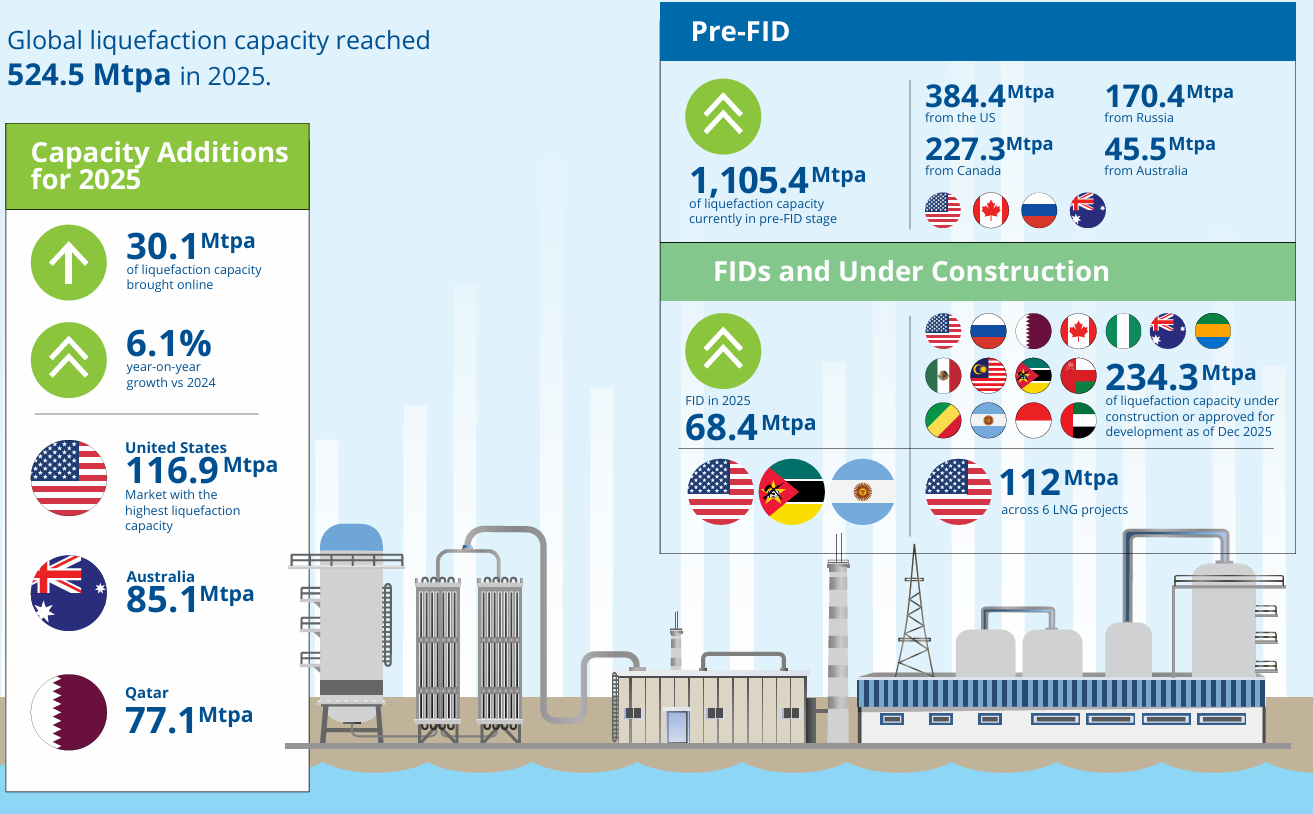
This increase supported global LNG volumes, but short-haul Atlantic cargoes do not create the same shipping demand as long-haul exports to Asia.
If a larger share of future US production moves to China, Japan, South Korea and Southeast Asia, tonne-mile demand could increase significantly. If Europe continues to absorb a substantial proportion of US supply, the number of vessels required per tonne of export capacity may be lower.
Canal access and geopolitical disruption add another layer of uncertainty.
Restrictions at the Panama Canal, instability around the Red Sea and prolonged diversions around southern Africa can increase voyage distances and absorb additional fleet capacity. A return to shorter and more predictable routes would release that capacity back into the market.
The key question is therefore not only how much LNG will be produced, but where it will be consumed and which routes the ships will be able to use.
Nearly One-Quarter of the Fleet Faces an Efficiency Problem
Fleet replacement is another major component of GTT’s forecast.
Around 194 LNG carriers still use conventional steam turbine propulsion, representing close to one-quarter of the operating fleet. These vessels were all delivered before 2015.
Traditional steam turbine systems typically achieve full-load thermal efficiency of around 35%. Modern two-stroke dual-fuel propulsion systems, including ME-GI, ME-GA and X-DF designs, can offer efficiency improvements of approximately 50% compared with older steam ships.
Older vessels generally consume more fuel, carry less cargo and have higher boil-off rates. Their commercial position will become increasingly difficult as carbon-related operating costs rise.
Regulations and market-based measures such as EEXI, CII, the EU Emissions Trading System and FuelEU Maritime are gradually affecting the economics of LNG carrier operations. Charterers are also paying closer attention to fuel consumption, methane emissions and cargo-delivery efficiency.
Many older steam vessels will not be scrapped immediately. Some may operate at reduced speeds, shift into regional trades, undergo conversion or serve as floating storage units. During strong freight markets, they may remain commercially viable.
By the end of the decade, however, a growing number will struggle to compete against larger and more efficient modern ships.
A meaningful proportion of the forecast 550 orders should therefore be viewed as replacement tonnage rather than pure fleet growth.
Why Can the Spot Market Still Be Oversupplied?
The LNG carrier market has repeatedly demonstrated that strong long-term fundamentals can coexist with weak short-term freight conditions.
After 2013, LNG carrier deliveries expanded much faster than liquefaction capacity. The resulting oversupply pushed charter rates lower for several years.
A similar imbalance emerged in 2024, when a large number of ships entered service while new LNG production increased more slowly. Even modern dual-fuel vessel rates fell to levels below those seen during parts of the pandemic period.
Although the market experienced a temporary recovery toward the end of 2025, the year remained one of the weakest periods for LNG carrier earnings in recent history.
The current delivery schedule could produce another period of pressure.
Approximately 11.4 million cubic metres of LNG carrier capacity is scheduled for delivery during the remainder of 2026, followed by 15.2 million cubic metres in 2027. A further 27.8 million cubic metres is due from 2028 onwards.
If major projects in the United States, Qatar, Canada or Africa fail to start production on schedule, the gap between fleet growth and cargo availability could widen.
Ships supported by long-term charters and dedicated export projects will be relatively protected. Speculative newbuildings and vessels relying on spot or short-term employment will face greater exposure.
A ten-year requirement for 550 orders does not guarantee strong freight rates in 2027 or 2028. Market-wide demand growth cannot eliminate the risks associated with an individual ship being delivered at the wrong point in the cycle.
Shipyard Expansion Is Changing the Competitive Landscape
A shortage of qualified construction slots at South Korean shipyards was one of the principal constraints on LNG carrier ordering during the early stages of the latest cycle.
That constraint is beginning to ease.
GTT estimates that annual LNG carrier construction capacity at South Korean and Chinese shipyards increased from around 55 vessels in 2020 to approximately 70 in 2024 and around 90 in 2026. Available capacity is expected to exceed 100 ships annually by 2028.
Compared with GTT’s forecast average of roughly 55 orders per year, the future theoretical construction capacity appears more than sufficient.
The primary bottlenecks are therefore likely to shift toward project management, containment-system installation, cryogenic equipment, propulsion systems, reliquefaction technology, quality control and delivery reliability.
China is becoming an increasingly important part of this expansion.
Chinese shipyards are building additional large docks, increasing LNG carrier production lines and developing capabilities in the mainstream 174,000 to 200,000-cbm segment.
Hudong-Zhonghua Shipbuilding is also building a series of 271,000-cbm QC-Max vessels for QatarEnergy, with deliveries scheduled between 2028 and 2031. These ships will rank among the largest LNG carriers ever constructed.
The expansion of Chinese capacity could make the country one of the principal beneficiaries of the next LNG carrier ordering cycle.
Yet growth in construction volume does not automatically mean that all high-value technologies have been localised.
With GTT systems specified on around four out of every five LNG carriers currently on order, the French company continues to dominate the membrane-containment segment. Chinese yards may gain a larger share of vessel construction while a significant proportion of design licensing, technical support and containment-system value remains within the GTT ecosystem.
The next stage of competition for Chinese shipbuilders will centre on stable series production, domestic equipment penetration, lifecycle costs and the development of proprietary core technologies.
Asia Is Both the Main Growth Engine and the Largest Uncertainty
GTT expects global LNG demand to grow at a compound annual rate of around 5% between 2026 and 2035 under its central scenario. Approximately 80% of the increase is expected to come from Asia.
European energy-security requirements and rising demand in the Middle East also support the company’s outlook.
Asia, however, remains the greatest source of uncertainty.
Global LNG trade increased strongly in 2025, but Chinese imports fell by approximately 9 million tonnes and Indian imports declined by around 1.5 million tonnes. European net imports, meanwhile, increased by more than 26 million tonnes.
Current forecasts for Chinese LNG demand are also being revised.
Higher domestic gas production, additional pipeline imports from Russia, rapid renewable-energy development and continued use of coal-fired generation are reducing China’s dependence on high-priced spot LNG.
Asia remains likely to provide the largest share of global LNG demand growth, but it is not a single, uniform market.
China, India, Pakistan, Bangladesh and Southeast Asian countries have very different levels of price sensitivity, infrastructure readiness, currency exposure and government support.
Lower LNG prices resulting from the coming supply wave could stimulate demand. Sustained high prices or geopolitical disruption could encourage buyers to rely more heavily on domestic gas, pipeline imports, coal or renewable power.
GTT’s 5% growth assumption is commercially credible, but it remains a scenario rather than guaranteed cargo demand.
Who Will Benefit Most From the 550-Ship Forecast?
For GTT, the visibility of long-term ordering demand is considerably stronger than it is for an individual shipowner.
The company secured 65 new orders during the first half of 2026, including 56 LNG carriers. At the end of June, its core orderbook represented approximately €1.85 billion in future revenue scheduled for recognition through 2029 and beyond.
GTT generated first-half revenue of approximately €387 million and EBITDA of €264 million, giving it an EBITDA margin of more than 68%.
Its income is largely generated through containment-system design, licensing and related technical services. The company is therefore much less exposed to short-term spot charter rates than LNG carrier owners.
GTT’s forecast deserves attention because the company has direct visibility across shipyards, owners and project developers. It should still be assessed alongside independent projections for LNG demand, project schedules and vessel supply.
For shipbuilders, 550 orders would provide a decade-long source of high-value work. As construction capacity increases, however, the pricing power created by scarce slots could gradually weaken.
Shipyards with proven series-production capability, reliable equipment supply chains and strong delivery records will retain an advantage over yards that simply possess large docks.
For shipowners, employment structure remains decisive.
A vessel backed by a 15- to 25-year charter from a major exporter, energy company or portfolio trader can secure financing and predictable cash flow.
An expensive newbuilding without long-term employment could face prolonged idle periods or refinancing pressure if its intended project is delayed.
The Real Test Is Synchronisation
GTT’s forecast of approximately 550 LNG carrier orders between 2026 and 2035 has a credible industrial foundation.
New liquefaction capacity, longer trading distances and the replacement of ageing steam turbine vessels all support substantial newbuilding demand.
The forecast does not mean the market is heading into a permanent vessel shortage.
There are already 338 LNG carriers on order, while annual construction capacity in South Korea and China could exceed 100 ships by 2028.
The central challenge will be synchronisation: aligning vessel deliveries with liquefaction project start-ups and the commencement of long-term charter contracts.
The most valuable LNG carriers of the next decade will be those delivered at the right point in a project cycle, equipped with efficient propulsion and low boil-off technology, and supported by reliable long-term employment.
Another 550 orders could sustain a major newbuilding cycle.
They will not automatically produce a ten-year freight-rate boom.

READ MORE
 Shipbuilding
COSCO SHIPPING Development to Invest RMB 7.92 Billion in 15 Newcastlemax Bulk Carriers, Backed by 20-Year Charters
 Shipbuilding
Greek Shipowner W Marine Orders Three Ultramax Bulk Carriers at Dajin Heavy Industry
 Shipbuilding
COSCO SHIPPING Development Adds Four 210,000 DWT Newcastlemax Bulk Carriers
 Shipbuilding
Nanjing Tanker places four MR tanker order at GSI amid fleet renewal push
 Shipbuilding
Hengli Heavy Industries Secures Six VLAC Orders in One Week
 Shipbuilding
Sallaum Lines Adds 1+1 Large PCTCs at China Merchants Jinling, Taking Firm Newbuild Programme to Nine Ships
 Shipbuilding
NVIDIA Enters Shipbuilding: Kawasaki Brings Physical AI to the Shipyard
 Shipbuilding
11-Ship Programme: Hengli Wins Six More Boxships from Jiangsu Port Group
 Shipbuilding
Kawasaki Heavy Industries Teams Up with NVIDIA on Next-Generation Digital Shipyard
 Shipbuilding