


COSCO SHIPPING Development to Invest RMB 7.92 Billion in 15 Newcastlemax Bulk Carriers, Backed by 20-Year Charters
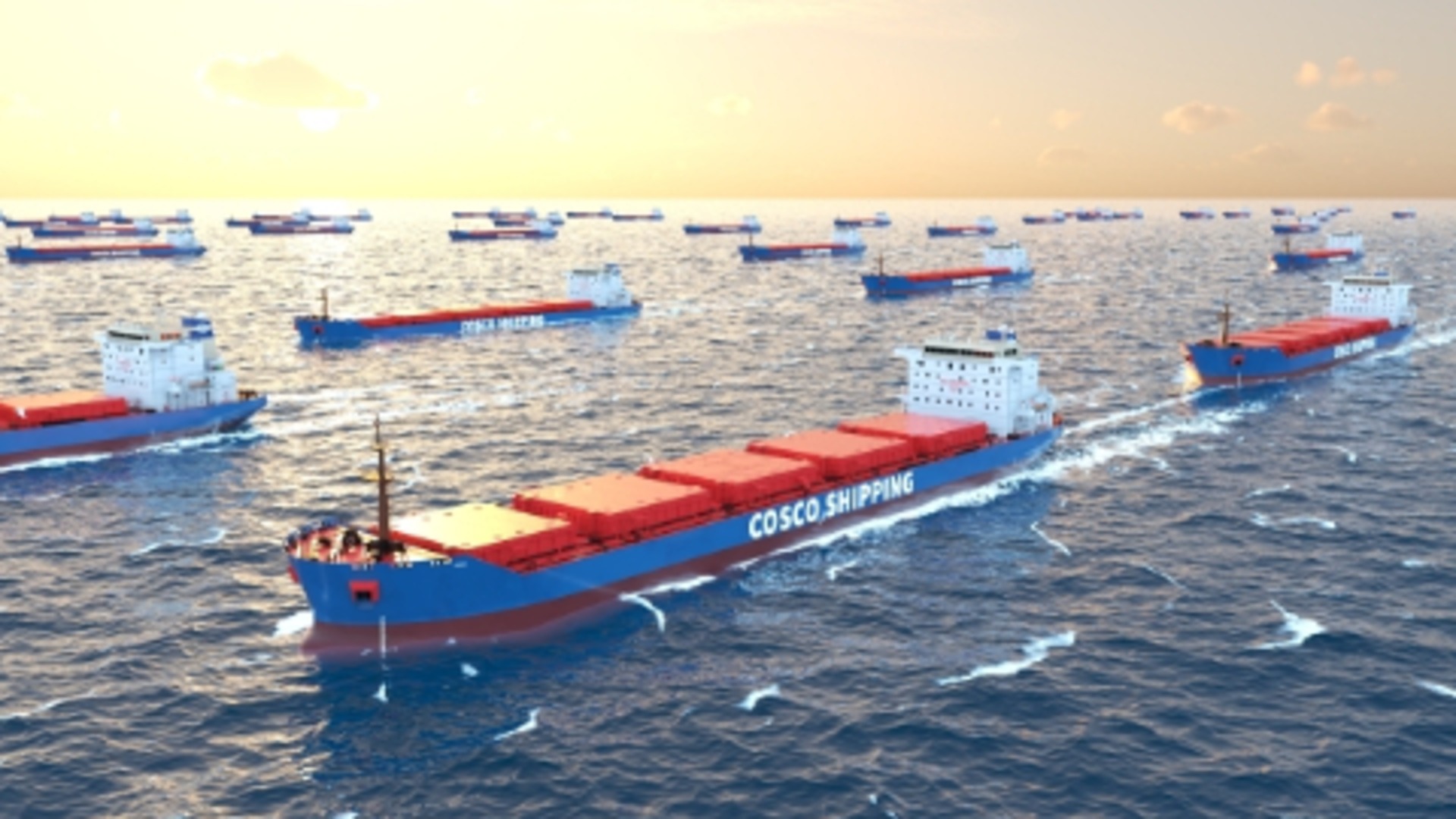

COSCO SHIPPING Group has unveiled another major investment in large dry bulk tonnage.
On 29 July, COSCO SHIPPING Development Co., Ltd. announced that its indirect wholly owned subsidiary, Hainan COSCO SHIPPING Development Shipping Co., Ltd., plans to order 15 Newcastlemax bulk carriers of approximately 210,000 dwt.
Shanghai Waigaoqiao Shipbuilding will build 10 vessels, while Nantong Xiangyu Offshore Engineering Equipment Co., Ltd. will construct the remaining five.
The contracts are valued at a combined RMB 7.92 billion before tax, equivalent to RMB 528 million per vessel. All 15 ships will be prepared for future methanol and ammonia fuel conversions and are scheduled for delivery between May and December 2030.
Assets Owned by COSCO SHIPPING Development, Operated by COSCO SHIPPING Bulk
The ownership and operating structure is central to understanding the transaction.
The vessels will be financed and owned by COSCO SHIPPING Development rather than purchased directly by COSCO SHIPPING Bulk.
After delivery, all 15 ships will be chartered on long-term operating leases to Wai Fung Shipping Limited, a subsidiary of COSCO SHIPPING Bulk. Each vessel will be chartered for 240 months, plus or minus 120 days, effectively locking in an operating arrangement of around 20 years.
The structure creates a clear division of responsibilities within COSCO SHIPPING Group: COSCO SHIPPING Development will handle investment, financing and asset management, while COSCO SHIPPING Bulk will undertake the commercial operation of the vessels.
For COSCO SHIPPING Bulk, the arrangement secures core large-bulker capacity beyond 2030 without requiring the company to bear the full upfront capital expenditure.
For COSCO SHIPPING Development, the long-term charter agreements reduce market exposure after delivery and provide a relatively predictable stream of rental income and cash flow.
At the end of the charter period, COSCO SHIPPING Development will remain responsible for disposing of the vessels. Wai Fung Shipping will have no obligation to purchase them, leaving residual-value exposure and potential asset-disposal gains with the owner.
Uniform Price of RMB 528 Million Per Vessel
The 15 vessels have been ordered at the same unit price.
The 10 ships at Waigaoqiao Shipbuilding are valued at RMB 5.28 billion, while the five vessels at Xiangyu Offshore carry a combined contract price of RMB 2.64 billion.
COSCO SHIPPING Development said it approached three major shipyards capable of building and delivering the same type of vessel. The final selection was based on a combined assessment of pricing, technical capability, delivery schedules, payment terms and construction experience.
The contracts will be paid in five instalments. Relatively small portions of the contract price will be paid during the first four stages, with most of the payment due upon vessel delivery.
Approximately 25% of the investment is expected to be funded by internal resources, while around 75% will be financed through bank borrowings. Based on the total contract value, this implies approximately RMB 1.98 billion in equity funding and around RMB 5.94 billion in external financing.
The payment arrangement limits capital tied up during construction, although the concentration of deliveries in 2030 will require careful management of financing costs and the company’s balance sheet.
Annual Rental Income Could Reach RMB 891 Million
COSCO SHIPPING Development said the expected annual rental for each vessel would not exceed RMB 59.4 million before tax, taking into account a potential future upgrade to dual-fuel propulsion.
If all 15 vessels are delivered and chartered at the stated ceiling, their combined annual rental income would reach approximately RMB 891 million.
That represents a gross annual rental-to-construction-cost ratio of around 11.25%.
This ratio should not be treated as a net investment return. COSCO SHIPPING Development will still need to account for financing costs, depreciation, insurance, asset management, potential technical upgrades and residual-value exposure.
The 20-year charter period nevertheless means that a substantial part of the vessels’ economic lives will be supported by long-term employment arrangements. The investment case will therefore depend on a combination of contracted rental income, financing structure and eventual vessel values, rather than on short-term fluctuations in the dry bulk market.
COSCO SHIPPING Development Accelerates Dry Bulk Asset Expansion
The latest order forms part of a much broader expansion of COSCO SHIPPING Development’s dry bulk leasing portfolio.
Since August 2024, the company has disclosed a series of investments covering medium-sized bulk carriers, multipurpose grain carriers and Newcastlemax vessels.
Based on publicly disclosed transactions, its dry bulk newbuilding and vessel-acquisition arrangements over the period have reached approximately 124 vessels.
The portfolio includes at least 37 vessels in the 210,000-dwt to 211,000-dwt segment, comprising 10 ships ordered in 2025, eight vessels acquired while under construction in May 2026, four additional large bulkers announced in June, and the latest 15-vessel programme.
The figure does not represent vessels already delivered or operating. It nevertheless demonstrates the scale of the leasing platform being developed around COSCO SHIPPING Bulk’s future fleet requirements.
“Methanol and Ammonia-Ready” Does Not Mean Dual-Fuel at Delivery
The announcement describes the vessels as having provisions for methanol and ammonia fuels.
This means that the ships will be designed with conditions reserved for future fuel-system upgrades. It should not be interpreted as confirmation that they will be delivered with fully operational methanol- or ammonia-capable dual-fuel propulsion systems.
COSCO SHIPPING Development has incorporated the possibility of future dual-fuel conversions into its rental calculations. However, the announcement does not specify the conversion timetable, engine technology, fuel-tank configuration or additional investment required.
The approach gives the company flexibility to respond to future emissions regulations, fuel availability and operating economics after 2030.
Splitting the programme between Waigaoqiao Shipbuilding and Xiangyu Offshore also reduces reliance on a single builder and secures construction capacity at two yards during the same delivery window.
Building a Large-Scale Dry Bulk Asset Platform
The significance of the transaction extends beyond a single newbuilding order.
COSCO SHIPPING Development is using its financing and asset-management capabilities to convert COSCO SHIPPING Bulk’s long-term fleet requirements into standardised shipping assets supported by long-duration leases.
COSCO SHIPPING Bulk, meanwhile, can focus more resources on cargo procurement, route development, customer relationships and commercial operations.
The model links shipyards, financial institutions, the asset owner and the vessel operator through an integrated “build, lease and operate” structure.
As the vessels are progressively delivered through 2030, COSCO SHIPPING Group will strengthen its position in large-scale dry bulk transportation, future-fuel-ready tonnage and renminbi-denominated maritime financing.
The 10-vessel contract with Waigaoqiao Shipbuilding constitutes a major transaction under Hong Kong Stock Exchange listing rules and remains subject to shareholder approval. The five-vessel order at Xiangyu Offshore has already received board approval.
The programme has therefore entered the implementation stage, although the Waigaoqiao portion will only become effective once the required shareholder approval has been obtained.

READ MORE
 Shipbuilding
338 LNG Carriers Already on Order — Why Does GTT Still See Demand for Another 550?
 Shipbuilding
Greek Shipowner W Marine Orders Three Ultramax Bulk Carriers at Dajin Heavy Industry
 Shipbuilding
COSCO SHIPPING Development Adds Four 210,000 DWT Newcastlemax Bulk Carriers
 Shipbuilding
Nanjing Tanker places four MR tanker order at GSI amid fleet renewal push
 Shipbuilding
Hengli Heavy Industries Secures Six VLAC Orders in One Week
 Shipbuilding
Sallaum Lines Adds 1+1 Large PCTCs at China Merchants Jinling, Taking Firm Newbuild Programme to Nine Ships
 Shipbuilding
NVIDIA Enters Shipbuilding: Kawasaki Brings Physical AI to the Shipyard
 Shipbuilding
11-Ship Programme: Hengli Wins Six More Boxships from Jiangsu Port Group
 Shipbuilding
Kawasaki Heavy Industries Teams Up with NVIDIA on Next-Generation Digital Shipyard
 Shipbuilding