


J.P. Morgan’s $3bn Shipping Bet: Why Wall Street Is Rushing to Secure Maritime Assets
Two more VLCCs take the investment group’s potential VLCC programme to 10 ships, as rising prices, scarce yard capacity and longer trade routes reshape the value of modern tonnage
A very large crude carrier scheduled for delivery only in 2030 now costs approximately $132.5m, yet J.P. Morgan-linked investment interests have reportedly moved to secure two more.
The latest order, placed at South Korea’s Hanwha Ocean, would expand J.P. Morgan’s potential VLCC newbuilding programme to 10 ships, comprising eight firm vessels and two options, with a combined investment estimated at close to $1.3bn.
Across crude tankers, LNG carriers and very large gas carriers, J.P. Morgan’s transportation investment business has arranged more than 30 newbuildings over roughly six months, representing capital commitments of more than $3bn.
The pace of expansion is particularly striking because Andrian “Andy” Dacy, chief executive and chief investment officer of J.P. Morgan Asset Management’s Global Transportation Group, argued only a few months ago that high vessel valuations made selling ships increasingly attractive.
J.P. Morgan has since emerged as one of the busiest financial investors in the newbuilding market, securing delivery slots extending into 2029 and 2030.
The change reflects a broader reassessment of shipping assets, long-term charter income, energy transportation requirements and the strategic value of controlling modern, compliant tonnage in an increasingly fragmented world economy.
Two VLCCs at Hanwha Ocean
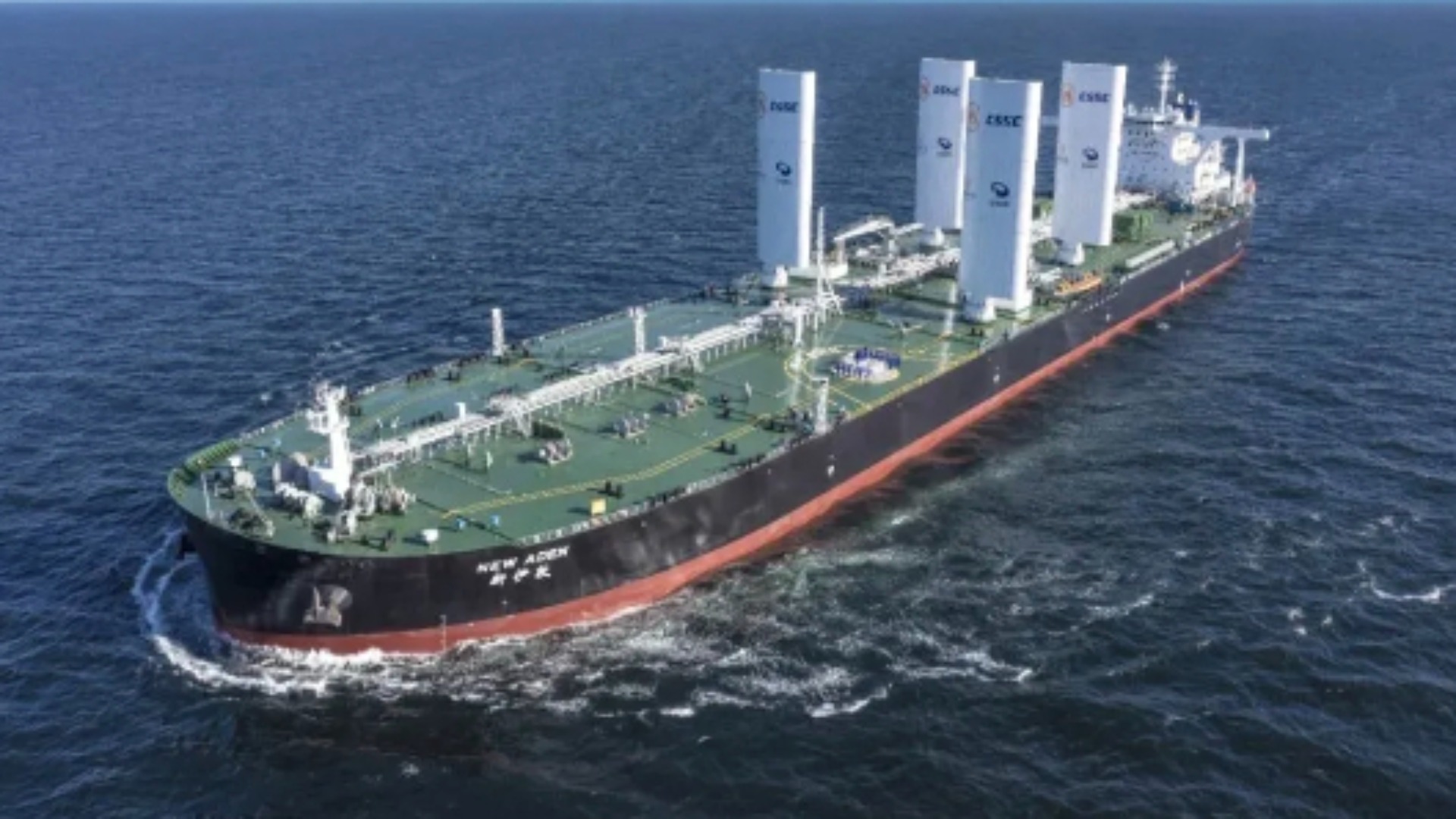
Hanwha Ocean recently disclosed a contract with an unnamed North American shipowner for the construction of two VLCCs.
The contract is valued at KRW394.3bn, equivalent to approximately $265m, giving an average price of about $132.5m per ship. The vessels are scheduled to be delivered by the end of March 2030.
Hanwha Ocean did not identify the ultimate buyer in its regulatory disclosure. Shipbroking and shipbuilding market sources, however, have linked the contract to a maritime investment platform associated with J.P. Morgan.
The vessels are understood to be conventional 320,000-dwt VLCCs.
The official disclosure therefore confirms the vessel type, contract value and delivery deadline. The identity of J.P. Morgan as the buyer remains based on reporting by specialist shipping media and market sources rather than a public announcement from Hanwha Ocean or J.P. Morgan.
The order would extend J.P. Morgan’s VLCC newbuilding exposure beyond China and into South Korea. Its associated investment platforms have already been linked to VLCC projects at Dalian Shipbuilding Industry Co and Jiangsu New Hantong Ship Heavy Industry.
The addition of Hanwha Ocean means the programme now covers leading VLCC construction facilities in both China and South Korea.
Following the latest contract, Hanwha Ocean’s 2026 order intake reportedly stands at 27 vessels worth approximately $4.61bn. The total includes 17 VLCCs, six large LNG carriers, three very large ammonia carriers and one wind turbine installation vessel.
VLCCs account for more than 60% of the ships in the yard’s year-to-date order intake, highlighting the renewed importance of large crude carriers to its commercial shipbuilding portfolio.
A 10-VLCC programme: Eight firm ships and two options
Based on vessel-by-vessel order data and publicly reported transactions, J.P. Morgan-linked VLCC projects can currently be identified at three shipyards.
The Dalian Shipbuilding project covers up to four 307,000-dwt VLCCs. Two are understood to be firm orders, while the remaining two are options. Delivery is expected around 2029.
Market estimates place the potential value of the full four-ship project at close to $500m, equivalent to approximately $123m to $125m per vessel.
At Jiangsu New Hantong, four firm 319,000-dwt VLCCs are recorded under Global Meridian, with a contract date of April 30, 2026, and delivery scheduled for 2029.
Global Meridian Holdings is a ship-owning and asset-holding platform associated with transportation funds managed by J.P. Morgan Asset Management. It is therefore appropriate to include these ships within J.P. Morgan’s wider managed transportation portfolio, although Global Meridian should not be described as a directly owned banking subsidiary without further corporate ownership disclosure.
The latest Hanwha Ocean project adds two firm 320,000-dwt VLCCs for delivery by March 2030.
Including the options, J.P. Morgan’s potential VLCC programme therefore consists of:
four vessels at Dalian Shipbuilding, including two firm orders and two options;
four firm vessels at Jiangsu New Hantong;
two firm vessels at Hanwha Ocean.
This gives a total of 10 VLCCs, comprising eight firm orders and two options.
Based on disclosed prices and market estimates, the potential investment value is approximately $1.26bn to $1.3bn.
The distinction between firm orders and options remains important. Options can reasonably be included when assessing the potential scale of the programme, provided that the order structure is clearly explained. They should not be treated as legally effective firm orders until exercised.
At least 24 identifiable ships, including options
J.P. Morgan’s current expansion extends far beyond VLCCs.
According to order data available as of July 16, 2026, 17 newbuildings can be identified with Global Meridian listed as the company or group company.
These comprise:
six firm VLCCs;
seven Suezmax tankers;
four VLGCs.
The six firm VLCCs consist of two ships at Dalian Shipbuilding and four at Jiangsu New Hantong.
The seven Suezmax tankers are being constructed by Samsung Heavy Industries and have capacities of approximately 157,000 to 158,000 dwt.
The four VLGCs are also being built by Samsung Heavy Industries, each with a cargo capacity of 88,000 cubic metres.
Prices are available for 11 of the 17 Global Meridian-linked vessels. The seven Suezmax tankers and four VLGCs have a combined disclosed value of approximately $1.09bn. Prices for the six Chinese-built VLCCs were not recorded in the dataset.
A further three 174,000-cbm LNG carriers at Samsung Heavy Industries are associated with Oceonix Services Ltd, a commercial management platform serving maritime assets held by funds within J.P. Morgan’s transportation investment structure.
Each LNG carrier is priced at approximately $252m, giving a combined contract value of about $756m.
These figures bring the number of identifiable J.P. Morgan-linked firm newbuildings in the dataset to at least 20, with disclosed prices totalling approximately $1.846bn. That figure excludes the prices of the six Chinese-built VLCCs.
Adding the two newly reported Hanwha Ocean VLCCs increases the identifiable firm-order total to 22 ships.
Including the two Dalian VLCC options takes the publicly identifiable potential programme to 24 vessels.
This still does not represent J.P. Morgan’s complete newbuilding portfolio.
In May 2026, Dacy said the transportation investment business had arranged more than 30 tanker and gas-carrier newbuildings during the preceding six months, involving capital expenditure of more than $3bn.
The difference suggests that several ships are held through other funds, special-purpose companies, single-ship entities or ownership structures that cannot yet be connected publicly on a vessel-by-vessel basis.
From LNG carriers and VLGCs to VLCCs
The timing of the orders illustrates how rapidly J.P. Morgan’s strategy has expanded.
At the beginning of 2026, associated platforms secured large LNG carriers at Samsung Heavy Industries.
In March, Global Meridian arranged three Suezmax tankers and two VLGCs at the same shipyard. It also entered the VLCC newbuilding market through the two firm ships and two options at Dalian Shipbuilding.
At the end of April, four additional 319,000-dwt VLCCs were recorded at Jiangsu New Hantong.
Further LNG carriers, VLGCs and Suezmax tankers followed in May. Global Meridian added another two Suezmax tankers in July, while J.P. Morgan was subsequently linked to the two Hanwha Ocean VLCCs.
Within a matter of months, the investment portfolio had expanded across LNG carriers, VLGCs, Suezmax tankers and VLCCs.
The structure creates diversified exposure to the energy transportation chain.
LNG carriers can provide long charter periods and relatively predictable contracted income. VLGCs serve established LPG trades and may also benefit from future growth in ammonia transportation. Suezmax tankers offer flexibility across Atlantic, Middle Eastern and other crude trades. VLCCs provide direct exposure to long-haul crude movements from the Middle East, the United States, West Africa and South America to Asia.
These vessel classes have different earnings cycles, chartering structures and cargo drivers. Combining them can reduce dependence on a single market while allowing J.P. Morgan to offer transportation solutions to energy companies, commodity traders and major industrial charterers.
Why did the strategy change so quickly?
At the Marine Money Hamburg conference in February 2026, Dacy suggested that conventional financial logic supported selling ships at prevailing asset values.
Only a few months later, J.P. Morgan had committed more than $3bn to new tonnage.
The apparent contradiction can be explained by the structure of the transactions.
Selling an existing vessel is primarily a decision about secondhand prices, current asset values and the opportunity to realise gains at a favourable point in the shipping cycle.
Ordering a new ship backed by charter demand involves a different calculation. The investor evaluates long-term cash flows, counterparty credit, financing costs, vessel residual value and the timing of delivery.
Dacy has stated that the recent newbuilding programme was driven by demand from end users.
That suggests at least part of the fleet may have been ordered against long-term charters, bareboat arrangements, charter commitments or other forms of contracted employment.
When future charter revenue is sufficient to cover construction costs, financing expenses, operational exposure and residual-value risk, a newbuilding project can meet an institutional investor’s return requirements even when vessel prices are elevated.
J.P. Morgan Asset Management has also argued in its 2026 alternative investment outlook that core transportation assets can generate stable and predictable income through long-term, lease-based and contracted structures.
The investment value of such assets depends heavily on charterer quality, contract duration, asset selection and diversification across transportation segments.
J.P. Morgan’s recent shift therefore reflects an evolution in how shipping risk is controlled. Earlier opportunity-driven investments relied heavily on buying assets at low prices and benefiting from a market recovery. The latest programme places greater emphasis on contracted income, customer credit, vessel specification and cash flows over the full economic life of the asset.
A $3.5trn replacement cycle
The ageing global transportation fleet provides another long-term foundation for the investment strategy.
J.P. Morgan Asset Management estimates that core transportation assets, including ships, aircraft and railway equipment, generally have economic lives of 25 to 30 years.
It believes approximately $3.5trn of capital may be required over the next decade to replace ageing global transportation assets.
Citing Clarksons data, the group has said the average age of the world fleet has reached approximately 13.9 years, equal to around 56% of a vessel’s assumed average useful life.
A separate J.P. Morgan publication released in April 2026 placed the average age of the global fleet above 5,000 gross tonnes at approximately 14.3 years, close to its highest level since 2005.
As older ships approach retirement, environmental rules, fuel-efficiency requirements and carbon costs are accelerating the commercial separation between modern and ageing tonnage.
Energy companies and major commodity traders increasingly favour ships with lower fuel consumption, stronger emissions performance, higher operational reliability and longer remaining commercial lives.
Modern vessels are also more likely to meet the requirements of banks, insurers, regulators and first-class charterers.
Even in a weaker freight market, these ships may retain advantages in utilisation, financing availability and charter rates.
Competing for 2029 and 2030 delivery slots
Vessel-by-vessel order data also helps explain why J.P. Morgan has moved quickly.
Using a consistent definition of tankers between 280,000 and 340,000 dwt, the data records 18 VLCC contracts in 2023.
That total increased to 75 ships in 2024 and remained high at 73 ships in 2025.
By early July 2026, the database contained 155 VLCC order records for the year.
The increase has been accompanied by a clear shift in delivery dates.
The median delivery year for VLCCs ordered in 2023 was 2026. For contracts signed in 2024, it moved to 2027. Orders placed in 2025 had a median delivery year of 2028, while the median for 2026 contracts has moved to 2029.
Of the 155 VLCC records for 2026, 74 are scheduled for delivery in 2029 and 28 in 2030.
Together, those 102 ships account for approximately 65.8% of the recorded total.
J.P. Morgan’s willingness to accept delivery from Hanwha Ocean as late as March 2030 is therefore consistent with the wider movement in shipyard availability.
When large numbers of owners return to the VLCC market simultaneously, dock space, engineering capacity and critical equipment supply are quickly absorbed.
Waiting for lower newbuilding prices creates another form of risk: delivery slots may move beyond 2030, potentially preventing owners from matching vessels with particular charter opportunities or fleet-replacement schedules.
Hanwha Ocean VLCC prices continue to rise
The data also indicates a gradual increase in Hanwha Ocean’s reported VLCC prices during 2026.
VLCCs contracted in January were priced at approximately $129.5m each. The figure rose to around $130m in March, $130.5m in April and $131m in June.
The latest two-ship contract averages approximately $132.5m per vessel.
That represents an increase of about $3m per ship, or approximately 2.3%, compared with the yard’s reported price at the beginning of the year.
The latest Hanwha Ocean price is also approximately $7.5m to $9.5m above the estimated price of J.P. Morgan’s Dalian Shipbuilding VLCCs.
Differences in vessel design, equipment, payment terms, fuel-readiness specifications, delivery dates and yard cost structures may account for part of the gap. Detailed technical specifications have not been disclosed, so the difference cannot be attributed entirely to a South Korean shipyard premium.
The combination of a higher price and a 2030 delivery date nevertheless suggests that proven VLCC construction capacity, project execution and acceptance among major charterers are commanding greater value.
Splitting orders between Chinese and South Korean yards can also help balance construction cost, technical requirements, delivery risk and geographical exposure.
Chinese shipyards offer increasingly competitive pricing and rapidly expanding capacity. South Korean yards retain significant experience in high-specification tanker construction, established equipment supply chains and strong recognition among some international charterers.
Geopolitics is reducing the fleet’s effective supply
J.P. Morgan’s view of transportation assets is also influenced by the lengthening of global trade routes.
Red Sea disruption, sanctions, changes in energy supply and the fragmentation of trade into competing blocs can all extend voyage distances and reduce fleet productivity.
A vessel may remain part of the nominal fleet, yet its effective capacity declines when it must sail around the Cape of Good Hope, wait longer in port, undergo additional compliance checks or avoid high-risk areas.
This helps explain why freight markets can experience tight vessel availability even when cargo volumes show only limited growth.
For crude tankers, the distance between the source and destination of a cargo is critical. Oil shipped from Russia, the Middle East, the United States, Brazil or West Africa to Asia generates very different tonne-mile demand.
The longer the distance, the more time a vessel remains occupied and the greater the amount of shipping capacity required to move the same volume of oil.
Dacy has repeatedly discussed the implications of a more multipolar world for transportation assets.
In a fragmented trading system, a ship’s ability to call at major ports, secure insurance and financing, comply with sanctions and operate for first-class charterers directly affects its value.
Modern, compliant vessels with credible management and long-term employment are therefore likely to become increasingly scarce and strategically important.
J.P. Morgan is already a major shipowner
J.P. Morgan has been investing in shipping assets for many years.
In 2017, its global alternatives business raised close to $500m for an institutional shipping fund. The strategy at the time focused on acquiring modern vessels during a weak market, when asset prices were close to historically low levels.
By the time fundraising was completed, approximately $312m had already been committed to 14 assets.
By 2024, Dacy’s transportation investment team was reported to be managing more than 140 ships across nine shipping segments.
J.P. Morgan had therefore already developed a large and diversified maritime asset platform before the current order surge.
The key development in 2026 is the method and speed of expansion.
Earlier investments were frequently associated with market-bottom acquisitions, opportunity-driven capital deployment and cyclical asset appreciation.
The current strategy increasingly involves batch newbuilding orders, contracted end-user demand, diversified vessel types and construction across several major shipyards.
The scale has also increased—from a shipping fund of about $500m to more than $3bn of newbuilding investment in roughly six months.
J.P. Morgan is effectively connecting long-term institutional capital, including pension and insurance money, with the transportation requirements of energy companies, commodity traders and major charterers.
The vessel becomes the physical link between financial capital and global trade. The charter contract converts future freight revenue into a stream of relatively predictable US-dollar cash flow.
Shipping assets are returning to the centre of global capital allocation
On the surface, J.P. Morgan is purchasing tankers and gas carriers.
From an asset-management perspective, it is also securing future charter income, access to scarce shipyard slots, modern compliant capacity and exposure to the long-term restructuring of energy trade.
The two new Hanwha Ocean VLCCs will not enter service until around 2030.
By then, today’s Red Sea disruption may have changed, sanctions regimes may have evolved and global energy flows may have been reorganised again.
J.P. Morgan’s willingness to commit approximately $265m four years before delivery shows that the investment thesis is not based on next quarter’s freight rates.
It is based on a longer cycle.
The world fleet is ageing. Environmental regulation will deepen the divide between efficient and inefficient vessels. Geopolitical disruption will lengthen some trade routes. High-quality shipbuilding capacity cannot be expanded quickly. Major charterers increasingly require reliable access to compliant, modern tonnage.
Viewed in this context, the movement from discussing vessel sales to ordering more ships is coherent.
J.P. Morgan can realise value from older assets when market conditions are favourable while simultaneously investing in newer vessels with stronger technical standards, longer commercial lives and contracted income support.
The discipline of the capital has remained consistent.
What has changed is the valuation framework applied to maritime assets.
The two latest Hanwha Ocean VLCCs are another clear indication that ships are once again becoming core strategic assets for global institutional capital.

READ MORE
 Shipbuilding
Bahri Line Orders LNG Dual-Fuel RoCon Vessels from China Merchants Jinling Shipyard
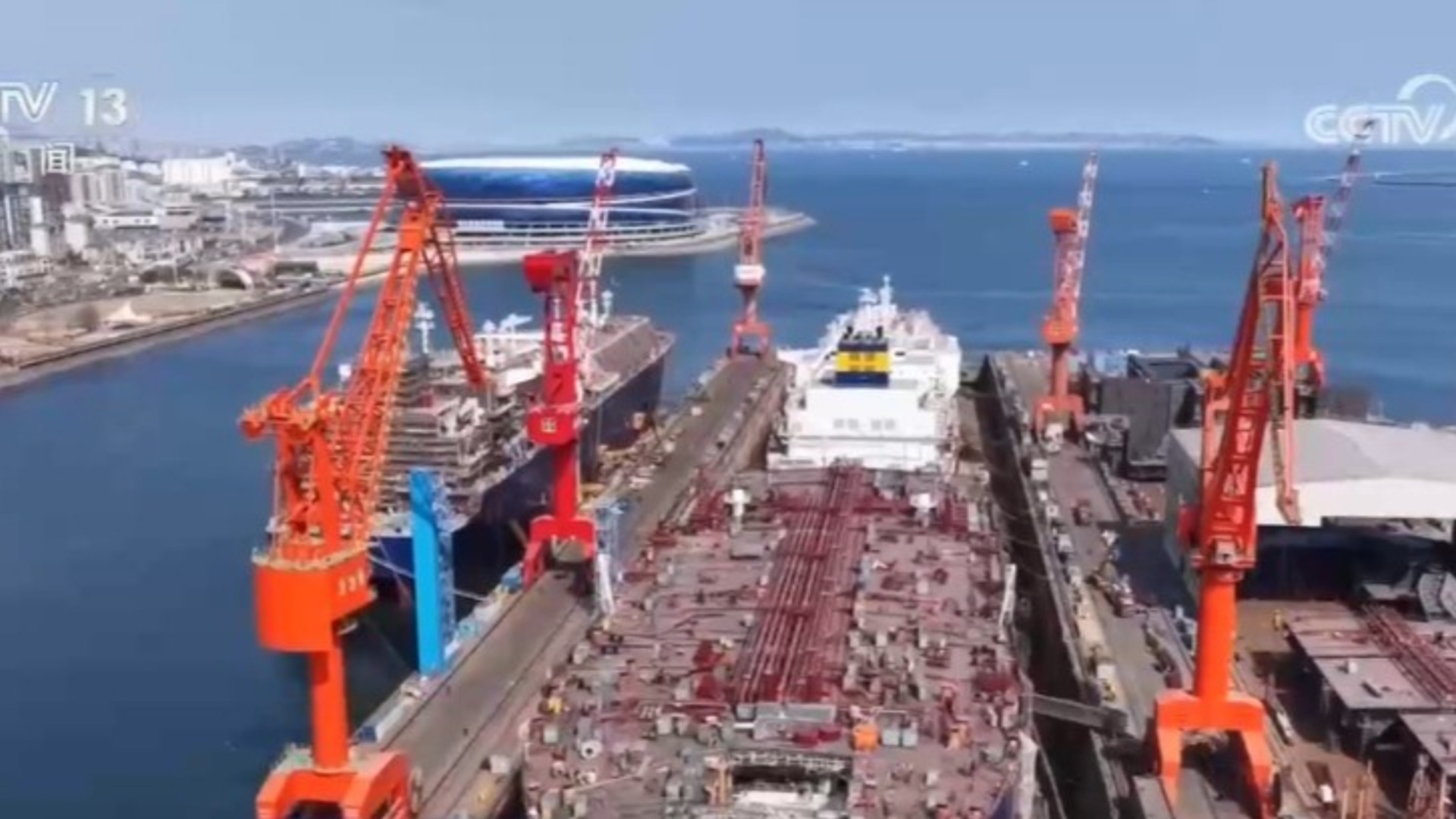 Shipbuilding
China Captures 82.3% of Global Ship Orders as Shipbuilding Indicators Reach New Highs
 Shipbuilding
Dajin Heavy Industry Lands Newbuilding Contracts for 7 Commercial Vessels
 Shipbuilding
26-Year-Old Car Carrier Reportedly Sold for $42 Million as MSC-Owned GCC Also Showed Interest
 Shipbuilding
China’s Shipyards Capture the Lion’s Share of a $132.6 Billion Newbuilding Boom
 Shipbuilding
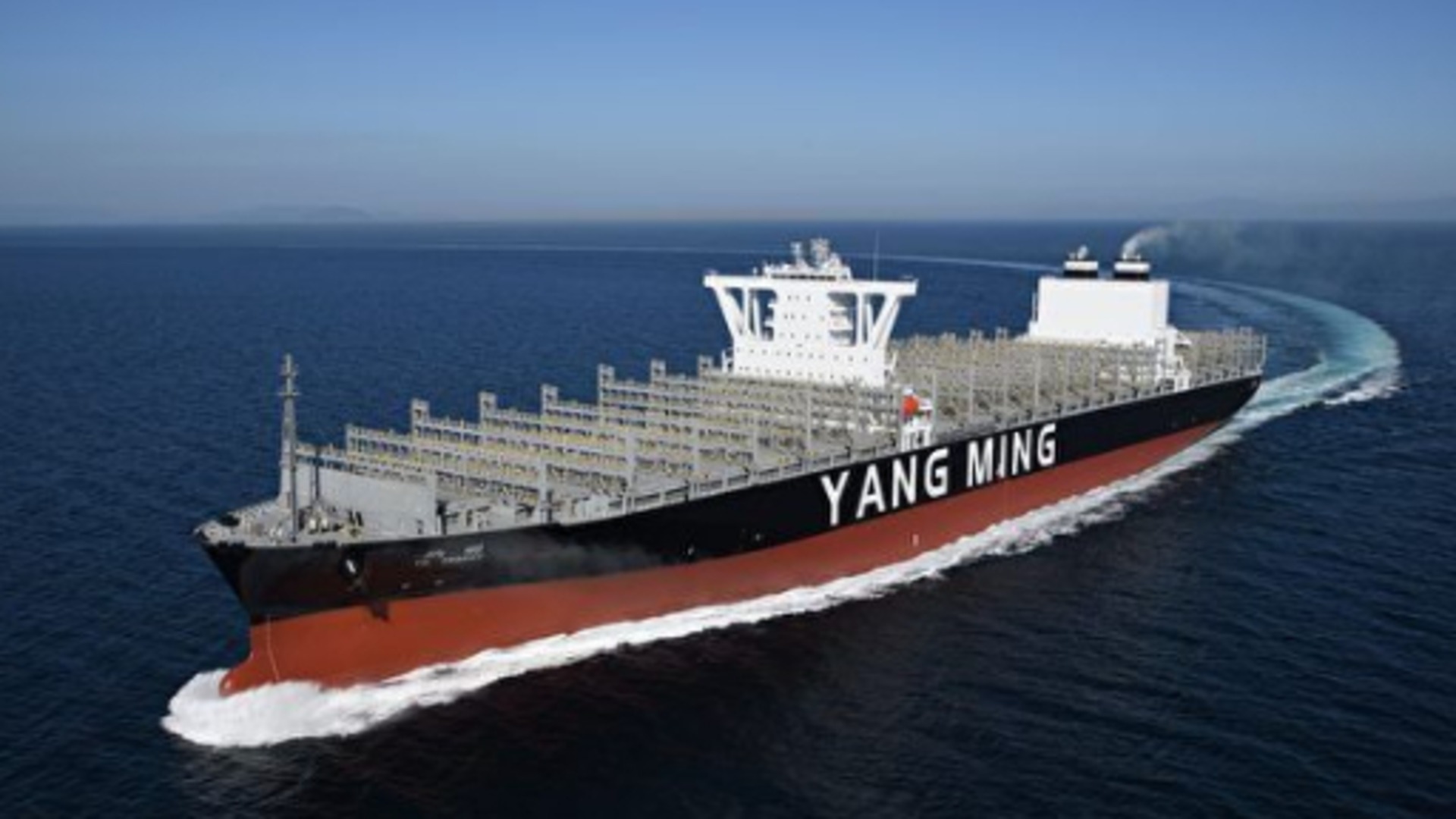
Yang Ming Marine Transport has confirmed an order for six 13,000-TEU LNG dual-fuel containerships at Hanwha Ocean, with a total contract value of between US$1.11 billion and US$1.224 billion.
 Shipbuilding
Greek Shipowner Orders 3+1 Newcastlemaxes at Dajin Heavy in US$309m Deal
 Shipbuilding
Wisdom Marine Cancels Plan for Two Japanese-Built Handysize Bulk Carriers
 Shipbuilding
China Merchants Nanjing Tanker Plans Four More MR Newbuildings as Its Fleet Renewal Pipeline Reaches 22 Vessels
 Shipbuilding