


Kawasaki Heavy Industries Teams Up with NVIDIA on Next-Generation Digital Shipyard
.
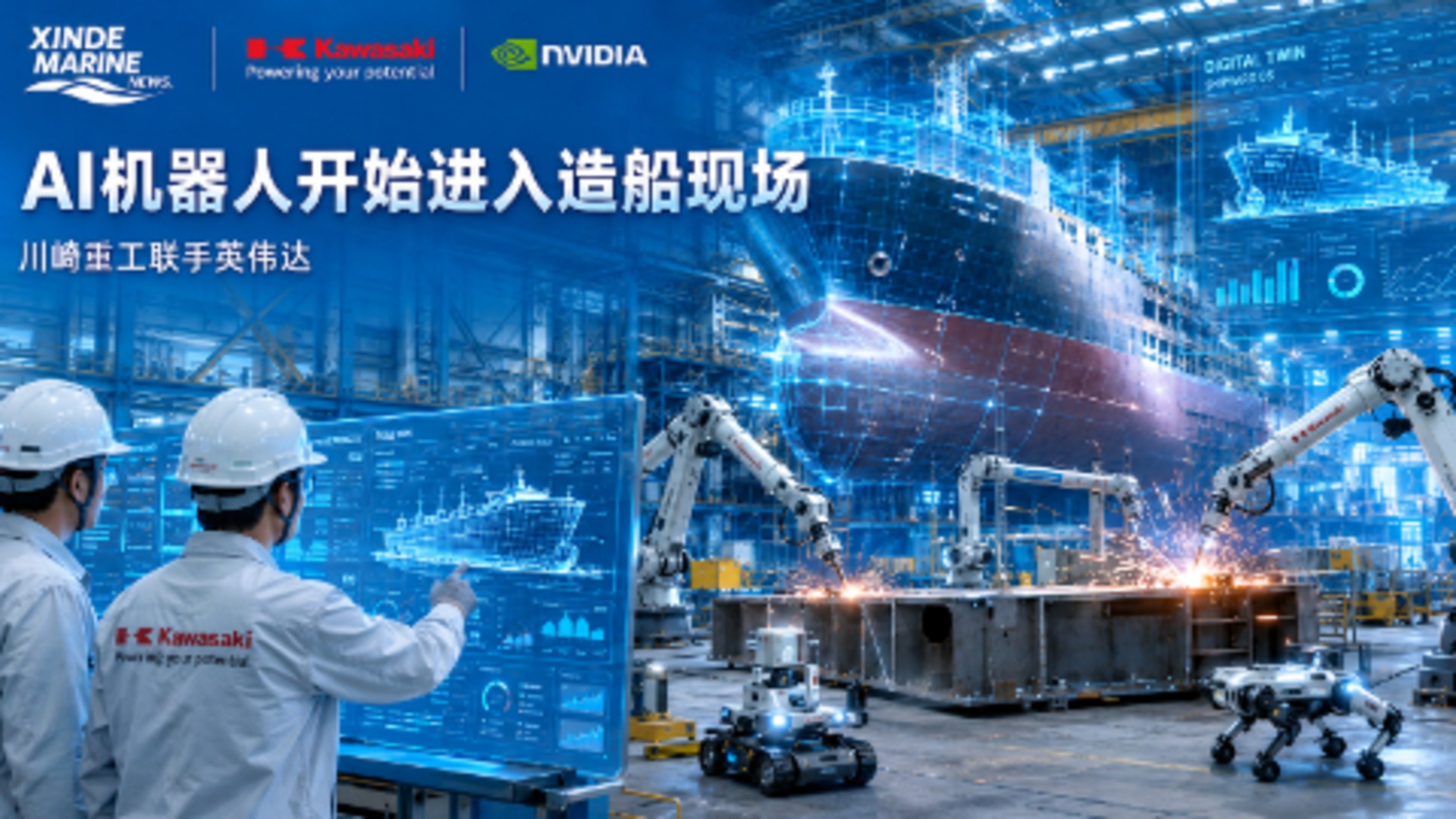

Kawasaki Heavy Industries recently announced a partnership with NVIDIA to develop a next-generation digital shipyard at its Sakaide Works in Kagawa Prefecture, Japan.
The project will apply physical artificial intelligence, digital twins and robotic simulation across commercial ship design, procurement, manufacturing and quality management. Kawasaki also plans to connect shipbuilding data with post-delivery operations, maintenance and retrofitting, gradually creating a digital system covering the vessel’s entire lifecycle.
Kawasaki will contribute its shipbuilding data, production know-how and robotics expertise. NVIDIA will provide technologies including Omniverse, Isaac, Cosmos, Metropolis and Jetson.
The two companies intend to train and verify robots in a virtual shipyard before deploying them in real production environments for welding, painting, inspection and material handling.
The project remains at the technical verification and phased implementation stage. Kawasaki will begin with the commercial ship production line at Sakaide Works, identify practical challenges and assess whether the technologies can later be extended to other large-scale manufacturing facilities.
The significance of the partnership extends beyond NVIDIA’s entry into shipbuilding. Kawasaki is attempting to connect digital twins, AI and robotics so that virtual models can directly support production and physical operations.
This suggests that digital shipyards are moving beyond production visualisation and towards autonomous operations and AI-supported decision-making.
Why do shipyards need physical AI?
Shipbuilding has always been one of the most difficult manufacturing industries to automate.
Automotive factories usually produce identical or similar products over long periods. Robotic arms can repeat the same movements at fixed workstations.
Ships are very different. They are large, highly customised products with long construction cycles. The production environment changes continuously.
A large vessel consists of numerous blocks, pipes, cables and equipment systems. Workers must operate on curved surfaces, at height, inside confined spaces and in semi-open environments. The structure under construction and the surrounding conditions may change from one day to the next.
Conventional welding robots generally require engineers to programme, position and recalibrate them in advance. When the vessel design, block geometry or weld location changes, the robot often needs to be reconfigured. This limits the large-scale use of robots in complex shipyard environments.
Kawasaki and NVIDIA aim to address this problem through digital-twin technology.
The shipyard can first recreate hull structures, equipment, workers, materials and robots in a virtual environment. The system can generate robot movement paths and check whether a machine might collide with the hull, scaffolding or other equipment.
Engineers can also test different working positions, construction sequences and operating conditions before deploying the robot in the physical shipyard.
Once the robot has completed virtual training, the corresponding control programme can be transferred to the real production site. Data generated during construction and inspection can then be fed back into the model to refine operating parameters and improve quality assessment.
Kawasaki hopes to establish a continuous cycle covering simulation, training, construction, inspection and feedback.
The company also plans to introduce agentic AI into design, procurement, manufacturing and quality management.
For example, an AI system could identify which materials, equipment and production tasks are affected by a design change. It could also support production scheduling based on the availability of docks, cranes, storage areas and workers.
If these capabilities prove reliable, the digital model would gradually evolve from a visualisation tool into part of the shipyard’s production and equipment-control system.
How far have Chinese shipyards progressed?
China’s shipbuilding industry began promoting digitalisation and intelligent manufacturing many years ago.
Chinese authorities have encouraged the adoption of fully three-dimensional digital design, intelligent production lines, manufacturing execution systems and closer integration between design and production.
Policies have also called for lower labour intensity and fewer workers in dirty, dangerous and physically demanding processes such as cutting, forming, welding and painting.
After years of investment, leading Chinese shipyards have established a broad range of automated production lines and digital platforms.
Shipyards under COSCO SHIPPING Heavy Industry have introduced welding robots, profile-processing robots, sub-assembly robots, intelligent pipe-processing lines and automated anti-corrosion equipment.
Nantong COSCO KHI has developed portable welding robots, while Dalian COSCO KHI has built an intelligent large-diameter pipe-processing line. Yangzhou COSCO SHIPPING Heavy Industry has also introduced robotic production lines for various hull components.
Dalian COSCO KHI was recognised as a national-level intelligent factory in 2025. The yard had previously been selected for several national intelligent-manufacturing pilot programmes.
Shanghai Waigaoqiao Shipbuilding launched the first version of its digital-twin shipyard platform in 2025.
The system can simulate the positioning of large blocks, lifting routes and the use of docks and berths. It can also digitally represent the status of workshops, storage areas, warehouses, equipment, logistics and personnel.
The yard plans to extend the platform further into supply-chain management, ship design and lifecycle services.
These examples show that China’s leading shipyards have already developed capabilities in digital design, intelligent production lines, digital twins, smart logistics and production scheduling.
China’s large orderbook also creates a valuable testing ground. Shipyards can continue collecting data and verifying new equipment while building large containerships, bulk carriers, tankers and gas carriers in series.
However, the level of digital maturity still varies considerably across the industry.
Some leading yards are developing shipyard-wide digital platforms, while others remain focused on isolated equipment upgrades. Data interfaces between design, production, warehouse and quality-management systems are not always fully integrated.
China therefore already has a large number of digital tools and practical applications. The next stage will focus increasingly on system integration.
Shipyards need to ensure that design models, bills of materials, production processes, construction data and quality records can flow continuously around the same vessel project.
Will robots replace shipyard workers?
Kawasaki’s project initially targets welding, painting, inspection and material handling. These are also among the most physically demanding and hazardous activities in shipbuilding.
Painting workers may be exposed to dust, solvents and volatile substances. Welders frequently operate in hot environments, at height or inside confined spaces. Material handling and heavy structural work can also involve crushing, falling-object and collision risks.
Robots can reduce the time workers spend in these environments.
They can take over some dirty, dangerous and repetitive tasks, reducing exposure to hazardous conditions and lowering the risk of occupational injuries.
The number of workers required for some processes may decline.
A welding robot can continuously complete standardised welds. Automated spraying systems can reduce the need for manual painting. Computer-vision systems, laser scanners and unmanned inspection devices can also replace some manual measurement and routine inspection work.
However, fully unmanned shipyards are unlikely in the near term.
Shipbuilding involves frequent adjustments and many non-standard tasks. Hull blocks may contain dimensional deviations. Equipment installation can be constrained by limited space. Production sequences can also change due to material availability and conditions at the site.
Robots are effective when tasks are clearly defined, but experienced workers are still needed for abnormal situations, complex assembly and on-site coordination.
Japan’s shipbuilding industry is also facing a shrinking skilled workforce and an ageing population. One of Kawasaki’s main objectives is to offset labour shortages and expand production capacity.
In the initial stage, robots are therefore more likely to fill difficult-to-recruit positions and move workers away from dangerous or repetitive tasks than to replace the workforce entirely.
The content of many jobs will nevertheless change.
Welders may spend less time carrying out repetitive manual welding and more time setting robot parameters, checking movement paths and handling defective welds.
Painting workers may shift towards task planning, equipment maintenance and local repair work. Inspectors will increasingly use three-dimensional models, machine vision and laser-scanning data to verify construction quality.
Shipyards will still need the experience of skilled workers.
Companies must convert practical knowledge into welding parameters, production rules, quality standards and abnormal-situation procedures that can be understood and applied by robots and AI systems.
This will raise the skills required for many positions.
Future shipyards will need more employees who understand shipbuilding processes while also being able to operate robots, maintain automated equipment and work with digital systems.
Some basic and repetitive jobs may decline, while demand will increase for robot technicians, automation engineers, digital-process specialists and quality-data analysts.
Older workers and employees with limited digital skills may face greater pressure. If shipyards purchase new equipment without providing adequate training, some skilled workers may struggle to move into new roles.
There is also a risk that valuable production knowledge could be lost during the transition.
Digitalisation will introduce new safety and management challenges as well.
When robots operate alongside people, shipyards must control the risks of collision, unexpected start-up, sensor failure and accidental movement during maintenance.
They will need clearly defined human-machine operating zones, shutdown procedures and fault-handling responsibilities.
Digital systems can also record workers’ locations, working hours, task completion and operating behaviour.
Such data can improve safety and production coordination, but it may also make workers feel that they are under constant surveillance. Companies will need clear rules governing how the data is used and should avoid turning safety systems into simple tools for monitoring and performance control.
The impact of digital shipyards on workers will therefore extend well beyond headcount.
It will reshape skills, job responsibilities, management practices and safety systems.
What can Chinese shipyards learn from the Kawasaki project?
The most relevant feature of Kawasaki’s approach is the attempt to place design data, digital twins, robotic training and physical construction within one continuous system.
Chinese shipyards have already installed a large number of robots and intelligent machines. The next step is to improve their adaptability and interoperability.
Shipyards could establish common robotic platforms that allow different machines to share three-dimensional models, positioning systems, visual-recognition tools and task-planning capabilities.
Virtual simulation also needs to become a more widely available shipyard capability.
Before a robot enters a real block or compartment, engineers should be able to generate movement paths, check for collisions and verify the production process in a digital environment.
This could reduce on-site commissioning time and allow robots to adapt more quickly to different vessel designs.
Data governance will be equally important.
Shipyards need to integrate the bill of materials, bill of process, three-dimensional model, material status, construction records and inspection results.
When a design changes, purchasing, production and inspection tasks should be updated accordingly. Problems identified at the production site should also be fed back into design and process planning.
Kawasaki also intends to extend construction data into vessel operation and maintenance.
Chinese shipyards could further develop digital vessel delivery. Equipment parameters, installation records, commissioning results and maintenance requirements could be transferred to the owner together with the vessel and linked with spare-parts management, maintenance planning and future retrofits.
Worker training must advance at the same pace as equipment investment.
Shipyards should involve welders, painters and inspectors in robot testing and improvement. Front-line workers understand practical production challenges and can identify issues that may not be fully represented in a virtual model.
Companies should also provide existing employees with training in robot operation, digital processes and equipment maintenance, while creating realistic transition paths for older workers.
Next-generation shipyards will still depend on people. Their roles will gradually shift from carrying out large volumes of repetitive manual work towards controlling equipment, supervising processes, assessing quality and managing abnormal situations.
The Kawasaki-NVIDIA project remains at an early stage. China’s leading shipyards already have a strong foundation in intelligent manufacturing.
Future differences will increasingly depend on whether data can flow across systems, whether robots can be deployed efficiently in changing environments, whether AI can operate reliably on the production floor and whether workers can successfully make the transition to new roles.
As physical AI enters shipbuilding, competition between shipyards will become less focused on individual machines and more dependent on the overall strength of their production systems, workforce and digital capabilities.

READ MORE
 Shipbuilding
26-Year-Old Car Carrier Reportedly Sold for $42 Million as MSC-Owned GCC Also Showed Interest
 Shipbuilding
Bahri Line Orders LNG Dual-Fuel RoCon Vessels from China Merchants Jinling Shipyard
 Shipbuilding
China Captures 82.3% of Global Ship Orders as Shipbuilding Indicators Reach New Highs
 Shipbuilding
J.P. Morgan’s $3bn Shipping Bet: Why Wall Street Is Rushing to Secure Maritime Assets
 Shipbuilding
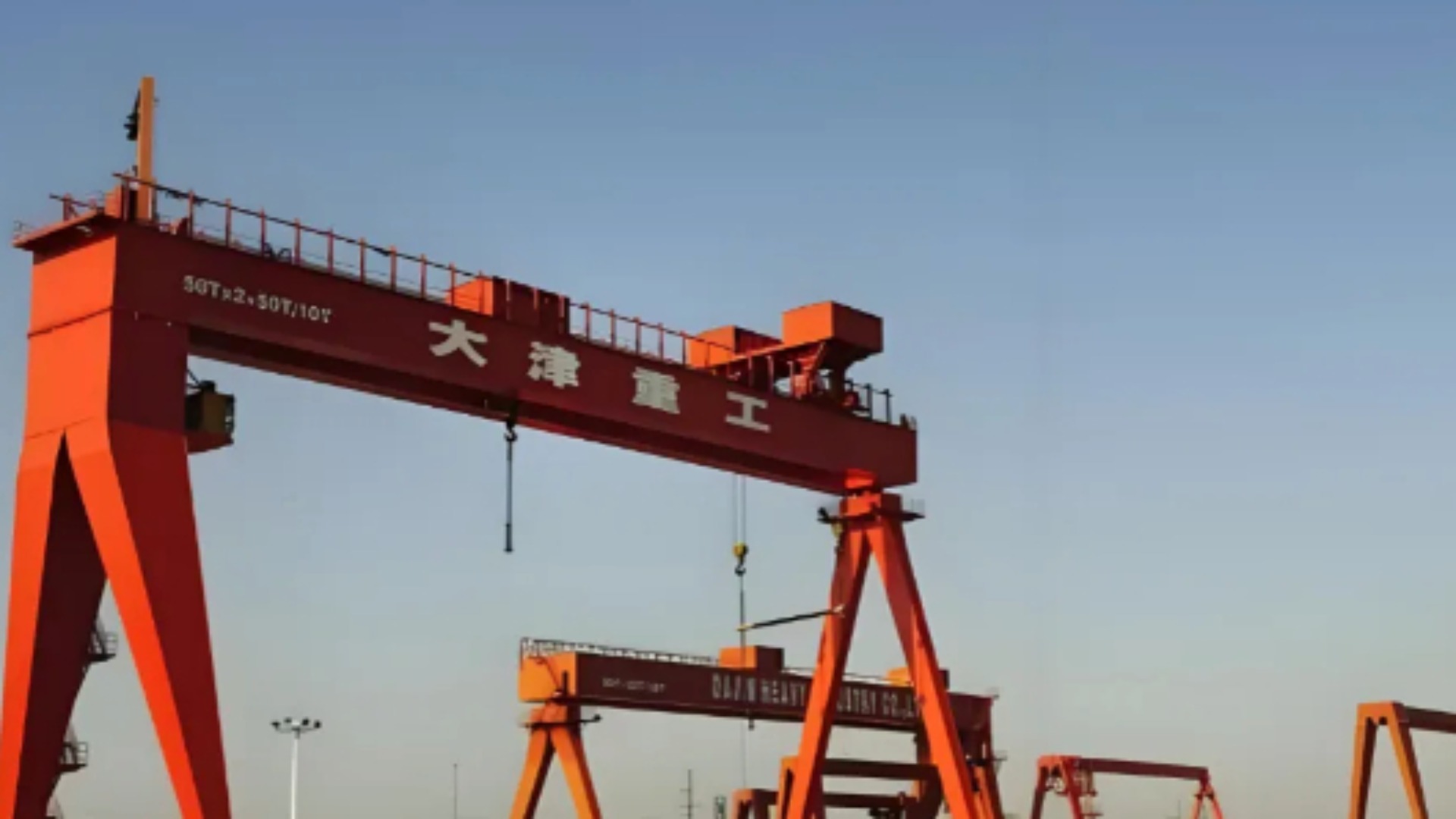
Dajin Heavy Industry Lands Newbuilding Contracts for 7 Commercial Vessels
 Shipbuilding
China’s Shipyards Capture the Lion’s Share of a $132.6 Billion Newbuilding Boom
 Shipbuilding
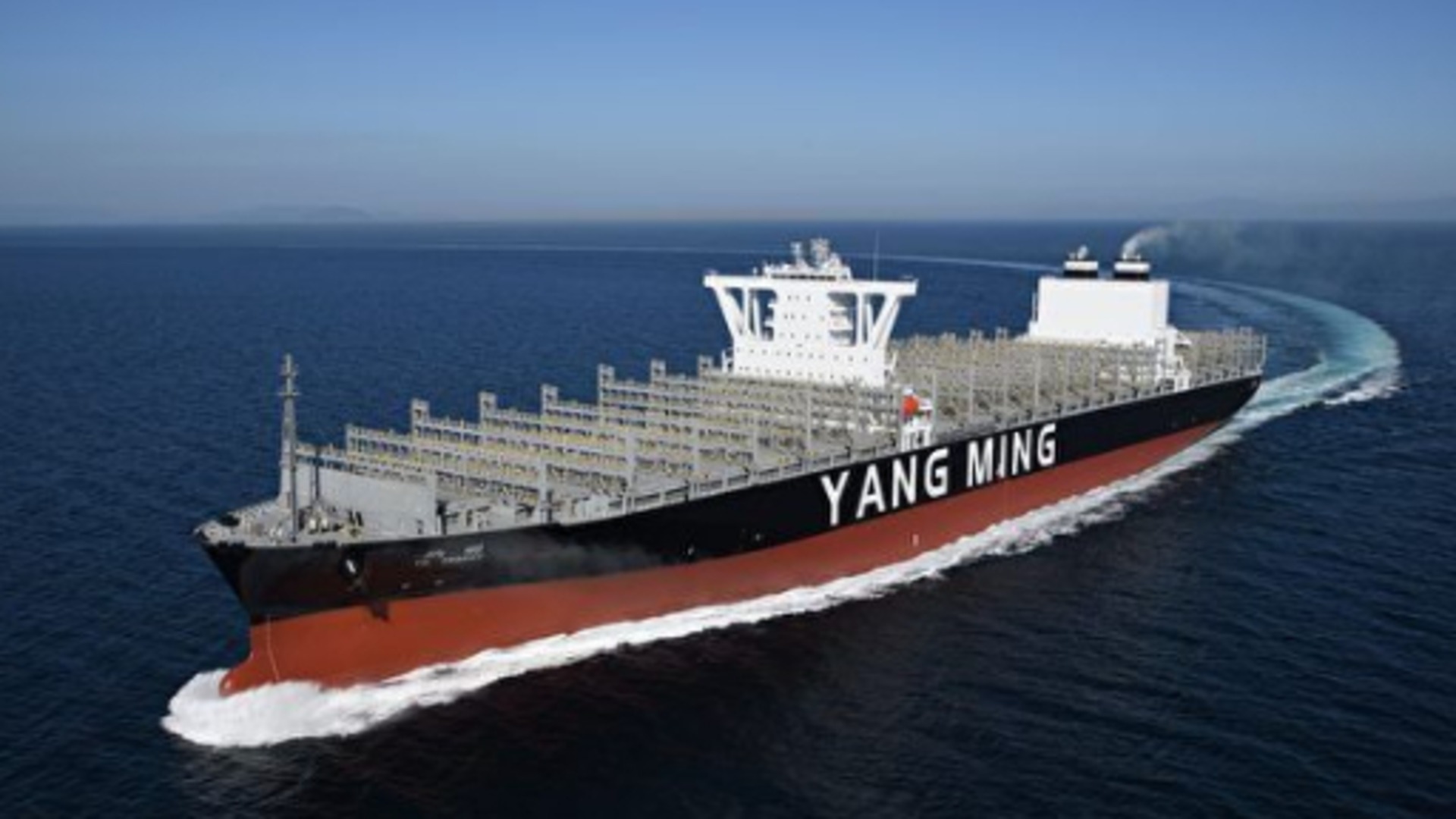
Yang Ming Marine Transport has confirmed an order for six 13,000-TEU LNG dual-fuel containerships at Hanwha Ocean, with a total contract value of between US$1.11 billion and US$1.224 billion.
 Shipbuilding
Greek Shipowner Orders 3+1 Newcastlemaxes at Dajin Heavy in US$309m Deal
 Shipbuilding
Wisdom Marine Cancels Plan for Two Japanese-Built Handysize Bulk Carriers
 Shipbuilding