


3 Dynacom-Linked Tankers Hit in Black Sea and Strait of Hormuz as Oil Shipping Becomes a Frontline Asset
.
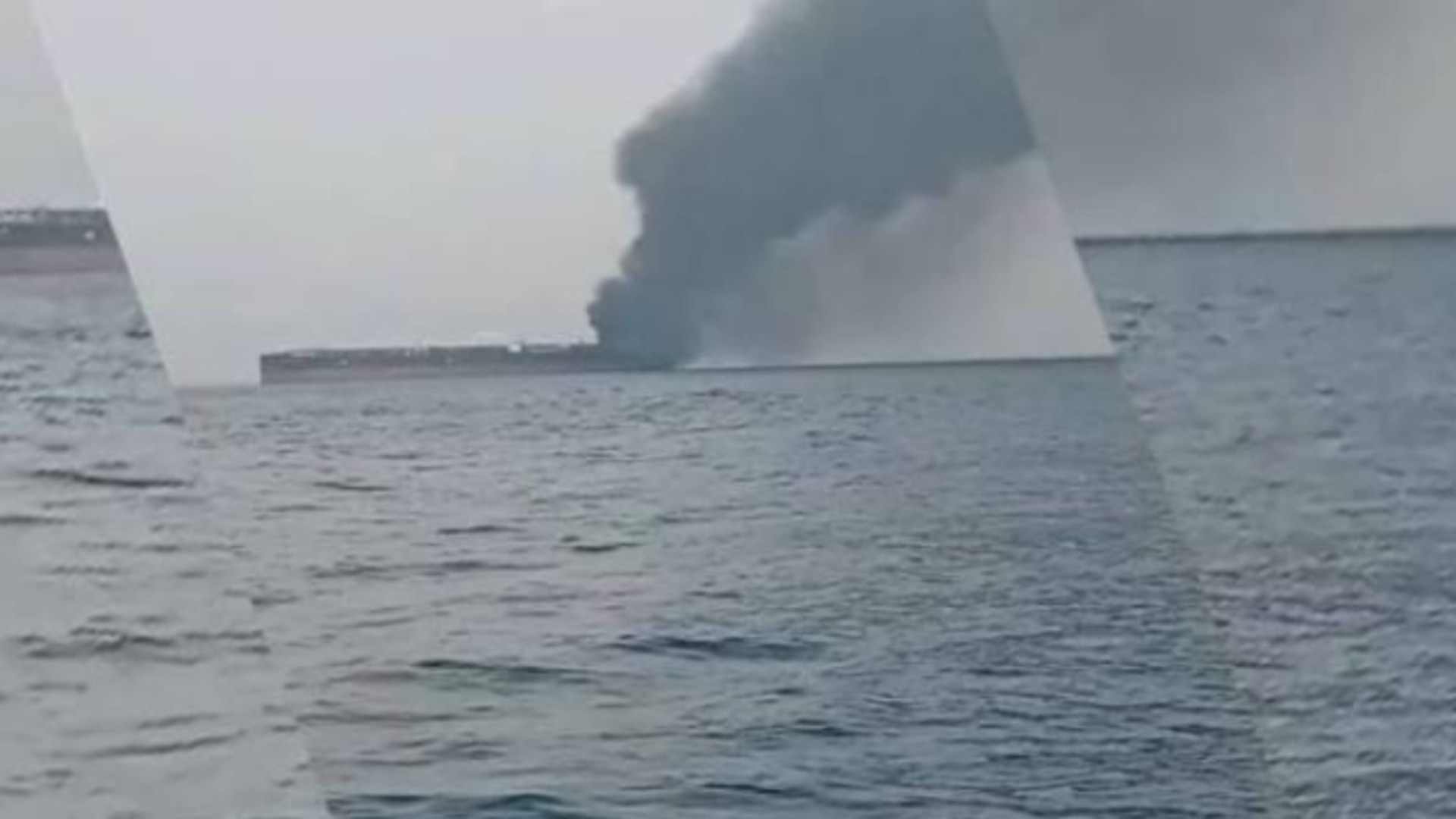

Three tankers linked to Dynacom Tankers Management have been attacked within 48 hours in two of the world’s most sensitive energy corridors, underscoring how oil shipping is increasingly exposed to overlapping geopolitical, military and sanctions risks.
Greek tanker operator Dynacom Tankers Management has found itself at the centre of a rapidly deteriorating maritime security picture after three of its managed or associated vessels were hit in separate attacks in the Black Sea and near the Strait of Hormuz.
In the Black Sea, the crude oil tanker ASIA, managed by Dynacom, was struck by drones while loading at the Caspian Pipeline Consortium’s offshore terminal near Novorossiysk. In the Middle East, the product tanker KAVOMALEAS and the VLCC ACHELOOS, both operated or managed by Dynacom, were reportedly hit by unknown projectiles near the Strait of Hormuz almost at the same time.
The incidents occurred within roughly two days. Together, they show how tanker companies are no longer exposed to isolated regional threats, but to a wider and more interconnected risk environment in which oil transport sits directly at the intersection of war, sanctions, energy security and maritime chokepoint control.
ASIA hit while loading at CPC terminal
The first incident took place in the Black Sea on July 19.
The Caspian Pipeline Consortium confirmed that two tankers, ASIA and NISSOS IOS, came under drone attack during loading operations at its marine terminal near Novorossiysk. According to CPC, the two tankers were alongside single point moorings SPM-1 and SPM-2 when the attack occurred.
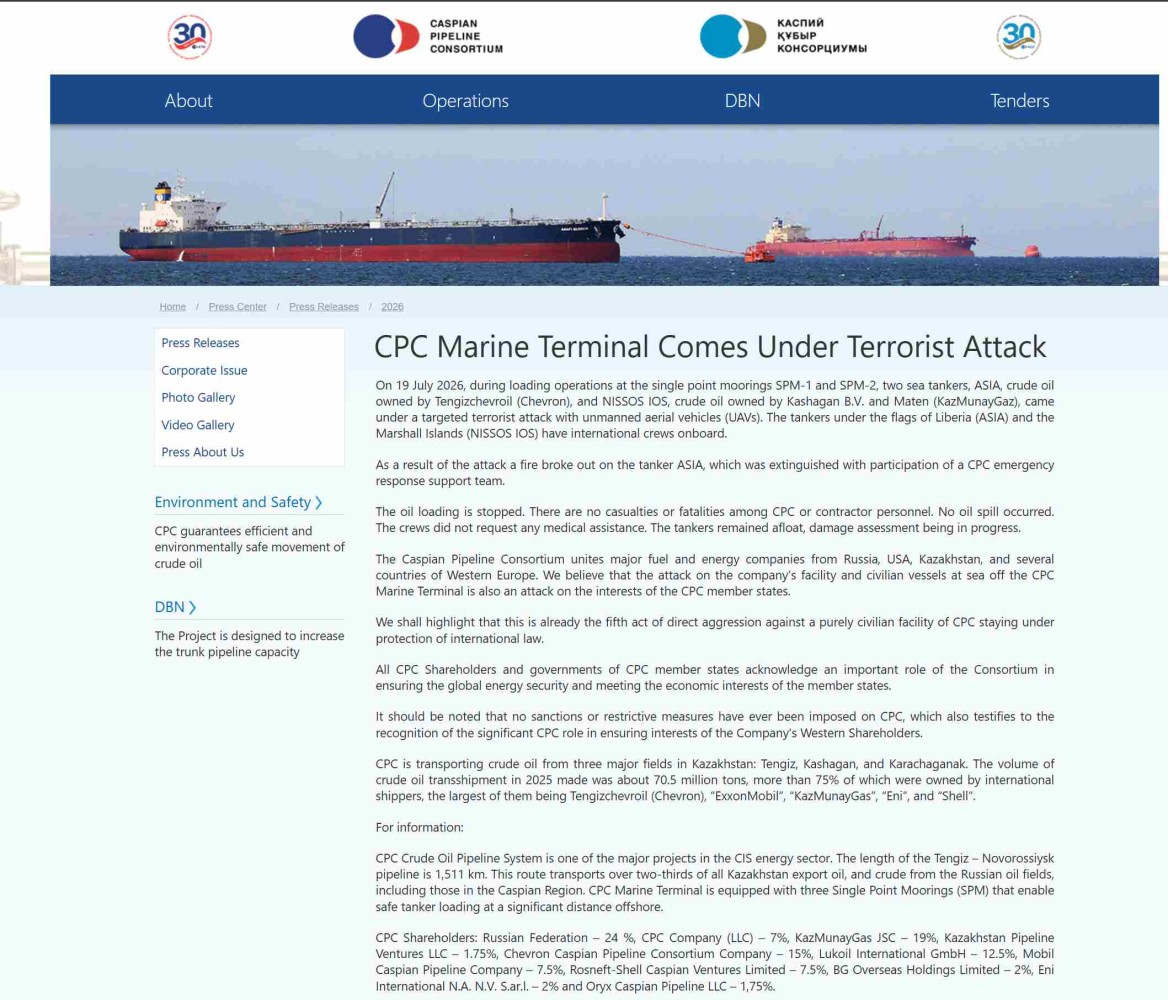
CPC said a fire broke out on board ASIA, but it was extinguished with the support of the terminal’s emergency response team. Loading operations were suspended, but CPC reported no casualties among its personnel or contractors, no request for medical assistance from the crews and no oil spill. The tankers remained afloat while damage assessment work continued.
Ship database information reviewed by Xinde Marine News shows that ASIA is a 163,111 dwt crude oil tanker, built in 2022 by New Times Shipbuilding in China. The vessel is registered under the Liberian flag. Its beneficial owner is listed as ICBC Financial Leasing Co Ltd, while Dynacom Tankers Management is listed as shipmanager, operator and technical manager.
CPC’s own statement described ASIA as carrying crude owned by Tengizchevroil, which is linked to Chevron. This point is important because CPC is not merely a Russian export facility. The pipeline system moves crude from major Kazakh fields, including Tengiz, Kashagan and Karachaganak, to the Black Sea. CPC said its 2025 crude oil shipment volume amounted to about 70.5 million tonnes, with more than 75% of volumes owned by international shippers, including Tengizchevroil, ExxonMobil, KazMunayGas, Eni and Shell.
That makes the attack politically and commercially sensitive. Although the terminal is located on Russia’s Black Sea coast, a prolonged disruption would not only affect Russian-related exports, but also Kazakhstan’s energy flows and the interests of major Western oil companies.
NISSOS IOS and NELSA show how complex the CPC risk picture has become
The second tanker struck in the July 19 attack was NISSOS IOS, a 157,447 dwt crude oil tanker built in 2021 and registered in the Marshall Islands.
Unlike ASIA, NISSOS IOS should not be described as a Dynacom vessel. Ship database information shows that its beneficial owner, shipmanager, operator, DOC company and technical manager are all listed as Kyklades Maritime Corp. CPC said the crude on board was owned by Kashagan B.V. and Maten of KazMunayGas.
Shortly after CPC resumed operations, another tanker, NELSA, was also reportedly hit on July 20. The 156,760 dwt crude oil tanker, built in 2010 and registered in Cameroon, was reportedly struck between the superstructure and the engine room. The fire was more serious, and 22 crewmembers were evacuated onto CPC tugboats.
Ship database information shows NELSA as operated by Nurlis Stormcore LLC, with its beneficial owner listed as unknown. The vessel has been associated with Russian oil trading and was sanctioned by the UK in 2024 and the EU in 2025.
This sequence underlines the complexity of the CPC terminal’s operating environment. In the same offshore loading system, there may be cargoes linked to Western oil majors, Kazakh exporters and high-risk or sanctioned tanker networks. For shipowners, charterers, insurers and service providers, the Black Sea energy chain is being reshaped simultaneously by war, sanctions enforcement and drone warfare.
KAVOMALEAS hit twice near the Strait of Hormuz
The second front opened near the Strait of Hormuz.
On July 20, UKMTO confirmed that a tanker north-west of Kumzar, Oman, had been struck by an unknown projectile. The vessel was later reported to be abandoned and adrift, with the crew rescued by a tug.
The vessel was identified by the press and the operator as KAVOMALEAS, a Dynacom-operated product tanker.
Ship database information shows KAVOMALEAS as a 74,978 dwt products tanker, built in 2025 by Jiangsu Newyangzi Shipbuilding. The vessel is registered in Malta, with Dynacom Tankers Management listed as beneficial owner, shipmanager, operator and technical manager. The DOC company and registered owner are listed as Kavomaleas Ships Ltd.
According to reports citing Dynacom, KAVOMALEAS was hit twice. The vessel sustained an engine-room fire, and its fixed firefighting system was unable to bring the fire fully under control. The crew abandoned ship and was rescued safely. As of Monday evening, the tanker was reportedly still burning and adrift.
This incident is especially significant because KAVOMALEAS was not attacked while idle in port or at an offshore terminal. It was hit during navigation near one of the world’s most important energy chokepoints. The risk has therefore moved beyond port facilities and loading infrastructure to ships actively transiting or approaching the Strait of Hormuz.
ACHELOOS, a newly delivered VLCC from Hengli, also reportedly struck
Even more striking is that KAVOMALEAS was not the only Dynacom-linked vessel reportedly hit near Hormuz.
Maritime security firm Marisks reported that the Dynacom-managed VLCC ACHELOOS was struck at around the same time. Greek media also reported that another Dynacom-managed supertanker was hit while transiting the waterway, with the steering gear room area reportedly affected.
Ship database information shows ACHELOOS as a 306,000 dwt crude oil tanker, built in 2026 by Hengli Shipbuilding Dalian and registered in Liberia. The vessel’s beneficial owner is listed as Oceanus Ships Ltd, while Dynacom Tankers Management is listed as shipmanager, operator and technical manager.
The vessel is particularly noteworthy because it is a new VLCC recently delivered by Hengli Heavy Industry. On June 5, Hengli delivered two 306,000 dwt VLCCs to Dynacom, at least three months ahead of their contractual delivery schedule. The two vessels were named EVROS and ACHELOOS. The ship type has an overall length of 332.8 metres, a beam of 60 metres, a depth of 30 metres and a service speed of 14.5 knots.
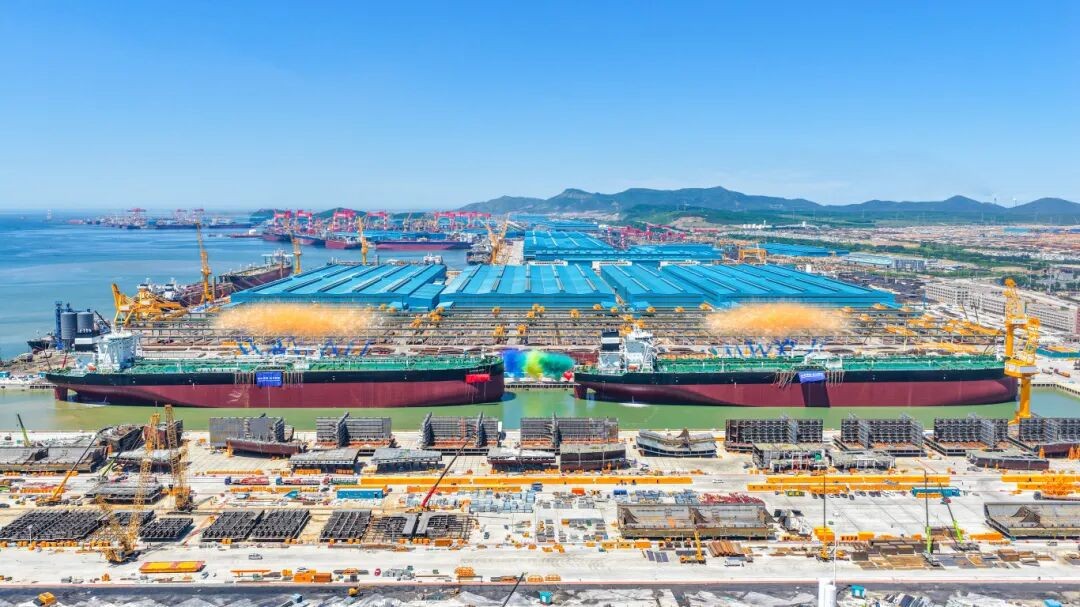
Public details about the damage to ACHELOOS remain limited. Current reports indicate that the crew was safe and that the vessel moved to an anchorage for assessment. But the fact that a VLCC was reportedly hit near the Strait of Hormuz is highly significant for the tanker market.
VLCCs are the core workhorses of Gulf crude exports. With large crude and LNG carriers already largely absent from Hormuz transits in recent days, any confirmed attack on a VLCC will further harden owners’ reluctance to send modern tonnage into the area.
Why Dynacom is exposed at the centre of this crisis
Dynacom is one of the major names in global tanker shipping, with a fleet spanning crude oil tankers and product tankers. The company has long been known as a commercially bold operator, willing to serve difficult trades and volatile markets where others may be more cautious.
That operating profile helps explain why Dynacom-linked ships are appearing in high-risk areas such as the Black Sea and the Strait of Hormuz. These are not marginal trades. They are high-value energy corridors where cargo demand remains strong, freight premiums can rise sharply, and only certain owners are prepared to accept the risk.
But the three attacks also show that Dynacom was not hit repeatedly in one single theatre. It was exposed simultaneously in two very different security environments.
In the Black Sea, the risk stems from the Russia-Ukraine war and Ukraine’s campaign against Russian energy infrastructure, port assets and maritime logistics. The CPC terminal is especially sensitive because it carries large volumes of Kazakh crude and involves Western energy companies.
Near Hormuz, the risk is driven by the US-Iran conflict and the struggle over control of the world’s most important oil and gas chokepoint. Tankers can become targets not only because of their cargo, but also because of their route, timing, ownership, chartering chain or perceived political alignment.
For Dynacom, the result is a rare concentration of exposure: one managed crude tanker hit while loading in the Black Sea, one product tanker badly damaged near Hormuz, and one newly delivered VLCC reportedly struck in the same area.
Market impact: risk premium is no longer just about freight
For the tanker market, the immediate consequences are clear.
War risk premiums are likely to rise. Crew bonuses and danger pay will become more difficult and more expensive to negotiate. Owners willing to trade into high-risk areas will demand higher compensation, while more conservative owners may simply refuse the voyages.
In the Black Sea, further attacks on CPC, Novorossiysk or related export infrastructure would affect Aframax, Suezmax and product tanker deployment. In the Middle East Gulf, reduced willingness to enter Hormuz would affect VLCCs, LR2s, LR1s and LNG carriers, directly constraining the ability of Gulf producers to move crude, products and gas to global markets.
But the larger point is that the traditional commercial model for high-risk voyages is becoming less stable.
In the past, owners could often price the risk through war insurance, freight premiums and additional contractual protections. Today, the risk environment is more layered. Missiles, drones, sanctions, port infrastructure damage, crew refusal, naval blockades and environmental liability can all converge on the same voyage.
That means risk is no longer simply a cost item. It can become an operational stop sign.
Tankers are becoming frontline assets
The attacks on ASIA, KAVOMALEAS and ACHELOOS point to a broader change in shipping.
Tankers have traditionally been viewed as carriers of energy and participants in freight, asset and commodity cycles. Increasingly, they are also becoming frontline assets in geopolitical conflict.
In the Black Sea, a tanker can be targeted because it is part of an energy export system. Near Hormuz, a tanker can be attacked because it is moving through a contested chokepoint. In the sanctions environment, the vessel, owner, manager, captain and crew can all become part of a wider enforcement and political contest.
Dynacom’s experience over the past 48 hours brings that shift into sharp focus.
This is not only a story about one Greek tanker operator, nor only about three damaged ships. It is a warning to the wider industry that the world’s most important energy routes are becoming more militarised, more politicised and more difficult to price.
For tanker owners, the question is no longer only whether the freight rate is high enough.
The question is whether the voyage can still be safely performed at all.

READ MORE
 Safety
Houthis Declare Maritime Blockade on Saudi Arabia: What If Hormuz and Bab el-Mandeb Both Become Unusable?
 Safety
Crew Kidnapped, US$500,000 Ransom Paid: The Global Maritime Kidnap-for-Ransom Map Is Being Redrawn
 Safety
Gabon Takes Back Control of Ship Registry After Shadow Fleet Operator Loses Mandate
 Safety
After Spending Billions on Tankers, Sinokor Offers Seafarers Six Months’ Pay for One Hormuz Voyage
 Safety
28,461 DWT Bulk Carrier Runs Aground in Marmara Sea
 Safety
India Bans Indian Seafarers From Strait of Hormuz Voyages
 Safety
Aged Bulker breaks in Two, Grounds in North of Strait of Hormuz
 Safety
MSC Containership Hydrofluoric Acid Leak Triggers Mass Evacuation at Antwerp; Around 130 Sent to Hospital
 Safety
2026 Cargo-Securing CIC: Shipowners and Seafarers Urged to Prepare for Closer PSC Scrutiny
 Safety