


2026 Cargo-Securing CIC: Shipowners and Seafarers Urged to Prepare for Closer PSC Scrutiny
Ships carrying containers and other cargo transport units may face detailed checks covering cargo plans, container weights, lashing equipment, bridge visibility and heavy-weather procedures under the 2026 Concentrated Inspection Campaign on cargo securing. Deficiencies could result in cargo operations being stopped—and, in serious cases, detention.
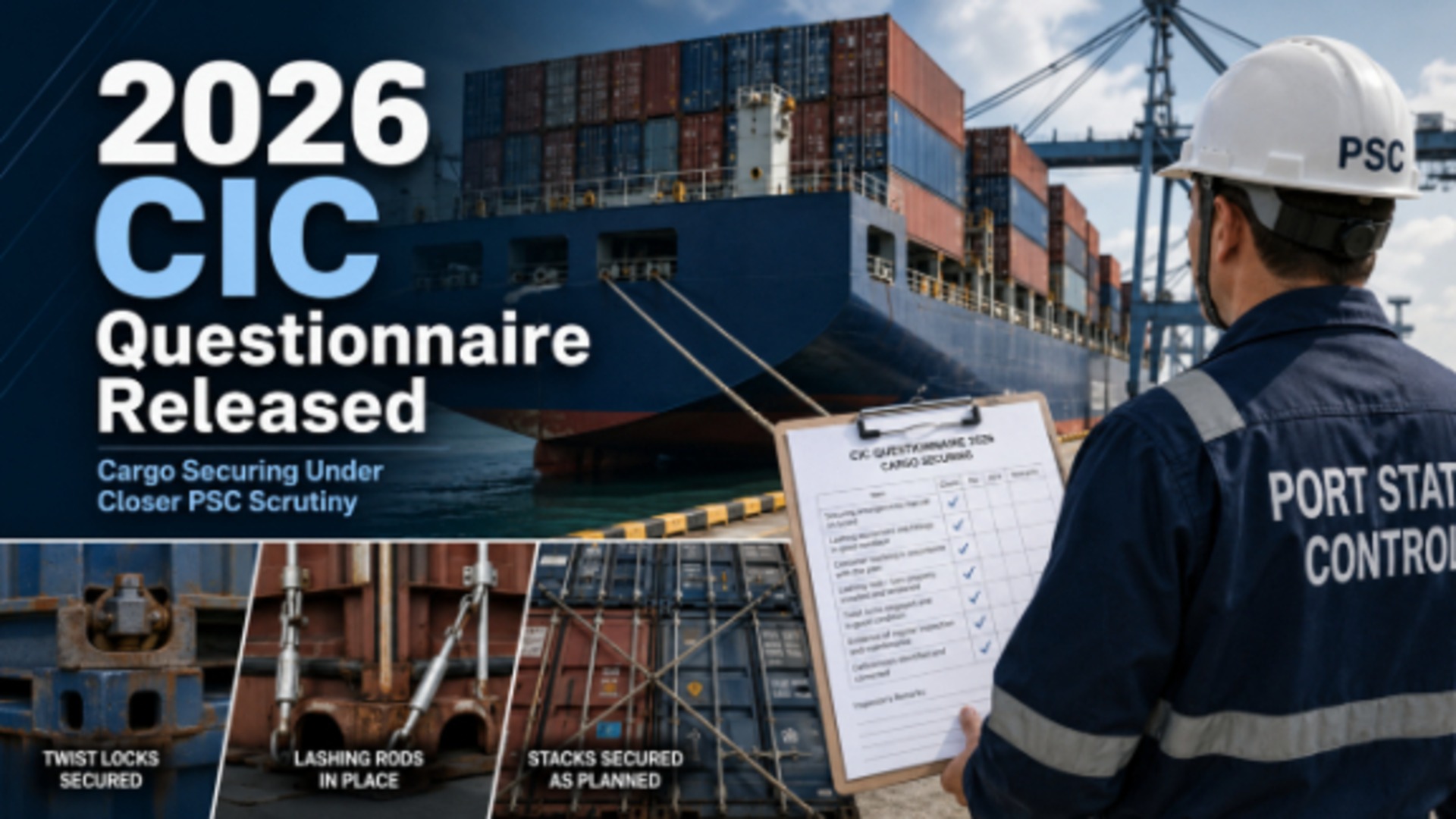

Shipowners, managers, masters and deck officers are being urged to review their cargo-securing arrangements as port state control authorities prepare to place increased attention on the loading, stowage and securing of containers and other cargo units.
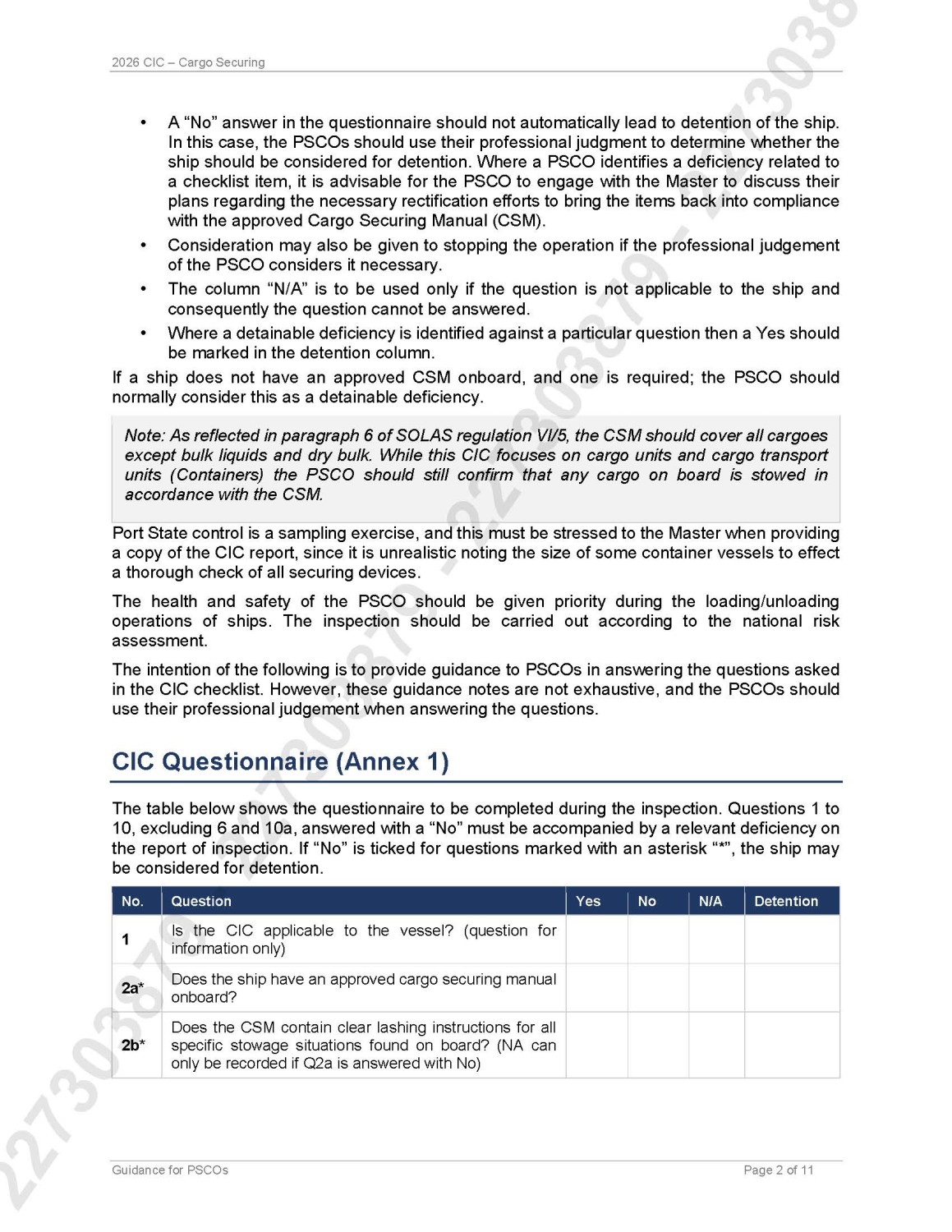
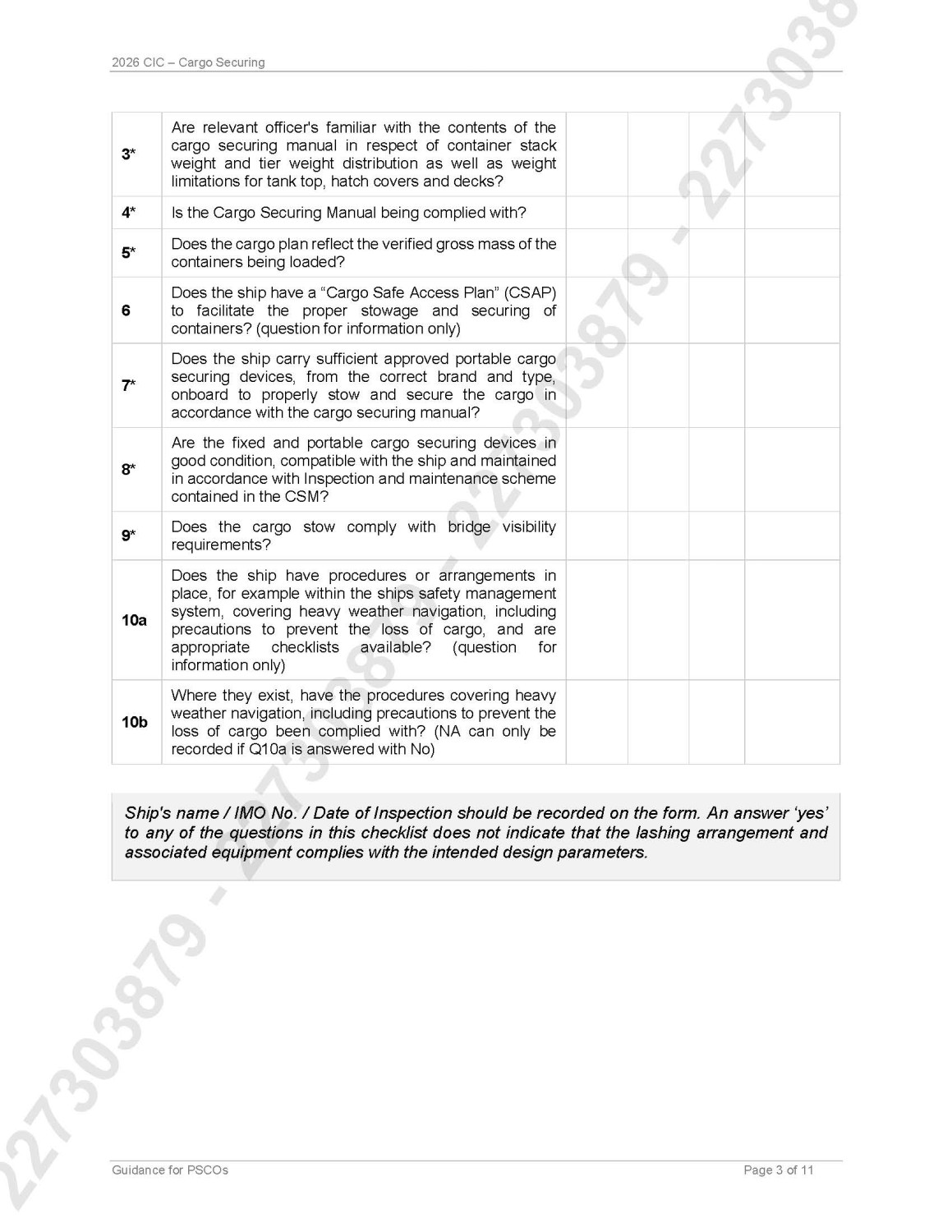
The guidance issued for the 2026 Concentrated Inspection Campaign, or CIC, on Cargo Securing sets out a detailed inspection questionnaire for Port State Control Officers. The campaign is intended to assess compliance with existing SOLAS requirements and collect further information on practices that may have contributed to container losses at sea during the past 15 years.
The campaign applies to ships required to carry an approved Cargo Securing Manual and which are carrying, or intending to carry, cargo units or cargo transport units. Although the campaign has a strong focus on containers, inspectors may also confirm that other applicable cargoes are being stowed and secured in accordance with the vessel’s approved manual.
Missing or inadequate Cargo Securing Manuals could lead to detention
One of the first matters inspectors will examine is whether the vessel carries an approved Cargo Securing Manual, or CSM.
Where a ship is required to carry a CSM but does not have an approved copy onboard, the guidance states that the deficiency should normally be considered potentially detainable.
Inspectors will also examine whether the manual provides appropriate instructions for the sizes and types of cargo carried onboard, including high-cube containers and units with abnormal dimensions.
However, the guidance recognises that a CSM may not contain an exact example for every loading situation. The absence of a one-to-one illustration of a particular stowage arrangement does not automatically constitute a deficiency. The central requirement remains that the actual loading and securing arrangement must comply with the approved limitations and principles contained in the manual.
Ship operators should therefore verify that the latest approved CSM is readily available, properly controlled and consistent with the vessel’s present cargo arrangements, securing equipment and operational profile.
Officers must demonstrate practical familiarity—not merely produce documents
The CIC will not be limited to a documentary review.
Relevant officers may be asked to demonstrate their understanding of container stack weights, tier-weight distribution, maximum stack heights and structural weight limits applicable to tank tops, hatch covers and decks.
The guidance highlights cases in which high-cube containers increased the overall height and windage of a stack even where its total weight remained within the nominal limit. Such arrangements can increase wind-heeling forces and expose the vessel and securing system to loads not adequately considered in the stowage plan.
Masters, chief officers and other personnel involved in cargo operations should be prepared to explain:
applicable stack and tier-weight limitations;
approved container-height restrictions;
the permitted sequence of heavy and light containers within a stack;
deck, hatch-cover and tank-top loading limits; and
the required lashing configuration for the planned stow.
A loading computer should not be treated as an automatic substitute for the approved CSM. The guidance specifically notes that loading computers are primarily used for stability calculations. A lashing module may only be relied upon where it has received appropriate approval, while the approved CSM remains the governing statutory document.
Actual compliance will be checked
Port State Control Officers may compare the cargo plan, the physical stow and the proposed lashing arrangement against the approved manual.
Inspectors may check whether stack-weight limits have been exceeded, whether individual container weights follow the permitted vertical sequence and whether the correct lashing devices are being used.
Previous accident investigations have identified cases involving excessive stack weights, incorrect weight distribution, improper securing arrangements and the use of lashing equipment not specified in the approved manual.
Where serious non-compliance is identified, inspectors may require containers to be restowed before departure. They may also examine cargo plans from previous voyages to determine whether the vessel has been operating repeatedly outside approved limits.
In serious cases, the vessel may be detained until the loading, stowage and securing arrangements comply with SOLAS and the approved CSM.
Verified Gross Mass will be a central inspection point
The campaign will also examine whether the cargo plan correctly reflects the Verified Gross Mass, or VGM, of each container.
Under SOLAS, VGM information must be provided to the master or the master’s representative before the container is loaded. Containers without the required VGM should not be accepted for loading.
Inspectors may compare VGM information received from the terminal or shipper against the vessel’s final stowage plan. Any discrepancy could affect stack-weight calculations, stability assessments and lashing loads.
Where containers have been loaded without the required verified weight, the PSCO may consider stopping cargo operations until the issue is resolved. Serious non-compliance could also provide grounds for detention.
Shipping companies should therefore examine not only shipboard procedures but also the reliability of the information exchange between shippers, terminals, planners and vessels.
Lashing equipment will be physically examined
Another major focus will be the quantity, type, compatibility and condition of portable and fixed cargo-securing equipment.
Ships must carry sufficient approved equipment to secure the planned cargo, together with an adequate reserve to replace items lost or damaged during operations.
Inspectors may verify that the equipment onboard matches the brands, types and specifications identified in the approved CSM. Incorrect substitution could be treated as non-compliance—for example, using cones in place of twistlocks or installing incompatible left-hand and right-hand turnbuckles.
Portable equipment likely to be examined includes:
twistlocks;
lashing rods;
turnbuckles;
chains;
wire-tensioning devices; and other portable securing components.
Fixed equipment may include deck sockets, dovetail foundations, hatch-top container bases, pedestal fittings, container guides, buttresses, eye plates and D-rings.
Obvious corrosion, cracking, distortion, excessive wear or unauthorised repairs may attract further scrutiny. Inspectors may also examine inspection records, maintenance procedures and test certificates for replacement equipment.
Operators should ensure that damaged lashing gear is clearly segregated and cannot inadvertently return to service.
Bridge visibility must not be sacrificed for additional cargo
The campaign also covers compliance with SOLAS bridge-visibility requirements.
The cargo stow must not obstruct the view of the sea surface beyond the limits prescribed by SOLAS Chapter V. Inspectors may examine both the planned and actual stow, particularly where high-cube or oversized containers are carried forward of the bridge.
Commercial pressure to maximise deck capacity will not justify arrangements that compromise the ability of the bridge team to maintain an effective visual lookout.
Where the cargo stow does not comply with the required sight lines, the vessel may be required to restow cargo before sailing. Detention may be considered where immediate corrective action is necessary.
Heavy-weather preparation must be more than a checklist
The CIC will gather information on whether vessels have procedures covering heavy-weather navigation and precautions against cargo loss.
Inspectors may review safety management system procedures, weather-routing arrangements, adverse-weather checklists and evidence that the master and bridge team have complied with them.
The guidance notes that previous container-loss incidents involved failures to consider weather routing, inappropriate ship handling in heavy weather and incomplete checklists.
Masters should therefore ensure that heavy-weather procedures address more than route selection. They should also cover speed and course adjustments, rolling and acceleration loads, inspection of lashings, restrictions on deck access, communications with the company and criteria for seeking shelter or altering the voyage plan.
Immediate preparation is essential
The CIC will be conducted alongside normal port state control inspections. It is a sampling exercise, meaning inspectors may examine selected container stacks, securing devices, records and operational practices rather than every item onboard.
Nevertheless, a positive answer to a checklist question does not in itself confirm that the entire lashing arrangement complies with its design limits.
Shipowners and managers should use the campaign as a prompt to carry out targeted internal inspections before their vessels arrive in port. Particular attention should be given to discrepancies between manuals, loading software, cargo plans and the equipment physically onboard.
Masters and chief officers should also ensure that crew members can explain the vessel’s cargo-securing limitations during an interview with the PSCO.
The most important areas for immediate review are the approved CSM, VGM controls, stack-weight compliance, lashing-equipment inventories, maintenance records, bridge visibility and heavy-weather procedures.
For shipping companies, the message is clear: cargo securing must be treated as an operational safety system, not simply as paperwork prepared for inspection. For seafarers, especially deck officers and personnel involved in container operations, familiarity with the vessel’s approved arrangements may directly determine whether cargo operations continue, whether the vessel sails on schedule—or whether it is detained.


READ MORE
 Safety
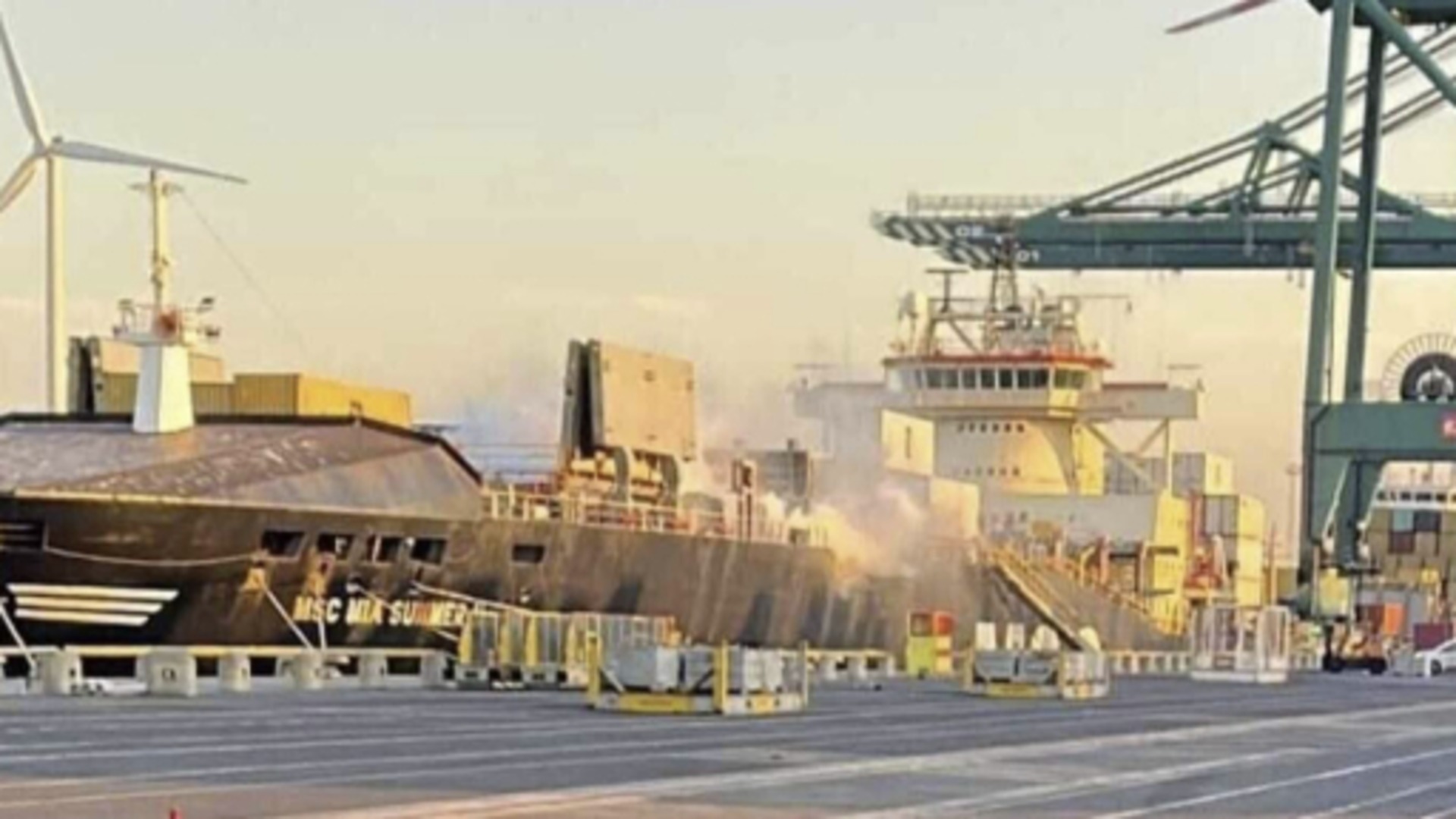
MSC Containership Hydrofluoric Acid Leak Triggers Mass Evacuation at Antwerp; Around 130 Sent to Hospital
 Safety
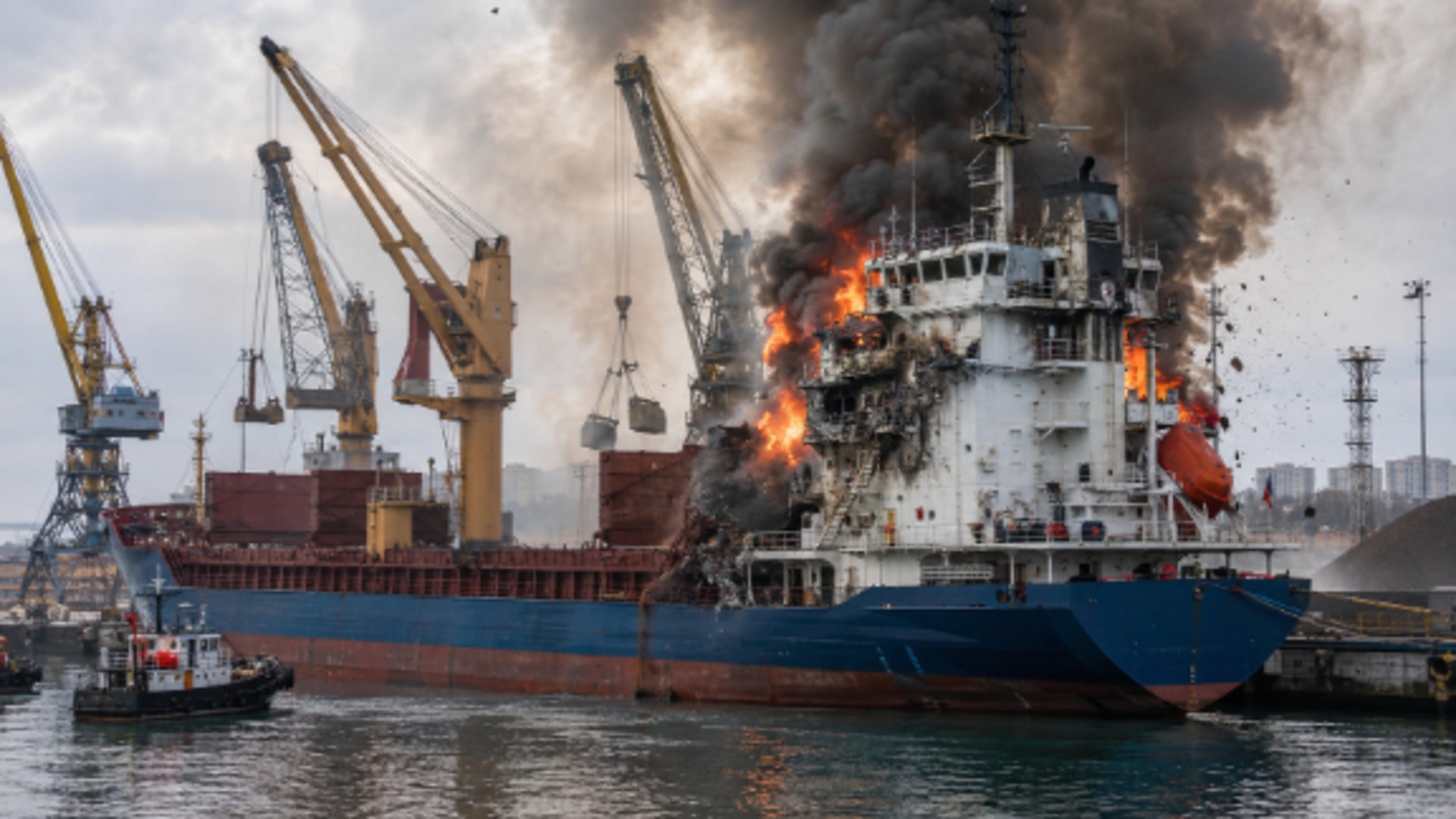
Five Seafarers Killed as Russian Drone Strikes Merchant Ship in Ukraine’s Chornomorsk Port
 Safety
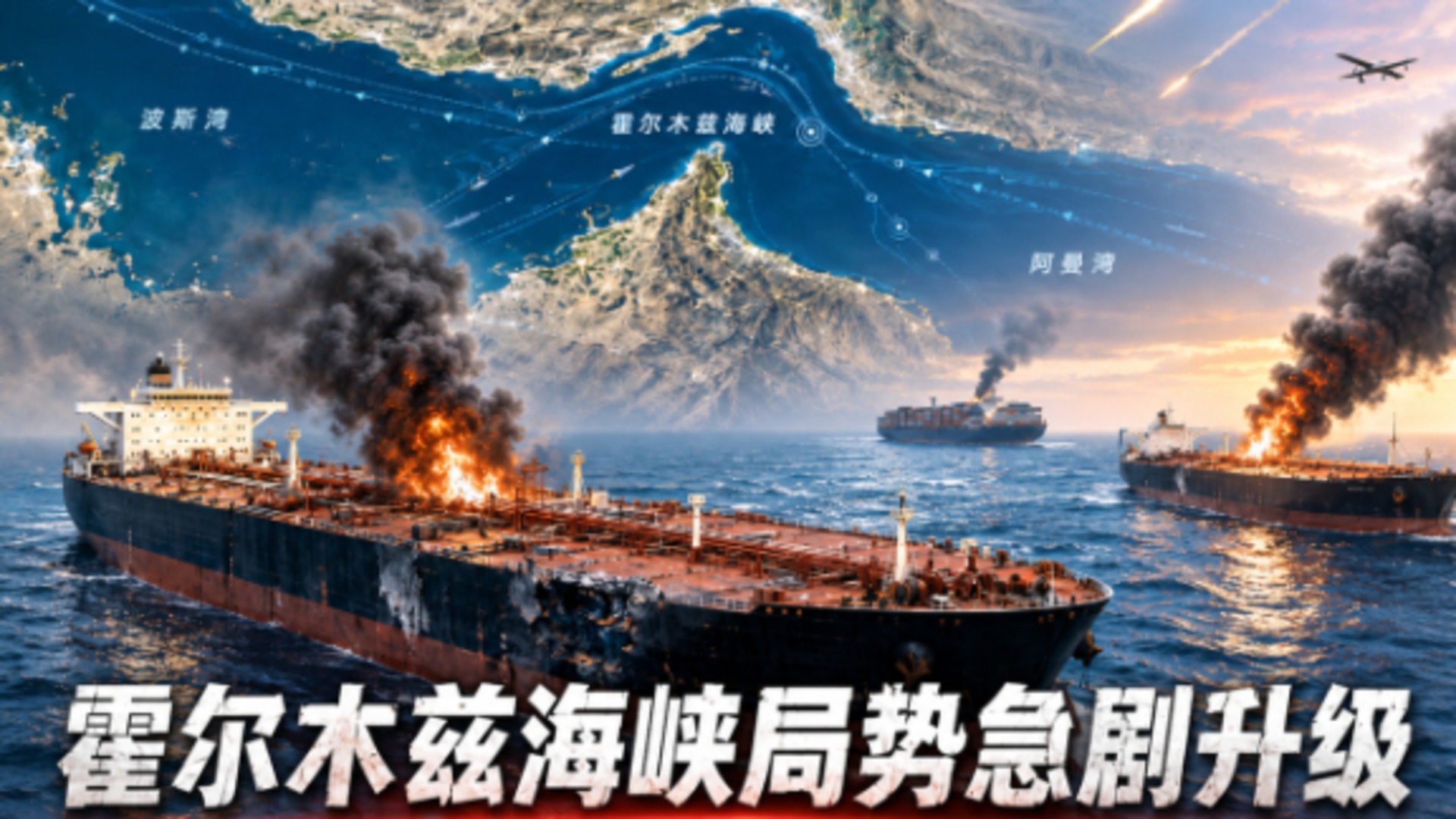
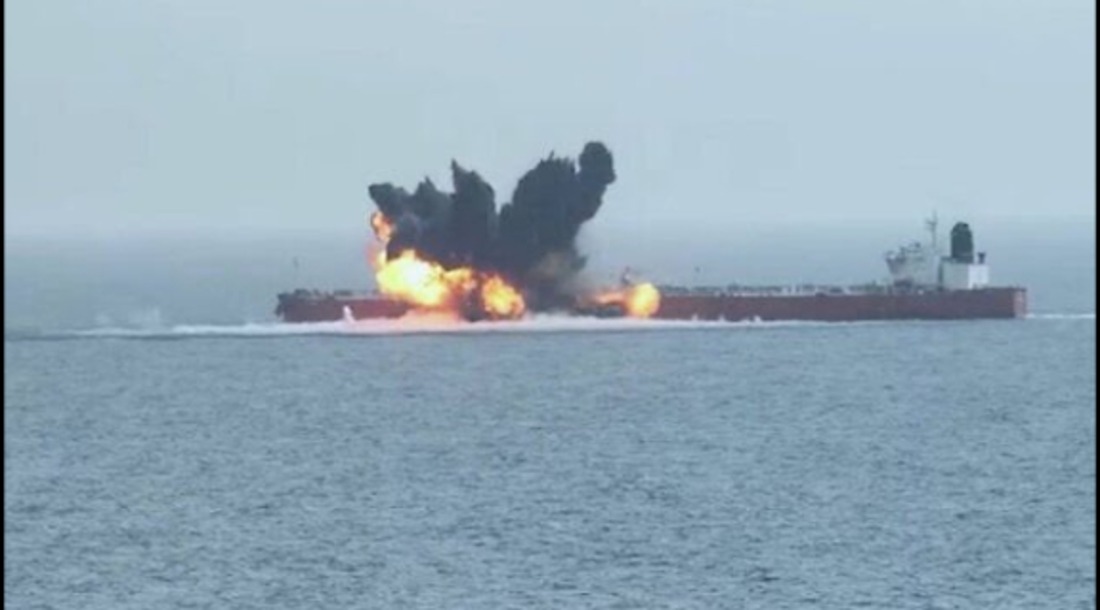
Two VLCCs Hit by Missiles Near Hormuz as Merchant Shipping Attacks Escalate
 Safety
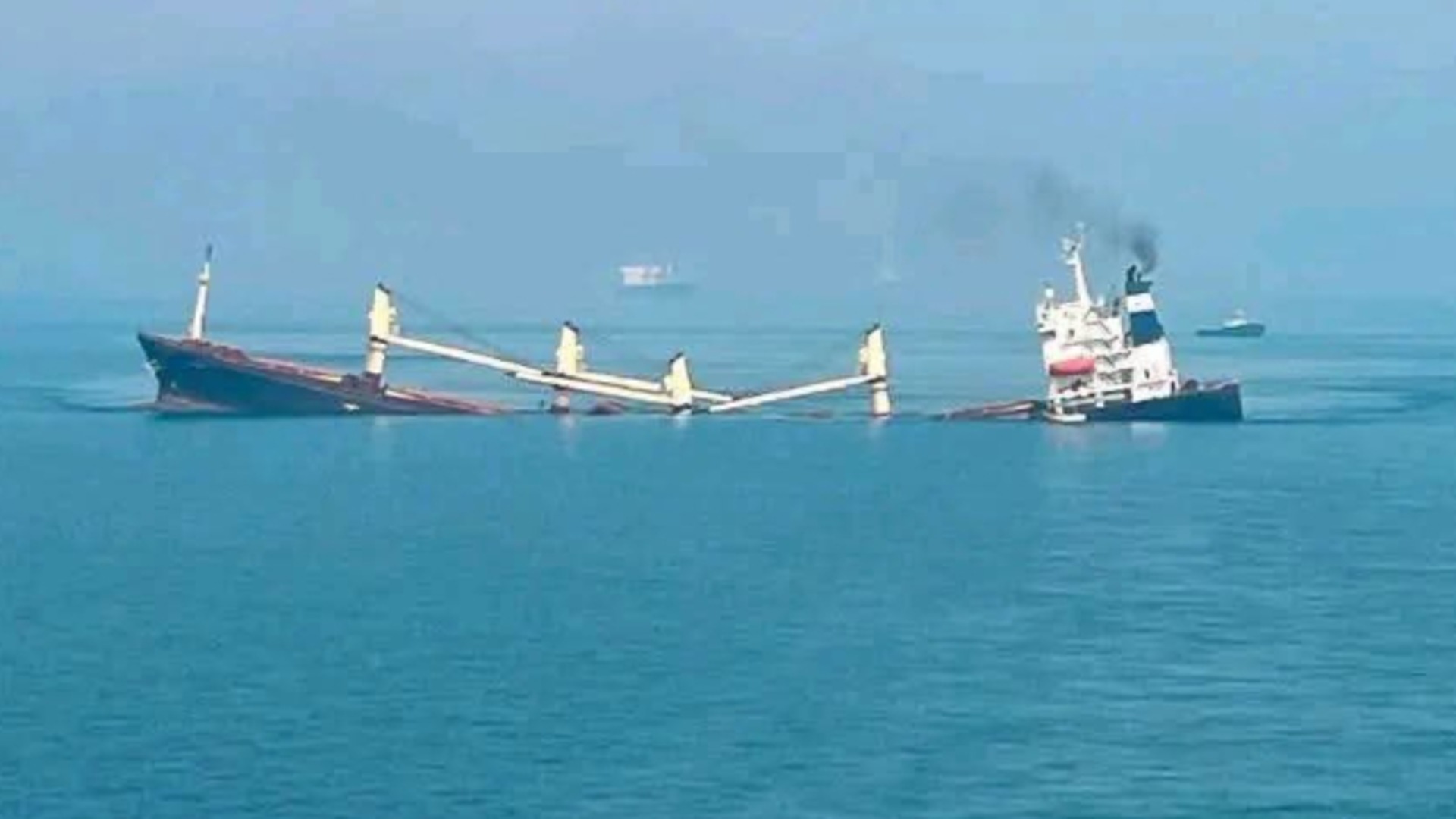
Aged Bulker breaks in Two, Grounds in North of Strait of Hormuz
 Safety
Hormuz Crisis Escalates: Trump Announces New Measures Targeting Iran, Proposes 20% Charge on Cargo Transiting the Strait
 Safety
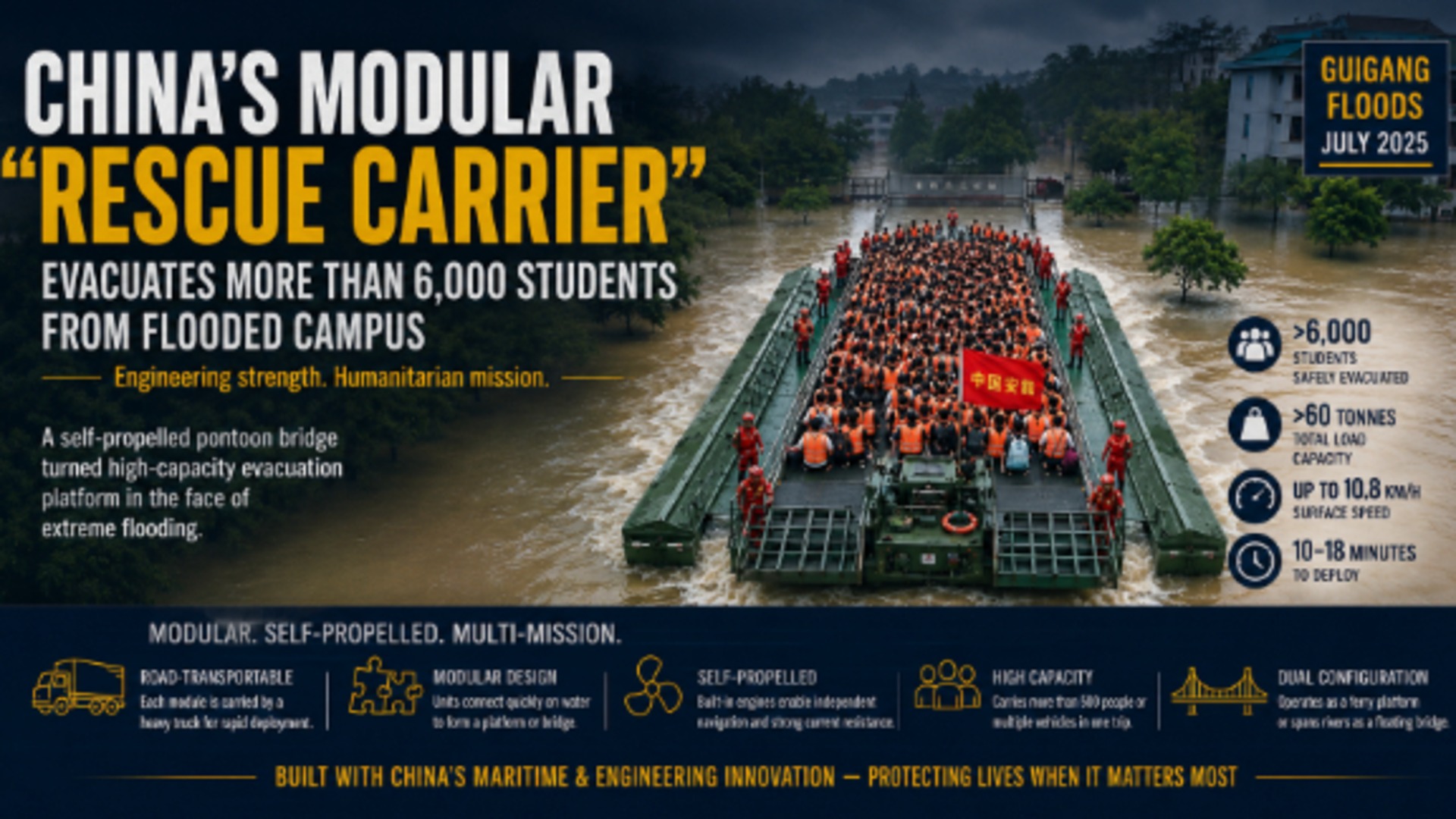
China’s Modular “Rescue Carrier” Evacuates More Than 6,000 Students from Flooded Campus
 Safety
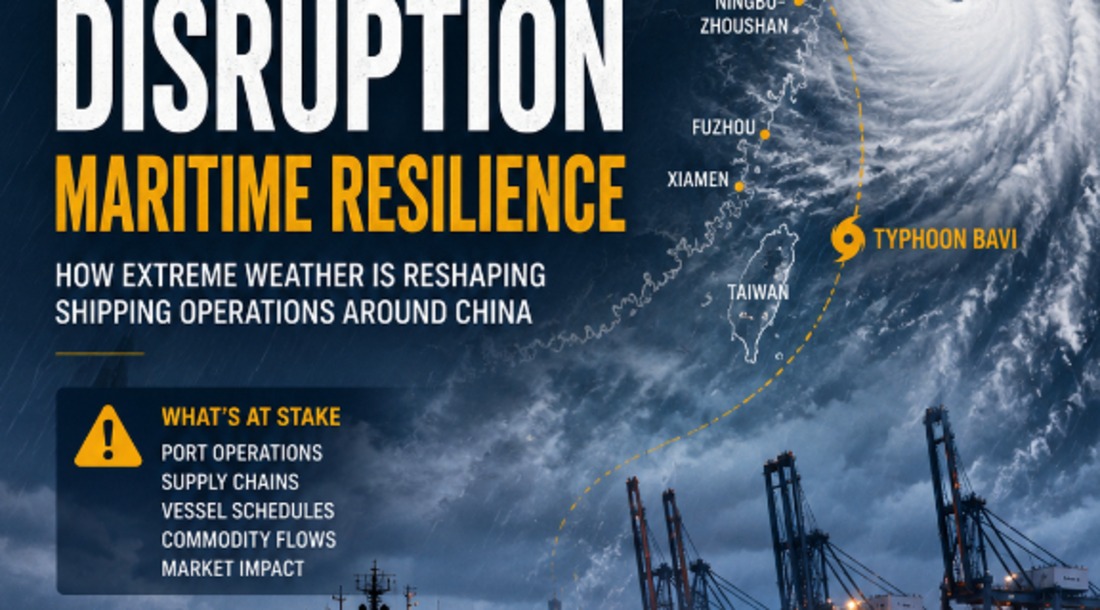
Super Typhoon Bavi Puts China’s Coastal Shipping and Major Ports on Alert
 Safety
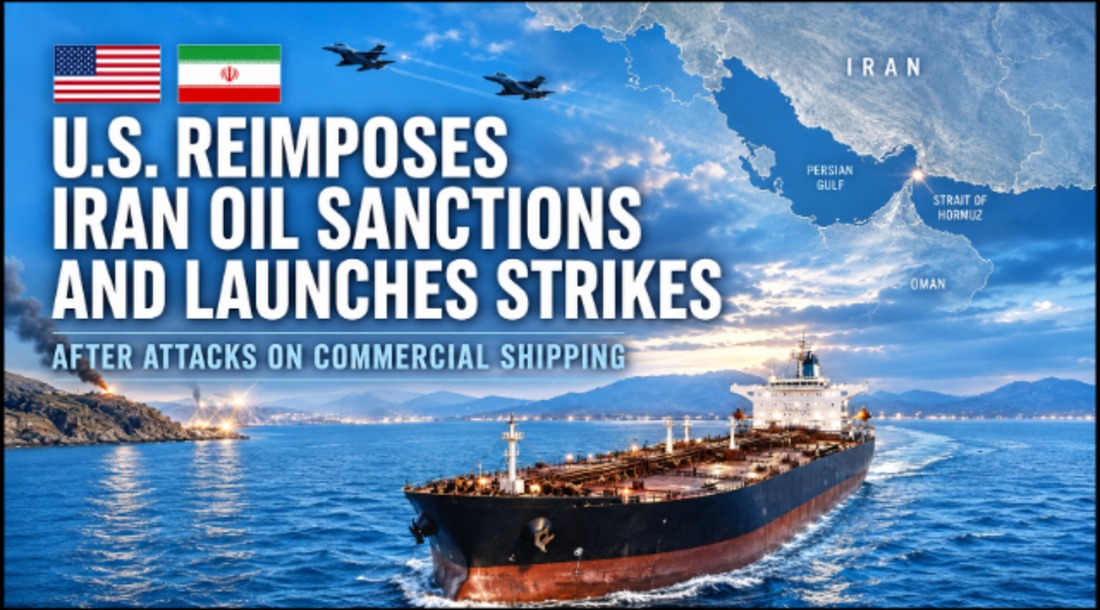
U.S. Reimposes Iran Oil Sanctions and Launches Strikes After Attacks on Commercial Shipping
 Safety
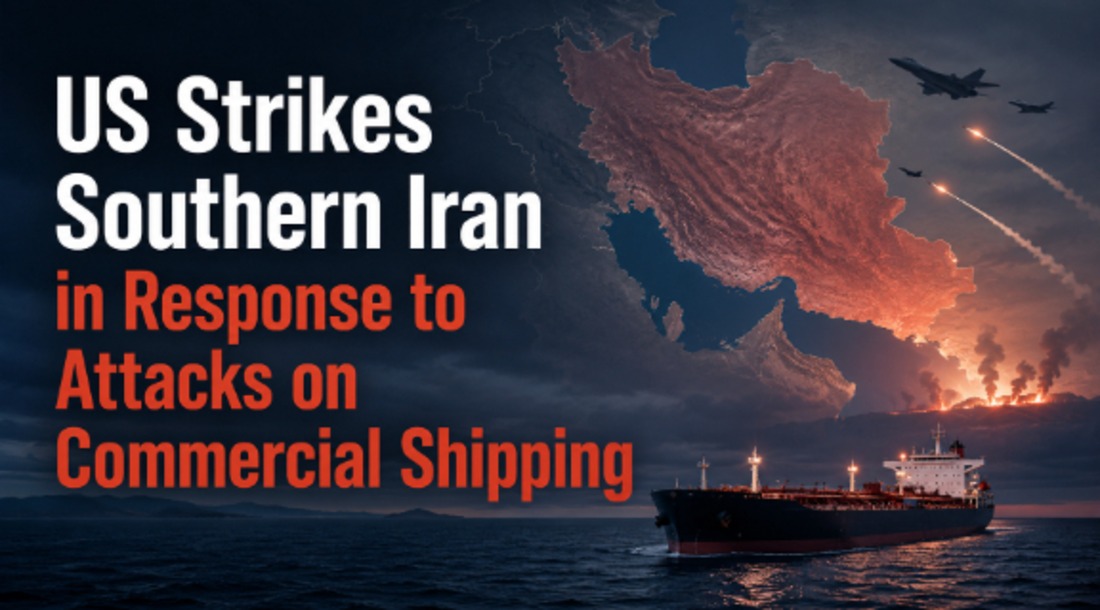
US Strikes Southern Iran in Response to Attacks on Commercial Shipping
 Safety