


India Bans Indian Seafarers From Strait of Hormuz Voyages


Published
14:11
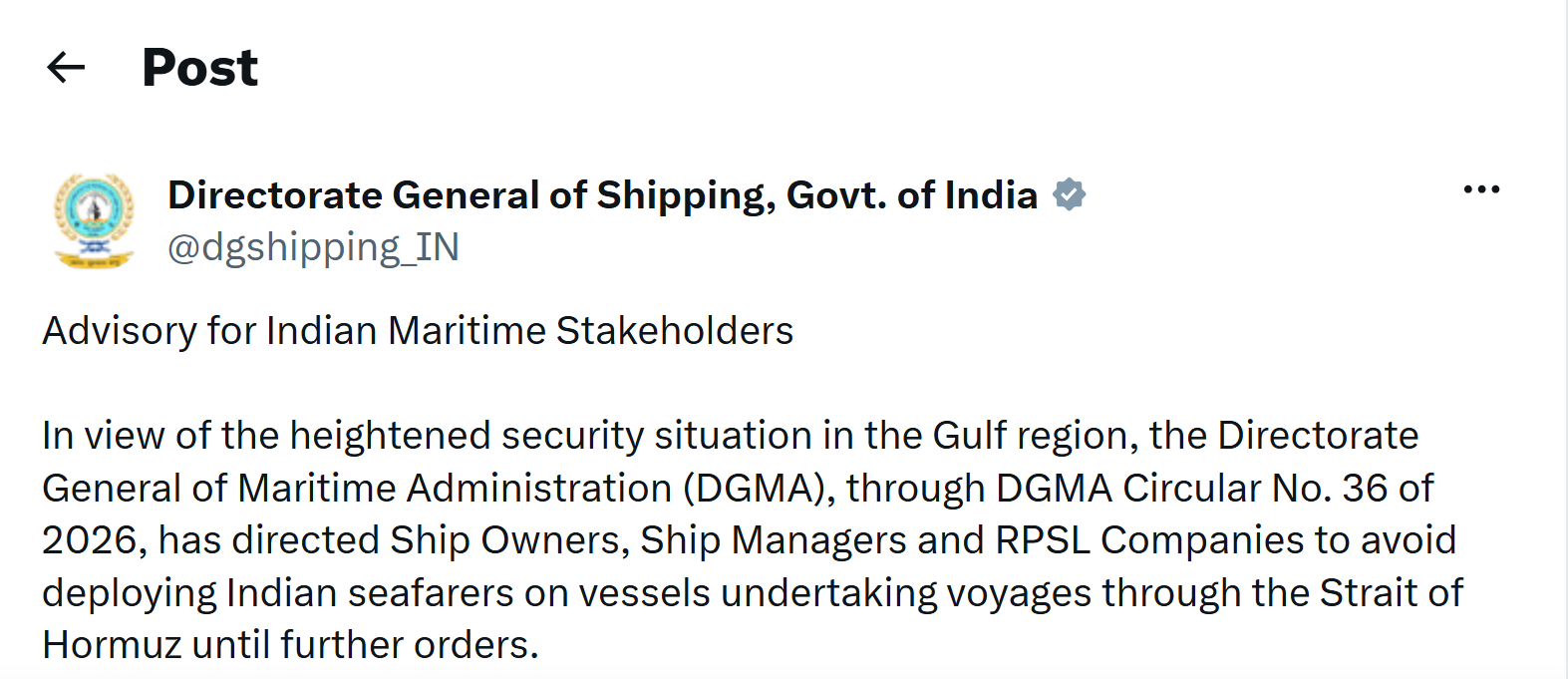
The Directorate General of Merchant Shipping (DGMA) of India has officially issued Circular No. 36 of 2026, mandating all shipowners, ship management companies and Registered Personnel Service Providers (RPSL) to suspend the deployment of Indian seafarers aboard all vessels scheduled to navigate the Strait of Hormuz. The ban will remain in force until further official notifications, marking India’s toughest maritime restriction amid the ongoing regional geopolitical tensions.
Maritime security risks in the Strait of Hormuz and the Gulf of Oman have escalated sharply since July 2026. Hostile attacks on civilian merchant vessels have evolved from early drone harassment tactics to direct cruise missile strikes, putting all passing vessels and crew members at severe risk of casualties and vessel damage.
A string of violent attacks in recent days has caused heavy losses to Indian seafarers. On July 12, the Cypriot container ship GFS Galaxy was struck by a missile in the southern shipping lane of the Strait of Hormuz. The impact triggered a fire in the stern engine room and left the vessel adrift without power. All 23 crew members on board were Indian nationals, among whom 22 were rescued and one went missing, marking the first disappearance of an Indian seafarer in the latest round of regional tensions.
In the early hours of July 14, two very large crude carriers (VLCCs) owned by Abu Dhabi National Oil Company — Mombasa B and Al Bahyah — came under cruise missile attacks originating from Iran in the southern waters of the strait. The two vessels carried a total of 46 crew members, including 30 Indian seafarers. The assault resulted in one Indian seafarer killed and 10 others injured, two of whom are in critical condition. Both oil tankers suffered structural hull damage and on-board fires, sustaining severe operational damage.
Statistics show that since the escalation of regional conflicts in late February 2026, at least seven Indian seafarers have been killed in attacks on merchant ships in and around the Strait of Hormuz, making Indian seafarers one of the most affected maritime groups amid the ongoing geopolitical turmoil.
India Rolls Out Multi-Dimensional Response Measures
Following the fatal attacks, India’s Ministry of External Affairs summoned the Deputy Ambassador of Iran to India on July 14 to lodge a strong protest over the death and injury of Indian seafarers. The Indian side explicitly demanded an immediate halt to attacks on civilian merchant vessels and full guarantees for the safety of international shipping lanes and seafarers’ personal security.
On maritime supervision fronts, India’s Ministry of Ports, Shipping and Waterways convened a high-level inter-ministerial meeting and launched a comprehensive "Seafarer First" response mechanism. The mechanism coordinates joint efforts from the Ministry of External Affairs, Ministry of Petroleum and Natural Gas, the Indian Navy and overseas embassies to handle maritime crisis incidents. Meanwhile, the DGMA has set up a dedicated real-time monitoring platform to track all vessels carrying Indian nationals navigating the Persian Gulf, the Strait of Hormuz and the Gulf of Oman on a 24/7 basis, covering vessels of all flag states.
Circular No. 36 of 2026 further clarifies binding regulatory requirements for the shipping industry. It prohibits all shipowners, ship management firms and RPSL entities from deploying new Indian seafarers to vessels undertaking voyages via the Strait of Hormuz. For vessels already operating in the high-risk waters, the circular requires elevated security alert levels, strict implementation of ISPS (International Ship and Port Facility Security) Code protocols, and continuous monitoring of official navigational warnings and safety advisories. Relevant institutions are also ordered to prioritize the safety, health and legitimate rights of serving Indian seafarers with real-time updates on vessel and crew status.
Progressive Tightening of India’s Maritime Restrictions Since 2024
The latest full deployment ban is the culmination of India’s progressively stringent maritime safety policies amid lingering Middle East tensions. As early as April 2024, after the Iranian Navy seized the container ship MSC Aries in the Strait of Hormuz, India’s Directorate General of Shipping (DGS) issued an emergency circular, urging all local shipping companies and seafarer recruitment agencies to exercise extreme caution and suspend seafarer deployments to waters around Iran and Israel.
Throughout 2026, India has continuously upgraded its risk control measures for high-risk Gulf waters. In January, Circular No. 01 mandated daily status reporting for all Indian seafarers operating near Iranian waters and launched round-the-clock safety surveillance. In March, Circular No. 10 rolled out targeted preventive guidelines against drone and cruise missile attacks, alongside the establishment of a 24-hour Quick Response Team (QRT) and the DGCOMM command center to unify crisis disposal for seafarer emergencies.
In June 2026, the oil tanker MT Settebello was mistakenly struck by U.S. forces off the coast of Oman, killing three Indian seafarers. The incident prompted the DGS to issue restrictive orders on seafarer deployment to conflict-hit Gulf regions, allowing crew replacement only in extreme emergencies with the explicit consent of individual seafarers. The July 2026 full suspension via Circular No. 36 represents the strictest regulatory control since the latest wave of regional security escalation.
Far-Reaching Impacts on Global Middle East Shipping
As the world’s second-largest supplier of seafarers, India boasts more than 310,000 serving merchant mariners, accounting for over 12% of the global total and forming a core workforce pillar for oil tanker, bulk carrier and container shipping sectors. Indian seafarers make up over 40% of crew members on merchant vessels operating Middle East routes, serving as the backbone of regional maritime manpower supply.
Previous deployment restrictions during the Red Sea crisis have already caused severe crew shortages for vessels taking alternative routes, driving war risk allowances for seafarers up by 30% to 50% and substantially increasing labor costs for ship management firms. The new Strait of Hormuz ban will trigger more acute manpower shortages for Persian Gulf crude oil transportation and Middle East container trunk routes.
Industry analysts predict that shipowners and vessel operators serving Persian Gulf routes will face enormous pressure in crew replacement and staffing supplementation in the short term. Many vessels may be forced to adjust routing plans or source alternative seafarer manpower from other countries. Coupled with rising marine war insurance premiums, the overall operational costs of Middle East shipping routes will surge further. Given the persistent deterioration of regional security situation, market insiders do not rule out the possibility of India expanding the scope of its seafarer deployment ban in the future.
In addition, India has long adopted zero-tolerance policies towards seafarer service fraud. Any shipping agency or enterprise found violating official deployment regulations will face severe penalties including industry blacklisting, to standardize the domestic seafarer dispatch industry and protect national seafarers’ interests.


READ MORE
 Safety
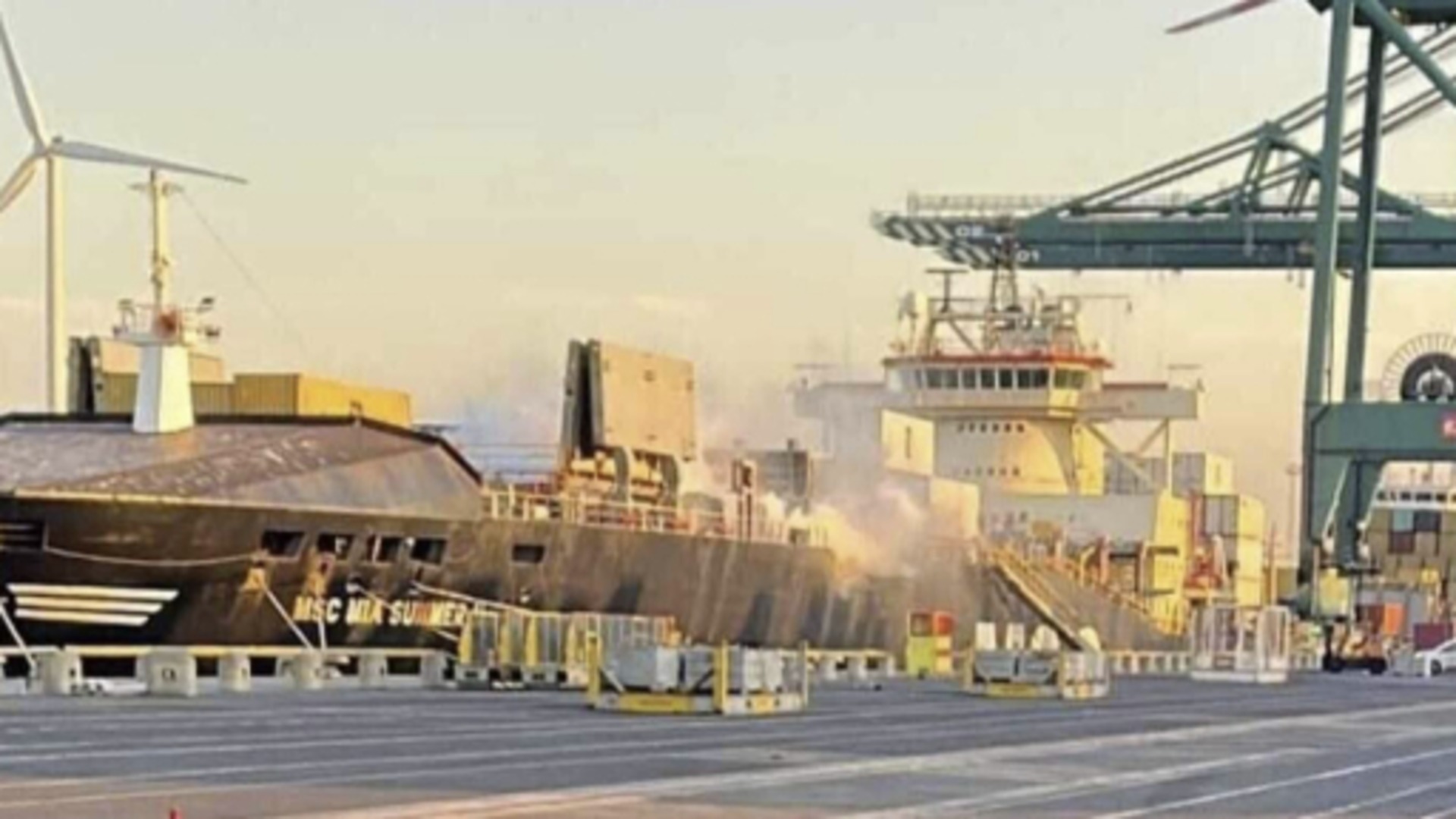
MSC Containership Hydrofluoric Acid Leak Triggers Mass Evacuation at Antwerp; Around 130 Sent to Hospital
 Safety
2026 Cargo-Securing CIC: Shipowners and Seafarers Urged to Prepare for Closer PSC Scrutiny
 Safety
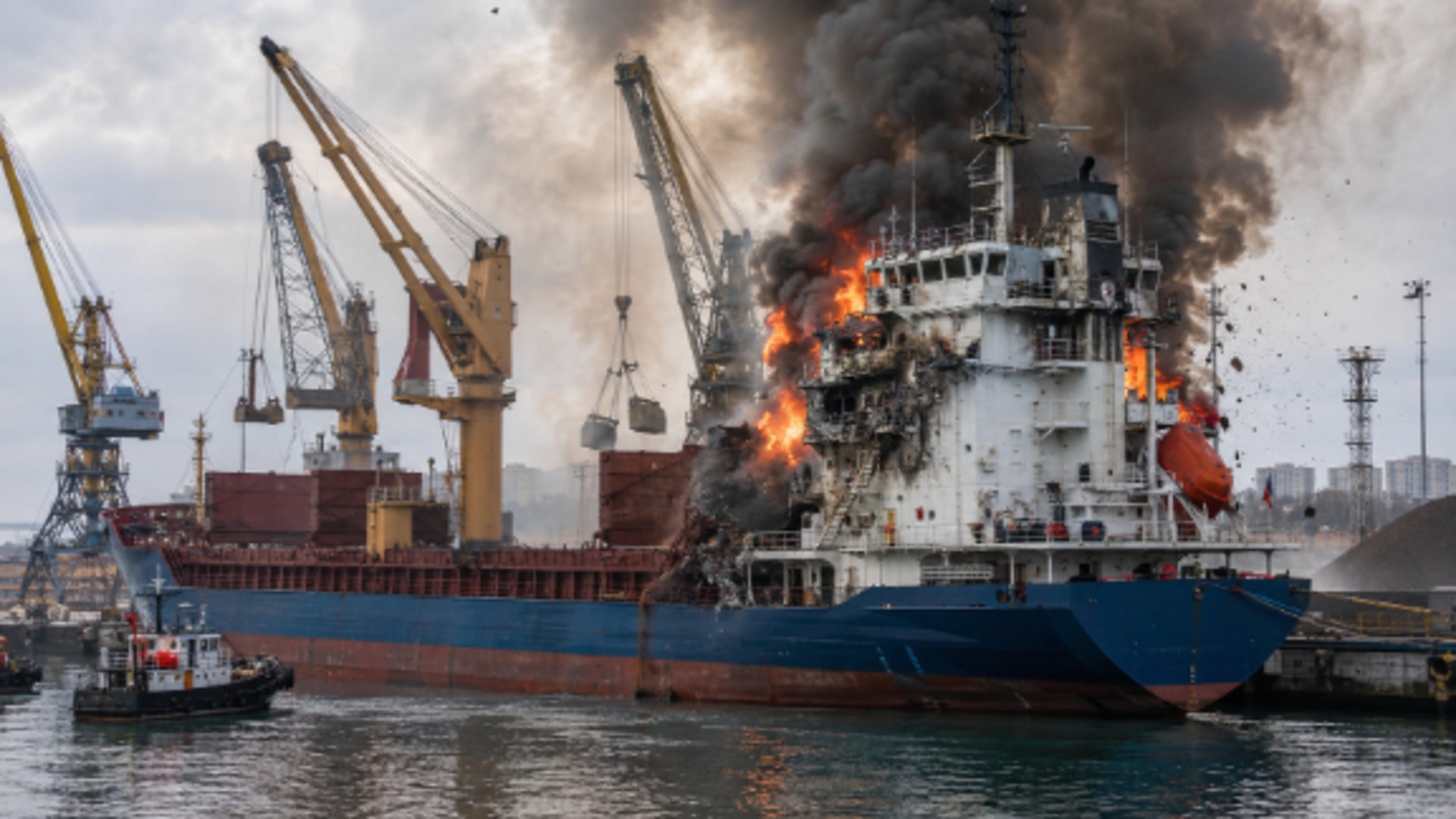
Five Seafarers Killed as Russian Drone Strikes Merchant Ship in Ukraine’s Chornomorsk Port
 Safety
Aged Bulker breaks in Two, Grounds in North of Strait of Hormuz
 Safety
Two VLCCs Hit by Missiles Near Hormuz as Merchant Shipping Attacks Escalate
 Safety
Hormuz Crisis Escalates: Trump Announces New Measures Targeting Iran, Proposes 20% Charge on Cargo Transiting the Strait
 Safety
China’s Modular “Rescue Carrier” Evacuates More Than 6,000 Students from Flooded Campus
 Safety
Super Typhoon Bavi Puts China’s Coastal Shipping and Major Ports on Alert
 Safety
U.S. Reimposes Iran Oil Sanctions and Launches Strikes After Attacks on Commercial Shipping
 Safety