

Two VLCCs Hit by Missiles Near Hormuz as Merchant Shipping Attacks Escalate
At least six merchant ships have been attacked in and around the Strait of Hormuz in eight days, with the latest incidents leaving one seafarer dead, eight injured and two VLCCs damaged.
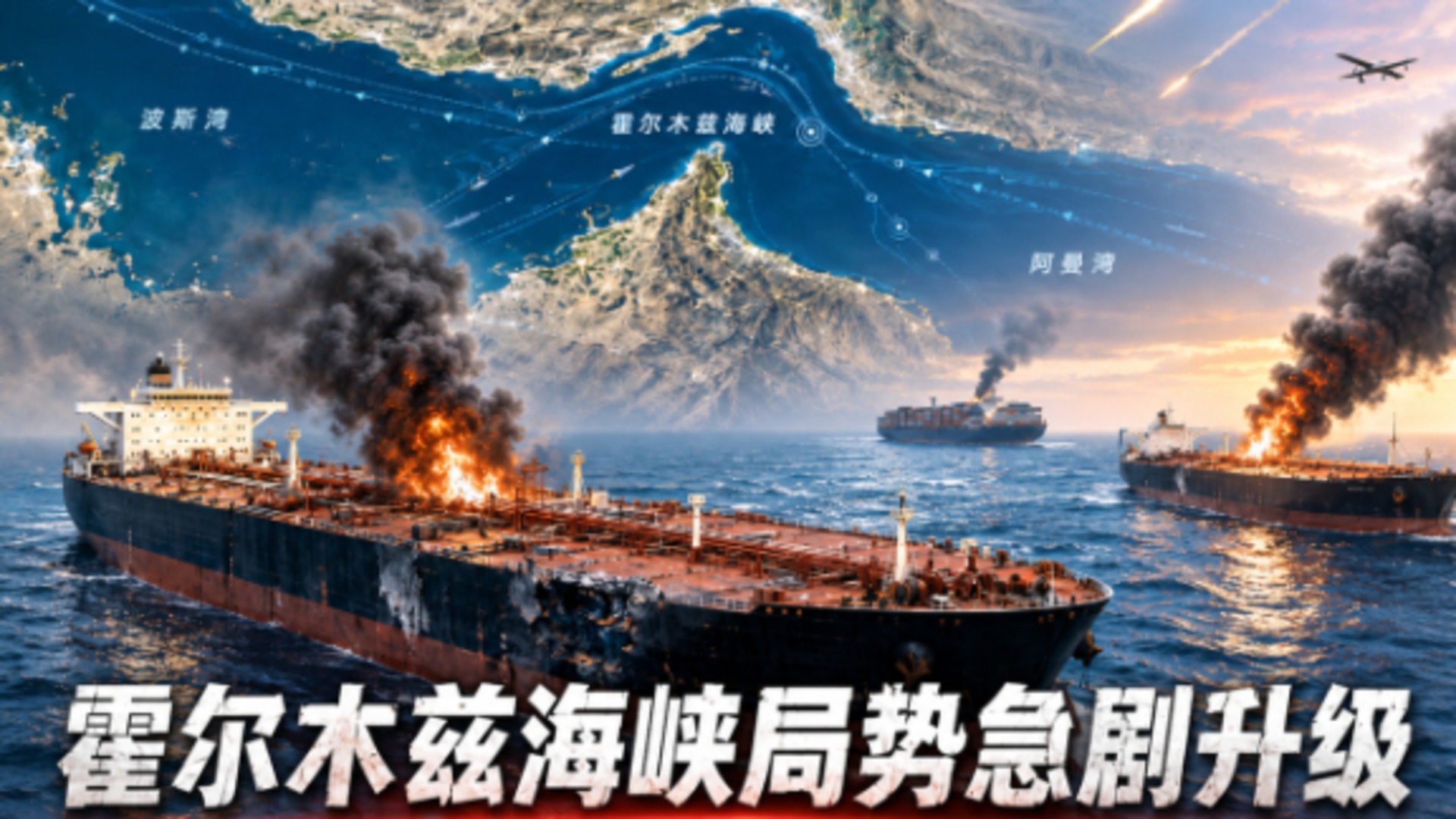

Security conditions in the Strait of Hormuz and its surrounding waters have deteriorated sharply, with a series of attacks now extending beyond oil and gas carriers to container shipping.
Between 6 and 14 July, at least six merchant vessels were reportedly struck by missiles, drones or unidentified projectiles in the Strait of Hormuz, waters off Oman and the Gulf of Oman.
The attacks have followed a clear pattern of escalation. Early incidents caused limited structural or machinery damage without casualties. A container ship was subsequently disabled by fire, forcing its crew to abandon the vessel and leaving one seafarer missing. The latest attacks involved cruise missiles striking two VLCCs, resulting in the first confirmed fatality and multiple serious injuries.
Two VLCCs struck, one seafarer killed
The United Arab Emirates said on 14 July that two UAE-linked very large crude carriers, Mombasa B and Al Bahyah, were struck while sailing through the southern traffic lane of the Strait of Hormuz in Omani territorial waters.
According to the UAE authorities, two cruise missiles approaching from the direction of Iran hit the vessels.
Both ships are approximately 300,000-dwt VLCCs. Mombasa B, IMO 9739501, was built in 2016, while Al Bahyah, IMO 9937799, was delivered in 2023.
Both vessels are registered under the Liberian flag. The UAE authorities referred to them as national oil tankers, a description understood to reflect their ownership, operation or strategic connection to the UAE rather than their legal flag status.
One Indian seafarer on board Mombasa B was killed. Eight other crew members were injured, including six Indian nationals and two Ukrainians. Four of the injured were reported to be in a serious condition.
Both tankers caught fire and sustained physical damage after the strikes. Their crews activated emergency firefighting procedures and subsequently brought the fires under control.
The UAE condemned the attacks as a serious violation of international law and a direct threat to civilian shipping, regional stability and global energy supply chains. It also said it reserved the right to respond.
Iran’s Islamic Revolutionary Guard Corps later said that two “non-compliant supertankers” had been targeted after allegedly ignoring warnings, switching off navigation equipment and attempting to enter what Iran described as a mined or restricted channel.
The Iranian statement did not identify the ships, however, and did not explicitly confirm that the vessels were Mombasa B and Al Bahyah.
The incident represents the most serious attack on commercial shipping in the area during the latest escalation. It also marks a shift from drone strikes and unidentified projectiles to the reported use of cruise missiles against large crude carriers navigating a principal international shipping route.
Separate tanker incident remains under investigation
Around the same period, the UK Maritime Trade Operations office issued warning 085-26 concerning another tanker incident in the Gulf of Oman.
The master of the vessel reported that an unidentified projectile struck the starboard side of the engine-room area at 21:04 UTC on 13 July, approximately 40 nautical miles northeast of Qalhat, Oman.
All crew members were reported safe, and there was no indication of an oil spill or other environmental damage.
UKMTO has not disclosed the vessel’s identity.
The incident has been linked in some reports to Al Bahyah, but the available coordinates, timing and vessel details do not yet provide sufficient evidence to establish that the two reports concern the same ship.
Until further information is released, the UKMTO incident should not be counted as a separate attack, nor should it be definitively identified as involving Al Bahyah.
Should it prove to be unrelated to the two VLCC attacks, the total number of merchant vessels struck between 6 and 14 July would rise to at least seven.
Container ship disabled, engineer still missing
Before the latest tanker strikes, the attack on the Cyprus-flagged container ship GFS Galaxy had already demonstrated that the threat was expanding beyond energy shipping.
UKMTO warning 083-26 reported that the vessel was struck at 22:40 UTC on 11 July, equivalent to the early hours of 12 July in Oman, approximately nine nautical miles off the Omani coast.
The impact damaged the vessel’s stern and machinery spaces and triggered a fire. GFS Galaxy subsequently lost propulsion, and the crew abandoned ship in lifeboats.
Cypriot shipping authorities and the US Central Command later confirmed the ship’s identity.
Of the 24 crew members on board, 23 were rescued by Omani forces. One Indian third engineer remained missing.
The crew included 11 Indian nationals, 10 of whom were rescued.
Iran said the vessel had received “warning fire” after using an unauthorised route. Cypriot authorities, however, described the ship as having been struck by an unidentified projectile. The precise weapon used and the full circumstances of the attack remain under investigation.
The GFS Galaxy incident marked an important widening of the threat environment.
Until then, the attacks had largely involved tankers and LNG carriers. The strike on a container vessel showed that liner shipping, feeder services and ordinary commercial traffic entering or leaving the Gulf could also be exposed to direct military action.
Three oil and gas carriers attacked within 24 hours
The current escalation began on 6 and 7 July, when three oil and gas carriers were attacked in less than one day.
In the first incident, recorded as UKMTO warning 080-26, a southbound vessel was struck on its port side by an unidentified projectile at 21:19 UTC on 6 July, around eight nautical miles east of Lima, Oman.
The vessel was subsequently identified as the Qatar-linked LNG carrier Al Rekayyat.
A fire broke out near the engine room, and the crew evacuated safely. No casualties or pollution were reported.
The second attack, reported under UKMTO warning 081-26, involved a VLCC transiting the Strait of Hormuz on 7 July.
The vessel sustained structural damage after being struck by an unidentified projectile but remained able to continue its voyage. There were no reported casualties or pollution.
Maritime security sources identified the tanker as the Saudi-flagged VLCC Wedyan, although UKMTO did not disclose the vessel’s name in its official warning.
Later the same day, UKMTO warning 082-26 reported that another unnamed tanker had been hit by an unidentified drone near the strait.
The ship suffered minor structural damage but continued towards its next port. No injuries or pollution were reported.
Following the three attacks, the Joint Maritime Information Center raised the maritime threat level in the Strait of Hormuz to Severe, indicating that deliberate hostile action against merchant vessels was considered highly likely.
Traffic falls as owners reassess the risk
The attacks rapidly changed the operating calculations of shipowners, charterers, insurers and cargo interests.
On 8 July, at least four oil and gas carriers preparing to enter the Strait of Hormuz reportedly reversed course. They included three empty LNG carriers heading towards Qatar and the Indian-flagged VLCC Lila Vadinar, which was carrying approximately two million barrels of Kuwaiti crude.
By 9 July, tanker traffic through the strait had fallen close to a standstill, with only two tankers observed transiting during the early part of the day.
Some war-risk insurers advised shipping companies to suspend passages, while a growing number of vessels either switched off their automatic identification systems or reduced their public visibility.
By 13 July, oil and gas carrier traffic had fallen to a two-month low.
Kpler data indicated that only around six tankers passed through the strait during the day, while no regular LNG carrier transits were observed over the weekend. Some vessels reportedly turned to ship-to-ship transfers in the Gulf of Oman to avoid sailing directly into the Persian Gulf.
The sequence of incidents shows how quickly the operating environment has changed.
The first phase involved drones and unidentified projectiles causing manageable structural damage. The second involved a container ship being disabled, its crew abandoning ship and a seafarer going missing. The latest phase has involved two VLCCs reportedly struck by cruise missiles, with one death and multiple serious injuries.
The merchant ships confirmed or widely reported as having been attacked between 6 and 14 July include:
Al Rekayyat, an LNG carrier;
Wedyan, a VLCC;
an unidentified tanker struck by a drone;
GFS Galaxy, a container ship;
Mombasa B, a VLCC;
and Al Bahyah, a VLCC.
Control of the strait becomes a political and military dispute
The security crisis has intensified alongside competing claims over who controls access to the Strait of Hormuz.
On 13 July, US President Donald Trump said the strait remained open and would continue to remain open, with or without Iranian participation.
He also announced the reimposition of what he described as a blockade targeting Iranian ships and customers, while saying that vessels from other countries would be allowed to use the waterway.
Trump further said the United States planned to impose a 20% charge on all cargo transported through the strait, although the legal basis, implementation mechanism and operational details of such a measure remained unclear.
Iran responded by rejecting any US role in managing the waterway.
A spokesperson for Iran’s Khatam al-Anbiya Central Headquarters said US military activity was threatening the management of the Strait of Hormuz, regional security, international trade and the safe passage of tankers and merchant ships.
Iran warned that it would act against interference with commercial traffic, particularly vessels that it considered to be using unauthorised routes or deviating from designated navigation lanes.
The spokesperson also warned neighbouring governments that logistical or military support for US forces could be treated as a threat to Iranian sovereignty and national security.
The result is an increasingly militarised transit environment in which the safety of a commercial vessel may be influenced not only by its route and cargo, but also by its flag, ownership, AIS practices, political associations and compliance with competing navigation instructions.
The Strait of Hormuz has not been physically closed. Commercial ships continue to transit.
But following repeated attacks, falling traffic volumes and the first confirmed deaths and serious injuries, the distinction between an open waterway and a commercially viable route is becoming increasingly difficult to maintain.
For shipowners, charterers, insurers and crews, the strait is no longer simply a high-risk chokepoint. It is becoming an active conflict zone in which ordinary merchant shipping may be directly exposed to military action.


READ MORE
 Safety
China’s Modular “Rescue Carrier” Evacuates More Than 6,000 Students from Flooded Campus
 Safety
Super Typhoon Bavi Puts China’s Coastal Shipping and Major Ports on Alert
 Safety
U.S. Reimposes Iran Oil Sanctions and Launches Strikes After Attacks on Commercial Shipping
 Safety
Hormuz Crisis Escalates: Trump Announces New Measures Targeting Iran, Proposes 20% Charge on Cargo Transiting the Strait
 Safety
US Strikes Southern Iran in Response to Attacks on Commercial Shipping
 Safety
Breaking: LNG Carrier Attacked Near the Strait of Hormuz, Fire Breaks Out on Port Side
 Safety
Stranded sulphur cargoes in the Strait of Hormuz face mounting corrosion risk, warns Brookes Bell
 Safety
Red Sea Alert: Bulk Carrier Comes Under Attack off Yemen After Nearly One Year of Relative Calm
 Safety
Top 10 Blacklisted Flags Revealed in Paris MoU 2025 Annual Report
 Safety