


Red Sea Alert: Bulk Carrier Comes Under Attack off Yemen After Nearly One Year of Relative Calm
A fresh security incident near Al Hudaydah is forcing shipowners, charterers and insurers to reassess the real risk of returning to the Red Sea route.


Xinde Marine News reports that a merchant vessel has come under attack in the southern Red Sea, raising renewed concern over the security of one of the world’s most strategically important shipping corridors.
According to the United Kingdom Maritime Trade Operations, the incident occurred at around 07:19 UTC on 5 July, approximately 30 nautical miles southwest of Al Hudaydah, Yemen. The vessel reported that it was “under attack by unknown armed assailants”, prompting authorities to investigate the incident.
Associated Press reported that a skiff approached the bulk carrier and opened fire, after which the ship’s onboard security team returned fire. The attackers then withdrew towards a larger vessel located about two nautical miles away, which reportedly had its AIS switched off. The vessel and crew were reported safe, and no injuries were initially reported.
According to TradeWinds, Vanguard Tech identified the vessel as the Palau-flagged bulk carrier Lady Naeima, built in 2000. VesselsValue data cited by TradeWinds shows that the vessel had left the incident area and was transiting the Gulf of Aden en route to Kandla, India. The same report identified UAE-based Caesar Maritime as the vessel’s beneficial owner.
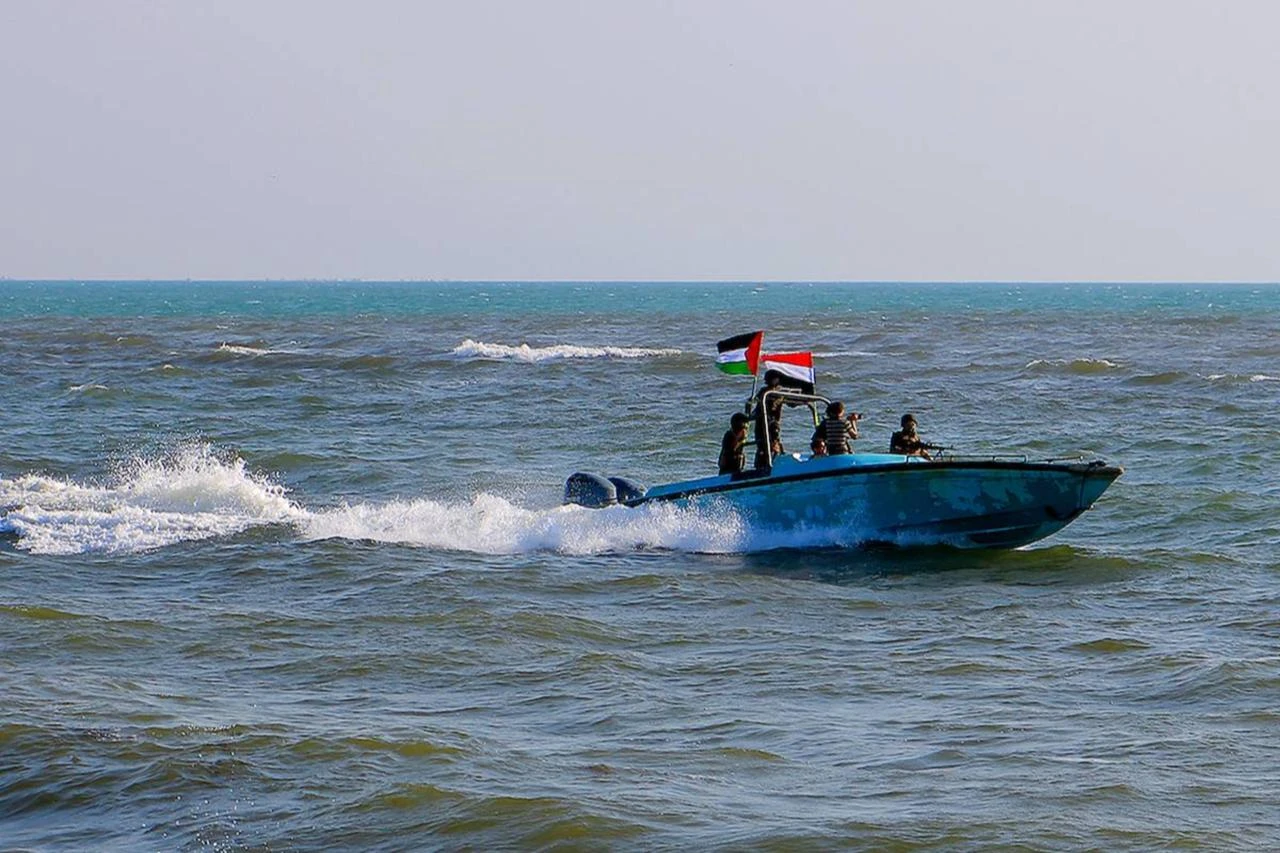
A warning shot for Red Sea shipping
The attack is significant because the Red Sea had gone through a period of relative calm after a prolonged wave of Houthi-related attacks on commercial shipping.
Since late 2023, the Red Sea and Bab el-Mandeb area have become one of the most sensitive maritime risk zones in the world. Houthi attacks forced many shipping companies to divert vessels around the Cape of Good Hope, adding voyage time, fuel costs and capacity pressure to Asia-Europe trade lanes. AP noted that the Houthis have threatened to resume attacks, although no group had immediately claimed responsibility for this latest incident.
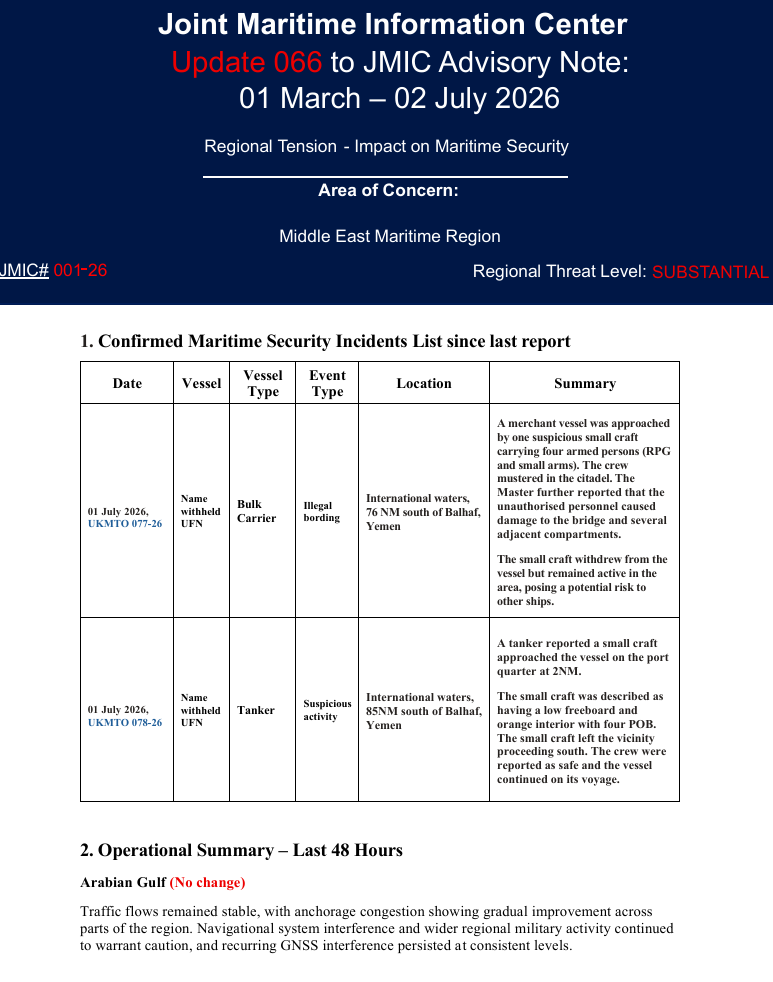
The Joint Maritime Information Center had assessed the threat level in the Gulf of Aden as “substantial” in its latest advisory before the incident, while the Bab el-Mandeb and southern Red Sea area remained under close monitoring. JMIC also warned that hostile small-boat activity and broader regional conflict dynamics continued to pose risks to commercial shipping.
This means the latest incident may change market perception. Even if the attack did not cause casualties or major damage, it reminds the industry that the security environment in the Red Sea remains fragile and can deteriorate quickly.
Three signals shipowners should not ignore
First, the small-boat threat remains active. The reported use of a skiff and small-arms fire shows that commercial vessels in the area still face close-range attack risks. Such incidents do not need to sink or disable a ship to affect routing decisions, crew confidence, insurance terms and charterparty discussions.
Second, the reported presence of a larger vessel with AIS switched off is important. If confirmed, this would suggest a more organised support structure behind the skiff attack. It also underlines the limits of relying only on AIS-based situational awareness. Radar watch, visual lookout, security drills and bridge-team readiness remain essential.
Third, the Red Sea risk is now overlapping with renewed piracy concerns in nearby waters. AP also reported a separate incident south of Balhaf on 1 July involving armed men in a small boat, highlighting continued security pressure in the wider Gulf of Aden and western Indian Ocean region.
For shipowners and managers, the operating environment should therefore be viewed as a layered threat picture: armed skiffs, possible piracy activity, Houthi-related missile and drone risks, AIS manipulation, false communications and wider geopolitical escalation.
What it means for Red Sea re-routing decisions
Over the past year, the shipping market has repeatedly debated when major carriers and tramp operators might return to the Red Sea and Suez route at scale.
For container lines, a return to the Red Sea would have direct implications for Asia-Europe capacity, schedule reliability, freight rates and vessel deployment. For bulk carriers and tankers, the key issues include war-risk premiums, armed guard arrangements, charterparty clauses, deviation costs and crew safety obligations.
This latest incident does not automatically mean a full-scale return of Red Sea attacks. But it will likely slow down any assumption that the corridor has become safe enough for a broad return.
The next few weeks will be critical. Shipowners, insurers and charterers will be watching whether further incidents follow, whether any group claims responsibility, and whether UKMTO, JMIC or naval authorities adjust their advisories.
Safety and compliance priorities
For vessels still transiting the southern Red Sea, Bab el-Mandeb and Gulf of Aden, the immediate priority is a voyage-specific risk assessment. This should take into account the vessel’s flag, ownership, charterer, cargo, previous port calls, AIS exposure, routing, speed, freeboard and security arrangements.
Ship managers should also ensure strict implementation of BMP-style maritime security measures, including enhanced lookout, radar monitoring, access control, citadel readiness, emergency communication procedures and clear escalation protocols with company security officers and relevant maritime authorities.
The presence or absence of armed guards should be assessed carefully in line with flag-state requirements, company policy, charterparty obligations and insurance conditions. In this latest incident, the vessel’s onboard security team reportedly returned fire, which appears to have helped deter the attackers.
The Red Sea is not just a regional security issue. It is a core artery linking Asia, Europe, the Middle East and the Mediterranean. Any renewed instability in this corridor can quickly affect container freight rates, tanker deployment, dry bulk routing, bunker demand, port schedules and global supply-chain resilience.
The reported attack on Lady Naeima did not result in major damage or casualties based on initial information. But its wider message is clear: the Red Sea risk has not disappeared.
For global shipping, a return to the Red Sea must be based on verifiable, insurable and operationally sustainable security conditions. Until then, one gunfire incident off Yemen is enough to remind the industry that the true cost of using this corridor is still being recalculated.


READ MORE
 Safety
Around 1,400 Ship Transits This Month as Traffic Through Hormuz Falls by 90% and Bab el-Mandeb Slows Sharply
 Safety
48 Rescued After Vietnamese Vessel Sinks in the South China Sea
 Safety
London Market Draws a Red Line on Hormuz Tolls: Pay, and Cover for the Vessel Terminates
 Safety
Three Fatal Accidents in Half a Month: Why HD Hyundai Heavy Industries Had to Stop
 Safety
Red Sea and Hormuz crisis: Shipping’s strategic routes are being tested again
 Safety
Two China-linked VLCCs cross Bab el-Masndeb amid Red Sea tension
 Safety
Why Does Marine War Risk Insurance Become “Unavailable” Once a Real War Starts?
 Safety
Houthi Blockade Turns Violent: Saudi Tanker Hit as Red Sea Traffic Falls
 Safety
Maersk tightens its network as security risks spread across the Middle East and Black Sea
 Safety