

Shipping at Crossroads: Geopolitics, Global Market Shift, & Strategic Positioning
The 10th Capital Link Maritime Leaders Summit – Greece was successfully held on Monday, June 1, 2026, as part of the Posidonia Week Conference Program. Organized by Capital Link in partnership with DNV and with the cooperation of NASDAQ and NYSE, the biennial event once again confirmed its position as one of the most prominent maritime gatherings during Posidonia Week.
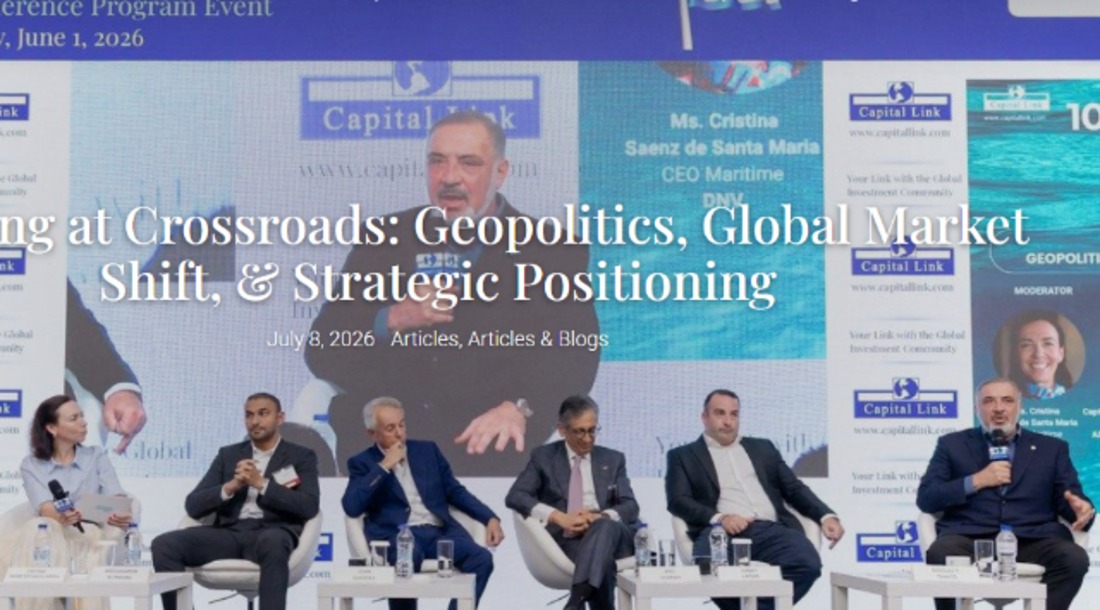
A panel that drew particular attention was “Shipping at Crossroads: Geopolitics, Global Market Shift, & Strategic Positioning,” which brought together leading figures from the international shipping industry, including Captain Abdulkareem Al Masabi, CEO – ADNOC Logistics & Services (DH:ADNOCLS), Dr. John Coustas, Chairman, President & CEO – Danaos Corporation (NYSE: DAC), Dr. Anil Sharma, Founder and CEO – GMS & Lila Global, Mr. Harry Vafias, Founder – Stealthgas (GASS) / Imperial Petroleum (IMPP) / C3iS inc (CISS), Dr. Nikolas P. Tsakos, Founder & CEO – TEN Ltd. (NYSE: TEN); Chairman – INTERTANKO (2014-2018). The discussion was moderated by Ms. Cristina Saenz de Santa Maria, CEO Maritime – DNV.
The full discussion can be viewed here:
For decades, shipping executives relied on familiar indicators to read the market. Fleet growth, cargo demand, orderbooks and vessel age determined where the cycle was headed. Today, those metrics cannot tell the whole story. The industry’s fortunes can turn on an election, a new sanctions package or an overnight escalation in the Middle East.
This conversation covered everything from sanctions and energy security to artificial intelligence and ship recycling, but it always returned to the same conclusion, flexibility has become shipping’s most valuable asset.
“We’re operating in an environment where things change much faster than they used to,” Capt. Al Masabi said, as companies can no longer afford to build strategies around assumptions that could turn outdated within months. Then again, supply chain disruptions, he noted, create opportunities alongside the obvious challenges. Companies that can react quickly stand to benefit, provided they have the financial strength and operational flexibility to do so.
Therefore, most shipowners have abandoned long term planning and instead focus on resilience. Long-term charter contracts still provide stability, Capt. Al Masabi commented, but they are only one piece of a larger equation that now includes crew availability, insurance costs, vessel protection, environmental regulation and so much more. In fact, he believes that the pace of change has made rigid business plans obsolete.
Certainty: The Rarest Commodity
“The 20s have proved to be the most disruptive period in recent memory,” Dr. Tsakos shared, reflecting on a decade that began with expectations of economic expansion before quickly giving way to one crisis after another.
“I remember that as 2019 was coming to an end, we were looking forward to an exciting period, but then Covid froze and then defrosted a large part of the world, and while we were still digesting the effects of that, we got the Ukraine war and now the war in the Middle East. It keeps us young, on our feet, having to make long-term decisions in an ever-changing world.” For generations, shipowners learned to navigate market cycles, but today, they also navigate political ones.
The result is an industry that has become, perhaps unwillingly, one of the clearest barometers of geopolitical change. That transformation extends beyond shipping. The energy transition, once presented as a relatively linear journey towards decarbonization, has become entangled with questions of national security and strategic autonomy. Governments that only a few years ago were focused almost exclusively on climate targets are now balancing those ambitions against the need to secure reliable energy supplies and protect economic competitiveness.
Dr. Tsakos illustrated how quickly those priorities can shift. “After the elections in the United States we went from net-zero, to ‘drill baby drill’. Otherwise, we would maybe still be talking about ammonia, and other exotic fuels, rather than trying to find ways to keep global trade going, which is our job.”
Dr. Coustas, suggested that changes in energy production, consumption and trade are already reshaping shipping patterns, particularly in Asia, where demand drives much of the world’s seaborne energy trade.
AI Offering More than Expected
At the same time, artificial intelligence has the potential to improve voyage planning, optimise fuel consumption, streamline operational decision making, the possibilities are endless, Mr. Coustas pointed out. Nevertheless, even those advances can prove secondary to the rapid expansion of data centres and other energy infrastructure, which is expected to generate additional demand for energy transportation. Technology may therefore create new cargoes before it transforms the ships carrying them.
Further than that, Dr. Tsakos highlighted another aspect of technology. He admitted that yes, AI has indeed dominated all conversations lately,
“but I believe that shipping as an industry is still very sustainable by itself. Ships are the largest man-made mobile structures in history. There’s simply no other way to move 300,000 tons of oil from point A to point B. What AI can do is play a big role in making the business more efficient.”
Ship Recycling Expected to Take Off
Dr. Sharma turned attention to another part of the industry’s lifecycle, ship recycling. The ageing global fleet is well-known by now, yet demolition activity has remained subdued as strong markets encouraged owners to extend the commercial lives of their older vessels.
Dr. Sharma expects that balance to change as more energy-efficient ships enter service and regulatory requirements become more demanding.
He also stressed that responsible dismantling requires robust licensing systems apart from enforcement, a way to avoid the ever imposing presence of the shadow fleet.
Bringing Predictability Back
Traditional shipping analysis has long relied on measurable indicators, fleet growth, vessel supply, cargo demand. Mr. Vafias supported the idea that although those indicators are still of interest, they are no longer sufficient. He advised that companies with strong liquidity and conservative balance sheets are better positioned to withstand sudden market dislocations than those built around assumptions of stability.
The proliferation of overlapping sanctions regimes has complicated the operating environment, forcing companies trading internationally to struggle with legal frameworks that are not always aligned. Greater regulatory coordination, he anticipates, would improve predictability without diminishing compliance standards.


READ MORE
 Sustainability
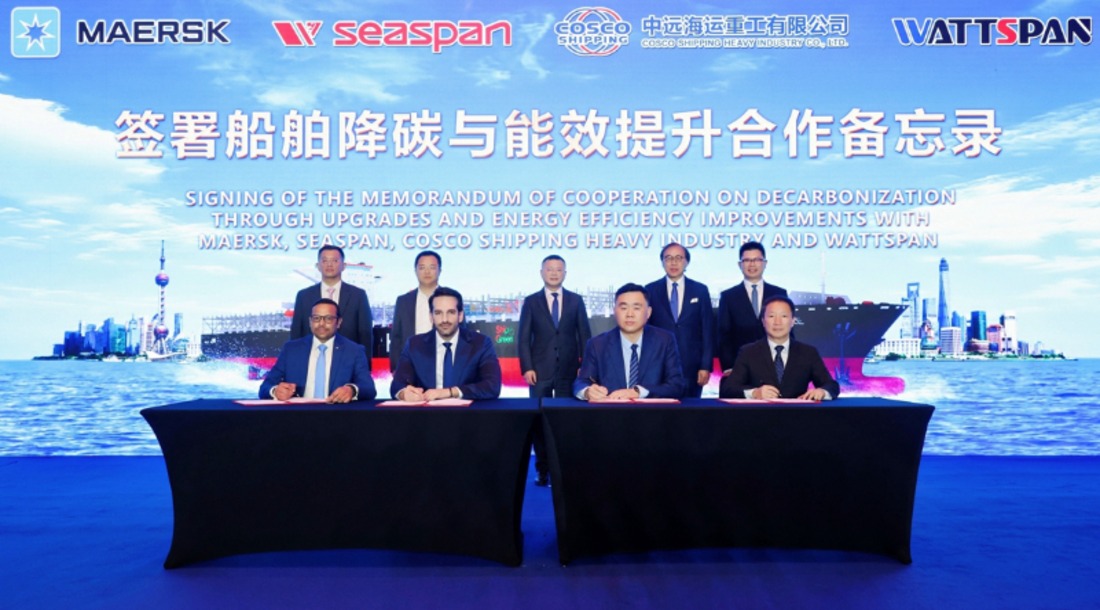
Seaspan and Maersk Advance Fleet Efficiency Upgrade Programme Across 18 Chartered Vessels
 Sustainability
COSCO SHIPPING Lines Establishes New Container Shipping Subsidiary in Hainan
 Sustainability
China’s Inland Waterway Vessel Completes First Biomethane Bunkering
 Sustainability
The Hong Kong Convention at Year One: A Success Story and the Way Forward for Responsible Ship Recycling
 Sustainability
Zhejiang Completes First Ship-to-Ship Methanol Bunkering Operation
 Sustainability
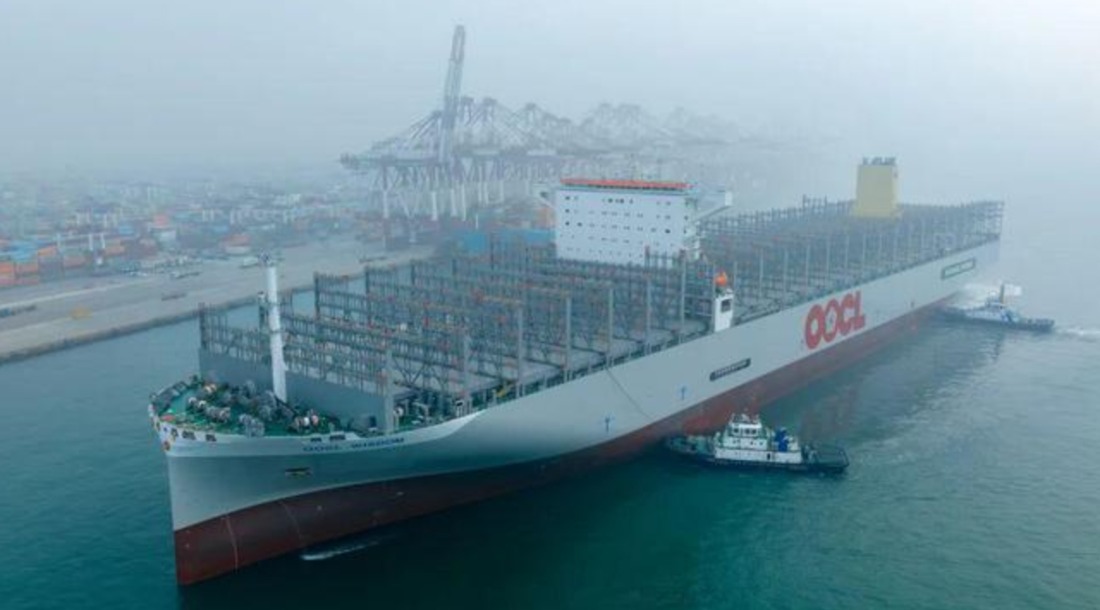
1,500 Tonnes! Seacon Fuels OOCL WISDOM’s Maiden Voyage
 Sustainability
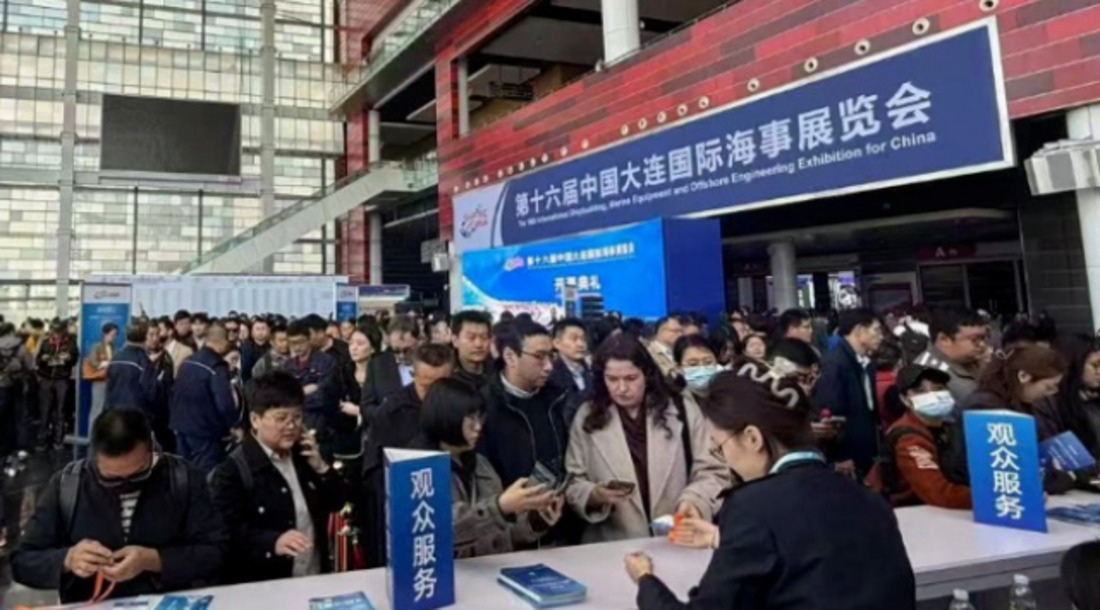
Awarded the International "Gold Standard"UFI Certification! Shiptec China : The Ultimate Industry Chain Gathering In Dalian This October !
 Sustainability
U.S. Lawmakers Reintroduce $10 Billion Clean Shipping Bill
 Sustainability
EU Publishes 2025 Shipping Emissions Data
 Sustainability