

The Hong Kong Convention at Year One: A Success Story and the Way Forward for Responsible Ship Recycling
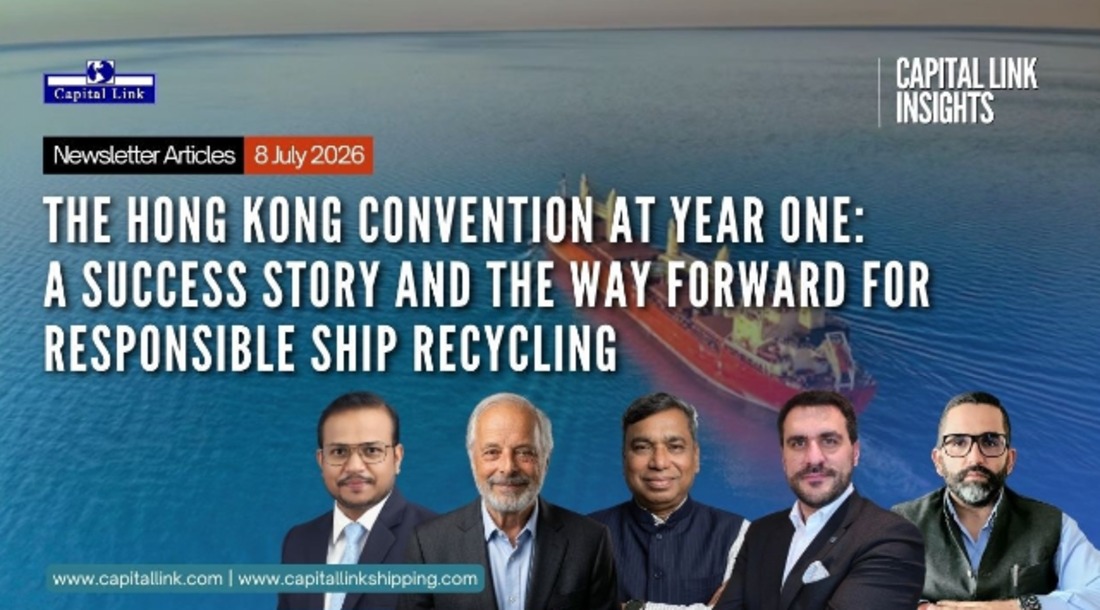
As the Hong Kong Convention completes its first year in force, industry experts take stock of what has changed on the ground and where the industry goes next. The discussion looked at the progress made by shipowners, recycling states, yards, regulators, and cash buyers, while also addressing the practical challenges that still remain around capacity, compliance, enforcement, and transparency. An open conversation that led to understanding how HKC can continue to strengthen responsible ship recycling and become a truly global standard for the industry.
The discussion was moderated by Dr. Anand Hiremath , CEO at Sustainable Ship and Offshore Recycling Program and featured Dr. Nikos Mikelis, Chairman at the BIMCO Ship Recycling Alliance, Mr. Vidhyadhar Rane, General Secretary at Alang Sossiya Ship Recycling and General Workers Association (ASSRGWA), Mr. Vishaal Soni , CEO of Leela Group of Ship Recycling Yards , and Mr. Vagelis Chatzigiannis , Trader at GMS Leadership .
All representatives agreed that the convention has already raised standards across the world's major recycling nations, but they also warned that uneven enforcement of conflicting regulations, and unresolved labor issues threaten to slow that progress.
For Dr. Mikelis, it marks the beginning of a new era. The convention may have taken 14 years to become binding after its adoption in 2009, but he believes the delay ended up working in the industry's favor, as it gave recycling yards time to modernize and governments time to prepare before the rules become mandatory. By the time it entered into force, all four major ship recycling countries had already joined it.
“This means that now virtually all end-of-life ships have no choice but to be recycled in line with the standards of HKC. This had been the dream scenario from the time the new convention was being developed,” he divulged.
View the full discussion here:
The new battle of regulation
If there was one issue that dominated the discussion, it was not the convention itself but its relationship with the Basel Convention, which, adopted in 1989 to regulate hazardous waste movements, was never intended to govern ship recycling according to Dr. Mikelis. He recalled that its own governing body had asked the IMO in 2004 to develop a convention specifically for ships, a process that resulted in the Hong Kong Convention.
Now, the industry is caught between two overlapping legal regimes. “The only practical and reasonable way forward is for the governing body of the Basel Convention to agree that the IMO has fully delivered on its request of 2004, and therefore, ships that fulfill the requirements of HKC are exempt from transboundary movement controls of the Basel Convention,” Dr. Mikelis supplied, warning that keeping both systems in place risks creating uncertainty rather than improving environmental standards. Instead of helping regulators, it adds another layer of paperwork and makes HKC harder to enforce consistently.
Making note of some discussions taking place this week at the Basel Convention's Open-ended Working Group in Geneva, Dr. Mikelis highlighted the industry's hope that governments will eventually recognize the HKC as the single framework for ship recycling.
It’s still uncertain whether that will be achieved, especially considering the European Commission's position that HKC should be strengthened before it can be considered equivalent to the Basel Convention.
The changes workers can see
Mr. Rane focused on something more immediate. Has life improved for the people cutting ships apart every day?
He actually is of the opinion that the past year has brought noticeable changes, as safety training has expanded, workers are using more personal protective equipment, and emergency preparedness has improved in many recycling yards. But Mr. Rane was equally clear that safer yards do not automatically mean better lives.
“What matters most is whether they return home safely after work, receive fair wages on time, have access to medical care, decent accommodation, social security, and stable employment.” He noted that occupational health monitoring should become a permanent part of the HKC’s framework, as illnesses linked to hazardous exposure can appear years after workers have left the industry.
“A worker may leave the industry, but the health impact of exposures can remain for life. Therefore, protection should not end when workers leave the industry,” he reiterated.
Compliance becomes the norm
For Mr. Chatzigiannis, the first year of HKC, has changed conversations with shipowners as much as it has changed the paperwork. He was happy to share that owners now routinely ask about documentary compliance before committing a vessel for recycling, particularly the International Ready for Recycling Certificate required under the HKC.
The process itself depends on the Inventory of Hazardous Materials, an agreement with an authorized recycling yard and an approved Ship Recycling Plan before classification societies or flag administrations issue the certificate.
“It's a very simple process, but depending on the experience of the people involved, it might end up having some delays or complications," he said.
Eleven years of preparation
Inside the recycling yards themselves, the transition has been less dramatic. Mr. Soni commented that his facilities had already been operating in line with HKC principles since 2015, when some Indian yards voluntarily adopted the convention's standards years before they became mandatory.
“What has changed is that now the convention, from being voluntary, has become a mandatory international standard.”
For established yards the focus has shifted from building infrastructure to maintaining standards. More than 115 Indian yards have achieved compliance through classification societies, and the country's Directorate of Ship Recycling has begun issuing Documents of Authorization for Ship Recycling (DASR), with more approvals expected in the coming months.
Finally, Dr. Hiremath noted that the discussion reported on how far the industry has moved in the past year, but also where work still needs to be done. “The regime is now real, but enforcement is the test it still has to pass,” he commented, making it a point to note that worker welfare and downstream accountability are the areas where the HKC has not yet fulfilled its promise.
“HKC at one year is not a finish line. It is a foundation. The way forward is ours to build,” he concluded.
Capital Link – Disclaimer
Capital Link’s webinars, podcasts, articles and presentations may contain "forward-looking statements." Statements that are predictive in nature, that depend upon or refer to future events or conditions, or that include words such as "expects," "anticipates," "intends," "plans," "believes," "estimates," "projects," "forecasts," "may," "will," "should" and similar expressions are forward-looking statements. These statements are not historical facts but instead represent only the beliefs of each participating Company regarding future results, many of which, in their nature, are inherently uncertain and outside of the control of the Companies. Actual results may differ, possibly materially, from those anticipated in these forward-looking statements. For more information about risks and uncertainties associated with the participating companies, please refer to the regulatory filings of each participating company with the SEC or other Stock Exchanges where they are listed.
Founded in 1995, Capital Link provides Investor & Public Relations and Media services to several listed and private companies, including companies featured in these webinars, podcasts, articles and presentations. All these, including the one mentioned above, are for informational and educational purposes and should not be relied upon. They do not constitute an offer to buy or sell securities or investment advice or advice of any kind. The views expressed are not those of Capital Link, which bears no responsibility for them. In addition, Capital Link organizes a series of industry and investment conferences annually in key industry centers in the United States, Europe, and Asia, all of which are known for combining rich educational and informational content with unique marketing and networking opportunities. Capital Link is a data partner of the Baltic Exchange. Based in New York City, Capital Link has presence in London, Athens & Oslo. For additional information please visit: www.capitallink.com.

READ MORE
 Sustainability
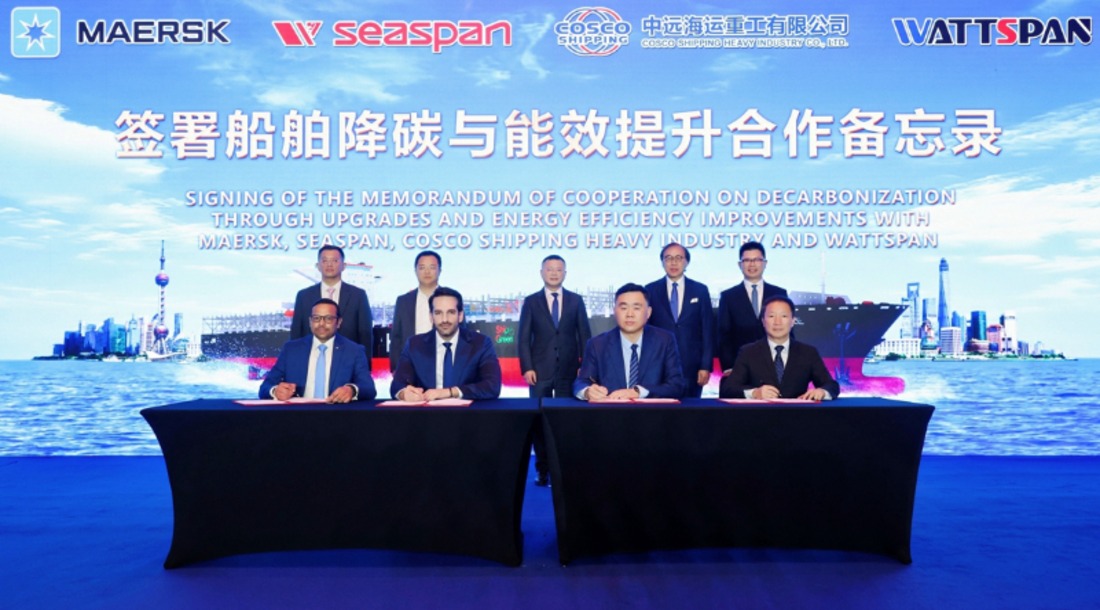
Seaspan and Maersk Advance Fleet Efficiency Upgrade Programme Across 18 Chartered Vessels
 Sustainability
COSCO SHIPPING Lines Establishes New Container Shipping Subsidiary in Hainan
 Sustainability
China’s Inland Waterway Vessel Completes First Biomethane Bunkering
 Sustainability
Shipping at Crossroads: Geopolitics, Global Market Shift, & Strategic Positioning
 Sustainability
Zhejiang Completes First Ship-to-Ship Methanol Bunkering Operation
 Sustainability
1,500 Tonnes! Seacon Fuels OOCL WISDOM’s Maiden Voyage
 Sustainability
Awarded the International "Gold Standard"UFI Certification! Shiptec China : The Ultimate Industry Chain Gathering In Dalian This October !
 Sustainability
U.S. Lawmakers Reintroduce $10 Billion Clean Shipping Bill
 Sustainability
EU Publishes 2025 Shipping Emissions Data
 Sustainability