

Shipowner Builds Its Own “Sail” and Finally Installs It on the First Vessel
Wallenius Wilhelmsen’s Tirranna becomes the first operating vessel fitted with Oceanbird’s Wing 560, taking wind-assisted propulsion from concept to sea trials
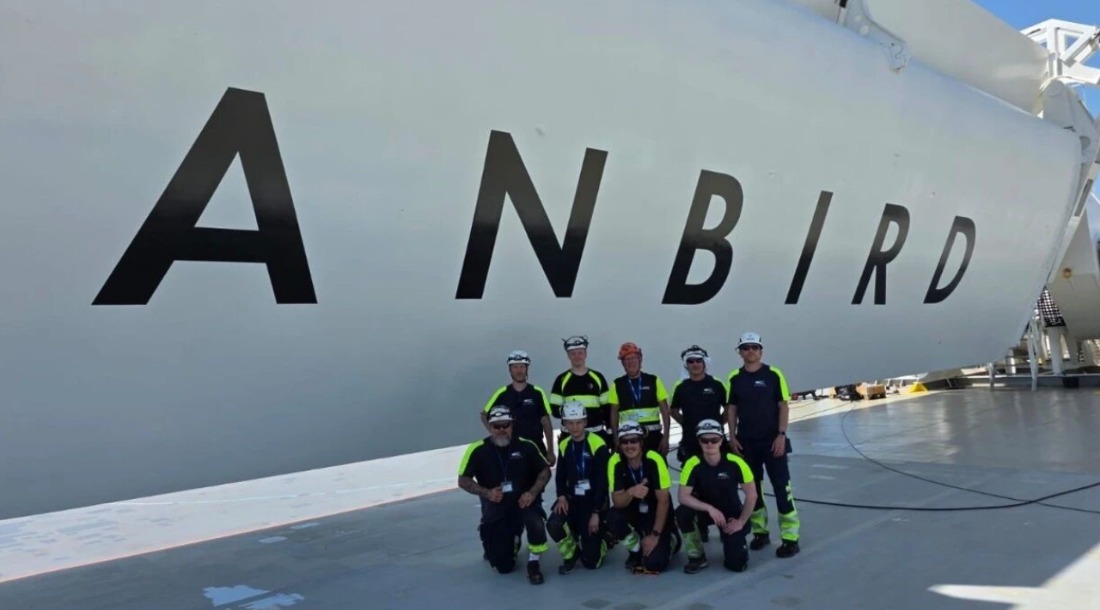
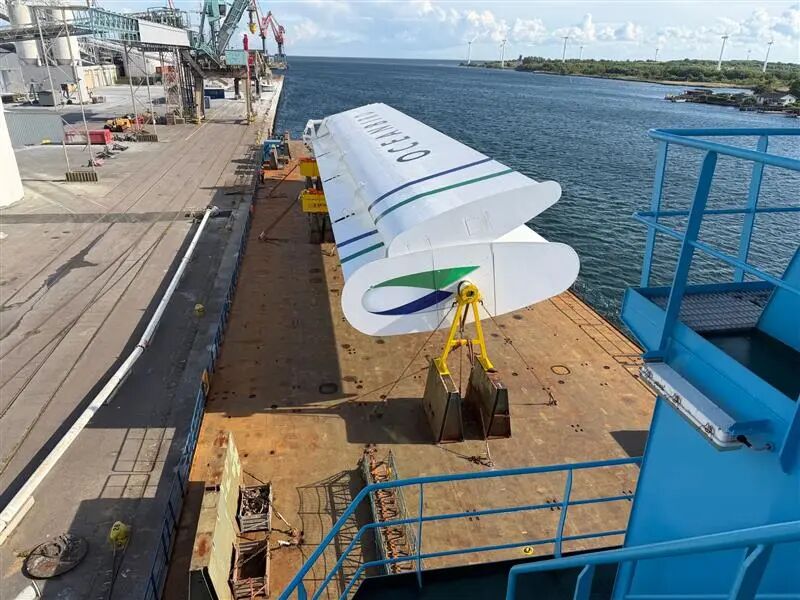
A wind-assisted propulsion system developed by Oceanbird has been installed on Tirranna, a car carrier operated by Norwegian-listed vehicle logistics and ro-ro shipping giant Wallenius Wilhelmsen.
The system, known as Wing 560, is a tiltable rigid wing sail standing around 46 metres high. Following installation, the vessel is expected to move into initial testing and operational trials at sea.
At first glance, this may look like another energy-saving retrofit. But the real significance lies in who is behind the technology.
Oceanbird is not an external supplier that suddenly won a pilot project from a shipowner. It is a wind propulsion company jointly formed by Wallenius Lines and Alfa Laval. In other words, the Tirranna installation is not simply a case of a shipowner buying a new piece of equipment from the market. It is part of a much longer strategic process in which the Wallenius ecosystem has taken a zero-emission shipping concept from design, company formation and land-based prototyping to installation on a real commercial vessel.
Wallenius is not waiting for the market to decide
For many shipping companies, the usual response to decarbonisation pressure has been to wait for fuel suppliers, shipyards, engine makers and equipment manufacturers to develop mature solutions before making investment decisions.
Wallenius has taken a more active path.
The origin of Oceanbird can be traced back to a wind-powered car carrier concept led by Wallenius Marine. The idea was not simply to add an energy-saving device to an existing vessel. It was to rethink the energy structure of deep-sea vehicle transportation.
If wind can once again become part of a vessel’s propulsion power, pure car and truck carriers could be one of the first deep-sea ship types to create a meaningful application window. They have large deck areas, long ocean routes and growing pressure from cargo owners to reduce supply-chain emissions.
Wallenius later joined forces with Alfa Laval to establish AlfaWall Oceanbird, which operates under the Oceanbird brand. The logic behind the partnership is clear. Wallenius brings shipowning experience, vehicle carrier operations, customer understanding and real route data. Alfa Laval brings marine engineering, equipment manufacturing, service capability and ship system integration.
This combination suggests that Wallenius is not treating wind propulsion as a single-vessel fuel-saving device. It sees it as a potential underlying technology that may affect future car carrier design, operating cost, emissions performance and customer service capability.
Tirranna is a testbed, not just a retrofit
Tirranna is a car carrier built in 2009. In 2024, the vessel entered IMC Shipyard in Zhoushan, China, for preparatory retrofit work. The work included deck strengthening, installation of the wing sail foundation, cable interfaces, radar and navigation light adjustments, as well as stability testing.
These engineering details matter. A wing sail is not simply mounted onto a ship. It affects structural load, deck arrangement, stability, visibility, crew operation, port calls, maintenance and voyage planning under different wind conditions.
Wallenius Wilhelmsen has been clear about the role of Tirranna. The vessel is part of the Orcelle Horizon project and serves as a unique testbed. Its task is to test and assess a full-scale wind propulsion unit on a real vessel in real operating conditions. The data will support future wing sail optimisation and the development of the Orcelle Wind wind-powered ro-ro vessel concept.
That means Tirranna is not only testing whether the wing sail can be installed. It is testing a full operational package: whether fuel savings can be achieved consistently on actual routes, whether the automation system is reliable, whether crew can operate the equipment safely and efficiently, whether port and navigational constraints are manageable, whether maintenance costs are acceptable, and whether the vessel’s overall operating efficiency improves.
Only after those questions are answered with real data can wind-assisted propulsion move beyond demonstration and into broader commercial adoption.
A slow process shows strategic caution
The Oceanbird programme has not moved at a dramatic pace. That is part of why it is worth watching.
The joint venture between Wallenius Lines and Alfa Laval was established in 2021. Oceanbird then spent several years on engineering development, modelling, system design and testing. In 2025, the first full-scale Wing 560 prototype was presented in Landskrona, Sweden. That unit remains at Oresund DryDocks as a land-based platform for training, demonstrations and automation system optimisation. A second wing of the same type was then prepared for installation on Tirranna.
By 2026, the project has entered the vessel installation and sea-trial stage. Oceanbird has also secured its first commercial order, covering two Wing 560 units for an undisclosed shipowner, with retrofit installation planned in Europe in early 2027.
This sequence shows a careful approach. Wallenius has not rushed to present Oceanbird as a fully mature, mass-produced zero-carbon solution. The company has instead focused on testing, demonstration, crew training, data collection and operational trials.
That caution gives the project more industry value. Wind propulsion must prove itself not in a concept video, but in daily vessel operations.
Wind propulsion enters the payback phase
Oceanbird is still at an early stage. The Wing 560 land-based prototype is in place, and the installation on Tirranna marks a major step forward. But the real test will come from operational data at sea.
The economics of wind-assisted propulsion depend on many variables, including route profile, wind conditions, vessel speed, fuel prices, carbon costs, cargo owner willingness to pay, retrofit cost, port restrictions and maintenance requirements.
For shipowners, fuel savings matter. But so do operational reliability, crew workload, off-hire risk and integration with existing vessel schedules.
That is why the significance of Tirranna lies not in providing an instant answer for the whole industry, but in producing real answers. The vessel will show how a full-scale rigid wing sail performs on a large car carrier, what kind of fuel and emissions savings can be achieved, what practical challenges appear, and what kind of ship-shore coordination is required.
This data will be more valuable than another concept announcement.
From sail to strategy
Modern wind propulsion is not a return to the past. Behind today’s wing sails are aerodynamics, automation, digital route optimisation, materials engineering, structural design and ship-shore data coordination.
Wallenius’ decision also shows that future competition in green shipping will not be limited to alternative fuels. Methanol, ammonia, LNG, biofuels and e-fuels will all play roles. But energy efficiency technologies will also become an important part of fleet competitiveness.
A ship that consumes less fuel also needs less alternative fuel. That means lower fuel cost, lower carbon cost and lower exposure to future green fuel supply constraints.
Seen from this perspective, Oceanbird is an early strategic bet by Wallenius on the future cost structure of shipping. It is not betting on one specific fuel. It is betting on wind — an energy source that does not need to be purchased, is not priced by geopolitics, but can only be used effectively through engineering capability and operational discipline.
The installation of the wing sail on Tirranna means that this bet has now entered the real-vessel validation stage.
Whether Oceanbird can move from one demonstrator vessel to more car carriers, bulkers and tankers will depend on sea-trial data, customer acceptance and scalable delivery capability.
But one thing is already clear: Wallenius is not simply waiting for future technology to mature. It has stepped into the technology itself, and is now bringing one of its long-term zero-emission concepts into the real shipping market.
READ MORE
 Sustainability
Seacon Shipping shifts focus from expansion to value creation as strategy resets
 Sustainability
China-Built Bulkers Put Fortescue’s Ammonia Shipping Plan on the Water
 Sustainability
Marine Engine Giant Changes Hands: Volkswagen to Sell 51% of Everllence to Bain Capital in €7.4 Billion Deal
 Sustainability
13 Dry Bulk Shipping Companies Sign Green Shipping Cooperation Initiative in Hong Kong
 Sustainability
World’s Largest Methanol Dual-Fuel Containership Delivered
 Sustainability
6,000 Tons! China's Largest Single Batch of Green Methanol Procurement Completed
 Sustainability
Most Shipping Companies Keep Decarbonisation Plans Unchanged After IMO Net-Zero Framework Delay
 Sustainability
European Shipowners Call for €9bn in EU ETS Revenues to Be Invested Back into Shipping
 Sustainability
Iron Ore Giant FMG to Charter Ammonia-Capable Bulk Carriers
 Sustainability