

European Shipowners Call for €9bn in EU ETS Revenues to Be Invested Back into Shipping
European shipowners are urging the EU to reinvest shipping’s €9bn annual ETS contribution back into maritime decarbonisation, as only about €1.6bn has so far been clearly earmarked for the sector through 2030.
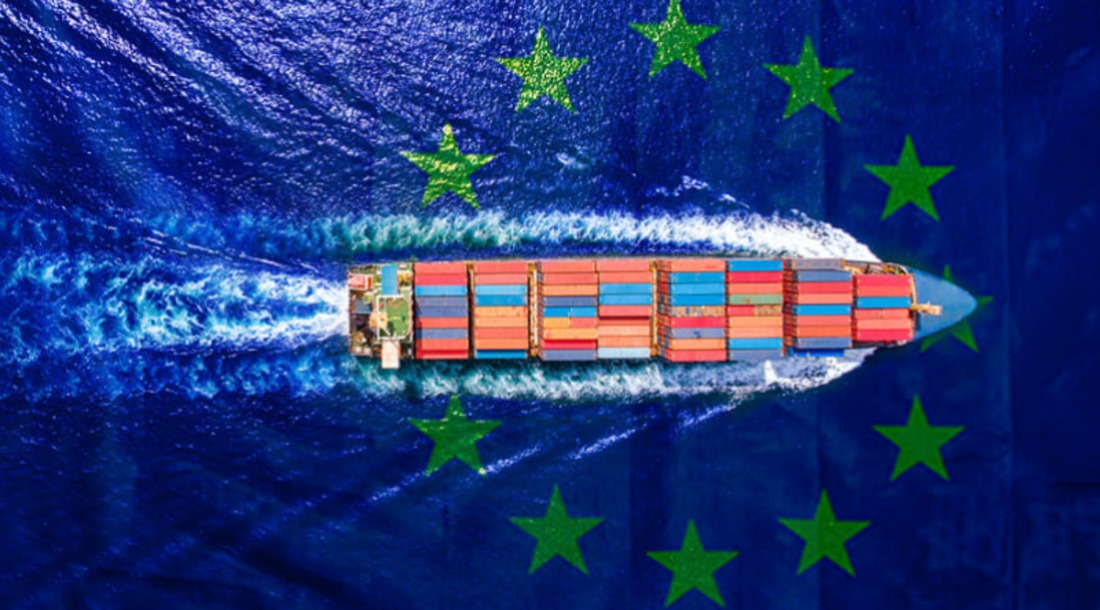

European shipowners are calling for a much larger share of EU ETS revenues generated by shipping to be reinvested into the sector’s decarbonisation.
On 22 June, European Shipowners | ECSA and Airlines for Europe (A4E) issued a joint statement urging the European Commission and EU Member States to use EU and national ETS revenues to support sustainable fuels, clean technologies and offtake mechanisms for shipping and aviation.
According to the statement, shipping and aviation already contribute more than €11bn annually to EU ETS revenues. Shipping alone contributes around €9bn a year. ECSA and A4E argue that these revenues should be channelled back into the two sectors to help de-risk investment in sustainable fuels and bridge the price gap with conventional fuels.
The call comes against the backdrop of a clear imbalance in the current funding structure. Shipping is now paying into the EU ETS, but the amount of ETS revenue explicitly earmarked for maritime decarbonisation remains limited.
Under the existing EU ETS rules for shipping, the EU’s main dedicated arrangement is the earmarking of 20 million EU ETS allowances for maritime decarbonisation through the EU Innovation Fund up to 2030. Based on an assumed carbon price of €80 per allowance, this corresponds to around €1.6bn. If averaged over the seven-year period from 2024 to 2030, this would equal roughly €230m per year. However, this is only an arithmetic average, not a legally fixed annual allocation.
In other words, shipping contributes around €9bn to EU ETS revenues every year, while the clearly earmarked maritime envelope amounts to about €1.6bn in total up to 2030. This gap is the central background to the latest call from European shipowners to reinvest ETS revenues back into shipping.
The EU ETS has applied to maritime transport since 2024. It covers large cargo and passenger ships of 5,000 gross tonnage and above calling at EU ports, regardless of flag. The system covers 100% of emissions from voyages between EU ports, 100% of emissions at berth in EU ports, and 50% of emissions from voyages between EU and non-EU ports.
The surrendering obligation is being phased in. Shipping companies must surrender allowances for 40% of their reported 2024 emissions in 2025, 70% of their reported 2025 emissions in 2026, and 100% of covered emissions from 2027 onwards.
This means shipping companies will face a rapidly increasing carbon cost in the coming years. At the same time, low- and zero-carbon fuels remain expensive and insufficiently available.
ECSA and A4E said sustainable fuels remain significantly more expensive than fossil fuels. For shipping, sustainable fuels are on average around four times more expensive than conventional fuels. For aviation, the cost is around three to six times higher. Closing this price gap is seen as essential to scaling up supply and enabling real decarbonisation.
Sotiris Raptis, Secretary General of European Shipowners | ECSA, said European shipowners are already leading global investments in sustainable fuel-powered vessels, accounting for 44% of the global orderbook. However, he warned that fuel availability in Europe is not keeping pace with investment in ships.
According to ECSA, Asia accounts for 74% of global fuel production projects, while Europe accounts for only 10%. Less than 5% of European sustainable fuel production is currently intended for maritime use.
Raptis said shipping’s roughly €9bn annual contribution to EU ETS should be used at both EU and national levels to bridge the fuel price gap and support sustainable fuel availability and clean technology projects. He added that this is important not only for the sector’s energy transition, but also for Europe’s energy security.
A4E Managing Director Ourania Georgoutsakou said European airlines contributed €2.3bn to EU ETS in 2024 alone, with the figure expected to exceed €5bn annually by 2030. However, she said the revenues are not being sufficiently recycled into the fuels and technologies airlines need to decarbonise.
She also noted that the 20 million SAF allowances currently on the table fall short of what will be required by 2030, while the lack of clarity on post-2030 availability weakens the investment case for airlines.
The joint statement highlights a growing concern across European transport sectors. Shipping and aviation are being asked to pay rising carbon costs, but both sectors argue that these revenues must be used more directly to address the practical bottlenecks of decarbonisation.
For shipping, the challenge is not only whether shipowners are willing to invest in greener ships. The larger question is whether sustainable fuels will be available, whether ports will have the infrastructure to supply them, whether the price gap can be reduced, and whether producers, ports, shipowners and cargo interests can build bankable long-term demand.
READ MORE
 Sustainability
13 Dry Bulk Shipping Companies Sign Green Shipping Cooperation Initiative in Hong Kong
 Sustainability
Seacon Shipping shifts focus from expansion to value creation as strategy resets
 Sustainability
China-Built Bulkers Put Fortescue’s Ammonia Shipping Plan on the Water
 Sustainability
Shipowner Builds Its Own “Sail” and Finally Installs It on the First Vessel
 Sustainability
Marine Engine Giant Changes Hands: Volkswagen to Sell 51% of Everllence to Bain Capital in €7.4 Billion Deal
 Sustainability
World’s Largest Methanol Dual-Fuel Containership Delivered
 Sustainability
6,000 Tons! China's Largest Single Batch of Green Methanol Procurement Completed
 Sustainability
Most Shipping Companies Keep Decarbonisation Plans Unchanged After IMO Net-Zero Framework Delay
 Sustainability
Iron Ore Giant FMG to Charter Ammonia-Capable Bulk Carriers
 Sustainability