

Marine Engine Giant Changes Hands: Volkswagen to Sell 51% of Everllence to Bain Capital in €7.4 Billion Deal
The global marine engine market has witnessed a major ownership reshuffle.
On June 24, Volkswagen Group announced that it had entered into an exclusive arrangement with Bain Capital for the sale of a 51% stake in Everllence. The envisaged transaction is expected to generate proceeds of approximately €7.4 billion for Volkswagen. After completion, Bain Capital will become the majority shareholder of Everllence, while Volkswagen plans to remain a significant shareholder with a 49% stake in the medium term.
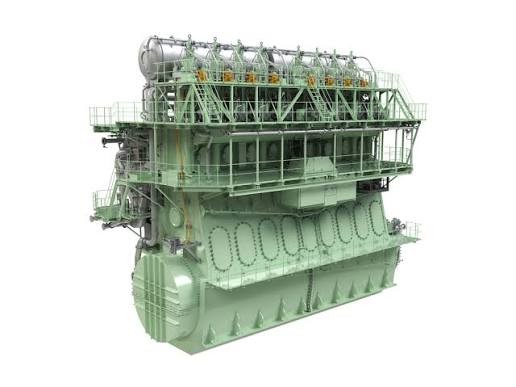
For the shipping industry, Everllence is far from an unfamiliar name. The company was known as MAN Energy Solutions until June 2025. Before that, it operated under names including MAN Diesel & Turbo and MAN B&W Diesel, and has long been one of the most important suppliers of large marine engines, two-stroke and four-stroke propulsion systems, dual-fuel engine technology, turbomachinery, PrimeServ after-sales services and industrial energy solutions.
Volkswagen is not selling an ordinary industrial asset. It is transferring control of one of Europe’s most historic heavy engineering businesses, and one of the most influential technology platforms in the global maritime propulsion market.
Volkswagen cashes in while retaining a strategic stake
According to Volkswagen, the transaction will be structured as a leveraged buyout. The group will sell 51% of Everllence and expects proceeds of around €7.4 billion.
Volkswagen said the deal will significantly strengthen its financial position and support the group’s ongoing transformation, while allowing it to further streamline its investment portfolio and focus more clearly on its core automotive business.
Oliver Blume, CEO of Volkswagen Group, said Everllence had been realigned and strengthened over the past few years and had developed into a success story. In his words, now is the right time for the next step: transferring the majority stake to a new strong partner. He also noted that leaner structures and processes would give Everllence room to grow further in attractive markets such as data centers, energy and shipping, while allowing Volkswagen to focus more strongly on its core business.
This means Volkswagen is not exiting Everllence because the company has lost value. On the contrary, Everllence is entering a new growth cycle.
Demand for data center power, the global energy transition, shipping decarbonization and industrial emission reduction are all increasing the need for large engines, power generation systems, turbomachinery and decarbonization technologies.
Everllence currently has around 16,000 employees and annual revenue of approximately €4.9 billion. It operates through more than 140 locations worldwide. Volkswagen disclosed that, as of May 31, 2026, the book value of Everllence SE in Volkswagen AG’s balance sheet was around €3.4 billion. Against that background, the expected €7.4 billion proceeds underline how strongly the market is pricing Everllence’s future cash flow and growth potential.
For major European industrial transactions of this kind, employee protection and site commitments are often critical. As part of the transaction, safeguards have been agreed for Everllence’s German sites in Augsburg, Oberhausen, Berlin, Hamburg and Ravensburg. These sites will be retained under the new ownership structure at least until the end of 2030, and compulsory redundancies are ruled out during this period.
The deal has not yet been completed. Volkswagen said the transaction remains subject to the legally required information and consultation process with employee representation bodies in France, as well as customary conditions and regulatory approvals. The company aims for these conditions, including regulatory approvals, to be met by the end of 2026.
Why Bain Capital wants Everllence
Before Bain Capital emerged as Volkswagen’s chosen partner, Everllence had already attracted strong interest from global private equity investors.
Earlier reports indicated that Volkswagen’s sale process had moved into the final buyer selection stage by early June. The final contenders included CVC Capital Partners, Bain Capital and EQT. EQT was reportedly bidding together with Porsche SE and investors linked to Qatar, creating a particularly sensitive ownership and governance context given Porsche SE’s position as a major Volkswagen shareholder.
Market reports had suggested that Everllence was being valued at around €8 billion to €9 billion during the process. Later reports indicated that the final bids valued the company clearly above €9 billion. Although Bain was not necessarily the highest bidder, it ultimately secured the exclusive arrangement with Volkswagen.
The reason Bain Capital was willing to pursue Everllence is not simply that it sees value in a traditional diesel engine manufacturer. The real attraction is Everllence’s position across several growth markets.
The first is shipping.
The global fleet is entering a new phase of fuel transition and efficiency upgrading. LNG, methanol, ammonia, ethane, LPG and other alternative fuel pathways all require large engines, fuel supply systems, retrofit solutions and long-term service networks. Everllence has deep technical and commercial positions in low-speed two-stroke engines, medium-speed engines, dual-fuel engines and lifecycle service. It remains one of the most important propulsion technology suppliers in global shipping.
The second is energy.
As Europe and other regions invest in energy transition, district heating, industrial decarbonization and power infrastructure, large heat pumps, turbomachinery, power generation systems and carbon capture technologies are becoming increasingly important. Everllence has spent recent years moving away from the narrow identity of an engine manufacturer and toward a broader role as a provider of energy and decarbonization solutions.
The third is data centers.
The rapid expansion of AI and cloud computing is driving electricity demand to new levels. Large data centers require highly reliable backup power and, in some cases, additional generation capacity. This is putting large engine and power generation technologies back into the spotlight for investors. Reuters has also reported that Everllence is looking for growth in generator demand linked to the AI data center boom.
In this sense, Bain Capital is not simply betting on diesel engines. It is backing a heavy industrial technology platform positioned across shipping, energy, power infrastructure and hard-to-abate decarbonization.
Everllence CEO Uwe Lauber said the transaction would lay the groundwork for the sustainable continuation and further acceleration of the company’s growth trajectory. He added that Bain Capital’s financial strength, strategic expertise and global network are expected to strengthen Everllence’s ability to drive innovation, scale up cutting-edge technologies and enter new markets.
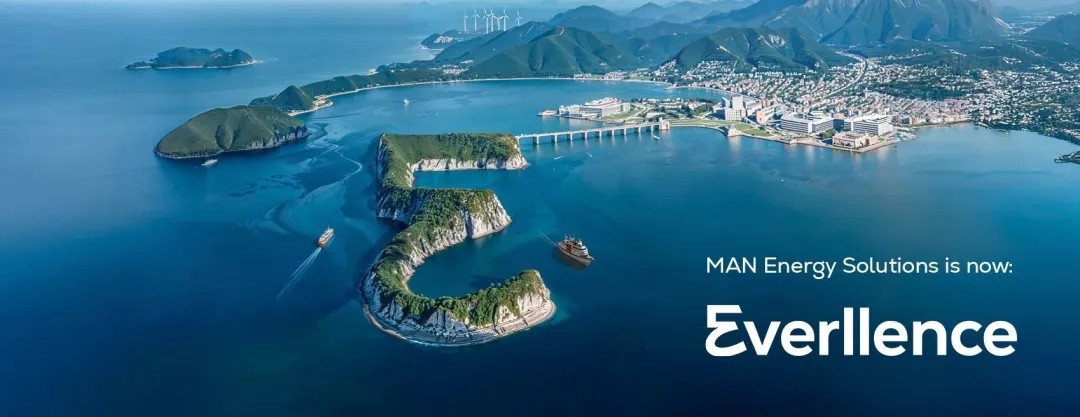
A new name, but a very old industrial legacy
Everllence is a new name, but the company behind it has a long history.
In June 2025, MAN Energy Solutions officially changed its name to Everllence. The company said the new name combines “ever” and “excellence”, reflecting both long-term engineering excellence and continuous innovation. The rebranding did not fundamentally change the company’s legal entities, products, services or contractual relationships.
The company’s industrial roots go back to the early stages of German industrialization. One historical line connects it to the Ruhr region’s iron and heavy industry tradition, while another leads to the mechanical engineering heritage of Augsburg.
For the engine industry, the most important moment came in the late 19th century.
Between 1893 and 1897, Rudolf Diesel worked with Maschinenfabrik Augsburg to develop and build the world’s first diesel engine. That invention changed industrial power systems and later became the foundation of modern ocean-going ship propulsion.
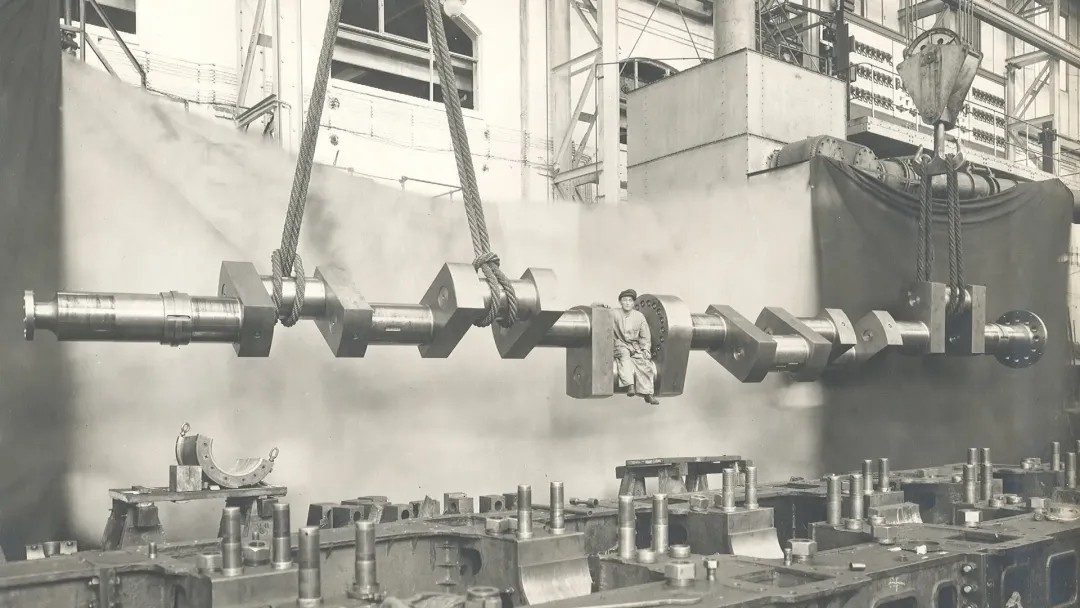
In 1912, the ocean-going vessel Selandia entered service with diesel propulsion, marking a key milestone in maritime history. In the decades that followed, diesel engines gradually displaced steam propulsion and became the dominant power source for merchant shipping.
Everllence also carries an important Danish lineage in marine low-speed engines: Burmeister & Wain, or B&W, a name deeply familiar to the shipping industry. In the 1980s, MAN and B&W’s diesel engine businesses were combined to form MAN B&W Diesel. The MAN B&W name subsequently became one of the most influential brands in the global two-stroke marine engine market.
The company later went through several changes in name and business structure. MAN B&W Diesel became MAN Diesel & Turbo. In 2018, the company was renamed MAN Energy Solutions, reflecting a broader shift from a traditional engine and turbomachinery supplier toward energy transition, industrial decarbonization and integrated energy solutions. In 2025, MAN Energy Solutions became Everllence.
Everllence’s relationship with Volkswagen came through Volkswagen’s integration of MAN. Volkswagen began building its stake in MAN in 2006 and gained control of MAN SE in 2011. Later, Volkswagen placed MAN Truck & Bus and related commercial vehicle businesses under the TRATON structure, while MAN Energy Solutions was separated from MAN SE and held directly by Volkswagen Group from 2018.
From this perspective, Everllence may look like a new brand, but it carries more than a century of MAN, B&W and diesel engine technology heritage.
A sale years in the making
The sale of Everllence did not come out of nowhere.
As early as 2019, market speculation had already emerged that Volkswagen was considering selling MAN Energy Solutions as part of a broader effort to simplify its industrial portfolio. At the time, Cummins was mentioned in market reports as a possible buyer.
That process did not result in a transaction. In 2020, Volkswagen confirmed that MAN Energy Solutions would remain part of Volkswagen Group for at least the next four years, following agreements with IG Metall and German works councils. The company then moved forward with its Performance 2023 program, focusing on restructuring, cost reduction, operational flexibility and long-term profitability.
In hindsight, that pause was not the end of the divestment story. It was a preparation phase.
Over the following years, MAN Energy Solutions continued to reposition itself. The company strengthened its role in energy transition technologies, low- and zero-carbon maritime propulsion, carbon capture, large-scale heat pumps and hydrogen-related solutions. The 2025 rebranding to Everllence gave the business a new identity, separating it more clearly from the MAN legacy while emphasizing decarbonization and future energy markets.
By 2026, Volkswagen’s sale process had restarted in a much more favorable market environment. Global infrastructure investment, shipping decarbonization, data center electricity demand and renewed interest in industrial technology platforms made Everllence a much more attractive asset for financial investors.
The result is one of the most significant European industrial carve-outs of the year.
What it means for shipping
For Volkswagen, the transaction is a way to strengthen its balance sheet, reduce complexity and sharpen its focus on the automotive business at a time when the carmaker is facing intense competition, the costly transition to electric vehicles and pressure to simplify its corporate structure.
For Bain Capital, Everllence offers exposure to a heavy engineering platform with positions in several long-cycle growth markets.
For shipping, however, the deal carries a wider message.
The value of marine engine companies is being reassessed. Future competition in ship propulsion will no longer be limited to the performance of a single main engine. It will involve fuel flexibility, dual-fuel technology, retrofit capability, lifecycle service, digital efficiency, emissions compliance, energy system integration and the ability to support customers through uncertain fuel pathways.
This is why Everllence matters.
The company sits at the intersection of several transitions: from fossil fuels to alternative fuels, from product sales to lifecycle services, from standalone engines to integrated energy systems, and from traditional shipping cycles to broader infrastructure and power demand.
A German company that helped bring the diesel engine into the world is now entering a new capital cycle.
Behind the new name Everllence remains one of the most important old forces in global shipping and industrial power. The ownership may be changing, but the company’s strategic relevance to shipping, energy and heavy industry is only becoming more visible.
READ MORE
 Sustainability
13 Dry Bulk Shipping Companies Sign Green Shipping Cooperation Initiative in Hong Kong
 Sustainability
Seacon Shipping shifts focus from expansion to value creation as strategy resets
 Sustainability
China-Built Bulkers Put Fortescue’s Ammonia Shipping Plan on the Water
 Sustainability
Shipowner Builds Its Own “Sail” and Finally Installs It on the First Vessel
 Sustainability
World’s Largest Methanol Dual-Fuel Containership Delivered
 Sustainability
6,000 Tons! China's Largest Single Batch of Green Methanol Procurement Completed
 Sustainability
Most Shipping Companies Keep Decarbonisation Plans Unchanged After IMO Net-Zero Framework Delay
 Sustainability
European Shipowners Call for €9bn in EU ETS Revenues to Be Invested Back into Shipping
 Sustainability
Iron Ore Giant FMG to Charter Ammonia-Capable Bulk Carriers
 Sustainability