


Safe Bulkers Chief Urges Ordering Restraint as Fleet Renewal Continues


Polys Hajioannou’s warning at Capital Link’s Shanghai forum highlights the challenge facing owners: investing in more competitive ships while preserving the financial capacity to withstand a weaker market.
Safe Bulkers chief executive Polys Hajioannou has urged shipowners to slow newbuilding commitments and prepare for a market correction, even as his company continues taking delivery of more efficient tonnage.
Speaking at Capital Link’s 10th Annual International Shipping Forum in Shanghai on October 20, Hajioannou invoked the experience of 2007–08 and called on owners to arrange financing before it becomes necessary and retain funds for more difficult conditions. His comments were reported in Capital Link’s October 22 account of the forum’s leadership panel.
The warning comes against a backdrop of continued investment by both Safe Bulkers and fellow panel participant Dorian LPG. Their disclosed transactions illustrate a distinction central to the debate: maintaining a competitive fleet requires investment, but orders placed during favourable markets create obligations that extend well beyond them.
Caution alongside investment
Safe Bulkers’ own disclosures show that its chief executive’s warning should not be read as an announcement that the company has stopped ordering ships.
In its second-quarter results, published in July, the owner reported agreements during the first half of 2026 to acquire five Kamsarmax bulkers and one Capesize, with deliveries scheduled for 2028–29.
As of July 24, its outstanding orderbook comprised 10 vessels, including two methanol dual-fuel Kamsarmaxes. That figure is a historical snapshot, rather than a current undelivered total.
Following the Shanghai forum, Safe Bulkers announced the delivery of Kypros Island, its first methanol dual-fuel Kamsarmax. The vessel was built by Tsuneishi Shipbuilding (Zhoushan), the Japanese shipbuilding group’s operation in China.
Fleet replacement and industry capacity growth present different investment questions. A modern vessel may improve an individual owner’s cost position, while simultaneous expansion across competing fleets can weaken the market into which that ship is delivered.
The difficulty is timing. Shipbuilding instalments become contractual commitments well before an owner knows the freight rates, cargo demand and financing conditions that will prevail when the vessel enters service.
Dorian pairs orders with asset sales
Dorian LPG’s recent transactions offer a more detailed example of how fleet renewal can combine newbuilding commitments, vessel disposals and financing.
On June 23, the company announced an agreement with HD Hyundai for a 90,000-cbm VLGC costing approximately $115 million, with delivery scheduled for July 2029.
The same announcement disclosed agreements to sell three existing VLGCs—one built in 2014 and two in 2015—for aggregate proceeds of approximately $256 million. Dorian expected delivery to the buyers by the fourth quarter of 2026, while cautioning that completion was not guaranteed.
On September 4, Dorian announced three further 90,000-cbm dual-fuel VLGCs at Hanwha Ocean for approximately $345 million, scheduled for delivery in June, September and December 2030.
The ships will be capable of burning LPG or conventional low-sulphur fuel and are designed to transit the Panama Canal’s original locks, giving charterers another routing option.
These commitments extend beyond a simple increase in vessel numbers. They also involve the timing of asset sales, delivery schedules and the commercial flexibility of the replacement ships.
At the Shanghai forum, Dorian president and chief executive John C. Hadjipateras emphasised measured renewal and a strong balance sheet. He linked the company’s LPG fuel choice to the cargo it transports and fuel availability along its trading routes.
Fuel capability must fit the trading pattern
That connection between technology and employment is equally relevant to dry bulk.
Safe Bulkers ordered its two 81,200-dwt methanol dual-fuel Kamsarmaxes in October 2023. The original announcement specified that they could operate on either methanol or conventional fuel.
Delivery establishes that an investment in fuel capability has been realised. It does not, by itself, establish how frequently the vessel will burn methanol, whether that methanol will be produced from low-carbon sources, or what emissions savings will be achieved in service.
International Chamber of Shipping chairman John Denholm highlighted a related operational distinction during the panel: liner operators with predictable routes are better placed to organise alternative-fuel supplies than tramp owners whose future destinations may be uncertain. He also called for greater certainty through global IMO rules.
For owners, the investment calculation therefore extends beyond the engine and fuel tanks. Bunker availability, procurement costs, potential deviations and charterers’ requirements all affect whether a technical capability becomes a commercial advantage.
Financing the interval before delivery
Dorian’s September announcement also disclosed a seven-year, $368.4 million credit facility, signed on September 2 to refinance existing debt. It comprised a $213.4 million term loan and a $155.1 million revolving credit facility.
The disclosure illustrates why financing belongs alongside vessel specifications in any assessment of fleet renewal. Owners must accommodate construction payments and debt maturities while retaining sufficient resources to operate through weaker earnings.
Hajioannou’s warning remains a market judgement, rather than evidence that a downturn has begun. Equally, continued ordering by individual companies does not demonstrate confidence in every vessel segment or fuel pathway.
The practical test is whether an owner can explain what each new ship adds, how it will be employed and fuelled, and how its payments will be met if earnings fall. A renewal programme must remain affordable in the market that ultimately arrives—not simply the one prevailing when the contract is signed.


READ MORE
 Dry Cargo
Paliou Urges Fleet Discipline as Dry Bulk Faces Rising Supply and Changing Demand
 Dry Cargo
Can Dry Bulk Match Tankers’ Earnings?
 Dry Cargo
How Much Longer Can Dry Bulk Stay Strong?
 Dry Cargo
A New National Shipping Company Launched, Targeting a 50-Ship Fleet
 Dry Cargo
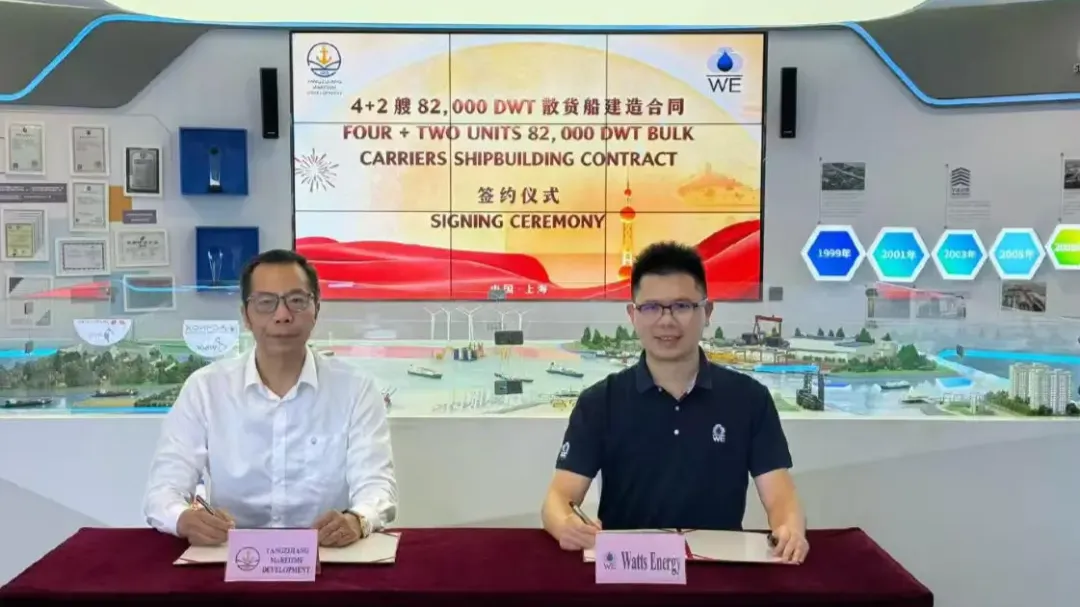
Yangzijiang Maritime Orders 4+2 Kamsarmaxes as Watts Energy Expands into Merchant Shipbuilding
 Dry Cargo
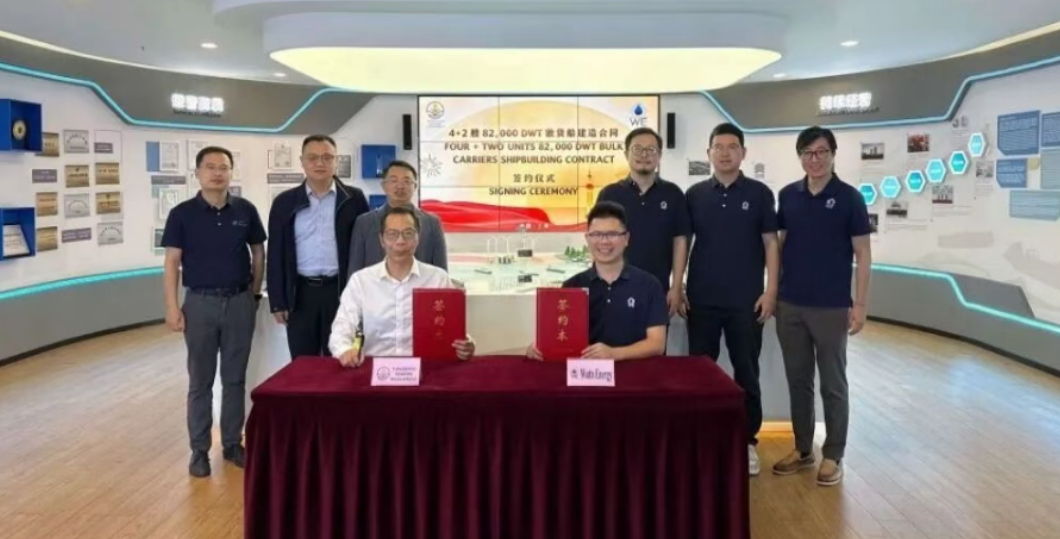
Yangzijiang Maritime linked to 4+2 Kamsarmax order
 Dry Cargo
Black Sea Wheat Loadings Plunge 78% as Grain Trade Reroutes
 Dry Cargo
China Merchants Signs $2.8 Billion-Plus Simandou Shipping Deal
 Dry Cargo
Seaspan Enters Newcastlemax Market, with Yangzijiang Set to Build Two Tri-Fuel Ore Carriers
 Dry Cargo