


A New National Shipping Company Launched, Targeting a 50-Ship Fleet


Xiehai Takes 70% Stake in Sierra Leone’s New National Carrier, Targeting 50 Ships
By Chen Yang, Xinde Marine News
Sierra Leone has launched a new national shipping company controlled by China’s Zhejiang Xiehai Group, with plans to develop a 50-vessel fleet serving mineral exports, essential imports and wider West African trade. President Julius Maada Bio inaugurated Sierra Leone Ocean Shipping Company Ltd (SLOSCO) at Queen Elizabeth II Quay in Freetown on 19 October 2026. Xiehai holds 70% of the venture, while the state-owned Sierra Leone National Shipping Agency (SLNSA) owns the remaining 30%. The announced development programme envisages 30 vessels in its first phase.

Xiehai’s latest statement adds detail to the operating structure. The group will lead the company’s management, following more than a year of preparation, participation in a tender process and negotiations. Its proposed fleet spans Capesize, Panamax and Ultramax bulk carriers, feeder containerships and product/chemical tankers, supported by commercial and operational coordination across Freetown, Shanghai, Singapore and Geneva. The venture gives Xiehai a locally established platform through which to organise cargo, deploy tonnage and develop logistics services around Sierra Leone’s international trade.
Rebuilding national shipping capacity
SLOSCO follows a restructuring of Sierra Leone’s national shipping institutions. SLNSA traces its origins to the former Sierra Leone National Shipping Company, established in 1972. Transport and Aviation Minister Alhaji Fanday Turay has said the government began a reform process in 2023 after an earlier shipping joint venture failed to meet its objectives. The subsequent establishment of SLNSA under legislation adopted in 2025 created the basis for seeking a new international partner with capital, vessels and operating expertise.

SLNSA and Xiehai signed their joint-venture agreement on 16 July 2026, followed by parliamentary ratification on 4 August and the October inauguration. At the signing, Sierra Leonean officials said Xiehai would provide the investment, vessels and technical support needed to establish operations, with the arrangement intended to avoid a direct funding burden on the government. Xiehai’s operational leadership now makes the commercial division of responsibilities clearer: the international shipping partner brings fleet and management capabilities, while SLNSA contributes its national-carrier role and local maritime experience.

The policy framework provides an important starting point for cargo development. Legislation governing SLNSA gives the agency national-carrier status and the right, at its discretion, to undertake seaborne transport covering 40% of the total value of cargo imported into and exported from Sierra Leone. That provision is expressed in cargo value. The volume and earnings ultimately secured by SLOSCO will depend on arrangements with cargo owners, transport contracts and the competitiveness of its services.

For Sierra Leone, the government’s stated objectives extend across freight income, dividends, employment and the development of maritime services. Equity participation offers a financial interest in the carrier, while ship operations, chartering, crewing and logistics can create additional professional activity around the country’s trade. The partnership therefore combines a national capacity-building programme with a business that must cover vessel, financing and operating costs in international markets.
A fleet shaped by minerals and essential imports
Xiehai says SLOSCO’s fleet will be developed in phases to match Sierra Leone’s trade and opportunities elsewhere in West Africa. Iron ore and bauxite exports are central to the dry-bulk business, while petroleum products, grain, equipment and other imports provide a broader range of transport requirements. Capesize vessels offer capacity for large mineral parcels; Panamax and Ultramax tonnage provide options for different cargo sizes and ports; feeder containerships and product/chemical tankers would serve separate segments of the import and regional markets.
The importance of minerals is visible in Sierra Leone’s export figures. A report published by the Chinese embassy’s economic and commercial office, drawing on Sierra Leone’s supplementary budget data, put mineral exports at $317.9 million in the first quarter of 2025, accounting for 75% of merchandise exports. Iron ore alone generated $221.5 million. These figures explain the relevance of a partner with experience in large bulk carriers, although the release of cargo for shipment will continue to depend on mine production, commodity demand and loading infrastructure.

There is also an established trading relationship with China. According to China’s Ministry of Foreign Affairs, bilateral trade reached $2.284 billion in 2025, up 29% from the previous year. Chinese exports included machinery and electrical equipment, while imports from Sierra Leone included mineral products. SLOSCO is consequently entering a market with existing cargo flows and customers to serve. Its commercial opportunity lies in securing a larger role in arranging and carrying those shipments.
The proposed range of ships creates several distinct businesses to develop. Ore exports require suitable bulk tonnage and loading arrangements; petroleum imports require tanker capacity and specialist handling; equipment and containerised cargo involve different schedules, terminals and customer requirements. The commercial rationale is to coordinate these services through a common network of cargo relationships and shipping expertise. Fleet growth will need to follow the contracts, parcel sizes and port capabilities available in each segment.
The shipowner behind the venture
Founded in 2013 and based in Linhai, Zhejiang province, Xiehai has expanded from coastal and river-sea shipping into international commodity transport. Shanghai Shipping Exchange data published in April 2025 recorded an operated fleet of 52 vessels totalling 4.071 million dwt at the end of 2024. The figures show the scale of its operating platform before the Sierra Leone partnership.

Its expansion has involved both newbuildings and secondhand acquisitions. In November 2024, the 211,000-dwt bulk carrier XH ALOT was named at COSCO Shipping Heavy Industry’s Yangzhou yard, around the time Xiehai reported that its fleet capacity had passed 3 million dwt. In April 2025, Xinde Marine News reported two further additions through the group’s Singapore-based Xiehai Bulk Shipping platform: the approximately 178,600-dwt Capesize XH VALOR and the 61,400-dwt Ultramax XH VIRTUE. The acquisitions illustrate the group’s experience in assembling international bulk-carrier capacity across different vessel sizes.
Chinese leasing institutions have also supported its fleet development. In February 2025, Zhegang Leasing, part of the Zhejiang provincial port group, purchased a 180,000-dwt Capesize from a Greek owner for lease to Xiehai under a cross-border direct-leasing arrangement. A further example followed in April 2026, when the 63,500-dwt Xie Hai Yong Yu, financed through cooperation with Hongtai Xinhang Financial Leasing, was named and delivered at Zhejiang Mingfei Shipbuilding. China Classification Society identified it as the first vessel in the yard’s international-trading series of that size.
This background is relevant to the choices ahead for SLOSCO. Xiehai has used ship purchases, newbuilding projects and leasing to organise capacity, giving the group experience with several ways of funding and operating a fleet. A phased programme in Sierra Leone can draw on those capabilities as cargo requirements become clearer. The partners have yet to publicly detail the full vessel allocation, financing package and deployment timetable for the new company.
Four locations connecting cargo and chartering markets
Xiehai has appointed Sui Xiao as SLOSCO’s chief executive and Laurent Debart as chief operating officer. Sui previously served as an assistant to Xiehai’s chairman. Debart has spent more than 15 years in China, chiefly as managing director of BRS Shipbrokers, and previously held commercial director positions at Fednav and NEU Seeschiffahrt. The appointments bring together familiarity with Xiehai’s business and experience in international shipping and chartering.

The four-location arrangement described in Xiehai’s latest announcement connects the cargo market in Sierra Leone with commercial centres in Asia and Europe. Freetown provides proximity to local customers, ports and public institutions, while Shanghai, Singapore and Geneva extend access to shipping, trading and chartering relationships. The practical value of that network will be in coordinating cargo enquiries, vessel availability, freight negotiations and voyage execution across time zones.
SLOSCO also carries expectations for local maritime employment. In September, Sia Fille, deputy harbour master at the Sierra Leone Ports and Harbours Authority, told local media that trained seafarers struggled to find ships on which to obtain the sea time needed to advance their careers. Some were relying on ferries and other limited opportunities for practical experience. She identified the planned national carrier as a potential source of additional opportunities.
A larger operating business could create demand for cadet berths, seafarers, marine engineers, operations staff and logistics personnel. Turning that demand into local career paths will require training, recruitment and supervision alongside fleet development. Building a capable local team also has a commercial purpose: it strengthens communication with customers, improves the coordination of port services and gives the company a more durable operating presence.
Extending the business ashore
Xiehai’s relationship with Sierra Leone predates the launch of SLOSCO. On 8 December 2025, the group and Taizhou’s port operator jointly hosted an event in Linhai to launch a Taizhou–Freetown shipping link. In its account of the event, Xiehai said chairman Wang An wanted shipping cooperation to support further exploration of port development and operations, international trade and resources-related business. The direct connection established a practical shipping relationship before the national-carrier venture reached its inauguration.
Discussions immediately after SLOSCO’s launch show how that interest is extending into local logistics. On 20 October, Xiehai representatives met the Sierra Leone Ports and Harbours Authority to discuss potential investment in cargo-haulage trucks. According to the authority, the talks focused on improving movement between Freetown port and inland destinations and easing congestion associated with vehicle breakdowns. The delegation also visited the inland container depot at Hastings. These remain investment discussions, with a final agreement and investment amount yet to be announced.

For a carrier serving imports, inland delivery affects the service customers actually receive. Unreliable haulage can increase storage costs and delay cargo collection, while poor coordination between the port and transport providers can disrupt delivery schedules. Participation in local logistics could give Xiehai greater ability to coordinate shipments beyond the sea passage. It would also add investment and management responsibilities in a market where local operating knowledge matters.
Taken together, the shipping link, joint venture and haulage discussions show a progression towards a broader transport business. Each element addresses a different part of the customer’s requirements: access to international tonnage, the organisation of freight and the movement of goods through the port and inland. Their commercial value will depend on how effectively those services work together.
Turning the fleet plan into a sustainable business
SLOSCO now has an ownership structure, a management team and government approval behind its development programme. The next stage is to match vessel commitments with cargo contracts and operating cash flow. A 50-ship target spans substantial differences in capital requirements, technical management and customer demand across bulk carriers, tankers and feeder containerships. Phasing the investment gives the partners room to select capacity around business that can be secured and serviced.
The central commercial questions concern freight competitiveness, vessel utilisation, financing costs, customer credit and port performance. National-carrier status provides a basis for market participation, while Xiehai contributes fleet access and operating experience. Sustainable earnings will come from combining those advantages in reliable transport services that cargo owners choose to use. Local training and employment will help determine how widely the economic benefits extend within Sierra Leone.
The project brings commercial ownership and management into a national-carrier programme as Sierra Leone seeks more value from its mineral trade. For shipowners, financiers and cargo interests, the next steps to watch are the first fleet deployments and their contract coverage. Those decisions will show how SLOSCO intends to balance Sierra Leone’s trade requirements with its ambition to serve the wider West African market.


READ MORE
 Dry Cargo
Paliou Urges Fleet Discipline as Dry Bulk Faces Rising Supply and Changing Demand
 Dry Cargo
Can Dry Bulk Match Tankers’ Earnings?
 Dry Cargo
How Much Longer Can Dry Bulk Stay Strong?
 Dry Cargo
Safe Bulkers Chief Urges Ordering Restraint as Fleet Renewal Continues
 Dry Cargo
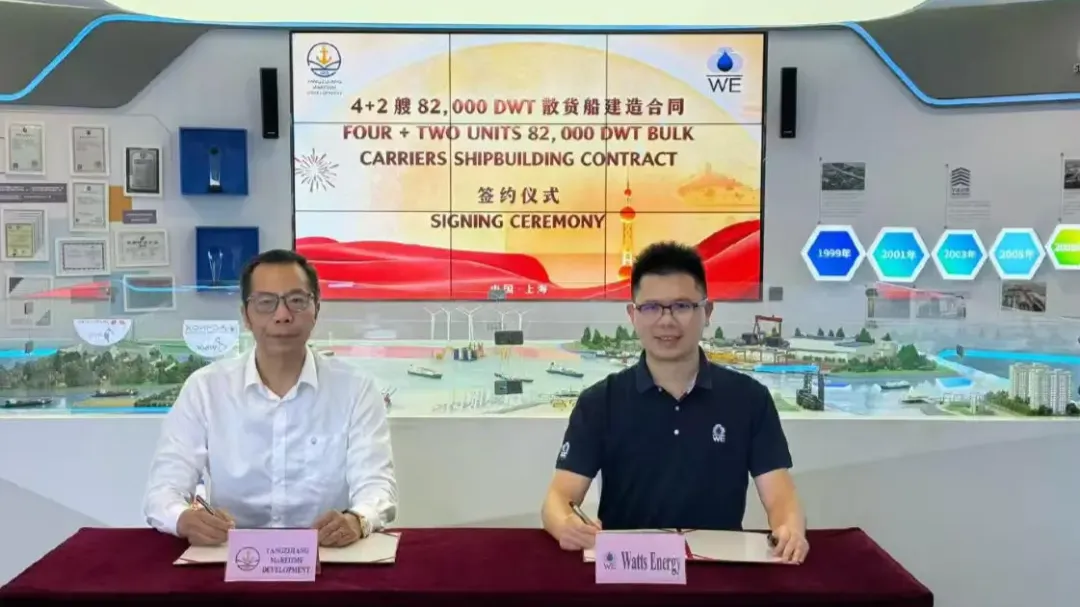
Yangzijiang Maritime Orders 4+2 Kamsarmaxes as Watts Energy Expands into Merchant Shipbuilding
 Dry Cargo
Yangzijiang Maritime linked to 4+2 Kamsarmax order
 Dry Cargo
Black Sea Wheat Loadings Plunge 78% as Grain Trade Reroutes
 Dry Cargo
China Merchants Signs $2.8 Billion-Plus Simandou Shipping Deal
 Dry Cargo
Seaspan Enters Newcastlemax Market, with Yangzijiang Set to Build Two Tri-Fuel Ore Carriers
 Dry Cargo