


China’s 18.3 Million-Tonne Iron Ore Storage Expansion Could Boost Capesize Demand


China’s expansion of iron ore storage and blending facilities could provide an additional source of demand for Capesize bulk carriers in 2027 and beyond, even as the country’s steel production declines. Shipping consultancy @Maritime Strategies International (MSI) has identified projects involving a combined 18.3 million tonnes of additional storage capacity at Dongjiakou, Lianyungang and Caofeidian, alongside expansion elsewhere on the Chinese coast.

The potential shipping benefit extends beyond greater storage space. More extensive blending operations, changes in sourcing and a possible increase in inventories could all influence iron ore imports and the vessel capacity needed to transport them.
For the dry bulk market, these developments reinforce the need to examine steel production, raw-material purchasing, inventories and transport distances separately.
Steel production falls while iron ore imports rise
China’s production and trade figures already illustrate the distinction between steelmaking activity and imported ore demand.
During the first nine months of 2026, China produced approximately 725 million tonnes of crude steel, down 2.9% year on year, while pig iron production fell 3.0% to approximately 628 million tonnes. Over the same period, imports of iron ore and concentrates increased 4.1% to approximately 955 million tonnes. Even pig iron production, which is more directly linked to blast-furnace ore consumption, therefore moved in the opposite direction to imports.
Several factors can explain this divergence, including domestic mine supply, substitution between domestic and imported ore, changes in ore quality, purchasing schedules and inventory movements. Steel production remains a fundamental driver of raw-material consumption, but import demand also reflects how buyers organise procurement and manage stocks.
This is the distinction highlighted in MSI’s October 2026 dry bulk analysis. While growing Guinean bauxite exports and the ramp-up of Simandou have attracted considerable attention, developments at the receiving end of the supply chain could provide another source of support for shipping.
An additional 18.3 million tonnes of storage capacity
Using satellite imagery, MSI examined the expansion of iron ore stockyards and handling facilities at Dongjiakou, Lianyungang, Caofeidian, Rizhao, Shulanghu and Majishan.
The three quantified projects comprise 10 million tonnes of additional storage capacity at Dongjiakou, 5.3 million tonnes at Lianyungang and 3 million tonnes at Caofeidian. Their construction and commissioning schedules differ, so the combined figure represents capacity expansion across several projects rather than a single annual addition.
Public project information supports these figures. Shandong transport authorities have stated that, as Dongjiakou’s new terminal reaches mature operations, the port’s two ore terminals capable of handling 400,000-tonne vessels will have combined annual throughput capacity exceeding 56 million tonnes, with storage capacity increasing by 10 million tonnes.
At Lianyungang, a September 2026 tender document describes a specialised blending stockyard in the southern part of the Qitai operating area. The project covers approximately 1.24 million square metres and provides around 5.3 million tonnes of storage capacity, with designed annual handling of 37 million tonnes. It connects with the port’s large ore terminals and rail distribution system. The storage and annual handling figures measure different capabilities: the amount of material that can be held and the volume that can move through the facility over time.
At Caofeidian, the ore storage and logistics project includes two large enclosed sheds with static storage capacity of 3 million tonnes. Its functions encompass storage, screening, blending and bonded processing, supported by enclosed conveyor connections with terminal unloading operations.
The implications for shipping depend on how these facilities are used. Additional stockyards can accommodate higher inventories, keep different ore grades separate, improve cargo turnover or handle business transferred from other locations. The 18.3 million tonnes of storage capacity cannot simply be treated as an equivalent increase in annual seaborne imports.
Simandou strengthens the role of blending and processing
The expansion of Chinese port facilities is taking place as the international iron ore supply mix changes.
As Simandou’s high-grade ore enters the market, it creates opportunities to blend with some lower-grade material, including Australian ores. Steelmakers assess raw materials according to iron content, impurities, processing suitability and overall operating cost. Ports able to store and process different products can help suppliers tailor ore combinations to customer requirements.
Portside processing is already an established part of this business. Rio Tinto reported Chinese portside sales of 4.7 million tonnes in the third quarter of 2026, of which 71% had been screened or blended at Chinese ports.
Simandou has also introduced specific processing requirements. On 25 March 2026, a bonded crushing facility at Dalian Port began operations alongside the arrival of approximately 201,500 tonnes of ore from Simandou’s Blocks 3 and 4 aboard RTM Cartier. Rio Tinto explained that the material undergoes two crushing stages in Guinea and a third in China to meet customer specifications for particle size and quality.
This arrangement makes the Chinese port part of the product preparation chain linking the mine with steel customers. Operating such a system requires sufficient storage, processing equipment and coordination between vessel arrivals, material preparation and inland distribution.
For shipping, the significance lies in how these capabilities affect procurement and cargo flows. Blending may change the competitiveness of individual ore products and encourage different sourcing combinations. Its effect on total seaborne demand must be assessed alongside actual import volumes and changes in the origin of those imports.
Inventory accumulation can support imports beyond immediate consumption
MSI’s other potential demand driver is a higher level of iron ore stockholding in China.
Expanded storage gives buyers greater scope to hold material beyond their immediate production needs. Such inventories can provide protection against supply interruptions, transport delays and changes in the availability of suitable ore grades.
When inventories rise, incoming shipments must cover both current consumption and the additional material being placed into storage. Imports can therefore receive temporary support even without higher steel production. If the extra ore comes from distant suppliers, the associated cargoes can also occupy vessels for longer.
The duration of this effect matters. Building inventories towards a higher target creates additional purchasing during the accumulation phase. Once that target is reached, maintaining a stable stock level mainly requires replacement of material consumed. A subsequent period of destocking can reduce import requirements.
The facilities identified by MSI establish that China’s capacity to store and process ore is expanding. Determining how much will be used for commercial turnover, operational safety stocks or other reserve purposes requires further evidence from actual inventory and business activity. Stockyard construction alone is insufficient to establish the scale of any future stockbuilding programme.
Cargo origins determine how much shipping capacity is needed
For Capesize owners, the origin of China’s ore imports is as important as the total tonnage.
A cargo shipped from Guinea to China travels considerably farther than one loaded in Australia. If some Australian supply is replaced by Guinean ore, tonne-mile demand can increase even when China’s total import volume changes little.
The size of that increase depends on which supplies are displaced. Replacement of shorter-haul cargoes provides a larger distance-related gain than substitution for material already travelling on long-haul routes. Any additional imports associated with inventory accumulation must also be distinguished from changes in the sourcing of existing demand to avoid counting the same growth twice.
Transport arrangements will influence how this demand reaches shipowners. On 30 September 2026, China Merchants Energy Shipping (CMES) disclosed that its wholly owned subsidiary Hong Kong Ming Wah had signed a 25-year transportation agreement covering six very large ore carriers, with an estimated total contract value of at least US$2.8 billion. CMES described the agreement as a step in its participation in the Simandou project.
Such contracts show how part of the emerging trade is being organised through long-term shipping commitments. They support the business of the owners involved, while the impact on spot Capesize freight depends on the balance between existing vessels, new dedicated tonnage and ships chartered from the market.
These arrangements remain connected to the wider fleet balance, but additional ore exports will not all generate the same amount of spot chartering demand.
From greater storage capacity to higher freight earnings
The next stage is to establish how expanded infrastructure translates into cargo movements.
Relevant indicators include the utilisation of new facilities, changes in port inventories and stockholding periods, growth in blending activity, and the geographical composition of additional purchases. Together, they will show whether storage expansion is supporting higher inventories, changing procurement patterns or primarily improving the handling of existing trade.
Vessel supply must be assessed alongside those developments. Longer voyages and concentrated stockbuilding can increase fleet employment, while new deliveries, changes in sailing speeds and improved port productivity can release capacity. Better stockyards and unloading systems may shorten vessel waiting times, allowing the same fleet to transport more cargo.
China’s iron ore storage expansion therefore adds a useful dimension to the Capesize outlook. Procurement driven by supply security, changes in ore combinations and longer transport distances can create shipping demand beyond the signals provided by steel production alone.
For the global dry bulk market, the practical task is to track mine shipments, Chinese inventories, port processing, long-term transport commitments and fleet availability together. The 18.3 million tonnes of additional storage capacity is a tangible development; its contribution to freight earnings will emerge through the cargo flows and vessel employment that follow.

READ MORE
 Dry Cargo
A New National Shipping Company Launched, Targeting a 50-Ship Fleet
 Dry Cargo
Paliou Urges Fleet Discipline as Dry Bulk Faces Rising Supply and Changing Demand
 Dry Cargo
Can Dry Bulk Match Tankers’ Earnings?
 Dry Cargo
Safe Bulkers Chief Urges Ordering Restraint as Fleet Renewal Continues
 Dry Cargo
How Much Longer Can Dry Bulk Stay Strong?
 Dry Cargo
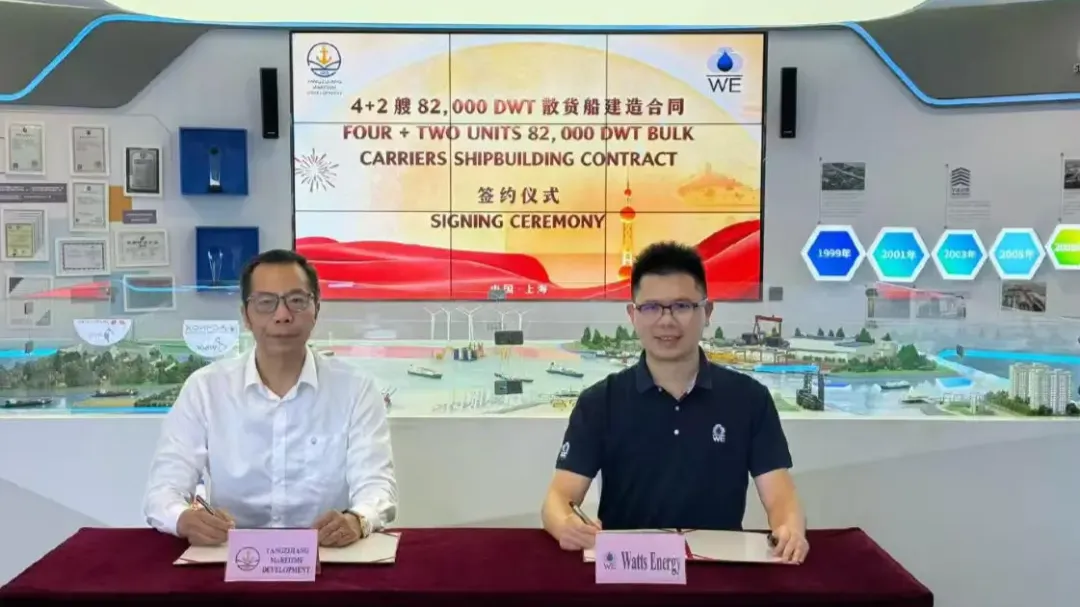
Yangzijiang Maritime Orders 4+2 Kamsarmaxes as Watts Energy Expands into Merchant Shipbuilding
 Dry Cargo
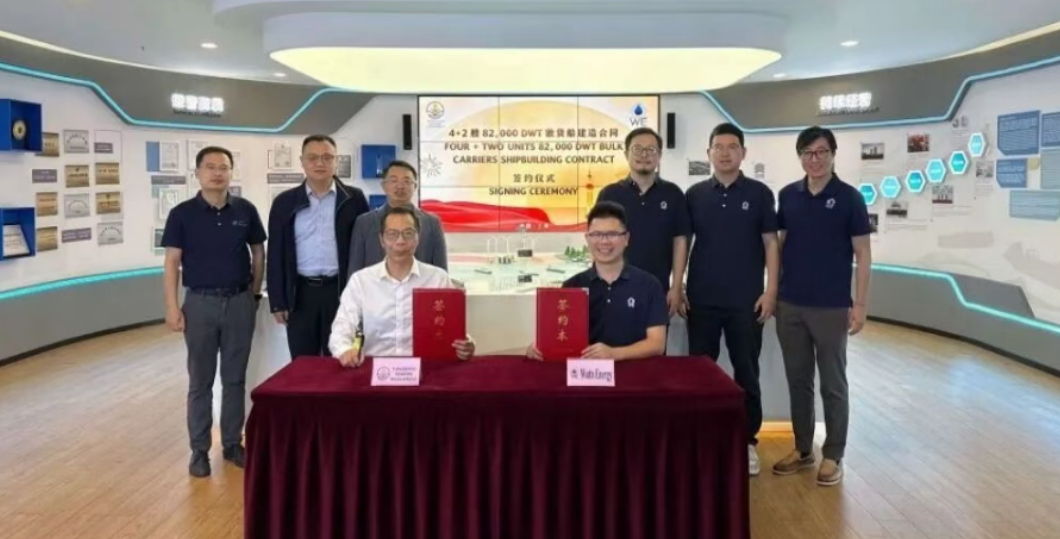
Yangzijiang Maritime linked to 4+2 Kamsarmax order
 Dry Cargo
Black Sea Wheat Loadings Plunge 78% as Grain Trade Reroutes
 Dry Cargo
China Merchants Signs $2.8 Billion-Plus Simandou Shipping Deal
 Dry Cargo