


CMA CGM’s $1.4bn FedEx Supply Chain Deal: How Its Global Logistics Network Is Taking Shape


A $1.4 billion enterprise value, nearly 10,000 employees and approximately 34 million square feet of warehouse space: CMA CGM has completed another major acquisition in North America.
On October 1, 2026, CMA CGM and FedEx announced the closing of the FedEx Supply Chain transaction. The business is joining CEVA Logistics, CMA CGM’s logistics subsidiary, nearly tripling CEVA’s North American contract logistics footprint. Alongside the acquisition, the companies are also advancing multi-year commercial cooperation in ocean and air freight.
The deal follows years of investment by CMA CGM in freight forwarding, warehousing, order fulfillment, automotive logistics, rail transport, parcel delivery and port terminals. Viewed alongside Chairman and Chief Executive Officer Rodolphe Saadé’s recent interview, these investments reveal an increasingly clear direction: CMA CGM wants to connect its ocean transport capacity with services on land and take responsibility for a larger share of its customers’ supply chains.

The next challenge is becoming equally clear. On October 6, CEVA announced changes to its organizational and operating model, identifying the integration of acquired businesses—particularly FedEx Supply Chain—as a priority. Acquisitions have broadened CMA CGM’s capabilities. Their long-term value will depend on how effectively those capabilities work together.
From a factory in China to a customer’s home
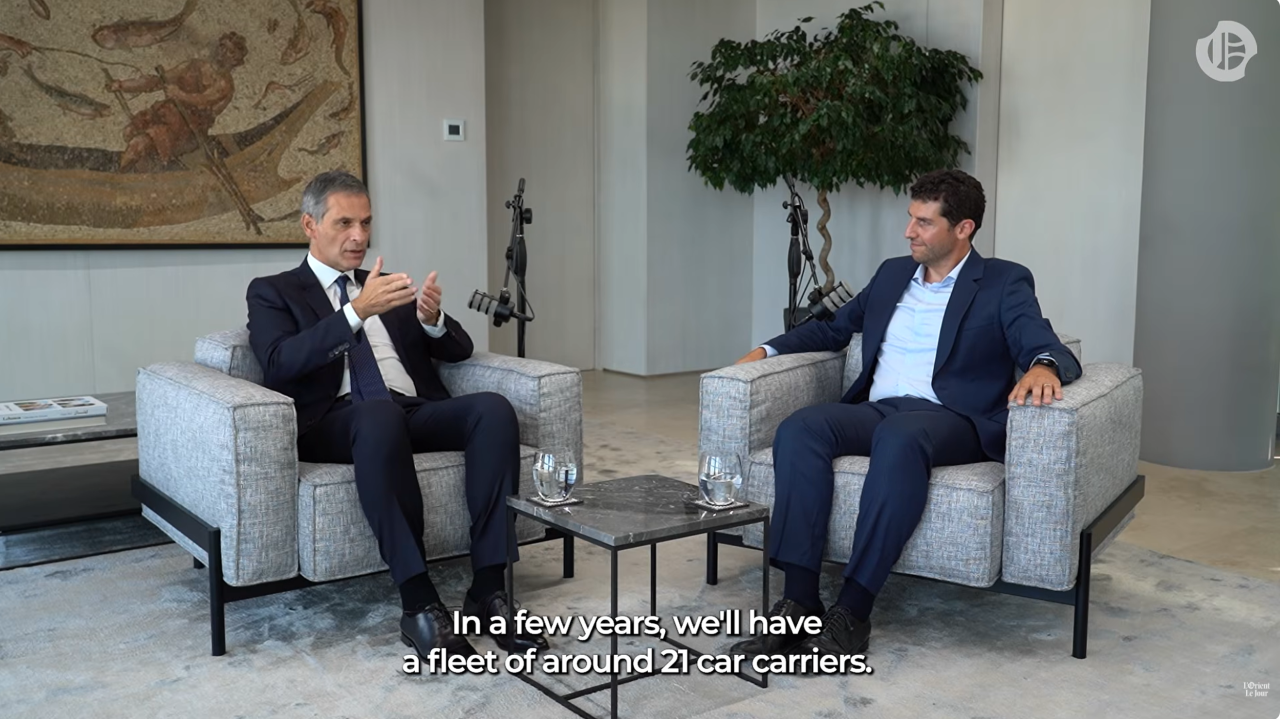
In a video interview published by L’Orient-Le Jour on September 16, Saadé again discussed challenging his teams to reach the number-two position. His account of the group’s ambitions, however, extended across shipping, terminals and logistics.
Ocean shipping remains the group’s core business, he explained, and he wants to continue developing both shipping and terminal operations. Logistics is another business he intends to keep expanding. His explanation for entering the sector began with a specific customer request.
During meetings with customers, including major American companies, Saadé was told that they wanted CMA CGM to provide a service stretching from a factory in China to the consumer’s home. Delivering that door-to-door solution required substantial investment in logistics.
CMA CGM initially took a minority position in CEVA, subsequently acquired the company outright, and then used further acquisitions to add capabilities across markets and service categories. In Saadé’s assessment, logistics requires sufficient scale: CEVA alone could not provide the full coverage the group wanted to build.
The interview offers a direct explanation for CMA CGM’s acquisition strategy. Customers wanted the company to handle more stages of their supply chains, requiring both wider geographical coverage and greater specialist expertise.
Saadé also emphasized shipping’s cyclical nature and the speed with which conditions can change. Diversification is intended to reduce the group’s dependence on a single business. Logistics investment therefore serves two purposes: extending the customer offering and changing the group’s revenue and risk profile.
He was candid about the work still required. CMA CGM has accumulated acquisitions, he acknowledged, and its logistics business needs further integration and better performance. That assessment is central to understanding the group’s current stage of development.
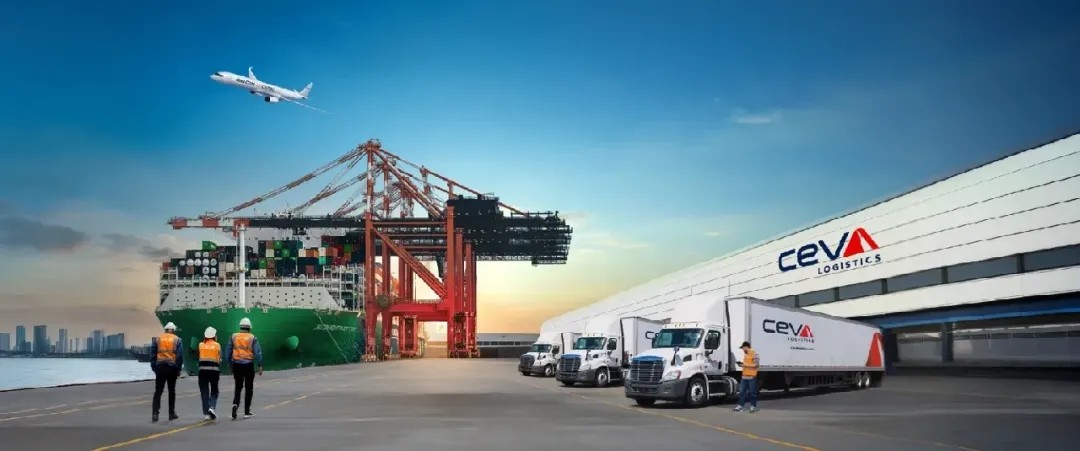
CEVA provides the platform; acquisitions add the capabilities
CMA CGM’s logistics expansion began before the pandemic.
The acquisition of CEVA in 2019 was a turning point, giving the group a global platform spanning freight management and contract logistics. Subsequent transactions have progressively expanded that platform.
Contract logistics involves managing activities such as warehousing, inventory, order processing and distribution for corporate customers. It places a logistics provider inside the customer’s recurring operating processes and creates responsibilities that extend well beyond moving an individual shipment.
In April 2022, CMA CGM completed the principal closing of its acquisition of most of Ingram Micro’s Commerce & Lifecycle Services business, including Shipwire. The transaction strengthened its capabilities in warehousing, e-commerce fulfillment and contract logistics. Xinde Marine News had previously followed the investment in its report on the approximately $3 billion transaction.
Colis Privé and GEFCO joined the group in the same year. Colis Privé extended the offering into last-mile parcel delivery. GEFCO brought finished vehicle logistics, automotive supply-chain expertise and multimodal capabilities. These activities also provided a land-based foundation for the group’s subsequent expansion into automotive ocean transport.
On February 29, 2024, CMA CGM completed the acquisition of Bolloré Logistics for €4.85 billion, approximately $5.25 billion, significantly expanding its international ocean and air freight forwarding business and specialist logistics services.
More recent transactions have continued to add regional reach and technical expertise. The Borusan Lojistik acquisition, completed in November 2025, strengthened CEVA’s contract logistics and ground transport presence in Turkey. The Fagioli acquisition, completed in March 2026, added heavy transport, heavy lifting and complex project logistics capabilities.
On August 3, CEVA, through Colis Privé, completed the acquisitions of Paack Iberia and Paack France. The deals strengthened its French delivery network and extended its presence into Spain and Portugal. FedEx Supply Chain’s arrival on October 1 then substantially enlarged its North American contract logistics network.
Each transaction addresses a different part of the supply chain. Freight forwarding organizes international transport; warehousing and fulfillment manage inventory and orders; automotive and project logistics serve specialized industries; and last-mile delivery connects goods with consumers.
For CMA CGM, a broader set of capabilities creates the opportunity to undertake more comprehensive customer assignments. Xinde Marine News has tracked this expansion in earlier coverage of the group’s acquisitions and its growing competition with Maersk. The question now is increasingly operational: can the services assembled through these transactions become a network that customers can use seamlessly?
What FedEx Supply Chain adds in North America
Following the transaction, CEVA’s combined North American network comprises approximately 150 warehouses, more than 240 locations and around 20,000 employees. The acquired business adds approximately 34 million square feet—about 3.16 million square meters—of warehouse space, together with expertise in healthcare, technology, consumer goods and retail.
Those figures establish the scale of the expansion. Its commercial significance becomes clearer when viewed from the customer’s perspective.
A company selling goods in the United States still faces a series of tasks after its cargo reaches a port: inland transport, warehouse receiving, inventory allocation, order processing, delivery and returns. Using different providers for each stage creates additional coordination requirements. If CMA CGM can organize more of those activities through CEVA, its service can extend from an ocean shipment into the customer’s continuing inventory and order management.
This helps explain the attraction of warehousing and fulfillment for a shipping group. Once a customer entrusts warehouse operations, order systems and distribution processes to a logistics provider, the relationship becomes embedded in daily business. Service quality, information systems and execution all influence whether that relationship continues.
FedEx Supply Chain’s value therefore lies in its operating teams, industry knowledge and customer-service capabilities as well as its physical footprint. The acquisition announcement also identifies opportunities to combine digital and operational capabilities and accelerate automation and robotics. Whether those investments improve productivity and reduce unit costs will affect the transaction’s long-term returns.
Saadé had already linked the American market with the FedEx Supply Chain transaction in his September interview. He emphasized the importance of the United States to the group and his intention to expand its warehousing activities there. October’s closing moves that strategy into the integration stage.
Ports, railways and dry ports connect shipping with warehouses
CMA CGM has been investing in the infrastructure needed to connect its maritime and inland activities.
The United States provides a clear example. In January 2022, the group completed its acquisition of Fenix Marine Services in Los Angeles. At the end of August 2023, it completed the acquisitions of GCT Bayonne and GCT New York, subsequently operating under the Port Liberty brand. These assets strengthened its gateway positions on the US West and East coasts.
With FedEx Supply Chain joining CEVA, CMA CGM has ocean services, terminal interests and a substantially larger contract logistics network in North America. That combination provides a foundation for services across several stages of the supply chain. Effective coordination will still depend on transport planning, customer arrangements and systems integration.
In South America, CMA CGM completed its full acquisition of Santos Brasil in December 2025, expanding its Brazilian port and associated logistics presence. According to its 2025 financial results, the group invested $2.5 billion that year in a terminal portfolio spanning 66 terminals across 40 countries. The portfolio involves different ownership and operating arrangements; the terminals are not all wholly owned by CMA CGM.
European investments show a similar emphasis on connections with the hinterland. In January 2026, the group completed its acquisition of Freightliner’s UK intermodal business, adding rail transport and inland terminal capabilities. The former Freightliner group’s Heavy Haul business and certain other operations remain independent and were outside the acquisition.
CMA CGM’s 2025 results also disclosed a 35% stake in Egypt’s October Dry Port and the launch of a 30-year concession for a Lyon river container terminal by a consortium led by the group. Dry ports, railways and river terminals extend its infrastructure investments beyond the coastline.
Saadé’s explanation of terminal investment was practical. Participation in and control of strategic terminals can help accommodate large vessels, reduce waiting and improve operational and cost management. These are objectives of closer vessel-terminal coordination. Their realization depends on terminal productivity and efficient hinterland connections.
A ship’s capacity can serve customers effectively only when cargo can be loaded, discharged and moved through the port efficiently. The connections among berths, yards, railways, roads and warehouses influence the reliability of the entire transport chain.
That helps explain CMA CGM’s continued interest in terminal development. The group and Red Sea Gateway Terminal signed definitive agreements to develop and operate Terminal 4 at Jeddah Islamic Port. The project involves an initial investment of $434 million and plans to add up to 2.6 million TEU of annual handling capacity. This is future capacity under development, rather than capacity already in operation.
CMA CGM’s cooperation framework with China Communications Construction Company, previously reported by Xinde Marine News, covers port infrastructure, logistics and transport, digitalization and the energy transition. Specific projects, investment commitments and implementation arrangements remain to be developed. The framework provides a potential route for further expansion of port and hinterland networks.
Infrastructure capital supports further terminal investment
Expansion also requires substantial funding. Alongside acquisitions, CMA CGM has been changing the capital arrangements around some of its terminal assets.
On July 28, 2026, CMA CGM and Stonepeak completed the formation of United Ports LLC. Stonepeak invested $2.4 billion for a 25% stake, while CMA CGM retained 75% ownership and full operational control. The initial portfolio comprised nine CMA CGM-operated terminals.
The arrangement brings an infrastructure investor into an established terminal portfolio. The partners plan to support capacity expansion, equipment upgrades, stronger rail and inland connections, and infrastructure for lower-carbon port operations. The nine terminals are existing assets and should not be counted again as additional terminals in the group’s overall portfolio.
From an operating perspective, CMA CGM is retaining control of important network nodes while bringing in partner capital to support investment. Infrastructure projects require long investment horizons, and this structure provides additional funding capacity for their development.
It also illustrates the range of methods the group is using. Acquisitions add specialist logistics capabilities; joint ventures support infrastructure investment; and concessions and development agreements expand access to strategic locations. Ownership, control and capital commitments differ from one project to another.
The FedEx relationship continues beyond the sale
The FedEx Supply Chain transaction also reflects different resource-allocation choices by the two groups.
FedEx said the disposal advances its efforts to simplify its portfolio, sharpen its focus and concentrate resources on its core capabilities. CMA CGM is taking the opposite direction in this particular business, enlarging its contract logistics offering. Their commercial relationship will continue.
Under CMA CGM’s announcement, the group will become a preferred ocean carrier for FedEx through a non-exclusive agreement. The companies also plan air cargo capacity cooperation on strategic routes, including Asia-Europe, to improve aircraft utilization and provide greater flexibility in long-haul capacity deployment.
This shows how CMA CGM can expand its integrated offering through partnerships as well as ownership. Its ships, terminals and logistics businesses can connect with another company’s transport network. The non-exclusive nature of the ocean agreement also preserves commercial choice; it does not mean all FedEx ocean freight will move to CMA CGM.
Competition over customer relationships and network capabilities brings CMA CGM into more direct rivalry with Maersk. Maersk has long pursued the integration of container logistics, investing across ocean transport, terminals, warehousing, air freight and inland services. CMA CGM’s acquisitions around CEVA increasingly address similar customer requirements.
Earlier discussion of CMA CGM’s challenge for the world’s number-two container shipping position focused primarily on fleet capacity and orderbooks. The competitive picture now also requires an assessment of how much of a customer’s supply chain each group can manage—and the reliability, cost and returns of those services.
Integration and profitability are the next tests
In his interview, Saadé described logistics as accounting for approximately 40% of group revenue. That was his characterization during the interview; precise shares should be assessed using the reporting scope and period of the relevant financial statements.
CMA CGM’s full-year 2025 results reported logistics revenue of $18.3 billion, EBITDA of approximately $1.7 billion and an EBITDA margin of 9.4%. The container shipping business reported an EBITDA margin of 23.0% for the same year.
These figures show that logistics is a substantial revenue contributor, while the businesses have different earnings profiles. Additional logistics revenue does not automatically deliver the same profit contribution as shipping. EBITDA also precedes depreciation, interest and tax.
The results noted growth in contract logistics revenue and profitability during 2025, while freight management faced market volatility and difficulties in the automotive sector. Different logistics activities within the group operate under different demand and cost conditions.
Diversification can spread some risks, but it also creates additional operating responsibilities. Warehousing requires management of utilization and labor costs; delivery networks must meet service commitments; and automotive logistics is exposed to its customers’ industry cycle. Changes in trade and consumption can also affect shipping and logistics simultaneously.
Successive acquisitions add another layer of complexity. The businesses bring different information systems, customer contracts, processes and service standards. The group must maintain service continuity while enabling its networks to coordinate pricing, exchange necessary information, arrange transport and establish clear accountability.
CEVA’s October 6 announcement addresses that task. Freight Management and Contract Logistics form its two core global business platforms, supported by stronger regional accountability and decision-making closer to customers. Chief Executive Officer Patrick Moebel emphasized simpler decisions, faster execution and clearer responsibility. Completing the integration of acquired companies, particularly FedEx Supply Chain, remains a priority.
Moebel took office on July 1, 2026, having previously served as president of FedEx Logistics. His appointment announcement identified North American expansion, end-to-end services and closer cooperation among CMA CGM’s logistics, shipping and air freight businesses as key priorities.
From Saadé’s September interview to the acquisition closing and CEVA’s October operating-model changes, the next phase is clear: expand the business while improving execution across the enlarged network.
CMA CGM has assembled a supply-chain network of considerable scale. It now needs to demonstrate how effectively its assets and teams can create value together.
Can customers purchase services across several stages more easily? Can goods move more reliably from factories to warehouses and final destinations? Can the enlarged business improve cash generation and investment returns?
Those outcomes will determine the success of this expansion. The $1.4 billion transaction gives CMA CGM important additional resources. Their conversion into a durable competitive advantage will be measured in the daily operation of the integrated business.

READ MORE
 Containers
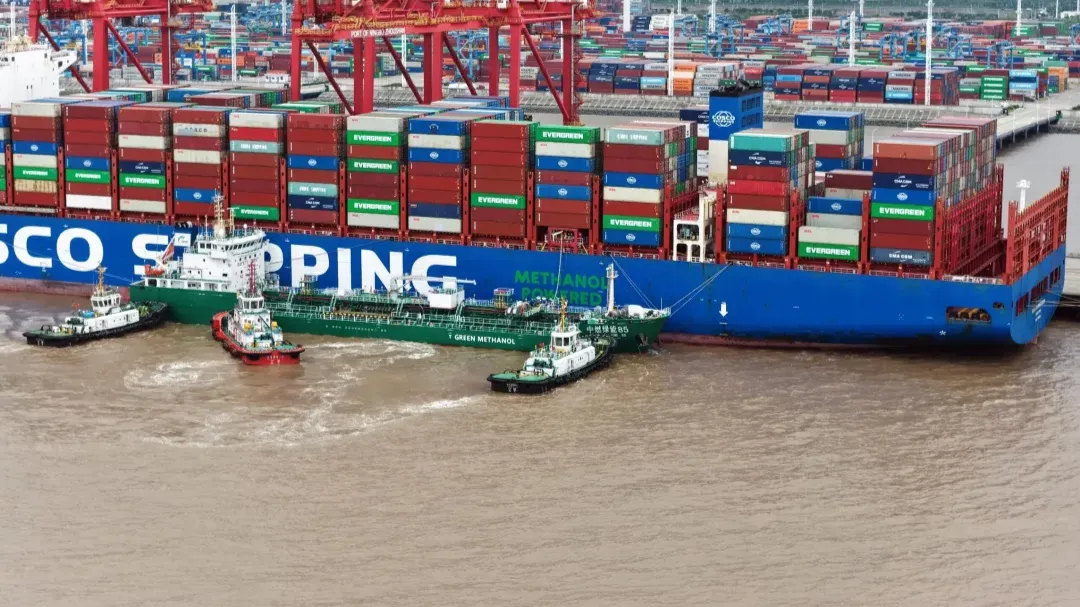
COSCO SHIPPING Sets Group Methanol Bunkering Record with 7,500-Tonne Delivery
 Containers
Up to 30 New Feeders: Inside Contships’ Fleet Renewal Strategy
 Containers
COSCO SHIPPING Holdings to Launch Third Far East–ECSA Service in December
 Containers
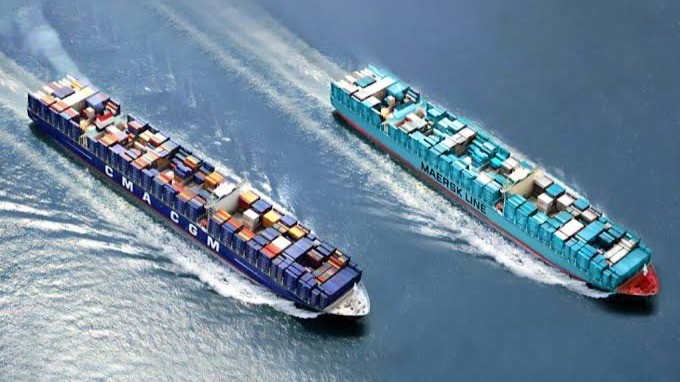
CMA CGM vs Maersk: A New Arms Race Begins!
 Containers
CMA CGM Expects Car Carrier Fleet to Reach Around 21 Vessels
 Containers
CMA CGM’s Reported French Flag Retreat Puts Shipping Taxes in Focus
 Containers
CMA CGM Chief Says Zero Carbon by 2050 May Take a Miracle
 Containers
COSCO SHIPPING Holdings Steps Up Asia-Pacific Expansion with Dual-Brand Push
 Containers
Ningbo Containerized Freight Index Weekly Commentary Overall Demand Weakened During the Holiday; Freight Rates Declined on Most
 Containers