


CMA CGM vs Maersk: A New Arms Race Begins!
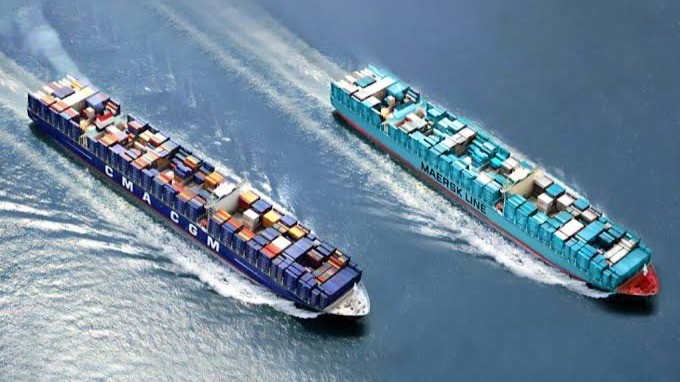

The contest for second place in container shipping is entering a new phase. CMA CGM is closing the capacity gap with Maersk, while both carriers are committing—or being linked—to major newbuilding programmes that could reshape their fleets well into the next decade.
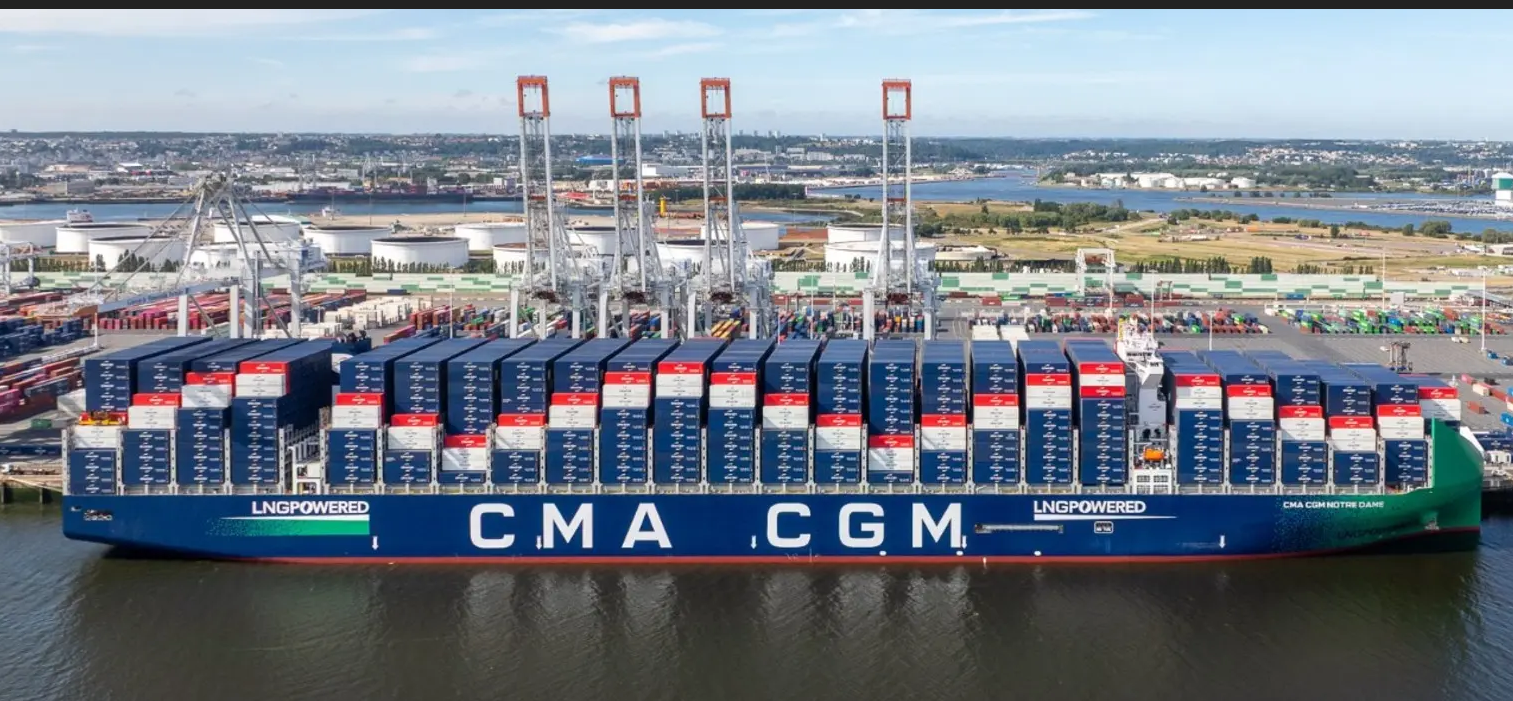
In his latest interview with L’Orient-Le Jour, released on 16 September, CMA CGM Chairman and Chief Executive Rodolphe Saadé again referred to challenging his teams to become number two. He also outlined his intention to keep developing the group’s shipping, terminal and logistics businesses. With MSC leading the global capacity rankings, Maersk in second place and CMA CGM third, the competitive target is clear.

Alphaliner’s snapshot dated 3 October 2026 puts the gap between Maersk and CMA CGM at just 282,978 TEU. CMA CGM already has slightly more owned capacity, although Maersk’s larger chartered fleet keeps it ahead overall.
The future comparison has become more complicated. Maersk has confirmed orders for 26 LNG dual-fuel containerships of 18,600 TEU each, while CMA CGM has been linked to a programme for twelve 24,000-TEU vessels at Yangzijiang Shipbuilding.
These investments raise two separate questions: can CMA CGM overtake Maersk, and what would it take to stay ahead?
Saadé’s challenge comes with a timetable
CMA CGM’s ambition to become the world’s second-largest container carrier has emerged through a series of public statements. On 1 July, Les Echos reported Saadé’s aim of reaching that position by the end of 2027. Alphaliner subsequently referred to the same deadline in its assessment of fleet growth during the first half of 2026. The September interview reinforces that ambition and places it within a broader commitment to continued investment.
Fleet growth is giving the challenge substance. According to Alphaliner, CMA CGM added approximately 235,500 TEU during the first half of 2026, an increase of 5.7%, making it the fastest-growing carrier among the global top ten over that period. MSC added approximately 205,000 TEU.
Xinde Marine News has previously tracked occasions when CMA CGM’s operated capacity, combined with its orderbook, provided a numerical basis for potentially overtaking Maersk. Such comparisons show the scale of investment already committed. Turning that investment into an actual ranking change depends on delivery dates, charter arrangements and the withdrawal of existing ships.
The latest developments require that earlier arithmetic to be revisited. CMA CGM is still advancing, but Maersk’s future capacity commitments have also increased.
Just 283,000 TEU apart—and CMA CGM already leads in owned capacity
A breakdown of the two fleets shows where Maersk’s present advantage comes from.
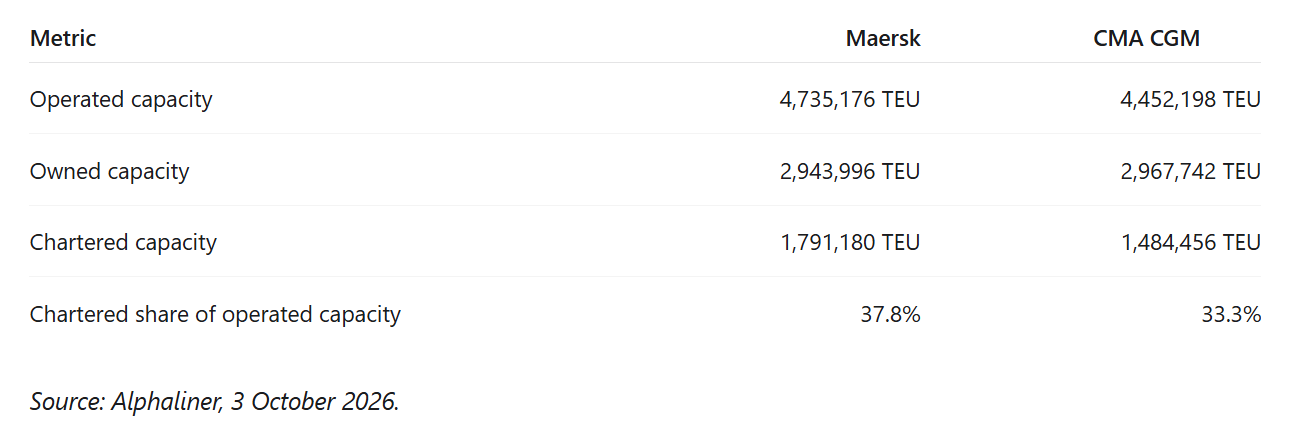
CMA CGM’s owned fleet exceeds Maersk’s by 23,746 TEU. Maersk, however, operates 306,724 TEU more chartered capacity. The difference leaves Maersk with an overall lead of 282,978 TEU, while CMA CGM’s operated fleet is already approximately 94% of Maersk’s size.
Chartering therefore has a direct bearing on the contest. Renewals, redeliveries and additional fixtures can materially change the gap without either company waiting for a newbuilding to leave a shipyard. Secondhand acquisitions provide another route to expansion.
The ranking also needs to be read within its scope. Alphaliner measures nominal container-carrying capacity operated by consolidated carrier groups, including owned and chartered vessels. An advantage in owned TEU does not establish a corresponding lead in asset value, revenue or profitability. Vessel age, specification, financing and employment all affect the commercial comparison.
Nevertheless, the capacity gap is now small enough for fleet-management decisions to influence the timing of a possible change in position.
Maersk opens the door to growth—and strengthens its orderbook
On 18 September, Maersk confirmed to the media that it had ordered 26 LNG dual-fuel containerships of 18,600 TEU each, scheduled for delivery in 2029–2030. Their combined capacity is 483,600 TEU, exceeding the current operated-capacity gap between the two carriers. Maersk described the investment as part of its ongoing fleet-renewal programme.
Its wider position on fleet growth is also changing.
For years, Maersk emphasised capacity restraint, with newbuildings primarily replacing older vessels. Its August 2024 renewal announcement envisaged an overall fleet of approximately 4.3 million TEU. The operated fleet has since moved well beyond that level.
During the second-quarter 2026 earnings call on 13 August, Chief Executive Vincent Clerc explained that the Gemini Cooperation had enabled Maersk to carry more cargo while keeping fleet growth relatively restrained. With utilisation and asset turnover already high, however, the scope to extract further growth from the existing fleet was approaching its limit. Future investment, he said, would need to include “some level of fleet growth”. Xinde Maritime News
That wording brings net expansion into Maersk’s planning alongside replacement. It does not establish that the September orders were placed specifically to defend second place, nor that every new vessel will add to the fleet. It does show that a replacement-only interpretation no longer captures the company’s stated approach.
The orderbook comparison has meanwhile reversed. Alphaliner’s first-half assessment put CMA CGM’s orders at approximately 1.8 million TEU against around 1.2 million TEU for Maersk. In the 3 October snapshot, Maersk had 131 ships totalling 1,764,122 TEU on order, compared with CMA CGM’s 160 ships and 1,691,581 TEU.
Maersk now leads in ordered capacity by 72,541 TEU, despite having fewer vessels on order. CMA CGM’s earlier orderbook advantage can no longer underpin a straightforward claim that it will inevitably move ahead.
CMA CGM’s twelve-ship project: distinguish market confirmation from a corporate announcement
CMA CGM is also being linked to another substantial investment.
On 16 September, Splash and Riviera reported that Alphaliner had identified the French group as the likely buyer behind a twelve-ship, 24,000-TEU programme at Yangzijiang, with a letter of intent reportedly signed. The vessels were expected to have LNG dual-fuel propulsion and deliveries in 2029–2030.
At an estimated $245 million–$250 million per vessel, the programme would be worth close to $3 billion and provide approximately 288,000 TEU of nominal capacity. At the time of those reports, neither CMA CGM nor Yangzijiang had formally confirmed the transaction.
Linerlytica’s Week 38 report, dated 21 September, subsequently used confirmation language when discussing both CMA CGM’s twelve 24,000-TEU ships and Maersk’s 26-vessel programme. However, the public sources reviewed for this article have not yielded a formal contract announcement directly from CMA CGM or Yangzijiang. www.linerlytica.com
The distinction matters. An industry analyst treating an order as confirmed is a different level of evidence from a shipowner or shipyard announcing a signed contract.
The chronology also matters: CMA CGM’s project was reported on 16 September, before Maersk’s confirmation on 18 September. The available evidence supports concurrent investment activity. It does not establish that CMA CGM initiated the project in response to Maersk’s announcement.
Even with an additional 288,000 TEU, CMA CGM remains slightly behind on static arithmetic
Would those twelve ships be enough to put CMA CGM ahead in a comparison of today’s fleet and future orders?
Using the 3 October figures, Maersk’s operated capacity plus orderbook totals 6,499,298 TEU. CMA CGM’s equivalent total is 6,143,779 TEU, leaving a difference of 355,519 TEU.
Now assume that the reported twelve-ship programme is not already included in CMA CGM’s published orderbook, and add its full 288,000 TEU as a separate increment:
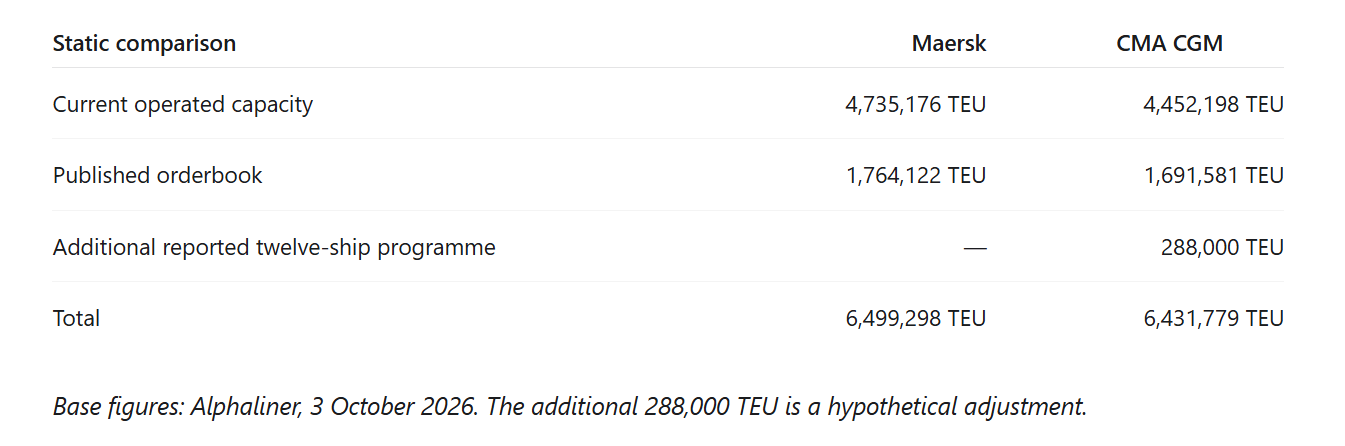
Under that assumption, CMA CGM would still trail Maersk by 67,519 TEU.
Two conditions must accompany this result. First, the publicly available aggregate data do not establish whether the twelve ships are already included in CMA CGM’s orderbook. If they are, adding them again would double-count the capacity; the unadjusted gap remains 355,519 TEU.
Second, this calculation retains every ship in today’s operated fleet and adds all ordered vessels. It leaves out charter redeliveries, sales, scrapping, further acquisitions, additional orders and changes in delivery schedules.
The result compares current capacity commitments. It cannot determine the carriers’ actual future fleet sizes or rule out CMA CGM taking second place.
Reaching second place in 2027 is different from holding it after 2030
The timing creates an important distinction. CMA CGM’s publicly stated target is the end of 2027. Both its reported twelve-ship project and Maersk’s confirmed 26 ships are scheduled for delivery in 2029–2030.
The nearer-term contest will therefore depend primarily on earlier orders being delivered and on changes to existing fleets. If CMA CGM achieves faster net growth through deliveries, chartering and secondhand purchases, it could overtake Maersk before the latest programmes enter service—even while its longer-term fleet-plus-orderbook total remains lower.
Maersk can also retain ships, extend charters or secure additional capacity. An orderbook total alone cannot identify when a change in ranking will occur.
From 2029 onwards, the latest investments become more relevant. CMA CGM could reach second place and subsequently face pressure from Maersk’s new deliveries. Maintaining a lead requires sustained attention to the net movement of ships into and out of both fleets.
Further CMA CGM orders are therefore a plausible development to watch. If the group wants to overtake Maersk and maintain a comfortable lead, additional newbuildings could strengthen its position. Long-term charters and secondhand acquisitions remain alternatives, while differences in fleet withdrawals could also affect the outcome.
This is a conditional assessment, rather than evidence of an announced decision to order more ships. Saadé’s willingness to continue investing, including during difficult or loss-making markets, nevertheless provides a clear strategic backdrop.
The competition extends into terminals and logistics
Saadé’s expansion agenda reaches beyond shipping capacity. In the latest interview, he described maritime transport as CMA CGM’s core business, referred to a network of more than 66 terminals and said logistics accounted for approximately 40% of group revenue. He also acknowledged the need to improve integration and performance following successive acquisitions.
On 1 October, CMA CGM completed its acquisition of FedEx Supply Chain at an enterprise value of $1.4 billion. According to CEVA Logistics, the transaction almost triples its North American contract-logistics footprint. CMA CGM and FedEx also concluded multi-year ocean commercial agreements and intend to cooperate in air cargo.
From an operating perspective, additional ships can support greater network coverage and cargo capacity. Terminals, warehouses and inland services can improve the connections between different stages of a customer’s supply chain.
These investments bring CMA CGM into more direct competition with Maersk’s integrated-logistics strategy. Both groups must turn their wider networks into dependable service and commercial returns.
A higher fleet ranking can expand a carrier’s operating options. Delivering profitable growth still depends on cargo, asset utilisation, costs and the successful integration of businesses acquired outside shipping.
The next shipping cycle will test the new arms race
The contest is unfolding within a broader wave of investment. On 3 October, MSC operated approximately 7.45 million TEU, well ahead of both companies. COSCO Shipping Group’s orderbook stood at approximately 1.91 million TEU, exceeding the ordered capacity of either Maersk or CMA CGM.
Linerlytica’s 21 September report put the global containership orderbook at 1,925 vessels and approximately 15.6 million TEU—around 45% of the existing fleet and the highest ratio since 2009. www.linerlytica.com
For an individual carrier, new ships provide resources for future development. When many carriers take delivery together, those same investments can create industry-wide pressure on utilisation, freight rates and asset values.
Larger fleets need more cargo and must cover financing, charter hire, fuel and operating costs. They also commit companies to assets whose commercial lives will extend through uncertain changes in trade, regulation and fuel availability.
Saadé’s comments on decarbonisation illustrate that uncertainty. In the same interview, he questioned what “miracle” would enable zero carbon by 2050 amid route diversions and geopolitical disruption. Carriers must reserve shipyard capacity years ahead while making decisions that will affect operating costs for decades.
Maersk’s position as the world’s second-largest container carrier is under credible challenge. CMA CGM has narrowed the gap, but Maersk has strengthened its orderbook and explicitly opened the door to fleet growth. Even an additional twelve 24,000-TEU ships would leave CMA CGM slightly behind in the stated static scenario.
The next phase will be decided by deliveries, charter commitments, fleet withdrawals and further investment. Over the longer term, the commercial test will be whether the additional ships and supporting assets earn adequate returns.
CMA CGM has made its ambition clear. Maersk’s fleet strategy is evolving. Their competing investment programmes are setting up a sustained contest whose consequences will extend beyond second place in the rankings.


READ MORE
 Containers
Up to 30 New Feeders: Inside Contships’ Fleet Renewal Strategy
 Containers
COSCO SHIPPING Holdings to Launch Third Far East–ECSA Service in December
 Containers
CMA CGM Expects Car Carrier Fleet to Reach Around 21 Vessels
 Containers
COSCO SHIPPING Sets Group Methanol Bunkering Record with 7,500-Tonne Delivery
 Containers
CMA CGM’s Reported French Flag Retreat Puts Shipping Taxes in Focus
 Containers
CMA CGM Chief Says Zero Carbon by 2050 May Take a Miracle
 Containers
COSCO SHIPPING Holdings Steps Up Asia-Pacific Expansion with Dual-Brand Push
 Containers
Ningbo Containerized Freight Index Weekly Commentary Overall Demand Weakened During the Holiday; Freight Rates Declined on Most
 Containers
SAIC Anji Logistics is moving into the 11,000-CEU class.
 Containers