


SAIC Anji Logistics is moving into the 11,000-CEU class.
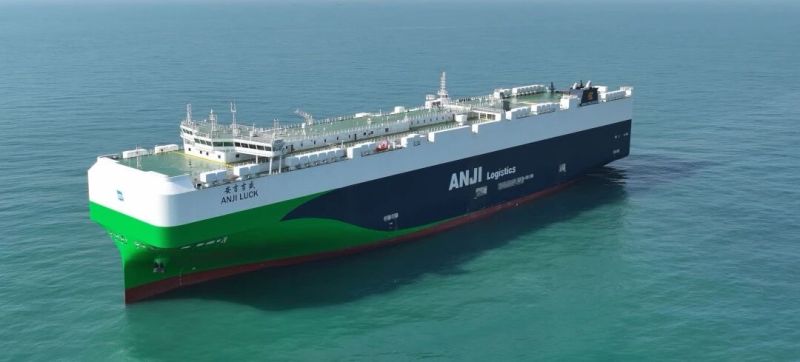
On 23 September, SAIC Anji Logistics launched an international tender for the construction of two 11,000-CEU LNG dual-fuel pure car and truck carriers (PCTCs), marking another major step in the rapid expansion of China-controlled car-carrier capacity.
The delivery schedule is equally notable: the first vessel is required to be delivered before September 2029, with the second to follow within three months.
But perhaps the most interesting part of the tender is the qualification threshold for shipyards.
Bidders are required to demonstrate delivery of at least 10 LNG dual-fuel car carriers of more than 7,000 CEU between 1 January 2023 and 31 August 2026.
That requirement significantly narrows the field.
China has become the dominant construction base for the latest generation of large PCTCs, but only a relatively small group of yards has accumulated this level of recent delivery experience in large LNG dual-fuel car carriers.
For SAIC Anji Logistics, the move also represents another step up in vessel size. The company has already expanded rapidly through a new generation of large PCTCs, including 9,500-CEU vessels. Moving directly into the 11,000-CEU segment pushes its fleet towards the very top end of the global car-carrier market.
The broader trend is becoming increasingly clear: Chinese automakers and logistics groups are no longer relying solely on third-party ocean capacity. They are building increasingly large, modern and fuel-flexible fleets under their own control to support the internationalisation of China’s automotive industry.
And the next battleground is no longer simply “more PCTCs”.
It is the race for the 10,000+ CEU generation.

READ MORE
 Containers
What Kind of Company Is Seaspan Today?
 Containers
With an Orderbook Above 45% of the Fleet, Why Are Container Lines Still Paying Up for Ships?
 Containers
HMM Approves $1.62 Billion Plan to Add 12 Containerships
 Containers
Ningbo Containerized Freight Index Weekly Commentary Freight Rates Continued Their Divergent Trend; Composite Index Edged Up
 Containers
Buy Again! From Ships to Ports: Inside the Maersk Family’s Infrastructure Buying Spree
 Containers
CMA CGM Updates eBL Templates to Clarify Electronic Original Status
 Containers
Bigger Fleets, Wider Networks: China’s Provincial Shipping Companies Step Up Expansion
 Containers
2,824-TEU GFS PRIDE Sinks in Hormuz; All 21 Crew Safe
 Containers
Zhonggu Orders Its First 14,000 TEU Ships as Annual Newbuilding Tally Reaches 20
 Containers