


CMA CGM Chief Says Zero Carbon by 2050 May Take a Miracle
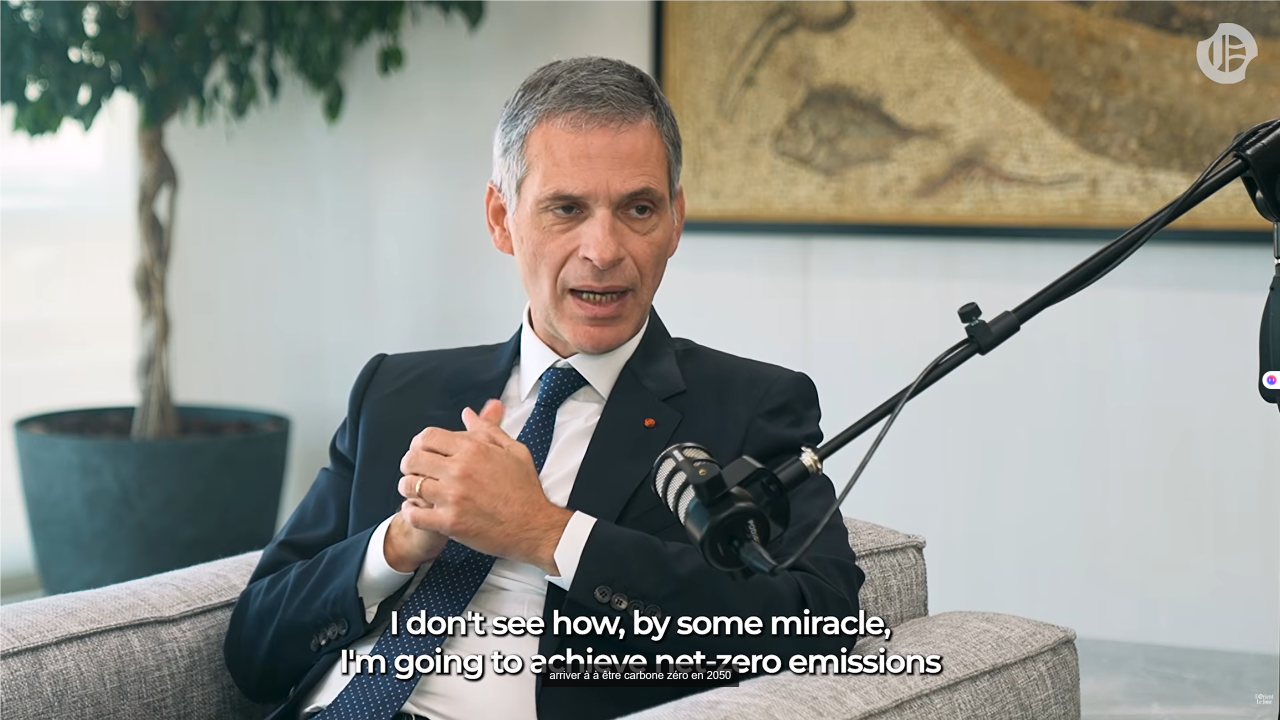
CMA CGM chairman and chief executive Rodolphe Saadé has questioned how zero carbon can be achieved by 2050, invoking the need for a “miracle” as geopolitical disruption and diverging energy policies complicate shipping’s transition.
His comments came in a wide-ranging video interview published by Lebanese newspaper L’Orient-Le Jour on 16 September 2026. For the head of a group operating more than 700 vessels and investing heavily in alternative-fuel ships, the remarks reveal the growing tension between long-term climate commitments and the conditions in which shipping companies actually operate.
CMA CGM’s published strategy continues to target net zero carbon across all its activities by 2050. It includes investment in vessels capable of using biomethane, biomethanol and synthetic fuels, alongside measures to reduce energy consumption. Saadé’s doubts about the pathway therefore sit alongside an unchanged public commitment to the destination.
The interview also explained why CMA CGM continues to buy ships, acquire logistics businesses and invest in terminals despite limited visibility over world events. Saadé’s approach rests on maintaining the capacity to serve future trade while giving the group more ways to respond when routes, regulations or markets change.
LNG offers an immediate option with clear limits
Saadé presented liquefied natural gas as an important option that CMA CGM can deploy today. He cited a reduction of about 20% in carbon dioxide emissions, while acknowledging that this falls well short of what is needed to complete the transition.
The group began ordering LNG vessels years ago and has been taking delivery of them. Saadé’s position is to keep deploying available technology as more ambitious solutions develop. He mentioned ammonia and nuclear energy as possible future options, without setting out a commercial timetable or committing the group to either pathway.
The emissions distinction is essential. A reduction in CO2 alone does not establish a fuel’s full climate benefit. The International Maritime Organization’s lifecycle framework assesses emissions from fuel production through to its use aboard a ship, including greenhouse gases such as methane. LNG’s overall performance therefore depends on factors beyond the CO2 released during combustion.
Operational disruption adds another constraint. Saadé pointed to diversions around the Cape of Good Hope following the disruption of Red Sea routes. Longer voyages increase fuel consumption and can offset part of the progress achieved through more efficient vessels. Safe access to established trade routes consequently affects the industry’s ability to reduce emissions.
He also highlighted the different environmental policy priorities of Europe and the United States. For shipowners, the difficulty is making decisions about machinery and fuels that may shape operations for decades while the regulatory and commercial conditions supporting those choices continue to change.
Investment continues despite limited visibility
Asked what globalization might look like in ten years, Saadé said even the next six months were difficult to predict. Yet he remained supportive of open international trade and continued investment in the capacity needed to serve it.
That outlook draws partly on CMA CGM’s experience of the shipping cycle. Saadé recalled the severe difficulties the group faced around 2009 and 2010, when its ability to continue operating came under pressure. The memory remains relevant to his investment decisions even after the extraordinary earnings generated during the pandemic.
He rejected the suggestion that those profits were simply a windfall detached from earlier effort. His argument was that decades of investment in ships, terminals and commercial networks had positioned CMA CGM to carry cargo when demand and disruption transformed the market.
Saadé also defended continued ship investment during difficult periods, including losses, provided the group retained confidence in the industry. That approach commits capital across the cycle and exposes the business to the risk that recovery will arrive later than expected. It also explains his desire to reduce dependence on ocean freight earnings by expanding into other activities.
Managing immediate security risks requires a different process. On sensitive passages such as Bab el-Mandeb, he described operational assessments, consultation with relevant authorities and, in some cases, coordination with the French Navy. Crew safety and cargo security govern the decision. Continued investment in the network is accompanied by voyage-specific judgments about where ships can safely sail.
Politics enters fleet deployment and shipbuilding
Saadé’s account of his March 2025 White House meeting with Donald Trump illustrated how closely shipping strategy now intersects with government policy.
One practical concern is the potential effect of US measures targeting vessels built in China. Saadé said CMA CGM could respond, if required, by moving Chinese-built vessels from affected US services to other trades and replacing them with ships built in South Korea. He presented this as a contingency dependent on the final policy arrangements.

For a global carrier, that possibility gives a vessel’s place of construction greater commercial importance. Deployment decisions already involve capacity, fuel consumption, port restrictions and schedules. Policies that distinguish between ships by their construction origin add another constraint, potentially requiring changes across several services at once.
India provides a different example of government influence over investment. Saadé recalled discussing the need for financial support if CMA CGM was to place shipbuilding orders there. The group subsequently signed a final construction contract with Cochin Shipyard Limited for six LNG-powered containerships, each with a capacity of 1,700 TEU.
Together, these examples show how industrial policy can affect both the location of newbuilding orders and the deployment of existing tonnage. Maintaining flexibility has a cost, but it gives a carrier more options when access conditions change.

Logistics expansion brings an integration test
Saadé estimated in the interview that logistics accounted for around 40% of group revenue. He traced the move into the business to customer requests for services extending from factories in China through to final delivery.
Those requests helped drive investment in @CEVA Logistics and further acquisitions to extend its geographic reach and capabilities. Ocean transport gave CMA CGM the international shipping network; contract logistics, warehousing and delivery operations allowed it to take responsibility for more of a customer’s supply chain.
The agreement to acquire FedEx Supply Chain is a major example. Announced on 1 July 2026 at an enterprise value of $1.4 billion, the transaction would nearly triple CEVA’s North American contract logistics business. The announcement envisaged completion in 2026, subject to customary regulatory approvals; the deal was still awaiting completion at the time of the interview.
Saadé said the United States contributed about 30% of group revenue, providing a commercial basis for further investment in local warehousing and logistics. In Europe, he also discussed last-mile delivery through Colis Privé and the proposed acquisition of Paack.
He was candid about the work that follows an acquisition. CMA CGM has bought extensively, and CEVA still needs to integrate those businesses and improve performance. He spoke positively about the contribution of its new chief executive, Patrick Moebel, while acknowledging that substantial work remained.
The commercial test is whether customers receive a consistent service across the enlarged network. Acquisitions can add revenue, facilities and market coverage quickly. Their value depends on connecting operations, improving service and generating adequate returns from the combined business.
Terminals support the wider transport network
Saadé said CMA CGM’s terminal portfolio extended to more than 66 facilities. His explanation for investing in ports was operational: terminal involvement can give the group greater influence over berth planning, vessel waiting times and handling costs.
Those factors determine how effectively a shipping line can use its fleet. Additional vessel capacity delivers less benefit when ships encounter congestion or unreliable handling ashore. Terminal investment therefore supports the performance of the wider network as well as providing a business in its own right.
CMA CGM is also broadening its transport capabilities through air cargo and vehicle shipping. Saadé said its car-carrier fleet could reach around 21 vessels over the coming years, building a presence in a segment where the group previously had none.
The opportunity is to serve more cargo types and more stages of a shipment’s journey. The operational challenge is to make those assets work together well enough for customers to see an improvement in service.
AI investment comes with human responsibility
Saadé described investment in artificial intelligence as a necessity for a group of CMA CGM’s scale. He said AI was already producing practical benefits, although projects required different levels of spending and offered different payback periods.
He also argued that Europe needed to make room for technological development while addressing misuse. Companies such as Mistral and Poolside featured in his discussion of the region’s potential to build competitive AI businesses.
The group’s fleet centres in Marseille, Singapore and Miami offered a concrete example of technology supporting operations. They bring together vessel positions, weather and routing information, with experienced maritime personnel providing advice to crews. Saadé stressed that the master retains final authority aboard the vessel.
That allocation of responsibility connects with his broader management approach. CMA CGM remains a privately held, family-controlled group, but its scale requires extensive delegation. Saadé said he was still learning how to delegate effectively, while continuing to check that responsibilities were being handled properly.
He placed particular importance on hearing about problems early. In a business spanning shipping, logistics and several other industries, delayed reporting can allow an operational issue to become a much larger financial or reputational problem. Teams need room to act, together with clear expectations about when to escalate decisions.
Diversification still has to deliver returns
Saadé was particularly direct about the media business. He acknowledged that the group had yet to establish a satisfactory, sustainable economic model for those operations.
Pressure on advertising revenue and the need to control costs remain central concerns. He rejected the assumption that CMA CGM’s financial resources would justify indefinite support without sufficient progress. Although he remained willing to examine attractive opportunities, media investments would ultimately have to demonstrate their own viability.
The admission defines a limit to diversification. Expanding beyond ocean shipping can reduce reliance on one industry’s earnings, but each additional business introduces its own operating demands. Group capital can provide time for improvement; it cannot remove the need for a workable business model.
Regional investment combines roots with commercial judgment
Lebanon occupied a substantial part of the interview. Saadé discussed his family history, the experience of war and his attachment to both France and Lebanon. He also insisted that affection for a country does not make an investment profitable.
The expansion of Beirut’s container terminal offers a concrete example of his approach. CMA CGM has announced a $100 million project to increase annual handling capacity from 1.2 million to 2.8 million TEU and expand the terminal footprint from 45 to 80 hectares. The works are expected to take approximately 18 months.
The project concerns the container terminal, with a defined scope of expansion and modernization. Its commercial purpose is to strengthen Beirut’s position as a regional gateway as competing ports develop their own facilities.
Saadé also discussed regional distribution through Fattal, support for education and technology, and opportunities in Syria. He acknowledged the concerns other businesses have about conflict and compliance, describing CMA CGM’s activities as subject to applicable rules. His investment approach, as presented in the interview, begins with conditions on the ground and the business that can be developed within them.
Across these investments, CMA CGM faces demands that operate on very different timescales. A security decision may require an immediate response. Integrating a logistics acquisition takes years. A new ship’s fuel and machinery choices can shape its economics for decades.
Saadé’s reference to a “miracle” draws attention to the difficulty of reconciling those timescales with a 2050 ambition. CMA CGM continues to commit capital to the transition. The unresolved question is whether cleaner fuel supply, supporting infrastructure and the conditions in which ships operate can develop quickly enough to deliver the emissions reductions those investments are intended to achieve.

READ MORE
 Containers
What Kind of Company Is Seaspan Today?
 Containers
With an Orderbook Above 45% of the Fleet, Why Are Container Lines Still Paying Up for Ships?
 Containers
HMM Approves $1.62 Billion Plan to Add 12 Containerships
 Containers
Ningbo Containerized Freight Index Weekly Commentary Freight Rates Continued Their Divergent Trend; Composite Index Edged Up
 Containers
Buy Again! From Ships to Ports: Inside the Maersk Family’s Infrastructure Buying Spree
 Containers
CMA CGM Updates eBL Templates to Clarify Electronic Original Status
 Containers
Bigger Fleets, Wider Networks: China’s Provincial Shipping Companies Step Up Expansion
 Containers
2,824-TEU GFS PRIDE Sinks in Hormuz; All 21 Crew Safe
 Containers
Zhonggu Orders Its First 14,000 TEU Ships as Annual Newbuilding Tally Reaches 20
 Containers