


Fujian Guohang Plans RMB2.49bn Fleet Expansion into LR2 Tankers and Heavylift


Chinese dry bulk owner Fujian Guohang Ocean Shipping is preparing a RMB2.49bn ($372m) newbuilding programme covering three LR2 tankers and three multipurpose heavylift vessels, marking a significant expansion beyond its traditional dry bulk business.
Fujian Guohang Ocean Shipping (Group) Co., Ltd. is planning to invest about RMB2.49bn ($372m) in six new vessels as the Beijing Stock Exchange-listed shipowner moves into both liquid energy transportation and the project cargo market.
The proposed programme comprises three 115,000-dwt LR2 tankers and three 62,000-dwt multipurpose heavylift vessels, according to financing documents released by the company this week. The planned construction period is around two years.
The ships have not yet been ordered. Guohang said shipyards will be selected after considering quotations, available delivery slots and payment terms, while individual newbuilding prices, delivery dates and final specifications remain open.
That distinction is important: the announcement represents a fleet investment plan rather than six concluded shipbuilding contracts.
RMB700m fundraising covers only part of investment
Guohang is seeking to raise up to RMB700m through a share placement to specific investors. Of that amount, RMB680m is intended for the vessel programme and RMB20m for working capital.
With the shipbuilding project itself estimated at RMB2.491bn, the equity financing would cover only around 27% of the required investment. The remaining funding is expected to come from the company's own resources, bank borrowing, financial leasing or other financing channels.
The share issue has been approved by Guohang's board but still requires shareholder approval, review by the Beijing Stock Exchange and registration with the China Securities Regulatory Commission before it can proceed.
Moving beyond dry bulk
The more significant aspect of the plan is the change it would bring to Guohang's business mix.
The company has historically concentrated on dry bulk shipping, operating a fleet spanning capesize, panamax and handy-sized tonnage. It said earlier this year that it had 22 owned vessels with close to 1.8m dwt of capacity, while additional methanol dual-fuel bulk carriers remain under construction.
The proposed LR2s would create a new exposure to the oil transportation market. Ships in this size range can trade both refined products and, depending on specification and employment, crude oil, giving owners greater flexibility across long-haul liquid bulk trades.
Guohang explicitly described the move as an entry into the energy transportation sector and said it expects the different cycles of tanker and dry bulk markets to reduce its dependence on a single shipping segment.
The three multipurpose heavylift ships would open another new business line.
Guohang said the vessels are intended to handle cargoes including wind turbine components, offshore structures, large steel structures and heavy engineering equipment, reflecting the growing logistics requirements created by China's exports of renewable-energy and industrial equipment.
Such vessels combine conventional cargo capacity with onboard heavy-lift cranes, allowing them to handle oversized project cargo at ports where shore-based lifting infrastructure may be limited.
A broader fleet strategy
The six-ship proposal therefore represents more than a straightforward fleet expansion.
If implemented, Guohang would move from a business still dominated by dry bulk into three distinct markets: bulk commodities, liquid energy cargoes and specialised project logistics.
That diversification also comes with a substantially larger capital requirement. More than RMB1.8bn of the planned vessel investment would need to be financed outside the proposed equity proceeds.
For now, the next important developments will be the selection of shipyards, final vessel specifications and pricing, as well as the financing structure supporting the balance of the investment.
Until those decisions are made, the six vessels should be viewed as planned newbuildings rather than additions to Chinese shipyards' firm orderbooks.


READ MORE
 Shipbuilding
French Space Logistics Owner Selects China’s GSI for Next-Generation Ro-Ro Vessel Project
 Shipbuilding
Will Newbuilding Prices Still Be This High a Year From Now?
 Shipbuilding
Guohang Enters Tankers with RMB 2.49bn Fleet Plan
 Shipbuilding
Swire Buys Four Heavy-Lift Ships in Latest Strategic Shift
 Shipbuilding
Henghui Reportedly Orders Up to Four Heavy-Lift Ships at ZPMC
 Shipbuilding
24 Firm Orders + 16 Options: Ren Yuanlin Accelerates Yangzijiang Maritime’s ‘Financial Shipowner’ Strategy
 Shipbuilding
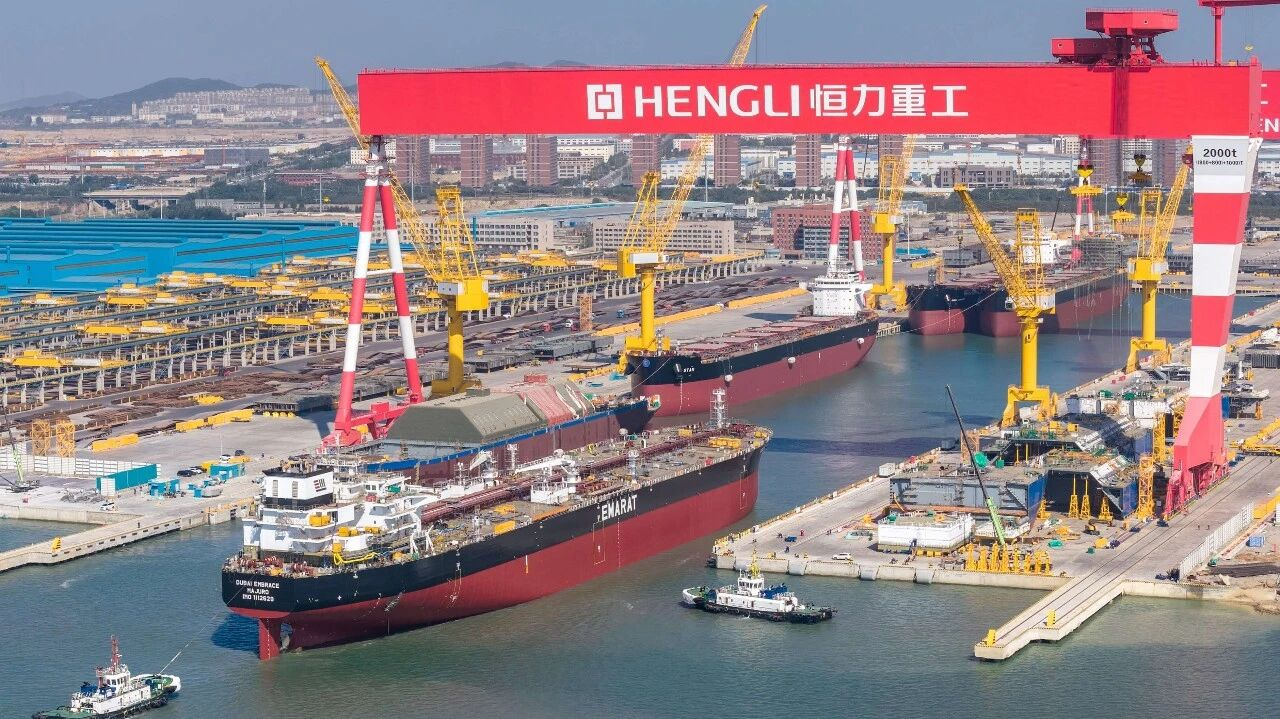
Hengli Heavy Industries moves five newbuildings from world’s largest dock in latest production milestone
 Shipbuilding
$3.1 Trillion in Revenue, $824 Billion in New Ships: Is Shipping Buying the Wrong Tonnage?
 Shipbuilding
Maersk’s $5bn Newbuilding Push Signals a Shift Back Toward Fleet Growth
 Shipbuilding