


Guohang Enters Tankers with RMB 2.49bn Fleet Plan
RMB 2.49 Billion for Six Newbuildings: Guohang Ocean Shipping Enters Tankers and Deepens Its Multipurpose Push
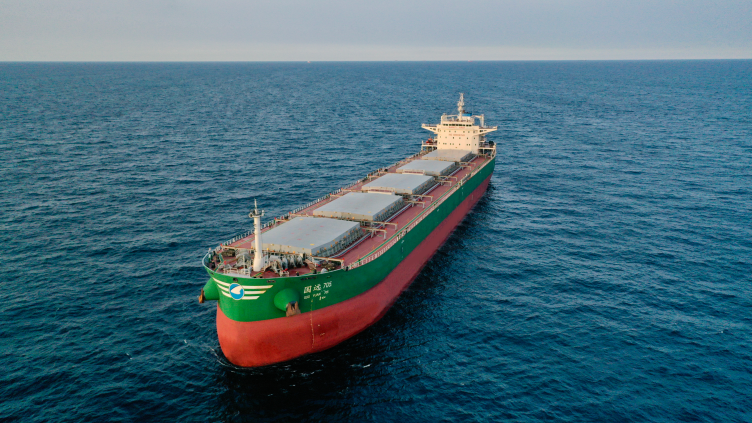
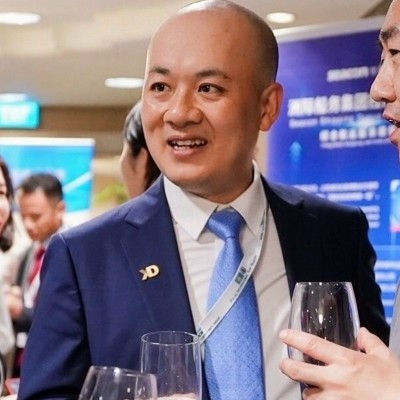
A proposed private placement of no more than RMB 700 million is opening the door to what could become the most extensive business restructuring undertaken by Guohang Ocean Shipping in more than two decades.
On 21 September, Fujian Guohang Ocean Shipping (Group) Co., Ltd. released the draft prospectus for its 2026 private placement. The company plans to issue up to 100 million shares and raise no more than RMB 700 million, of which RMB 680 million will be allocated to vessel acquisitions and RMB 20 million to working capital.
The underlying newbuilding programme is considerably larger. With a total planned investment of RMB 2.4907 billion, Guohang intends to order three 62,000-dwt multipurpose heavy-lift vessels and three 115,000-dwt LR2 tankers. The construction period is expected to be approximately two years. The shipyards, contract prices and delivery dates have yet to be finalised, with the company expected to evaluate bids based on pricing, delivery schedules and payment terms.
The six vessels will take Guohang into two markets not previously covered by its self-operated fleet. The multipurpose heavy-lift ships will target wind-energy equipment, offshore structures, advanced manufacturing products and other project cargoes, while the LR2s will mark the company’s formal entry into the highly specialised and globally integrated tanker market.
Its dry bulk fleet will remain the foundation of the business, but it will no longer carry the full burden of future growth. Having expanded from Panamax into Ultramax and Capesize tonnage, Guohang is now adding MPP/heavy-lift vessels and LR2 tankers to its asset portfolio. The company is gradually moving from a privately owned dry bulk operator towards a multi-segment shipping platform spanning bulk commodities, project cargoes and liquid energy trades.
The timing is particularly revealing. Just ten days before the private placement plan was released, Guohang chairman and president Wang Yanping led a delegation to meet COSCO SHIPPING Energy Transportation. The two companies signed a framework cooperation agreement covering the tanker market, fleet collaboration and coordinated development, with vessel investment and operation, innovative business models and newbuilding projects identified as potential areas of cooperation.
Guohang subsequently described the agreement as the beginning of “a new chapter in the joint operation of newly built tankers” and said the company would move from a pure dry bulk model towards a “dual-engine strategy” built around dry bulk and tanker shipping.
Ten days later, three 115,000-dwt LR2s appeared in its public financing plan. The sequence suggests a clear implementation path: Guohang will bring tanker assets onto its own balance sheet, while COSCO SHIPPING Energy may provide the professional operating expertise, commercial network and market access required to deploy them effectively.
RMB 700 Million in Equity Supporting Nearly RMB 2.5 Billion in Capital Expenditure
The scale of the expansion goes far beyond the headline RMB 700 million private placement. The RMB 680 million allocated to vessel acquisitions will cover only approximately 27.3% of the total project cost, leaving around RMB 1.811 billion to be funded through internal resources, bank lending, financial leasing or other financing channels.
Guohang has also stated that it may begin investing in the project before the placement proceeds are received and subsequently use the raised funds to reimburse those earlier expenditures. Once the shipbuilding contracts are signed, the programme will therefore place immediate demands on cash flow, bank facilities, financing costs and the timing of instalment payments.
The company is launching the programme from a stronger earnings position. In the first half of 2026, Guohang recorded revenue of RMB 641 million, an increase of 47.19% year on year, while net profit attributable to shareholders surged 603.81% to RMB 124 million. Its gross margin rose to 36.13%, and its first-half profit was already several times the result recorded for the whole of 2025.
Newly introduced vessels, including the 63,500-dwt GH PRIDE and GH HARVEST and the approximately 180,000-dwt GH VISION, are beginning to convert capital investment into revenue and earnings. Guohang currently operates 22 dry bulk vessels with a combined capacity of 1.7074 million dwt and has developed commercial relationships with major cargo interests including Rio Tinto, Trafigura, China Energy Investment Corporation, Cargill, Ansteel, Baosteel and COFCO.
The earnings recovery gives Guohang a window in which to expand, although stronger profits do not remove the underlying capital constraints. A six-vessel programme costing nearly RMB 2.5 billion represents another capital-intensive investment cycle, while tankers and heavy-lift ships will require new safety systems, commercial expertise, crewing capabilities and customer-approval processes.
The quality of the expansion will ultimately depend on whether Guohang can secure financing on acceptable terms, control newbuilding costs and bring the vessels into cash-generating employment soon after delivery. Failure in any of these areas would increase the financial volatility created by the programme.
Why Enter the Tanker Market with 115,000-dwt LR2s?
LR2s occupy the space between large product tankers and Aframax-sized crude carriers. At 115,000 dwt, Guohang’s planned vessels will sit towards the upper end of the LR2 segment. With the appropriate coated cargo tanks and onboard systems, they can serve long-haul clean petroleum product trades while retaining a degree of flexibility to carry certain crude cargoes.
Compared with smaller MR tankers, whose employment is often more closely associated with regional trades, LR2s are better suited to long-haul routes linking the Middle East, Asia and Europe. Compared with Aframax tankers configured primarily for crude oil, LR2s can provide broader flexibility between clean petroleum products and selected crude trades.
The choice reflects structural changes in the global refining industry. New refining capacity in Asia and the Middle East is reshaping product export flows, while the redirection of Russian energy trade, geopolitical risks in the Red Sea and the Middle East, and longer diversion routes are adding tonne-mile demand. LR2s can participate in the long-distance movement of products from export-oriented refineries and, when market conditions permit, enter crude trades. That flexibility fits Guohang’s attempt to reduce its exposure to a single shipping cycle.
Owning three tankers, however, will be only the first step. Tanker operations require an integrated capability covering oil-major approvals, vetting, cargo tank and tank-cleaning management, ship-to-shore safety systems, sanctions compliance, insurance, global chartering and customer access. Guohang’s experience has been accumulated primarily in dry bulk shipping, and these capabilities will not appear automatically when the vessels are delivered.
This is where COSCO SHIPPING Energy could become central to the strategy.
As of the end of June 2026, COSCO SHIPPING Energy owned or controlled 153 tankers totalling approximately 21.9 million dwt, with another 38 vessels of 4.28 million dwt under construction. Its fleet covers the principal tanker segments, including VLCCs, Suezmaxes, Aframax/LR tankers and MRs.
The company reported first-half net profit of RMB 4.545 billion in 2026, up 143.21% year on year, with international tanker shipping acting as one of its principal earnings drivers. More importantly for Guohang, COSCO SHIPPING Energy already possesses the global customer relationships, shipmanagement systems, commercial teams and operating structures needed to manage tanker assets at scale.
During the 11 September meeting, COSCO SHIPPING Energy also introduced Guohang to the operation of China Pool. A clear distinction nevertheless needs to be maintained. China Pool is currently a VLCC-based pooling platform, while Guohang plans to build three 115,000-dwt LR2s. There is no public evidence that the proposed vessels will join China Pool.
The reference to China Pool is better understood as a demonstration of COSCO SHIPPING Energy’s ability to market, deploy and commercially manage vessels contributed by different owners under a unified operating system. Whether the LR2s will ultimately be placed under commercial management, chartered to COSCO SHIPPING Energy, operated through a revenue-sharing mechanism or incorporated into a new LR2-focused structure remains to be disclosed.
The official reference to the “joint operation of newly built tankers” does, however, indicate that Guohang is unlikely to build its tanker commercial platform entirely from the ground up.
Wang Yanping had previously expressed interest in acquiring a VLCC. More recently, strong secondhand buying by companies including ADNOC and Sinokor Merchant Marine, against a backdrop of heightened geopolitical risk, has pushed VLCC asset values to levels that are difficult to justify under more normal market conditions. Acquiring a secondhand VLCC at such prices would therefore be a much harder investment decision.
That does not remove the possibility of future cooperation between Guohang and COSCO SHIPPING Energy in the large crude tanker segment. It simply makes newly built LR2s a more measured and operationally flexible entry point under current asset-market conditions.
Three Heavy-Lift Ships Tied to the Global Expansion of Chinese Manufacturing
The three 62,000-dwt multipurpose heavy-lift vessels should not be treated as a secondary component of the programme. They represent another new growth platform for Guohang and will connect the company more closely with changes in China’s export structure.
Vessels in this segment typically combine large cargo hold openings, strong deck-loading capacity and onboard heavy-lift cranes. They can transport wind turbine towers and blades, offshore modules, construction machinery, railway equipment and other long, heavy or indivisible cargoes, while retaining the ability to carry steel products, pulp, bulk commodities and selected containerised cargo.
Their earnings are therefore less directly tied to conventional dry bulk indices. Commercial performance depends on the shipowner’s ability to coordinate ports, lifting plans, securing arrangements, project schedules and backhaul cargoes around individual shipments. These cargoes are more technically demanding, but they can also generate higher added value than traditional bulk transportation.
Guohang has already begun preparing for this direction. The company has worked with Mingyang Group on the global transportation of offshore wind components and on green methanol-related cooperation, while its Singapore platform is strengthening commercial links with Southeast Asia and Oceania.
Combining outbound project cargoes with inbound bulk commodities could allow Guohang to pair Chinese-manufactured equipment exports with raw-material backhaul cargoes, reducing ballast voyages and improving vessel utilisation. Whether this model can generate stable employment will depend on cargo commitments, access to international projects and disciplined scheduling. Vessel specifications alone will not guarantee the outcome.
The broader strategy therefore extends beyond Guohang’s own description of an “oil and dry bulk dual-engine” model. Once all six ships have been delivered, the company’s business will be organised around three distinct operating lines: dry bulk shipping based on Panamax, Ultramax and Capesize tonnage; project and heavy-lift transportation supported by the 62,000-dwt MPPs; and liquid energy transportation entered through the LR2 fleet.
These businesses serve different customers, respond to different market cycles and require different operating standards. The structure could reduce Guohang’s exposure to volatility in any single segment, while also making the organisation considerably more complex to manage.
From a RMB 4.4 Billion Green Fleet Programme to a Multi-Segment Platform
The latest investment is part of a longer expansion process. By the end of 2024, Guohang was already pursuing a major fleet-renewal programme centred on 73,800-dwt bulk carriers, 63,500-dwt geared bulkers and 89,000-dwt methanol dual-fuel bulk carriers.
Xinde Marine News estimated at the time that the company’s newbuilding investment over a two-year period was approaching RMB 4.4 billion across approximately 20 vessels. In January 2025, the delivery of GUOYUAN 707 completed a six-vessel series of 73,800-dwt bulk carriers. The 89,000-dwt programme subsequently moved beyond methanol-ready notation towards the installation of full methanol dual-fuel capability.
At the beginning of 2026, the 63,500-dwt Ultramaxes GH PRIDE and GH HARVEST joined the fleet in quick succession, extending Guohang beyond its traditional Panamax concentration and into geared, more cargo-flexible tonnage.
The company then paid USD 35.175 million for the 2012-built, 180,355-dwt Michalis H, subsequently renamed GH VISION, marking its first entry into the Capesize market. Panamax, Ultramax and Capesize vessels now give Guohang exposure to cargoes, ports and routes with substantially different operating characteristics, replacing its previous concentration around a single core ship type with a more layered dry bulk fleet.
The expansion has also extended beyond vessels. Guohang has been developing Hong Kong and Singapore as overseas operating platforms, established a Panamax fleet alliance with Hong Kong Ming Wah Shipping, and pursued cooperation with COSCO SHIPPING (Hong Kong) in green shipping, digitalisation and vessel lifecycle management. Unmanned helicopter deliveries to vessels and the company’s MOS digital operating system have also been incorporated into its broader operating model.
Together, these initiatives indicate that Guohang is attempting to build international commercial, shipmanagement, technological and industrial coordination capabilities alongside its growing fleet.
The addition of MPPs and LR2s will reshape more than the average age and energy efficiency of the fleet. It will also change the composition of Guohang’s revenue, customer base and market-cycle exposure. A fleet-renewal strategy that initially focused on greener dry bulk tonnage is evolving into a broader restructuring of the company’s business portfolio.
The Next Test Is Organisational, Financial and Managerial
A multi-segment fleet can create more commercial options, but it also brings a new level of management complexity. Dry bulk shipping, tanker operations and heavy-lift transportation each have their own commercial structures, safety regimes, crewing requirements and customer-approval procedures.
If all three businesses continue to be managed through a single highly centralised organisation, insufficient specialisation could weaken asset performance. Building separate professional platforms, meanwhile, will require more people, systems and management resources. Guohang’s next challenge therefore concerns more than total fleet capacity: it must determine whether it can establish three specialist operating capabilities that retain clear professional boundaries while still supporting one another.
The capital structure also requires close attention. Guohang’s leverage remains relatively high, and the RMB 700 million private placement will fund only a minority of the six-vessel programme. The remaining capital is likely to rely heavily on bank financing and financial leasing.
Long-term debt is a normal tool for financing ships, provided charter coverage, cargo commitments and operating cash flow are aligned with repayment obligations. A stable operating arrangement with COSCO SHIPPING Energy could improve financing visibility for the LR2s, while long-term cargo support from wind-energy, offshore and advanced-manufacturing clients would strengthen the investment case for the heavy-lift vessels. If both new businesses enter an extended market-development period at the same time, however, the resulting financial pressure could become concentrated.
Corporate governance must develop at the same pace as the fleet. As asset values rise, leasing structures multiply and the number of counterparties and major contracts increases, decision-making procedures, related-party boundaries and disclosure standards will need to become more rigorous. A programme approaching RMB 2.5 billion, together with possible commercial-management, joint-operation and leasing arrangements, will place greater demands on governance and transparency.
Guohang has previously set a five-year target of reaching 4.5 million dwt. The three MPPs and three LR2s will add approximately 531,000 dwt, while its delivered and ordered bulk carriers will continue to expand the fleet.
Deadweight alone, however, will no longer provide a complete measure of the company Guohang is building. The value of a heavy-lift vessel depends heavily on project execution, while the earning capability of an LR2 depends on oil-company acceptance, customer access and commercial deployment. None of those capabilities can be captured by a fleet-capacity figure.
Guohang will eventually need to clarify whether it intends to remain primarily an asset owner that relies on external partners for specialised operations, or whether it plans to establish independent professional platforms for dry bulk, project logistics and tanker shipping. That decision will determine the quality, rather than simply the size, of its 4.5-million-dwt ambition.
What Kind of Shipping Company Is Wang Yanping Building?
The outline is becoming increasingly clear. Guohang is retaining its dry bulk fleet and cargo relationships as the foundation of the business, renewing that base with energy-efficient and methanol dual-fuel tonnage, and expanding commodity-market coverage through Ultramax and Capesize ships.
It is now using multipurpose heavy-lift vessels to connect with the international expansion of China’s renewable-energy equipment and advanced manufacturing sectors, while the LR2s will provide an entry point into global energy transportation. Partnerships with established operators such as COSCO SHIPPING Energy can help reduce the operational and commercial barriers associated with crossing into a new shipping segment.
The attraction of this structure lies in the different cargo flows and cycles underpinning the three businesses. Iron ore, coal and grain support the dry bulk base; wind-energy equipment, offshore structures and construction machinery create opportunities in project logistics; and refined products and selected crude cargoes bring the company into global energy trading networks.
Such a combination could reduce Guohang’s dependence on a single dry bulk cycle and give its Hong Kong and Singapore platforms a wider commercial role.
The risks are equally visible. The shipyards, prices and delivery schedules have not been finalised. More than RMB 1.8 billion of project funding still needs to be arranged. The LR2 operating model with COSCO SHIPPING Energy has yet to be disclosed, while long-term cargo coverage for the heavy-lift vessels will need to be secured. High leverage, multi-segment management and corporate governance could each affect the returns generated by the new assets.
The market will therefore be watching more than which shipyards secure the six orders. The eventual commercial arrangement between Guohang and COSCO SHIPPING Energy, the ability of the LR2s to obtain customer approvals and stable employment, the extent to which the MPPs are supported by Mingyang or other industrial cargo interests, the financing cost of the remaining RMB 1.811 billion and the future interpretation of the 4.5-million-dwt target will all shape the outcome.
From 73,800-dwt bulk carriers and 89,000-dwt methanol dual-fuel ships to Ultramaxes, a Capesize, MPPs and LR2s, Guohang has assembled an asset strategy of considerable breadth. The six vessels disclosed on 21 September will take that strategy into a more demanding phase.
If the financing, cargo support and specialised operating capabilities can be developed alongside the ships, describing Guohang Ocean Shipping simply as a dry bulk shipowner will no longer capture the company it is becoming.

READ MORE
 Shipbuilding
Henghui Reportedly Orders Up to Four Heavy-Lift Ships at ZPMC
 Shipbuilding
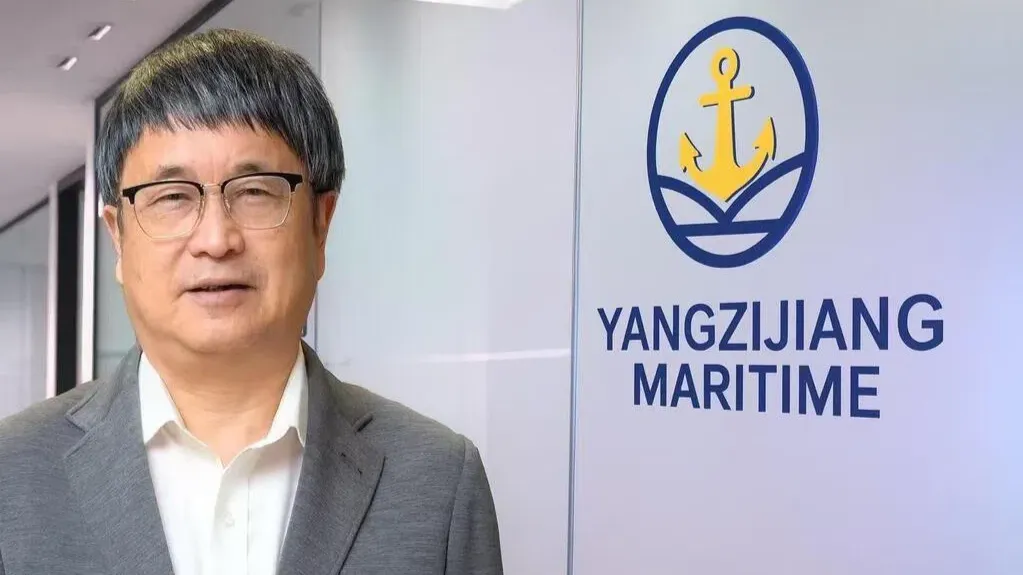
24 Firm Orders + 16 Options: Ren Yuanlin Accelerates Yangzijiang Maritime’s ‘Financial Shipowner’ Strategy
 Shipbuilding
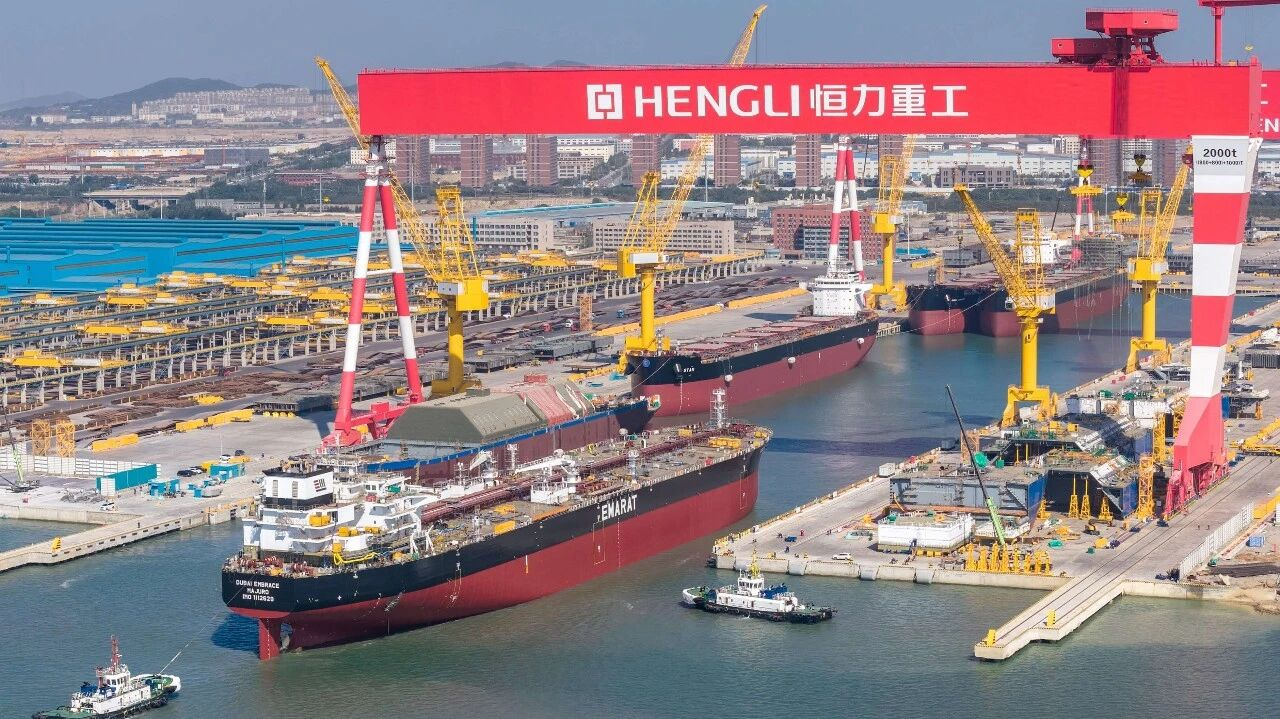
Hengli Heavy Industries moves five newbuildings from world’s largest dock in latest production milestone
 Shipbuilding
Will Newbuilding Prices Still Be This High a Year From Now?
 Shipbuilding
$3.1 Trillion in Revenue, $824 Billion in New Ships: Is Shipping Buying the Wrong Tonnage?
 Shipbuilding
Maersk’s $5bn Newbuilding Push Signals a Shift Back Toward Fleet Growth
 Shipbuilding
185 Ships and Counting: How Union Maritime Is Building Its Next Fleet in China
 Shipbuilding
Ren Yuanlin: Shipbuilding Still Has 8–10 Years of Strong Growth Ahead
 Shipbuilding
CULines Steps Up Fleet Expansion with First 14,000 TEU Newbuildings
 Shipbuilding